


A Tu-22PD with the bort number "Red 32" from the 3rd Squadron of the 341st Heavy Bomber Aviation Regiment at Ozerne Air Base, October 1995. The Tu-22P electronic warfare aircraft and its aerial refueling probe-equipped modification, the Tu-22PD, were developed for joint operations and escorting Tu-22 family aircraft tasked with strike missions. Due to prolonged delays in the development of its replacement, the Tu-22MP, these aircraft remained in service until the very collapse of the USSR with heavy bomber (VBAP) and independent long-range reconnaissance (ODRAP) aviation regiments that operated modifications of the Tu-22 and Tu-22M2/3.
After the dissolution of the Soviet Union, Ukraine inherited two aviation regiments equipped with the Tu-22P and Tu-22PD. Specifically, these were the 341st Heavy Bomber Aviation Regiment in Ozerne, Zhytomyr Oblast, and the 199th Independent Long-Range Reconnaissance Aviation Regiment in Nizhyn, Chernihiv Oblast, both of which operated versions of the baseline Tu-22.
From October 1988 to January 1989, aircraft of the 341st Regiment took part in the Soviet–Afghan War, providing escort and electronic cover for strike groups of Tu-22M3s from the 185th Heavy Bomber Aviation Regiment. These strike groups operated in support of the 40th Army during its withdrawal from Afghanistan in areas bordering Pakistan and Iran. The 185th Regiment was based in Poltava and used Tu-16P jammers, which were poorly suited for joint operations with the Tu-22M3. During combat sorties in Afghanistan, the Tu-22PD aircraft jammed Pakistani and Iranian ground-based radars that were tracking the Soviet strike formations.
The aircraft bearing the bort number "Red 32" was part of the first pair of Tu-22PDs that deployed from Ozerne to Mary-2 Air Base in Turkmenistan on October 3, 1988, flying its first combat sortie from there on October 7. After several such missions, the personnel of the 341st Regiment noticed mission stars painted on the Poltava-based Tu-22M3s, so "Red 32" returned to Ozerne with 21 stars painted on its port side, representing the number of its combat sorties. In total, crews of the 341st Regiment flew 42 combat sorties in Afghanistan, with "Red 32" accounting for the highest number of them. In the summer of 1989, at the initiative of the personnel who had served in the Afghan deployment, a dragon clutching arrows was also painted on both sides of the fuselage, becoming its signature feature.
Following the collapse of the USSR, the reconnaissance variant from the 199th Independent Long-Range Reconnaissance Aviation Regiment remained in Ukrainian service the longest among all Tu-22 modifications. Missile carriers and electronic warfare aircraft stayed operational until the mid-1990s, making their final flights in 1996–1997 before being scrapped at the dismantling facility in Nizhyn. The 341st Heavy Bomber Aviation Regiment was disbanded in the late 1990s. Meanwhile, the 199th Regiment was downsized to a squadron in 1996; its aircraft continued flying until July 1998, and in February 1999, the squadron itself was transferred to the Ministry of Emergency Situations. The scrapping of Tu-22 aircraft continued until 2001. Only three airframes survived intact: two of them (a Tu-22KP and a Tu-22RD) are preserved in museums in Poltava and Kyiv, respectively, while the third, a Tu-22K, is displayed as a monument in Ozerne.


One of the gray Su-27s from the 831st Tactical Aviation Brigade armed with AGM-88 HARM anti-radiation missiles. According to open sources, the latest variant of these missiles spotted in service with the Ukrainian Air Force is the B Block III version, which began arriving no later than the summer of 2022.
Photo from the brigade's Facebook page.

A photo showing a visit of a Chinese delegation to the Shenyang Aircraft Corporation. In the background stands the T-10K-7 carrier-based fighter prototype, purchased from Ukraine. Second half of the 2000s.
Following the collapse of the USSR, Ukraine inherited two experimental prototypes of the future Su-33 in Crimea, namely the T-10K-3 and T-10K-7. The first was located at the Novofedorivka air base in Saky, where it underwent testing at the NITKA take-off and landing systems training facility. In early 1992, the T-10K-3 was transferred to Russia, where it continued its test program through 1993–1994 and later served as a spare parts donor for other prototypes.
As of 1991, the T-10K-7 was located at the Air Force Research Institute base in Kirovske and held significantly greater value, as it was a pre-production model of the pilot batch featuring a perfected wing and horizontal stabilizer folding mechanism, an upgraded fly-by-wire (FBW) control system, and other refined systems and mechanisms that the T-10K-3 lacked. It was precisely due to an issue with the FBW system that this aircraft remained in Ukraine, as the malfunction prevented the Russians from flying this precious prototype to Russia. Later, the aircraft received Ukrainian insignia, but never performed test flights again.
In 2004, the T-10K-7 was secretly sold to China along with test documentation regarding the structural strength of this very aircraft, which had previously been conducted in Feodosia at the Research Institute of Aeroelastic Systems. The purchase of this aircraft played a key role in the creation of the Chinese J-15 carrier-based fighter, which was required for China's first aircraft carrier, the Liaoning (a Soviet Project 1143.6 ship built in Mykolaiv and about 70% complete at the time of the USSR's collapse). It was also purchased from Ukraine in 1998 through a front company for a mere $20 million. It is also worth adding that initially, the Chinese wanted to buy two serial Su-33s from Russia with the prospect of expanding the order to 50 airframes, but the Russians refused the deal. Around that time, the Chinese side had terminated a contract for the purchase of 200 Su-27SK fighters after receiving about 100 units, while Russia insisted on signing a contract for a large batch immediately. Thus, it was the purchase of the T-10K-7 from Ukraine that allowed the PRC to rapidly develop carrier-based aviation without spending many years on its own research or attempting to buy Su-33 aircraft on Russian terms.

Scrapping of the Tu-160 strategic bomber with tail number 32 at the Pryluky airbase in accordance with the Lisbon Protocol, February 2, 2001. Photo by Efrem Lukatsky.
The aircraft was built in 1987 and was part of the 184th Guards Heavy Bomber Aviation Regiment in Pryluky, which at the time of the collapse of the USSR had 19 such aircraft split between two squadrons. The photo shows the last of ten Tu-160s scrapped in Pryluky between 1998 and 2001 under US supervision as part of the Nunn-Lugar Cooperative Threat Reduction Program, which provided financial support to cover the aircraft dismantlement obligations. Another eight aircraft were transferred to the Russians to settle natural gas debts, and one was preserved as a museum exhibit at the Poltava Museum of Long-Range Aviation. While the flight hours of this particular Tu-160 remain unknown, the flight logs of other decommissioned aircraft are documented. For instance, the first to be dismantled was tail number 24, manufactured in 1989, which had 466 flight hours. The second to be cut up was tail number 14, built in 1991, with a mere 18 flight hours.
Regarding the operation of the Tu-160 in independent Ukraine, almost immediately after the collapse of the USSR, the 184th Regiment had to abandon combat training flights with these aircraft, as the country simply lacked specialized test ranges for them. Furthermore, technical oversight from the Tupolev Design Bureau and support from the manufacturer—which was supposed to provide warranty servicing for 10 years—ceased entirely. Fuel shortages and a lack of spare parts quickly grounded most of the fleet. By the summer of 1994, only a few pilots in the regiment were still qualified to fly the Tu-160 (after the dissolution of the USSR, only a quarter of the flight crew remained in Ukraine), and by that time, they took to the skies no more than 4–5 times a year, though they also conducted training flights on Tu-134UBL aircraft. On August 24, 1997, one Tu-160 took part in the first aviation parade of the independence era, held at the Chaika airfield. That same year, aircraft of this type were decommissioned from the Ukrainian Air Force, and the 184th Regiment itself was disbanded in 2000. The same year also saw the disbandment of the 13th Heavy Bomber Aviation Division, which, besides the 184th, included the 185th Regiment—the last heavy bomber aviation regiment to be disbanded in Ukraine.
P.S. The Lisbon Protocol, signed in 1992, was an amendment to the 1991 Soviet-American START I treaty. Under the protocol, Ukraine, Belarus, and Kazakhstan committed to eliminating their strategic nuclear forces and acceding to the Treaty on the Non-Proliferation of Nuclear Weapons (NPT) as non-nuclear-weapon states. The Tu-160 aircraft were subject to mandatory dismantlement as nuclear weapon delivery vehicles.

The workshop of the Lviv State Aircraft Repair Plant in January 2022. In the center stands the sole exemplar of the MiG-29MU2, with two Azerbaijani Air Force MiG-29 9.13s in the background (a third one is out of frame). The maiden flight of the prototype MiG-29MU2 took place in December 2019. Flight-design tests were completed in 2020, during which test flights were conducted with Kh-29T air-to-surface missiles and KAB-500KR guided bombs. State trials began subsequently, with plans to complete them and officially adopt the aircraft into service in 2022. With the start of the full-scale invasion, the aircraft was transferred to the 114th Tactical Aviation Brigade. The Azerbaijani airframes were also integrated into the Ukrainian Air Force. The MiG-29MU2 was shot down on June 2, 2023, while executing a combat mission in the Pokrovsk Raion of the Donetsk Oblast. The aircraft was piloted on his eighth combat mission by Major Vladyslav Savieliev, call sign 'Nomad', who, tragically, lost his life.

1
1
126
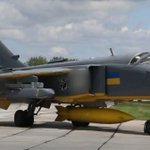
Su-24s from the 7th Tactical Aviation Brigade with Storm Shadow/SCALP-EG cruise missiles. The first image shows a Su-24M from today’s video on the official Facebook page of the Air Force Command of the Armed Forces of Ukraine, while the second shows a Su-24MR from a video published 10 months ago on the Air Force's YouTube channel.


79
A former Macedonian Su-25 serving in the 299th Tactical Aviation Brigade. In 2001, Macedonia purchased three single-seat and one combat-trainer Su-25 from Ukraine to fight Albanian separatists. The aircraft arrived in the country in June of that year. Since the jets had been in storage, they were sent to Belarus prior to delivery to Macedonia, where they underwent repairs at the 558th Aircraft Repair Plant in Baranovichi. Their combat involvement proved highly limited, with only a few sorties flown, and the aircraft themselves were piloted by Ukrainian pilots. The end of the conflict, a shortage of spare parts, and a lack of indigenous pilots led to all four Su-25s being placed in open-air storage at Petrovec Airport as early as March 2004. In 2005, Macedonia held active negotiations with Georgia regarding the sale of these aircraft, but political pressure from the Russian Federation derailed the deal. In 2011, the possibility of their restoration was considered, but repairs were deemed economically unfeasible. Ultimately, in the summer of 2022, they were transferred to Ukraine as part of military aid. At least two single-seat Su-25s were restored and inducted into the 299th Tactical Aviation Brigade, receiving side numbers 50 and 51. In the spring of 2023, the aircraft numbered 51 was featured in a photoshoot for foreign media alongside the brigade's pilots. This is a frame from the official Ukrainian Air Force YouTube channel.

Photos of the Su-27UB1M aircraft with AGM-88 HARM missiles were published on the Facebook page of the 831st Tactical Aviation Brigade back in July 2024. In total, the Ukrainian Air Force had two Su-27UB1Ms serving together in the 831st Tactical Aviation Brigade with tail numbers 67 and 71. They were manufactured on November 30, 1990, and January 30, 1991, and were upgraded to the UB1M standard in 2017 and 2015, respectively. The most advanced AGM-88 HARMs spotted in Ukraine were of the Block III B modification.


2
109
The Su-27P with tail number 101 from the 831st Tactical Aviation Brigade. This aircraft was one of the newest Su-27s in the Ukrainian Air Force's inventory before the full-scale invasion. There were three such aircraft in total, numbered 59, 100, and 101, all manufactured in August 1991 as part of the 35th production series. The latter two even had consecutive serial numbers (36911035716 and 36911035717), underwent repairs together at the Zaporizhzhia State Aircraft Repair Plant in 2012, and were the first Su-27s to receive the new pixel camouflage. As of early 2014, aircraft 100 and 101 were among the few flight-ready planes in the 831st BrTA. Unfortunately, the Su-27 with tail number 100 was lost on February 25, 2022. It was piloted by the legendary 1st Class pilot and Hero of Ukraine, Oleksandr Oksanchenko (posthumously).
Image source: Part one of the documentary series 'Heavenly Knights', which premiered on March 12, 2026.
