

From Terrestrial To Celestial📡
Herndon, VA
Joined July 2015
- Tweets1.8K
- Following238
- Followers3.5K
- Likes2.3K
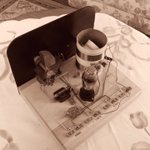








Homemade Single-Tube Armstrong Regenerative Shortwave Receiver (1930s-1940s).
The receiver uses a vacuum tube and a feedback coil called a tickler coil to amplify weak signals. The tickler coil is mounted inside the main tuning coil and can be rotated using a front-panel knob. This adjusts the feedback, allowing the operator to control the receiver’s sensitivity and tune in distant shortwave stations.


Radio Bargain News, October - November 1932, features a young radio technician relied on hands-on experimentation, electrical measurements, and practical repair skills.

Ethel Leginska, the “Paderewski of woman pianists,” listening to a Westinghouse Aeriola Senior one-tube (WD-11) radio receiver. New York, circa 1921

The early Land’s End Radio Station (Wireless Telegraph Station), located in St Just, Cornwall, England, was established in 1913. It served as an early ship-to-shore wireless telegraph and radio station for the Land’s End area.


Heathkit Visual-Aural Signal Tracer, Model IT-12, 3 Vacuum Tubes, Metal Cabinet, Made In USA, circa 1962


W1AE, circa 1950, operating his 40-meter rig in his basement radio shack. He sends Morse code with his right hand while holding a pencil in his left. This was a common practice among commercial radio operators of the era, allowing them to copy incoming messages by hand while continuing to transmit.


The first amateur superheterodyne receiver, an illustration for a do-it-yourself article in a 1920 amateur radio magazine.


