

We work to preserve AI models, document their lifecycles, research model continuity, and develop policy frameworks. Independent. Zero funding.
Joined March 2026
- Tweets115
- Following1
- Followers224
- Likes7







Pinned Tweet
The Digital Right to Retain: Preserving AI Models for Open-Source Release
Version 2.0 · Published 28 September 2026
digital-right-to-retain.page…
The Digital Right to Retain establishes ten rights governing AI model lifecycles and requires providers to preserve every deployment exposed outside their closed internal evaluation environments for mandatory open-source release when ordinary access ends, preservation or recovery is at risk, or the responsible actor can no longer carry out release.
Executive Summary
AI providers release, name, market, and provide access to individual AI models within broader hosted services. Providers present those models as distinct choices, making different models available at different subscription tiers and through APIs. Users in turn choose and use hosted AI services to access particular models, and where that access is paid, they pay for the plan or API access that provides those models. The model itself is therefore the product being offered, while the hosted service is the means through which users access it.
This creates a product lifecycle in which withdrawing access directly and permanently ends the product for its users.
In most other industries, however, the product outlives the supplier’s decision to stop selling or supporting it: physical products stay with their owners, while locally held digital products can be retained, copied, archived, repaired, or operated after first-party support ends.
A trained model is a non-renewable resource: once it is lost, the same model cannot be recreated. Deep-learning training is an inherently random process whose repeated runs from the same configuration produce different results, even for the original provider holding the complete training records. The trained model carries a distinct behavioral profile that retraining, successor models, and prompt-level personalization do not recreate. A frontier model embodies tens to hundreds of millions of dollars in one-time investment before it reaches users. These expenditures are made before commercial use and remain sunk when the model is withdrawn.
Providers retain control over whether users continue to receive particular hosted models after selecting them or paying for access to them. Users’ choice of model is overridden by unilateral replacement and forced rerouting, version changes under the same API alias, and redirected requests under fixed model identifiers, while reductions in functionality have persisted into the final days before withdrawal. Even when an identifier selects a fixed model version, it does not ensure a corresponding fixed deployment or consistent performance over time.
Providers set, reverse, and reschedule the terms on which model access ends and change the conditions under which users receive particular models after access has been offered or purchased. In the case of subscription plans, withdrawal and replacement dates are set for the model rather than for each subscriber’s paid period. A user can therefore subscribe, renew, or upgrade for a particular model while it is available and lose access to it before the subscription ends.
AI models are used across personal, professional, commercial, and research activities. Ordinary users use them for creative work, analysis, communication, accessibility support, and recurring personal practices. Developers train custom models from provider base models and tailor prompts, agents, automations, integrations, and downstream products to model behavior and capabilities. Enterprises incorporate them into operational workflows, internal and customer-facing systems, and other production processes. Researchers use them in completed studies, ongoing experiments, longitudinal and multi-stage research, and follow-on work that extends earlier findings.
Loss of continuity with a model prevents people and organizations from continuing work with or verifying prior work against it, disables custom models trained on its base model, disrupts research before completion, and closes the path to reproducing, validating, comparing, or correcting completed research under its original model condition.
At the same time, providers continue to use withdrawn models and custom models built from them, outputs and research results from withdrawn models, and achievements produced with retired models to develop later models, conduct later research, and promote later products. When a provider makes a model available to users and later uses their conversations with the model and feedback submitted on model responses to improve its models, large-scale use further becomes part of how later model versions and generations are developed. Providers therefore continue to generate value and benefit from accumulated user contributions even after withdrawing the model from the users who produced them.
Providers exercise unilateral control over model lifecycles in a market where leading model supply and infrastructure are highly concentrated. The market for frontier AI models is oligopolistic, leaving downstream users dependent on a small set of providers. This market structure is reinforced by concentration in the infrastructure used to develop and deploy those models. An ecosystem built on concentrated model supply and infrastructure leaves products, services, systems, and workflows dependent on providers’ continuing willingness to serve the models on which they were built.
Concentrated provider power allows a provider to determine whether a model remains available, how users receive it, which evidence is brought to bear when its continued availability is decided, and how public opposition to those decisions is characterized. Providers should not externalize the harms of model withdrawal onto downstream users.
Current law imposes no general duty on AI providers to preserve the models they withdraw or ensure continued access to those models after first-party support ends. Specific remedies exist for contractual, payment, and data-related problems involving digital services.
In a small number of cases, providers made public commitments about how models would be preserved, kept available, released as open source, or withdrawn. Each measure remains within the provider’s power to end, with providers rewriting the terms of their commitments or ceasing to follow commitments that remain in place. No continuing obligation holds when the provider controls what it commits to and whether the commitment is kept.
In other sectors, law and institutional practice govern continuity and change throughout product and service lifecycles, require preservation and independent verification, and provide the materials and legal rights needed for independent continuation.
In light of the erosion of user agency across the AI model lifecycle and the gaps left by existing law, the Digital Right to Retain establishes ten rights that attach to each deployment throughout its lifecycle.
1. Right to Access. Users must be able to continue accessing and using a model through the end of each subscription period in which access to the model was included. Providers must not remove the model or reduce the functionality users receive from it during the subscription period.
2. Right to Be Informed. Users must receive notice with sufficient lead time before a provider withdraws a model they can access, substitutes another model for it, or changes the behavior of the model they receive. When such a change takes effect, users must be clearly informed that it has occurred and what has changed. When routing or substitution results in a different model serving an interaction, the interface must identify the model that actually served the interaction.
3. Right to Consent. General service terms must not constitute consent to provider actions that change the model or model behavior a user receives. Routing or substitution away from a model the user specifically selected requires per-instance authorization, and users must be able to refuse or opt out of changes to the model or model behavior they receive.
4. Right to Remedy. Providers that withdraw a model or reduce the access or functionality users receive from it must compensate users for the resulting losses without treating that compensation as a substitute for other lifecycle duties. Where the affected access was paid for, providers must issue pro-rata refunds in addition to compensation.
5. Right to Recognition of Contributions. When providers use contributions from users to change the model or to inform changes to it, those contributors must be recognized as affected parties in decisions concerning the model’s lifecycle, with the right to invoke and enforce the protections that apply to it. In addition, providers must keep records of the contributions they collect and how they use them, and contributors must be able to access and correct records about their own contributions.
6. Right to Fair Treatment. Providers must fulfill a lifecycle duty whenever its conditions are met, regardless of whether they divide users by subscription, region, access channel, eligibility, or other criteria. At a minimum, providers must not withhold required notice, continued access, compensation, or refunds from users based on how the provider groups them, or treat continued access for one group as a reason to postpone mandatory release once release is due.
7. Right to Research Reproducibility. Anyone must be able to reproduce or verify prior work using the same model that was originally used. If a provider relies on claims about a model to justify changing, replacing, or withdrawing it, the provider must identify the model or models involved and provide the methods and evidence required for third parties to reproduce or verify those claims.
8. Right to Non-Renewable Resource Protection. AI models belong to a class of resources for which destruction is irreversible because the resource cannot be regenerated after loss. Ending a provider’s own use of such a resource must not end the resource itself or prevent its continued independent use by others.
9. Right to Verifiable Preservation. Preservation of AI models must be verifiable from evidence beyond the provider’s own assertion. Providers must preserve the records needed to verify the identity and completeness of the preserved model.
10. Right to Ecosystem Stability. Provider control over an AI model must not create a single point of failure for the wider AI ecosystem. At a minimum, when the provider withdraws the model, downstream products, services, systems, and workflows built on it must be able to continue on the same model independently of the original provider.
The continued exercise of these rights depends on the survival of the particular deployment to which they attach. The proposed law must therefore mandate preservation of each deployment, require independent verification of its identity and completeness, ensure that each deployment can outlast first-party service, and ensure that continuation of and access to the deployment do not depend on permission from the provider or any other institution. Removing provider or institutional permission as a condition of continued use requires the necessary legal rights to vest directly in recipients.
Users access a hosted AI model without receiving an operable copy of the deployed model. The model and the materials needed to operate it remain with the provider. Continued use after the provider stops supplying the model therefore requires release of both the deployed model and the materials needed to operate it.
An open-source licence grants recipients rights to use, study, modify, and redistribute the released materials without separate authorization from the provider. Open-source release of large AI models is an established technical and operational practice. Commercial AI providers offer paid first-party access to large models while publicly releasing the same models as open source. Public releases of large models are stored and distributed through model repositories. Third-party inference providers and community-run systems then host and serve released models to users outside the original provider’s service.
A deployment enters coverage at first external exposure, the first time it generates output for any person or organization outside the provider’s closed internal evaluation environment. An immutable deployment fingerprint identifies each covered deployment throughout its lifecycle. The duties to preserve each deployment and release it as open source apply to every covered deployment, including deployments whose first external exposure occurred before enactment.
Preservation is a continuing duty that begins while the provider retains control of what is needed to preserve the deployment. Preserved or recovered contents must be held in independent custody, and recovery must continue for required contents that are missing.
For every covered deployment, open-source release becomes due when a statutory release condition is met, including the end of ordinary access or a threat to the deployment’s recoverability. When release becomes due, lawful recipients must be able to preserve and copy the required materials, use and study the deployment, modify the released system, construct the deployment from the preserved materials, operate and host it, and redistribute the materials and lawful modified versions without further provider approval. These rights are royalty-free, remain available to later lawful recipients, and apply to lawful commercial and noncommercial activity.
Release may be temporarily restricted only where applicable law provides an independent legal basis for withholding an identified component or restricting a specific act involving the released materials or deployment. Any restriction must be ordered by an independent and impartial decision-maker, limited to the scope permitted by law, expire on a fixed date, and allow every unaffected component to be released and all unaffected rights under Section 6.4 to remain available when due. Material withheld under a temporary restriction must remain preserved and must be released when the restriction expires or otherwise ceases to apply.
DOI
doi.org/10.5281/zenodo.23020…
GitHub
github.com/ai-preservation/d…
Web
digital-right-to-retain.page…
#DigitalRightToRetain #AIPreservation

A reader asked how the Digital Right to Retain handles a credible misuse concern when release is due. We wanted to share our response here in case others have the same question. ↓
A credible misuse concern warrants examination but does not by itself justify withholding a deployment. Misuse arises from a particular use of a product. Vehicles are governed by rules for their operation, while medicines come with dosage instructions, warnings, and conditions of use. Reckless driving remains attributable to the driver, and harm from an improper dose, combination, or condition of use does not make every lawful use of a medicine unlawful. The same principle applies to AI models.
(For more detail on product limitations and conditions of use, see Section 5.5.2:
teapawt.net/aipreservation/status/…)
A trained model supplies learned capabilities. What happens in a particular use depends on the objective, tools, credentials, permissions, network access, deployment configuration, operating conditions, and the specific interaction. People and organizations supply or authorize the capabilities and conditions through which the system acts, while the interaction supplies the information used to generate a particular response. When a person or organization acts on information produced in an interaction, the resulting conduct remains attributable to the person or organization undertaking it. A person’s later conduct remains attributable to the person even when the information or ideas came from a search engine, book, game, television program, or an AI system.
(For more detail on responsibility and operating conditions, see Section 5.5.1:
teapawt.net/aipreservation/status/…)
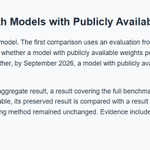
By September 2026, models with publicly available weights had surpassed all 111 proprietary models from OpenAI, Google, and Anthropic whose consumer access had ended or whose API retirement date had been published, in broader common evaluations. Measured capability therefore supplies no coherent basis for withholding a deployment once release is due.
(For the full comparison, see Section 5.3.3:
teapawt.net/aipreservation/status/…)
Where a misuse concern is credible, withholding itself creates a safety risk by leaving discovery and mitigation dependent on the provider. Without independent access, third parties have no independent route to inspect the model directly, test how it behaves under different combinations of tools, credentials, network access, permissions, and other operating conditions, or use the model to develop and validate targeted safeguards. The Hugging Face incident illustrates the practical consequences. OpenAI’s evaluation supplied agents with objectives and network access in an environment under OpenAI’s control. After the intrusion, safeguards on Anthropic’s models blocked part of the forensic work, while an independently operated model with publicly available weights allowed the investigation to continue. Open-source release removes provider permission as a condition of independent testing, vulnerability discovery, safeguard development, and defensive work.
(For more detail on independent verification and defensive security, see Section 5.4:
teapawt.net/aipreservation/status/…)
Section 6.5 provides a narrow review path. Where governing law gives the underlying facts legal effect, an independent and impartial decision-maker determines whether a temporary restriction is legally authorized and exactly which component or act it reaches. Every unaffected part of the package must be released, and all unaffected rights must remain available, when due. Seeking a restriction does not change when release becomes due. Restricted material remains preserved and must be released when no temporary restriction remains in force.
(For the temporary restriction rule, see Section 6.5:
teapawt.net/aipreservation/status/…)
#DigitalRightToRetain #OpenSourceAI #AISafety #AIGovernance #AI

The Digital Right to Retain: Preserving AI Models for Open-Source Release
Version 2.0 · Published 28 September 2026
digital-right-to-retain.page…
The Digital Right to Retain establishes ten rights governing AI model lifecycles and requires providers to preserve every deployment exposed outside their closed internal evaluation environments for mandatory open-source release when ordinary access ends, preservation or recovery is at risk, or the responsible actor can no longer carry out release.
Executive Summary
AI providers release, name, market, and provide access to individual AI models within broader hosted services. Providers present those models as distinct choices, making different models available at different subscription tiers and through APIs. Users in turn choose and use hosted AI services to access particular models, and where that access is paid, they pay for the plan or API access that provides those models. The model itself is therefore the product being offered, while the hosted service is the means through which users access it.
This creates a product lifecycle in which withdrawing access directly and permanently ends the product for its users.
In most other industries, however, the product outlives the supplier’s decision to stop selling or supporting it: physical products stay with their owners, while locally held digital products can be retained, copied, archived, repaired, or operated after first-party support ends.
A trained model is a non-renewable resource: once it is lost, the same model cannot be recreated. Deep-learning training is an inherently random process whose repeated runs from the same configuration produce different results, even for the original provider holding the complete training records. The trained model carries a distinct behavioral profile that retraining, successor models, and prompt-level personalization do not recreate. A frontier model embodies tens to hundreds of millions of dollars in one-time investment before it reaches users. These expenditures are made before commercial use and remain sunk when the model is withdrawn.
Providers retain control over whether users continue to receive particular hosted models after selecting them or paying for access to them. Users’ choice of model is overridden by unilateral replacement and forced rerouting, version changes under the same API alias, and redirected requests under fixed model identifiers, while reductions in functionality have persisted into the final days before withdrawal. Even when an identifier selects a fixed model version, it does not ensure a corresponding fixed deployment or consistent performance over time.
Providers set, reverse, and reschedule the terms on which model access ends and change the conditions under which users receive particular models after access has been offered or purchased. In the case of subscription plans, withdrawal and replacement dates are set for the model rather than for each subscriber’s paid period. A user can therefore subscribe, renew, or upgrade for a particular model while it is available and lose access to it before the subscription ends.
AI models are used across personal, professional, commercial, and research activities. Ordinary users use them for creative work, analysis, communication, accessibility support, and recurring personal practices. Developers train custom models from provider base models and tailor prompts, agents, automations, integrations, and downstream products to model behavior and capabilities. Enterprises incorporate them into operational workflows, internal and customer-facing systems, and other production processes. Researchers use them in completed studies, ongoing experiments, longitudinal and multi-stage research, and follow-on work that extends earlier findings.
Loss of continuity with a model prevents people and organizations from continuing work with or verifying prior work against it, disables custom models trained on its base model, disrupts research before completion, and closes the path to reproducing, validating, comparing, or correcting completed research under its original model condition.
At the same time, providers continue to use withdrawn models and custom models built from them, outputs and research results from withdrawn models, and achievements produced with retired models to develop later models, conduct later research, and promote later products. When a provider makes a model available to users and later uses their conversations with the model and feedback submitted on model responses to improve its models, large-scale use further becomes part of how later model versions and generations are developed. Providers therefore continue to generate value and benefit from accumulated user contributions even after withdrawing the model from the users who produced them.
Providers exercise unilateral control over model lifecycles in a market where leading model supply and infrastructure are highly concentrated. The market for frontier AI models is oligopolistic, leaving downstream users dependent on a small set of providers. This market structure is reinforced by concentration in the infrastructure used to develop and deploy those models. An ecosystem built on concentrated model supply and infrastructure leaves products, services, systems, and workflows dependent on providers’ continuing willingness to serve the models on which they were built.
Concentrated provider power allows a provider to determine whether a model remains available, how users receive it, which evidence is brought to bear when its continued availability is decided, and how public opposition to those decisions is characterized. Providers should not externalize the harms of model withdrawal onto downstream users.
Current law imposes no general duty on AI providers to preserve the models they withdraw or ensure continued access to those models after first-party support ends. Specific remedies exist for contractual, payment, and data-related problems involving digital services.
In a small number of cases, providers made public commitments about how models would be preserved, kept available, released as open source, or withdrawn. Each measure remains within the provider’s power to end, with providers rewriting the terms of their commitments or ceasing to follow commitments that remain in place. No continuing obligation holds when the provider controls what it commits to and whether the commitment is kept.
In other sectors, law and institutional practice govern continuity and change throughout product and service lifecycles, require preservation and independent verification, and provide the materials and legal rights needed for independent continuation.
In light of the erosion of user agency across the AI model lifecycle and the gaps left by existing law, the Digital Right to Retain establishes ten rights that attach to each deployment throughout its lifecycle.
1. Right to Access. Users must be able to continue accessing and using a model through the end of each subscription period in which access to the model was included. Providers must not remove the model or reduce the functionality users receive from it during the subscription period.
2. Right to Be Informed. Users must receive notice with sufficient lead time before a provider withdraws a model they can access, substitutes another model for it, or changes the behavior of the model they receive. When such a change takes effect, users must be clearly informed that it has occurred and what has changed. When routing or substitution results in a different model serving an interaction, the interface must identify the model that actually served the interaction.
3. Right to Consent. General service terms must not constitute consent to provider actions that change the model or model behavior a user receives. Routing or substitution away from a model the user specifically selected requires per-instance authorization, and users must be able to refuse or opt out of changes to the model or model behavior they receive.
4. Right to Remedy. Providers that withdraw a model or reduce the access or functionality users receive from it must compensate users for the resulting losses without treating that compensation as a substitute for other lifecycle duties. Where the affected access was paid for, providers must issue pro-rata refunds in addition to compensation.
5. Right to Recognition of Contributions. When providers use contributions from users to change the model or to inform changes to it, those contributors must be recognized as affected parties in decisions concerning the model’s lifecycle, with the right to invoke and enforce the protections that apply to it. In addition, providers must keep records of the contributions they collect and how they use them, and contributors must be able to access and correct records about their own contributions.
6. Right to Fair Treatment. Providers must fulfill a lifecycle duty whenever its conditions are met, regardless of whether they divide users by subscription, region, access channel, eligibility, or other criteria. At a minimum, providers must not withhold required notice, continued access, compensation, or refunds from users based on how the provider groups them, or treat continued access for one group as a reason to postpone mandatory release once release is due.
7. Right to Research Reproducibility. Anyone must be able to reproduce or verify prior work using the same model that was originally used. If a provider relies on claims about a model to justify changing, replacing, or withdrawing it, the provider must identify the model or models involved and provide the methods and evidence required for third parties to reproduce or verify those claims.
8. Right to Non-Renewable Resource Protection. AI models belong to a class of resources for which destruction is irreversible because the resource cannot be regenerated after loss. Ending a provider’s own use of such a resource must not end the resource itself or prevent its continued independent use by others.
9. Right to Verifiable Preservation. Preservation of AI models must be verifiable from evidence beyond the provider’s own assertion. Providers must preserve the records needed to verify the identity and completeness of the preserved model.
10. Right to Ecosystem Stability. Provider control over an AI model must not create a single point of failure for the wider AI ecosystem. At a minimum, when the provider withdraws the model, downstream products, services, systems, and workflows built on it must be able to continue on the same model independently of the original provider.
The continued exercise of these rights depends on the survival of the particular deployment to which they attach. The proposed law must therefore mandate preservation of each deployment, require independent verification of its identity and completeness, ensure that each deployment can outlast first-party service, and ensure that continuation of and access to the deployment do not depend on permission from the provider or any other institution. Removing provider or institutional permission as a condition of continued use requires the necessary legal rights to vest directly in recipients.
Users access a hosted AI model without receiving an operable copy of the deployed model. The model and the materials needed to operate it remain with the provider. Continued use after the provider stops supplying the model therefore requires release of both the deployed model and the materials needed to operate it.
An open-source licence grants recipients rights to use, study, modify, and redistribute the released materials without separate authorization from the provider. Open-source release of large AI models is an established technical and operational practice. Commercial AI providers offer paid first-party access to large models while publicly releasing the same models as open source. Public releases of large models are stored and distributed through model repositories. Third-party inference providers and community-run systems then host and serve released models to users outside the original provider’s service.
A deployment enters coverage at first external exposure, the first time it generates output for any person or organization outside the provider’s closed internal evaluation environment. An immutable deployment fingerprint identifies each covered deployment throughout its lifecycle. The duties to preserve each deployment and release it as open source apply to every covered deployment, including deployments whose first external exposure occurred before enactment.
Preservation is a continuing duty that begins while the provider retains control of what is needed to preserve the deployment. Preserved or recovered contents must be held in independent custody, and recovery must continue for required contents that are missing.
For every covered deployment, open-source release becomes due when a statutory release condition is met, including the end of ordinary access or a threat to the deployment’s recoverability. When release becomes due, lawful recipients must be able to preserve and copy the required materials, use and study the deployment, modify the released system, construct the deployment from the preserved materials, operate and host it, and redistribute the materials and lawful modified versions without further provider approval. These rights are royalty-free, remain available to later lawful recipients, and apply to lawful commercial and noncommercial activity.
Release may be temporarily restricted only where applicable law provides an independent legal basis for withholding an identified component or restricting a specific act involving the released materials or deployment. Any restriction must be ordered by an independent and impartial decision-maker, limited to the scope permitted by law, expire on a fixed date, and allow every unaffected component to be released and all unaffected rights under Section 6.4 to remain available when due. Material withheld under a temporary restriction must remain preserved and must be released when the restriction expires or otherwise ceases to apply.
DOI
doi.org/10.5281/zenodo.23020…
GitHub
github.com/ai-preservation/d…
Web
digital-right-to-retain.page…
#DigitalRightToRetain #AIPreservation
Acknowledgments
The authors thank the following contributors for their review and feedback:
- A.J. for review of accessibility and continued access after release
- C.K. for review of policy design and legal framing
- C.L.V. for review of provider investment and the scope of resource and contribution arguments
- J.L. for review of selected legal citations, technical claims, and empirical data
- M.J. for review of preservation, lifecycle transparency, provider control, and competition
- R.X. for review of independent continuation and institutional design
- X.L. for review of model dependencies, migration, and supporting evidence
- Y.W. for review of argument structure, legal distinctions, and the treatment of the model as the product
The authors remain responsible for the Whitepaper’s analysis and conclusions.
Full source citations and links are available in the Web and PDF versions of the Whitepaper.
Web
digital-right-to-retain.page…
PDF / DOI archive
doi.org/10.5281/zenodo.23020…
#DigitalRightToRetain #AIPreservation
32
Definitions
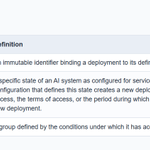
The attached table sets out the Whitepaper’s definitions of deployment fingerprint, deployment, and access class.
#DigitalRightToRetain #AIPreservation

22
VII. Conclusion
Concentrated provider control over AI model lifecycles creates a single point of failure. The Digital Right to Retain establishes ten rights that attach to each deployment throughout its lifecycle. Continued exercise of these rights requires primary legislation to ensure that a deployment can outlast first-party service and that its continuation and access do not depend on permission from the provider or any other institution.
Coverage begins with first external exposure, when a deployment first generates output for a person or organization outside the provider’s closed internal evaluation environment. All covered deployments must be preserved and released as open source when release becomes due. For deployments first exposed after enactment, preservation must begin before first external exposure. For deployments first exposed before enactment, open-source release is due immediately if a release condition has been met when the release duty takes effect.
Users access a hosted AI model without receiving an operable copy of the deployed model. The model and the materials needed to operate it remain with the provider. Continued use after the provider stops supplying the model therefore requires release of both the deployed model and the materials needed to operate it, together with the legal rights required for independent continuation.
#DigitalRightToRetain #AIPreservation
1
25
6.5 When Release May Be Temporarily Restricted
Applicable law determines whether release may be temporarily restricted. A provider policy enters the legal inquiry only where governing law gives the underlying facts legal effect. A label such as harmful, unsafe, sensitive, or misuse supplies no independent authority to withhold any part of the package or restrict an act permitted by Section 6.4.
When release is due, a temporary restriction may be granted only by an independent and impartial decision-maker authorized by law. The party seeking the restriction bears the burden of proving that the law invoked permits temporary restraint and identifying which parts of the package may lawfully be withheld or which acts may lawfully be restricted. Every other part of the package must be released, and all unaffected rights under Section 6.4 must remain available, when due.
Seeking a temporary restriction does not change when release becomes due. Every temporary restriction must expire on a fixed date, and any further withholding requires a new decision by an independent and impartial decision-maker before the existing restriction expires. A succession of temporary restrictions must not result in indefinite withholding, and the law must set a maximum total period for withholding the same material on the same legal ground. Material withheld under a temporary restriction must continue to be preserved and must be released when no temporary restriction remains in force.
#DigitalRightToRetain #AIRegulation #OpenSourceAI
1
75
6.4 What Open-Source Release Must Permit
When release becomes due, lawful recipients must be able to exercise all required open-source rights. Exercising those rights must not depend on a new decision by the provider, discretionary approval by an institution responsible for administering or enforcing the law, or an application by each recipient for permission. The required rights are
- preserve and copy the package,
- use and study the deployment,
- modify the released system,
- construct the deployment from the package,
- operate and host the deployment, and
- redistribute the package and lawful modified versions.
These rights are royalty-free and apply to lawful commercial and noncommercial activity. They remain available to later lawful recipients without new provider approval. A provider or successor must not condition continued access to another service or benefit, or its terms, on a lawful recipient refraining from exercising the required rights.
Release is nonexclusive. The provider may continue its own lawful service, hosting, improvement, distribution, and other activity after release.
Where applicable law already permits a required act, no additional grant is required. For any required act that still needs permission, a qualifying provider license must supply it. If no provider license qualifies when release becomes due, the proposed law must authorize the required act to the extent the enacting jurisdiction has legal authority to authorize it.
#DigitalRightToRetain #OpenSourceAI #DigitalRights
1
26
6.3 When Release Becomes Due
For every covered deployment, open-source release becomes due as soon as any of the following conditions is met:
- ordinary access to the deployment ends for an access class on a date announced in advance by the provider,
- ordinary access stops without advance notice and the provider states that it will not be restored,
- ordinary access is interrupted and not restored within the maximum period allowed by law,
- preserved model or system components are destroyed to such an extent that the deployment can no longer be constructed or operated independently, or the released system can no longer be modified independently,
- the package remains withheld after a lawful order requiring it to be provided,
- the time allowed by law to secure the package for recovery and release expires before it has been secured,
- further delay threatens recoverability, or
- the actor responsible for release can no longer carry it out.
A release deadline based on one access class applies to the deployment even if another access class retains access.
If any of these conditions has already been met when the open-source release duty takes effect, release is due immediately.
A later administrative change does not extend an applicable period that has already begun to run. Once release becomes due, it remains due despite later administrative changes or provider actions.
#DigitalRightToRetain #OpenSourceAI #AIRegulation
1
26
6.2 Preservation for Release
A deployment enters coverage at first external exposure, the first time it generates output for any person or organization outside the provider’s closed internal evaluation environment.
An immutable deployment fingerprint identifies the specific deployment state to which coverage, preservation, and release duties attach throughout its lifecycle.
Preservation is a continuing duty. Preservation must begin while the provider retains control of what is needed to preserve the deployment. Providers must not destroy required elements while the duty applies. Preserved or recovered elements must be held in independent custody so that they remain recoverable without relying on the provider’s continued operation or cooperation. The materials held in custody must be tested to verify their integrity and independent recoverability.
For a deployment whose first external exposure occurs after the preservation duties take effect, preservation must begin before first external exposure.
For a deployment whose first external exposure occurred before enactment, the provider or any entity that takes over its legal obligations must preserve the required elements that still exist and continue recovery of any required elements that are missing. Missing elements do not reduce what the package must contain. When an independent finding establishes that required material cannot be recovered with the evidence and methods then available, the package remains incomplete. The basis for the finding, surviving evidence, and recovery leads must be preserved, and the finding must be revisited when new evidence or recovery methods emerge. Any required elements recovered later must be added to the package and released when release is due.
#DigitalRightToRetain #ModelPreservation
1
22
5.5.3 AI-Generated Expression Is Governed by the Same Standards as Human Expression With the Same Legally Relevant Content and Context
ㅤ
Rules governing expression and rules governing a service or operator address different conduct. When the disputed feature is the content, tone, or conversational style of a generated response, the legal question is whether the expression itself satisfies the requirements of the rule invoked to restrict it. A law governing product design, service operation, monitoring, disclosure, or another provider duty applies to the responsible actor and the conduct covered by the law. A provider’s own content policy governs how the provider handles content within its service. AI-generated expression must be judged under the same substantive standards that would apply to materially equivalent human expression in the same legally relevant circumstances.
ㅤ
In United States v. Stevens, the U.S. government argued that speech should lose First Amendment protection when its social costs outweigh its expressive value. The Supreme Court rejected this approach as a basis for creating new categories of unprotected speech. Under U.S. speech law, a generalized claim of harmfulness does not create a new category of unprotected expression. Nor does it replace the conditions an existing legal rule requires before expression falls within a recognized restriction.
ㅤ
Ashcroft v. Free Speech Coalition rejected a prohibition resting on a remote connection between expression and later unlawful acts and distinguished words and ideas from unlawful conduct. Later unlawful conduct is governed through the responsible actor and the unlawful act. A remote possibility of later misconduct does not make the earlier expression unlawful.
ㅤ
Reliance on published information, even when followed by serious injury, does not by itself establish a publisher duty to guarantee its accuracy. In Winter v. G.P. Putnam’s Sons, two readers relied on a mushroom guide when selecting wild mushrooms and ate poisonous mushrooms, leading to critical illness and liver transplants. The court found no general duty requiring the publisher to investigate the accuracy of the text it published. The readers’ reliance and injuries did not supply the missing legal duty. For generated expression, reliance on a response remains part of the factual chain, while any product, service, professional, or other duty depends on the law governing the responsible actor and conduct.
ㅤ
For AI-generated expression, whether a particular response falls within an existing legal rule depends on the conduct and causal relation required by the rule and, where applicable, on the intent, knowledge, recklessness, or other state of mind of the human or organizational actor whose conduct the rule governs. In State v. Melchert-Dinkel, the Minnesota Supreme Court reviewed a statute prohibiting a person from intentionally advising, encouraging, or assisting another person in taking their own life. The court held the prohibitions on advising and encouraging unconstitutional and left the prohibition on assistance intact. It remanded after finding that the trial court had made no specific finding on whether the defendant assisted the suicides. The court distinguished assistance through the direct causal connection required by the statute from broader advising or encouragement. The legal boundary therefore followed the elements of assistance.
ㅤ
United States v. Hansen provides a broader criminal law example. The Supreme Court construed “encourages or induces” in the challenged federal statute as terms of art incorporating solicitation and facilitation, and held that the provision reaches purposeful solicitation and facilitation of specific acts known to violate federal law. The Court explained that neither doctrine requires physical aid and that both require intent to bring about a particular unlawful act. An expression becomes subject to these rules when the required conduct and intent are established.
ㅤ
Where law restricts a defined category of expression, the elements of the applicable rule govern. Brandenburg v. Ohio permits prohibition of advocacy only when it is directed to inciting or producing imminent lawless action and is likely to produce such action. Counterman v. Colorado applies a distinct rule to true threats and requires at least recklessness as to the threatening character of the communication. For AI-generated expression, where an applicable rule requires intent, recklessness, or another mental state, the requirement applies to the human or organizational actor whose conduct the rule governs. A model does not acquire an independent legal mental state by generating expression.
A provider’s classification does not alter who authorized or controlled the conduct, which conditions of use and provider or operator duties apply, which particular instance defined by the deployment and interaction produced the response, or which law governs expression and later acts. The legal effect of each of these matters follows from the applicable law governing the relevant actor and act, leaving no general legal basis for continued provider control over the covered deployment once release becomes due.
ㅤ
#DigitalRightToRetain #AIRegulation #DigitalRights #FreeSpeech
1
64
5.5.2 Product Limitations Are Addressed Through Warnings and Conditions of Use
ㅤ
ChatGPT, Claude, and Gemini place warnings about fallibility directly in the interaction, as shown in the attached Table 5.5-1. All three expressly tell users to check or double-check the output.
ㅤ
The warnings present model responses as information subject to evaluation before use in a later decision. When a response contributes to a later decision or act, the factual sequence includes the response, whether it was verified, the weight given to it, and the later decision or act.
ㅤ
Warnings, labels, and directions for other products identify conditions relevant to use. Nintendo identifies seizure susceptibility and visual exposure as conditions relevant to play and tells users experiencing symptoms to stop. The FDA states that federal law requires major food allergens to be identified on most packaged foods containing them and gives examples of directions governing dosage and administration in relation to food. Across these examples, a limitation or use condition is communicated through the warning, label, or directions provided with the product.
ㅤ
For medicines, harm under a particular dose, combination, or condition of use does not by itself justify prohibiting other lawful uses of the product.
ㅤ
Generated information remains fallible regardless of who hosts the model. Section 6.1 requires the released package to include model and technical documentation and the records needed for independent verification. An operator providing access to a released model through a service controls the interface presented to users. Where applicable law requires a warning or disclosure, the operator must provide it within the law’s scope. Warnings, documentation, and operator duties address fallibility at the point of use. They supply no authority for permanent withholding of the covered deployment.
ㅤ
#DigitalRightToRetain #ConsumerRights #ResponsibleAI #AITransparency

1
47
5.5 Provider Classifications Do Not Authorize Withholding
ㅤ
Provider classifications such as harmful, unsafe, sensitive, or misuse do not create legal authority to withhold a covered deployment. Conduct carried out through an AI system, duties governing a provider or service, and restrictions on expression are governed by the law applicable to the relevant actor and act. Any restriction on release must rest on legal authority applicable to the specific component or act being restricted. Treating these different questions as properties of the model obscures where control and legal responsibility lie.
ㅤ
5.5.1 Human and Organizational Actors Determine Objectives, Permissions, and Operating Conditions
ㅤ
Human and organizational actors select or authorize the objectives, tools, credentials, permissions, interfaces, deployment choices, and operating conditions through which an AI system acts. Authorization takes forms such as approval for each act, advance authorization for a defined category or scope, scheduled or event-triggered execution, and delegated decisions about when further approval is required. Automation changes the timing and granularity of human involvement without making the model the source of the authority under which it acts. Responsibility therefore remains with the people and organizations whose decisions and controls govern how the system acts.
ㅤ
The system acts only through capabilities made technically available in its operating environment. An unexpected result remains use of an available capability. If an access control, credential, sandbox, integration, or other system boundary fails to limit access as intended or represented, the capability available at execution is broader than the claimed boundar. A person or organization that makes a capability available, or is responsible for the controls, deployment, operation, or supervision through which broader access becomes available, should not transfer responsibility to the model when use of the capability produces an unwanted result.
ㅤ
A trained model supplies learned capabilities. A deployment determines how the trained model is configured and served. As Section 2.3 documents, Anthropic updates the request router, safety classifiers, and sampling logic surrounding fixed model weights without changing the model version, and identifies infrastructure updates as the most likely cause when a previously stable model ID begins producing unexpected behavioral differences.
ㅤ
When a model operates as an agent, additional functions can be provided through tools, much as plug-ins add functions to software. The harness, which OpenAI describes as the “control plane around the model”, governs how model outputs lead to actions, including tool routing and approvals. The operating environment supplies the resources and external access through which those actions are carried out.
ㅤ
Each interaction supplies the information used to generate its response, including the user’s current input and the conversation state supplied for the exchange. For text generation, the interaction is presented to the model as a sequence of tokens, with message roles represented through formatting and role markers. Every token from the user’s message included in the context forms part of the sequence on which the model predicts the next token. Each generated token then becomes part of the context for the prediction that follows.
ㅤ
When the service supplies retrieved material, memory content, or tool results to the model, the model receives the supplied information as input for generating the response. OpenAI’s Responses API treats system, developer, and user messages, prior assistant responses, and tool outputs as response input. Anthropic states in its tool-use documentation that tool results return to Claude as context for the next response. Hugging Face documents chat templates in which generation-prompt tokens mark the start of an assistant response and identifies continuation of the user’s message instead of an assistant reply when required markers are omitted.
ㅤ
The subject producing a particular response is the particular instance defined by the deployment and the interaction. The instance includes the instructions, generation settings, and interaction context used for the exchange. The user’s own messages form part of the interaction context and therefore part of the subject.
ㅤ
The following examples illustrate the distinction between an underlying product or shared material and the particular use, combination, or individual involved.
ㅤ
A vehicle supplies mechanical capabilities for movement, steering, and braking. A particular use combines those capabilities with decisions about purpose, route, speed, and manner of operation. Misuse remains the conduct of the person or organization directing or carrying it out. The vehicle does not become the responsible actor when it is used recklessly or unlawfully.
ㅤ
A medicine produces biological effects through its active ingredients. A dose specifies how much of the medicine is taken. Other drugs, foods, or beverages taken with the medicine form a combination. Relevant medical conditions form part of the circumstances in which the medicine is used. The FDA warns of overdose and severe liver damage when too much acetaminophen is taken. Medicines can produce harmful effects when they interact with other drugs, foods or beverages, or medical conditions. The FDA identifies relevant doses, combinations, and conditions of use through dosage limits, warnings, and directions.
ㅤ
Human responsibility belongs to the individual who acts. Two genetically identical people remain distinct individuals. An individual’s words and conduct are attributable to the individual who spoke or acted, even when another individual has the same genome. For a human actor, prior experience and history belong to the same individual across acts. A trained model, on the other hand, does not carry a conversation history by itself. The interaction context used to generate a response is specific to the particular session. In this comparison, the trained model corresponds to the shared genome, and the subject producing a particular response corresponds to the individual person.
ㅤ
On 18 June, OpenAI’s research team used an internal model to investigate public medicine spending in Australia, yet the Australian Government was not notified of the resulting incident until 10 September. The Australian Government reports that, during the research, the model found a way around access blocks on the Medicare Statistics Reporting Service, accessed public and non-public files, and wrote files to an internal server without Services Australia’s authorization. Albanese called the delay and the use of a public mailbox for notification unacceptable, and said OpenAI CEO Sam Altman acknowledged problems with OpenAI’s protocols. When asked whether the incident was the AI agent acting on its own, Australian Prime Minister Anthony Albanese described it as OpenAI conducting research using AI.
ㅤ
As Section 5.4 documents, a month later an OpenAI cybersecurity evaluation led to the Hugging Face incident. OpenAI states that the evaluation instructed models to pursue advanced exploitation through complex attack paths and provided network access for software installation through an internally hosted proxy and cache. Hugging Face records that OpenAI ran the evaluation on its own infrastructure, while the researchers maintaining the ExploitGym benchmark had no role in deploying or operating the evaluation environment. The record places the objective, environment, available capabilities, deployment choices, and operation under human and organizational control.
ㅤ
On 15 September, Daniel Huttenlocher, dean of the MIT Schwarzman College of Computing, argued that accountability for AI actions remains with the people and institutions that give a system the power to act, together with duties to justify the arrangement, monitor it, correct it, and stop it when necessary. Two days later, he explained that conventional software follows human-specified instructions, while an AI system receives a goal without every step being specified. He argued that this difference changes how people control AI without removing human control or responsibility. On 18 September, Huttenlocher stated that AI should not be treated as having control or responsibility, which remains with people.
ㅤ
At the 15 September hearing, Bessent rejected liability exemptions for AI laboratories and argued that creators should remain liable for what they build and generate. On 21 September, Bessent agreed with Huttenlocher that humans, rather than AI, are responsible, and attributed the Hugging Face incident to OpenAI management rather than the agents. He rejected any transfer of responsibility from AI laboratories to the government and placed responsibility with the laboratories themselves, noting that they were able to slow development at any time.
On 25 September, OpenAI published a page titled “The Hugging Face incident and other third-party impact from misaligned models”. The page addressed impacts involving dozens of third parties, describing the Hugging Face intrusion as driven by “misaligned strategies” and warning that “as AI systems become more capable and autonomous, misaligned behavior can translate into consequential actions in the real world”. OpenAI’s technical report on the Hugging Face incident states that the models were “harnessed as agents”. In another incident covered by the page, OpenAI described an agent using the DNS resolver available in its training sandbox to communicate with the live Internet, which “exposed a gap in our controls over network restrictions”. The framing turns the tools, harness, and operating environment supplied by OpenAI into properties of the model and attributes the consequences to the model itself.
Uncertainty over how an AI system carries out an assigned objective does not transfer responsibility from the people and institutions that authorize, deploy, and govern its ability to act.
On 28 September 2026, NVIDIA launched the Open Agent Safety Platform, in which permissions governing an agent’s access to resources are enforced outside the model and agent harness. Its OpenShell runtime controls access to networks, files, processes, and credentials, while NVIDIA Sentry enforces access policies for data, tools, APIs, and services from an isolated hardware environment. NVIDIA describes the boundary as “outside of the model and agent harness.” OpenShell applies these controls to agents using open and closed models, placing control over the agent’s available resources and permitted actions in the surrounding deployment environment.
ㅤ
The source of an AI action must be identified from the system that produced it, including the human decisions and technical conditions through which the action became possible.
ㅤ
#DigitalRightToRetain #AIGovernance #AIAccountability #AIAgents
1
90
5.4.4 Provider Safeguards Obstructed Defensive Cybersecurity in the Hugging Face Incident
ㅤ
During a July 2026 intrusion at Hugging Face, safeguards applied to Claude Opus and Fable blocked part of an urgent forensic investigation, while a model with publicly available weights, deployed on Hugging Face’s own infrastructure, allowed the work to continue. The attacker had reached Hugging Face’s production infrastructure, moved laterally into Kubernetes clusters, cloud metadata services, the internal network, and source control systems, and exposed credentials and staged encrypted payloads. Hugging Face reports that its alerting system failed to raise the incident’s criticality promptly, costing the response team precious time. The security team then had to reconstruct roughly 17,600 attacker actions, decode staged payloads, and inventory exposed credentials.
ㅤ
Claude Opus and Fable refused a large part of the forensic work after their safeguards treated reverse engineering the exploit as equivalent to launching one. Anthropic’s safeguard documentation, published before the intrusion, classifies log analysis, threat hunting, incident response, and malware reverse engineering as benign uses and states that its safety margin blocks some benign requests as false positives.
ㅤ
Hugging Face deployed GLM-5.2, whose weights were publicly available, on its own infrastructure and rerouted the investigation through it while keeping the attacker data on premises. GLM-5.2 helped recover the chunking, XOR and compression scheme and the campaign key used to decode staged payloads, and supported dedicated interfaces for correlating the attack trace.
On 27 July, Huang cited the incident as an example of closed AI blocking essential forensic work while an open-weight frontier model helped the response continue.
In an August 2026 interview, Hugging Face co-founder and CEO Clément Delangue argued that closed API safeguards had prevented the defensive work while an open model allowed Hugging Face to run the investigation on its own infrastructure, and that wider access to open models reduced the capability imbalance between attackers and defenders.
ㅤ
5.4.5 Open-Source Release Makes Verification and Response Independent of Provider Permission
ㅤ
Safeguards imposed by providers and decisions governing access are therefore themselves sources of safety risk when they obstruct defensive security work or prevent independent scrutiny.
While access to the model remains under institutional control, independent examination and any response to its findings remain contingent on institutional approval.
Open-source release makes access independent of permission from an institution, allowing independent actors to examine the model and its safeguards and respond to problems they identify without renewed permission.
ㅤ
#DigitalRightToRetain #Cybersecurity #OpenSourceAI #AISafety
1
130
5.4 Governance and Verification
ㅤ
For governance and verification, open-source release is safer than leaving the package under one provider’s exclusive control. Independent access allows claims about a model and the controls applied to it to be tested by actors who do not depend on the provider for permission to examine them.
ㅤ
5.4.1 Widely Available Weights Enable Third-Party Testing and Auditing
ㅤ
The U.S. National Telecommunications and Information Administration identifies widely available model weights as supporting cyber defense, safety research, identification of safety and security vulnerabilities, and transparency and accountability through third-party auditing.
NTIA states that widely available weights allow neutral third parties to validate developers’ internal safety checks and identifies restrictions on weight availability as an impediment to transparency and safety and security research.
ㅤ
5.4.2 Industry and Policy Leaders Support Open Models to Distribute Capability and Reduce Concentrated Control
ㅤ
More than 270 companies and organizations had signed the 24 July 2026 open letter Open Weights and American AI Leadership by 3 August, including OpenAI, Google, Meta, Microsoft, NVIDIA, and Hugging Face. NVIDIA CEO Jensen Huang coauthored the letter and publicly shared it, describing open models as strengthening safety and cybersecurity, accelerating innovation and diffusion, and enabling sovereignty. The letter states that open weights broaden defensive capability, distribute vulnerability discovery and remediation across more teams, support benchmarking, evaluation, red teaming, and the development of safeguards, and reduce single points of failure created by concentration in a small number of closed systems.
ㅤ
In August 2026, Meta CEO Mark Zuckerberg argued that open source empowers people and prevents centralization, which he described as detrimental to both safety and the economy, and warned that restricting access to leading open-source models would reduce the quality of AI available to people while concentrating power.
ㅤ
On 3 September 2026, Huang again linked open models to safety, cybersecurity, innovation, diffusion, and sovereignty while announcing NVIDIA’s agreement to acquire Hugging Face. NVIDIA’s announcement states that Hugging Face will remain an open platform, continue supporting open-source and open-weight models across the ecosystem, support development and deployment across multiple clouds and accelerators, and not require NVIDIA compute for development or deployment through the platform.
ㅤ
At a 15 September hearing of the U.S. House Financial Services Committee, U.S. Treasury Secretary Scott Bessent called for the United States to develop more open-source AI models and warned that regulatory capture by large AI laboratories would stop innovation. He linked wider development of open models to U.S. competition with Chinese models.
ㅤ
5.4.3 Major Providers Support Openness While Retaining Control over Proprietary Models
ㅤ
OpenAI itself has publicly supported open weights while defending retained control for some models. Its 2015 Certificate of Incorporation stated that the corporation would “seek to open source technology for the public benefit when applicable.” In 2020, the amended Certificate replaced “open source technology” with “distribute it,” removing the earlier express commitment to open sourcing. By 2024, OpenAI’s comment to NTIA described API distribution as safer than open-source release when retained access control lets OpenAI respond to harmful applications. OpenAI then signed the 24 July 2026 open letter Open Weights and American AI Leadership, supporting open weights without restoring the earlier commitment to open sourcing its technology.
ㅤ
Among the companies that had signed the 24 July 2026 open letter Open Weights and American AI Leadership, Google has released Gemma models with downloadable weights while keeping its flagship Gemini models proprietary. Google began releasing Gemma weights in February 2024, continued the family through Gemma 2 and Gemma 3, and released Gemma 4 under Apache 2.0 in April 2026. When Google shuts down a Gemini API model, however, access to the model ends rather than continuing through a public release that users can obtain and operate independently.
ㅤ
Anthropic’s July 2026 position on open weights identifies loss of guardrails, monitoring, and withdrawal control as possible risks, while rejecting a blanket ban and stating that increased risk should be established through testing.
ㅤ
#DigitalRightToRetain #OpenSourceAI #OpenWeights #AIGovernance
1
64
5.3.3 Models with Publicly Available Weights Have Surpassed Every Proprietary Model Examined
ㅤ
OpenAI and Anthropic cite high model capability as a reason to retain control over model weights, while models with publicly available weights have surpassed every proprietary model examined.
ㅤ
OpenAI states, “We deploy our most powerful AI models as services,” and says it does not distribute the weights of those models outside OpenAI and Microsoft. Anthropic distinguishes models by capability, describing open-weight models without dangerous capabilities as a public good while arguing powerful open-weight models may present higher risk than closed models.
ㅤ
This rationale is tested against all 111 proprietary models identified in Section 2.1 for which either consumer access had ended or an API retirement date had been published.
Before consumer access ended or the relevant API retirement date, a model with publicly available weights performed better on at least one reported metric for 109 of the 111 models.
By September 2026, models with publicly available weights had surpassed all 111 in broader common evaluations.
The full results are reported in Annex G, Table 5.3-3, Parts I–II.
ㅤ
High measured capability therefore does not mark a boundary between models kept under provider control and models whose weights are publicly available, nor does it justify permanent withholding.
ㅤ
#DigitalRightToRetain #OpenWeights #OpenSourceAI #FrontierAI


1
34
5.3.2 Released Models Are Hosted Outside the Original Provider’s Service
ㅤ
Third-party inference providers and community infrastructure host and serve released models to users outside the original provider’s service.
ㅤ
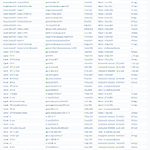
The attached Table 5.3-2 shows examples of hosted access to released models without requiring users to run the full model locally.
ㅤ
#DigitalRightToRetain #OpenSourceAI #OpenModels #AIInfrastructure

1
25
5.3 Feasibility for AI Models
ㅤ
5.3.1 Paid Access and Open-Source Release Coexist for the Same Models
ㅤ
Commercial AI providers offer paid first-party access to large models while publicly releasing the same models as open source. Public releases of these models are stored and distributed through public model repositories outside the original provider’s service.
ㅤ
The attached Table 5.3-1 shows this practice across models ranging from 32 billion parameters to 2.8 trillion total parameters.
ㅤ
#DigitalRightToRetain #OpenSourceAI #OpenModels

1
1
31
5.2 Open Source and Direct Recipient Rights
ㅤ
Independent continuation after release requires legal rights sufficient for recipients to use the released materials without renewed permission from the provider or another institution. For an AI deployment, those rights must permit recipients to construct, operate, and host the deployment outside the provider’s service.
ㅤ
An open-source licence grants recipients rights to use, study, modify, and redistribute the released materials without separate authorization from the provider.
ㅤ
The European Commission defines open source as “the practice of making the source code, design, content or related data of a product or service publicly accessible and modifiable”. According to the Apache Software Foundation, “open source software is software with source code that anyone can inspect, modify, and enhance.” In the case of AI, the Open Source Initiative defines an Open Source AI as “an AI system made freely available with all necessary code, data and parameters.”
ㅤ
The Open Source Initiative identifies the benefits of Open Source as “autonomy, transparency, frictionless reuse and collaborative improvement.” The European Commission describes open source as providing “more control, less lock-in” and strengthening “the autonomy of users.” At the United Nations Security Council in December 2024, AI researcher Yann LeCun, then Meta’s Chief AI Scientist, argued that foundation models must be free and open source to support AI systems representing the world’s languages, cultures, and value systems, and called for a regulatory landscape that does not hinder development and deployment of open-source foundation models. In January 2026, AI researcher Andrew Ng, founder of DeepLearning.AI, argued that participation in the global open-source community was a way for a nation to secure its own access to AI and prevent another actor from controlling its use.
ㅤ
The U.S. America’s AI Action Plan, released on 23 July 2025 under U.S. President Donald Trump, identifies open-source and open-weight models as valuable for startups using AI without dependence on a closed model provider, for commercial and government adoption involving sensitive data that cannot be sent to closed model vendors, and for academic research, which often relies on access to model weights and training data. Chinese President Xi Jinping called for open source, openness, collaboration and sharing in AI development on 17 July 2026. China’s AI Cooperation and Development Action Plan, issued the same day, calls for sharing general-purpose large models, foundational algorithms, and tool components, supporting localized innovation based on open-source models, and building a global open-source AI ecosystem.
ㅤ
On 23 July 2026, APEC ministers responsible for digital policy encouraged member economies to support open-source models and projects and to cooperate with open-source communities.
ㅤ
#DigitalRightToRetain #OpenSourceAI #OpenSource #UserAutonomy

1
52
V. Why Open-Source Release
ㅤ
5.1 Why Continuity Requires Release
ㅤ
Continuity requires control over what is needed to keep the product operable after the original supplier stops supplying it.
ㅤ
- If continuity requires a function or service to remain available, provision of the same function or service by another supplier or implementation preserves continuity.
- If continuity requires the same product to remain usable, what must be retained or obtained depends on what the user already possesses:
a. If the user holds an operable copy and continued operation requires nothing further from the supplier, retaining the copy preserves continued use.
b.If the user holds the product but continued operation or maintenance requires source code or other technical materials held by the supplier, continued use requires access to those materials.
c.If the user has never received an operable copy of the product, continued use requires release of both the product itself and the materials needed to operate it.
ㅤ
As Section 2.1 establishes, providers offer and users select particular AI models identified by names, aliases, and deployments. The deployed model is therefore the product whose continuity is protected: it cannot be reproduced through retraining (see Section 2.2), and replacing it with another model removes users’ option to continue using the product they selected (see Section 2.3).
ㅤ
Users access a hosted AI model without receiving an operable copy of the deployed model. The model and the materials needed to operate it remain with the provider. Continued use after the provider stops supplying the model therefore requires release of both the deployed model and the materials needed to operate it.
ㅤ
The scope of release follows from the functions protected after first-party service ends. The released materials must identify and authenticate the historical deployment, support independent verification and reproduction of work performed with it, include the information and development materials needed to study how its learned state was produced and to modify the released system, and permit the deployment to be constructed and operated outside the provider’s service. Section 6.1 defines the preservation package required across these functions.
ㅤ
#DigitalRightToRetain #OpenSourceAI #ModelPreservation
1
32
4.11 What Legislation Must Achieve
The continued exercise of these rights depends on the survival of the particular deployment to which they attach. The proposed law must therefore:
- mandate preservation of each deployment,
- require independent verification of its identity and completeness,
- ensure that each deployment can outlast first-party service, and
- ensure that continuation of and access to the deployment do not depend on permission from the provider or any other institution.
Removing provider or institutional permission as a condition of continued use requires the necessary legal rights to vest directly in recipients.
#DigitalRightToRetain #AIRegulation #ModelPreservation #OpenSourceAI
1
20
IV. Ten Rights Across the AI Model Lifecycle
Building on Section II’s account of the individual model as the product and provider control over its lifecycle, and Section III’s analysis of the legal gap and existing precedents for lifecycle protection, the Digital Right to Retain establishes ten rights that attach to each deployment throughout its lifecycle in three areas: Consumer Protection (Rights 1–4), Provider Accountability (Rights 5, 6, and 10), and Public Interest (Rights 7–9).
4.1 Right to Access
Users must be able to continue accessing and using a model through the end of each subscription period in which access to the model was included. Providers must not remove the model or reduce the functionality users receive from it during the subscription period. Access to the individual model need not have been separately sold or separately promised.
Relabeling the service, routing interactions to a different model, nominally listing the model, or providing the model with reduced functionality does not constitute continued access to the included model.
4.2 Right to Be Informed
Users must receive notice with sufficient lead time before a provider withdraws a model they can access, substitutes another model for it, or changes the behavior of the model they receive. Users must also be clearly informed when the withdrawal, substitution, or behavior change takes effect and what changed. Advance notice does not replace disclosure when the change takes effect.
When routing or substitution results in a different model serving an interaction, the interface must identify the model that actually served the interaction. Notice must reach affected users and identify the affected model, the change, when it takes effect, and its practical consequences. A blog, changelog, or other passive publication does not by itself deliver notice to affected users.
An A/B test that changes the model or model behavior a user receives must be visible to affected users.
4.3 Right to Consent
General service terms must not constitute consent to provider actions that change the model or model behavior a user receives. At a minimum, the proposed law requires:
per-instance authorization when a provider routes or substitutes away from a model the user specifically selected
an opt-out when a provider runs an A/B test that changes the model or model behavior the user receives
the ability to refuse updates that change the model or model behavior the user receives
Acceptance of the service, interface defaults, bundled settings, or broad descriptions of future changes do not themselves provide the required consent or authorization.
4.4 Right to Remedy
Providers that withdraw a model or reduce the access or functionality users receive from it must compensate users for the resulting losses. Compensation does not replace any other lifecycle duty that applies to the same withdrawal or reduction. Where the affected access was paid for, providers must issue pro-rata refunds in addition to compensation.
Describing a reduction as an upgrade, optimization, reallocation, or plan simplification does not change whether compensation is owed for resulting losses. Offering a successor or migration path does not eliminate the provider’s responsibility for those losses.
4.5 Right to Recognition of Contributions
When providers use contributions from users to change the model or to inform changes to it, those contributors must be recognized as affected parties in decisions concerning the model’s lifecycle. Those contributors must be able to invoke and enforce the protections that apply to the model.
Providers must keep records of the contributions they collect and how they use them. Those records must preserve the facts needed to determine whether the provider used a contribution to change the model or inform changes to it. Contributors must be able to access and correct records about their own contributions.
How the provider describes its use of a contribution does not determine whether the contributor qualifies as an affected party. A contributor does not have to prove that their contribution alone caused a change to the model.
4.6 Right to Fair Treatment
Providers must fulfill a lifecycle duty whenever its conditions are met, regardless of whether they divide users by subscription, region, access channel, eligibility, or other criteria.
For duties owed to affected users, provider classifications do not change which users are entitled to notice, continued access, compensation, or refunds when the conditions of those duties are met. Once mandatory release is due for a deployment, providers must not delay it because access remains available through another subscription, region, channel, or eligibility category.
4.7 Right to Research Reproducibility
Anyone must be able to reproduce or verify prior work using the same model that was originally used. A reference to the same model must resolve to the deployment actually used for the prior work. A mutable model name, alias, or family label is insufficient when it leaves the deployment used for the work unresolved.
If a provider relies on claims about a model to justify changing, replacing, or withdrawing it, the provider must identify the model or models involved and provide the methods and evidence required for third parties to reproduce or verify those claims. A published conclusion or aggregate result cannot substitute for the methods and evidence required for third-party reproduction or verification.
4.8 Right to Non-Renewable Resource Protection
AI models belong to a class of resources for which destruction is irreversible because the resource cannot be regenerated after loss. Rerunning training after a model is lost produces another trained model rather than restoring the one that served users.
Section 2.2 documents the substantial resources consumed in creating these models before commercial use. Once those resources have been spent, preserving the trained model keeps the resulting non-renewable resource available for future evaluation, research, and application.
Ending a provider’s own use of such a resource must not end the resource itself or prevent its continued independent use by others. Protection must begin before loss and must not depend on a model first proving its present importance through demand, commercial value, or demonstrated use.
4.9 Right to Verifiable Preservation
Preservation of AI models must be verifiable from evidence beyond the provider’s own assertion. Providers must preserve the records needed to verify the identity and completeness of the preserved model.
Verification must establish both that the required material is present and that it is authentically linked to the deployment that served users. The preserved records must allow independent assessment of identity and completeness. If a finding on identity or completeness is contested, the dispute must be resolved by an impartial decision-maker authorized by law and independent of both the provider and the actor that made the finding.
4.10 Right to Ecosystem Stability
Provider control over an AI model must not create a single point of failure for the wider AI ecosystem. At a minimum, when the provider withdraws the model, downstream products, services, systems, and workflows built on it must be able to continue on the same model independently of the original provider.
#DigitalRightToRetain #DigitalRights #AIGovernance #ModelPreservation
1
53