


"VeOmni: Turning a Multi-Modal Training Framework into a Recipe Library"
VeOmni isn’t trying to solve the question of 'can we train a multi-modal model?' but rather the hassle of 'switching modalities means swapping the entire training stack.'
It brings text, vision, audio, and video pretraining and finetuning into the same framework, using FSDP2 as the training foundation, with DeepSpeed Ulysses for sequence parallelism, expert parallelism for large MoEs, GroupGemm kernels, and Torch Distributed Checkpoint for checkpoints; on the front end, it sticks to being trainer-free: training scripts are written linearly with all logic exposed to users, and comes with a basic trainer and RL trainer as backups.
The more interesting part is that it breaks 'scale' into reusable recipes: dynamic batching, Omnidata preprocessing, HuggingFace Transformers compatibility, and models like DeepSeek, Llama3, Qwen3, Qwen3-VL, Qwen3-MoE, GPT-OSS, Qwen2.5-Omni, Wan, MiniMax H3, HunyuanVideo 1.5, LTX-2.3 can all be trained following the configuration.
It also covers hardware broadly: NVIDIA GPUs, AMD ROCm, Ascend NPUs, Cambricon MLUs are all supported, with wandb for experiment tracking.
It’s important to note that what it provides is a training foundation, not an out-of-the-box product; you still need to prepare model weights, data cleaning, and evaluation criteria, and there’s no ready-made solution for aligning across modalities.
For anyone looking to extend a training script from pure text to images, video, and audio, this project really offers a way to do it with minimal code changes: first, bring in the modalities, then turn the recipes into your own.
github.com/ByteDance-Seed/Ve…

1
43
"motlab: Writing Video into Code"
MotLab doesn't want to solve "AI generating videos," but "writing videos into code." It doesn't touch any AI images or video models; the images come only from reference materials you provide (logos, screenshots, stock clips, fonts, music, voiceovers) and what the code draws.
Each scene is a canvas page, and a renderAt(t) function determines what the frame at time t looks like; Behind it are WebCodes encoding frame-by-frame in headless Chrome, Mediabunny decoding the material within the page, ffmpeg only responsible for splicing and mixing, and the frontend is a viewer that can step and scale the timeline frame by frame. The real page runs in iframes, and audio goes via WebAudio.
Operationally, it's an assembly line: the project is a project.json; the scene is a regular HTML page; references are placed in a folder; the agent writes out all the scenes; you click on a frame, drag a box, circle it for a while; write notes into the selection.json; the agent changes items by number; satisfactory versions are kept side by side and will not be overwritten by the next version.
Export supports 720p, 1080p, 1440p, and 4K, rendering three scenes in parallel. A 4K project with 12 short scenes can be compressed from 93 seconds to 53 seconds, and the qp is set to 22 in the project.json, so the file can still be reduced by about 30%. The second skill is called motlab-assets, which uses the same approach to collect reusable asset packages: icons, illustrations, 2D characters with skeleton, transitions, 3D objects and textures, and outputs transparent PNG plus SVG, or GLB, FBX, and OBJ with PBR maps.
Boundary is also very straightforward: it doesn't generate images or create ideas for you; Machines without GPUs render several times slower, which hasn't been fully proven; macOS hasn't run yet, and there's no ready-made way to review on the same Wi-Fi on a phone—you need your own server first.
For those who want to turn storyboards from "describing for a long time" to "changing a line of code," this project truly offers a practical path: first turn videos into code, then turn video editing into code.
Source: GitHub | "staryone/motlab" | github.com/staryone/motlab | Author: staryone | 2026-11-16

1
3
113
"PlayCraft: Let the Agent Play First, Then Modify the Game"
What PlayCraft aims to tackle isn’t 'can we generate playable games,' but 'can the generated games make people actually want to keep playing.'
Playable doesn’t equal engaging; mastery is a key source of involvement, but in the past, designing around it relied on humans repeatedly playing and tweaking parameters.
It hands this task over to a visual agent: watch the screen, press controls, chase game objectives repeatedly, retain memory across sessions, and at the end of each game report progress, outcomes, decisions, and reflections. Then a creation agent takes over, estimating player skill, predicting performance at different proficiency levels, comparing with target learning progress, diagnosing gaps, and turning those gaps into decision and action spaces that can be improved.
Playing and creating alternate in a loop, starting from an initial game.
Evaluation uses new levels, three agent setups, and two metrics: learning gain and learning slope; in most games, gains are higher and slopes steeper, with the macro averages of both metrics surpassing the baseline in each agent setup.
However, all its judgments come from the agent’s play reports. Whether human players’ feel, pacing, and fun actually improve isn’t addressed; also, it modifies existing games rather than building one from scratch.
The novelty is turning the 'mastery curve' from a post-play feeling into a measurable design target. The catch is that this curve still needs to hold up with real humans.
Source: arXiv.org | "PlayCraft: Designing Engaging Games from Agent Play Experience" | arxiv.org/abs/2611.26624 | Weihao Cheng | 2026/11/19


1
2
79
"Seedance Realman: Turning a Story into a Live-Life Short Drama"
What it aims to solve is not "how to write more prompts," but "why is it that even when written full of cinematic and high-end looks, the models still show cartoon faces and plastic-like game visuals?"
This Skill covers the entire chain: rewriting articles, novels, and story outlines into short scripts, then detailing episodes, dialogue, and shots, then sketching life-up prompts for characters, scenes, and props. First, create reference images to lock in the image, and finally write seedance video prompts based on six pillars of realism, following the "text→ resources→ visual → editing" to the final product.
The so-called sense of being real is broken down into six items that can be directly copied into prompts: photographic media for film, grain, and light positions; skin and materials for pores, blemishes, and stray hairs; spatial anchoring for distance and position; physical causality for force, force, and no instant movement; micro-expressions for breathing with relaxed arms and forward-leaning bodies to represent "he was shocked," and synchronized voice matching lines word by word to lip movement.
Behind it is the Dream CLI's dreamina-canvas for image and video production, with default Seedream 5.5 raw images and Seedance 2.5 Flash for raw videos; The front end is a SKILL.md operation manual read to AI, plus a "Realism Guide to Realistic Filmmaking" as the sole source of fact. The sequence first produces asset images, then generates videos; skipping the "capital" step means characters change faces and scenes drift; The warehouse even holds cases from zero to finished films, which Feynman solved on the spot at Princeton using integral numbers to solve the integral puzzle, 5 episodes × 15 seconds per scene.
Without installing the Dream CLI, this skill can still write scripts and prompts, but it can't generate images or videos; Before generation, it uses the free quote interface to calculate how many points will be spent for this batch, reports it to you for confirmation, and then runs it. Fifteen seconds at 480p takes about 105 points.
For those who want to transform a story from "readable" to "film-making," this project indeed offers a viable path: first lock in the image, then bring the visuals to life.
Source: GitHub | "liangdabiao/seedance-storyboard-generator-realman"
github.com/liangdabiao/seeda…

"Robotics: Plugging Agents into a Robot's Real-Time Loop"
What it wants to solve isn't 'just make it work in simulation,' but 'how to take the same controller from MuJoCo to a real robot.'
This plugin from Google DeepMind plugs cutting-edge spatial reasoning, multimodal perception, and code generation directly into a robot's real-time loop: the agent writes the controller, tests it in MuJoCo, then runs the exact same code on a real robotic arm; or you can just keep it in simulation without touching any hardware. Behind the scenes are seven MuJoCo API skills covering mujoco-python, mujoco-spec-editing, mujoco-rendering, mujoco-accelerated, mujoco-parity, mujoco-studio, and mujoco-gui; the frontend is hooked up to Google Antigravity, using Gemini's perception model to observe the scene.
The workflow is compressed into a short loop: set it up, observe the environment, plan, act, and verify. Examples include the I2RT YAM Pro moving cookies on a sorting line, LeRobot SO-101 packing groceries on a tabletop, and a dual Franka Research 3 setup making coffee—all object movements are driven by the robot's contact, and it can even replicate your workspace from a few photos.
The barrier to entry is clear too: on the real-robot side, moving arms can hurt people or damage equipment, so someone has to be present, clear the workspace, and reach the emergency shutdown switch; safety is the user's responsibility. To tweak Gemini perception, you also need your own GEMINI_API_KEY prepared.
This makes it feel less like a typical 'robot SDK wrapper' and more like a workbench for quickly pushing ideas onto hardware: first get the closed loop running in simulation, then let the same code drop onto a real robot.
Source: GitHub | "google-deepmind/robotics-antigravity-plugin" | google-deepmind | 2026-11-16
github.com/google-deepmind/r…

1
102
"stick-scene: Turn product descriptions into a stick-figure scene"
stick-scene isn’t about 'what illustration should go on the landing page'; it’s about 'how to make people instantly get what the product does.'
It acts as an agent Skill: type /stick-scene plus what you want to show, and it reads your project, first suggests two or three ideas for you to pick from, then gets to work drawing, frame by frame checking if any elements overlap or get cut off, and finally plugs it into your page. The examples already have ready-made answers: leave a comment on a line of code, wait for the agent to fix it and nod, pull a lever to fire up a database, feed YAML in and shake out JSON, then submit the workflow down the CI pipeline.
What’s even cooler is its scale: each scene is just a canvas, zero dependencies, breathing and looking around when idle, and only doing a little animation when it scrolls into view, is clicked, or hovered over. The front end only keeps a tag; 'play' decides whether to play once on scroll, on click, on hover, or loop; 'no-floor' and 'no-ground' remove the shadow and horizon; 'zoom' changes size, and 'label' leaves a line for screen readers.
Changing things is easy too: 'bubble pops out of the frame,' 'let the robot think a bit before moving,' 'slower,' 'play only on click,' 'use brand green,' 'add a small cyan figure.'
It also knows its limits: off-screen scenes aren’t drawn, if motion reduction is on the system keeps only one static frame, it can only do 10-15 second micro-motions, can’t tell long processes, and doesn’t replace thinking about information architecture.
For anyone wanting to turn 'what exactly does our product do' from a paragraph into a little scene, this really saves the full round of discussions with an animation designer: first get your words straight, then let stick figures act it out for you.
github.com/nilbuild/stick-sc…

1
3
76
"MC-Lens: Exploring that 'Workbench' in Vision-Language Models"
The problem with vision-language models isn't that they 'lack concepts,' but that they 'can't read out concepts.'
This article sets up a probe called MC-Lens using the Global Workspace Theory (GWT): each visual encoder and language decoder has a lens, mapping intermediate states to a shared semantic space defined by the decoder's output vocabulary. This lets cross-modal concept accessibility be compared side by side. It also allows interventions on internal concepts to see whether the concepts actually make it into downstream computations.
The results boil down to four points: concept information in intermediate states is readable and selectively retrieved as needed; the readout carrier expands from single name words to word sets to support counterfactual experiments; counterfactual experiments show that retrieved concepts do participate in downstream computation and reasoning; two J-space metrics track cross-modal concept alignment more clearly than hidden-state cosine similarity, while reliable selective retrieval occurs noticeably later than concept accessibility. Across VLM families and different scales, concept accessibility, query-dependent selectivity, and cross-task intervention effects still show a shared pattern.
It's worth noting that these lenses read the semantic space defined by intermediate states and the output vocabulary, so they don't make judgments on concepts without a corresponding word, or on the word 'consciousness' itself.
For those wanting to borrow GWT from neuroscience to experiment in multimodal systems, it opens the door to 'readable, intervenable, and comparable'—the catch being that these readings still stay at the conceptual level.
Source: arXiv.org|"Probing the 'Conscious' Mind: Selective Access and Global Workspace in Vision-Language Models"|Huang, Jiahao、Wang, Jun|2026/11/19
arxiv.org/abs/2611.26590


2
3
133
“ProtoDiffusion: Multi-Layer Image Generation with a Token per Layer"
In multi-layer image generation, representing layers has always been a tricky problem. Previous methods struggled because they had to fill the entire canvas with latent grids layer by layer, essentially because the amount of representation blows up as you accumulate over layers. The key insight of this paper is: compress a design into a shared space prototype, then add one candidate vector per layer. For N layers, you only need HW+N tokens, compared to NHW for a full grid per layer. This compact latent setup lets the diffusion process denoise jointly on the prototype and a fixed number of candidate slots, with conditions being images or text, and bounding boxes serving only as optional layout guides.
The same architecture supports both image-to-design and text-to-design. Extra slots can be left empty, and the number of layers and layout without boxes are determined by the model itself, no need to provide them as input. ProtoVAE achieves 40.43 dB PSNR on layer cutouts. On the LayerD benchmark splits, RGB L1 with boxes is 0.040, without boxes 0.057; alpha soft IoU with boxes is 0.850, comparable to the strongest fine-tuned baseline at 0.871. On merged images, text-to-design gets 66.41 FID, versus FLUX.2 [Klein]’s 86.84, with a text accuracy of 0.860, 19.1 times faster than the generate-then-decompose cascade with the same backbone.
It doesn’t cover all possible complex layouts: the number of candidate slots is fixed, so anything beyond that has to be left empty, and layout quality still depends on conditions and optional boxes. What it opens up for future work is the compact modeling approach of “one token per layer,” but the hurdle left is generalization and editing consistency on large-scale real design drafts.
Source: arXiv.org | “ProtoDiffusion: Token-per-Layer Generative Modeling of Multi-Layer Images” | Lanau, Adrià Ciurana et al. | 2026/11/19
arxiv.org/abs/2611.26586


1
4
108
"The Geometry of Lies: Can Persona and Knowledge Directions Detect Model Deception?"
Linear probes aren’t about 'finding a cheap lie detector'; they’re about 'does it still work if the lie changes?' This paper lays the old problem bare: a direction trained on a single dataset can’t generalize across types of lies, and whether role-playing honesty vs. deception can hold up in 70B models on 'knowledge-related lies' hasn’t been tested before.
Their approach focuses on two directions. The authors expanded an existing persona dataset, adding roles that 'deny knowledge they actually have' along with honest counterparts. They extract persona directions from each model’s intermediate layers and use the Liars’ Bench to rank lies: out of four models, three beat a single-dataset probe, but it fails on Qwen, even though Qwen is the most role-compliant; on Llama-3.3-70B-Instruct, it outperforms random personas, but the gain over the published directions is within the range of random expansions.
The knowledge direction was tested differently: they compared model responses to solvable vs. unsolvable questions, followed by a scripted denial. On two models, it separated lies from honest literal denials; the third barely worked, and the fourth didn’t, with some results depending on benchmark wording.
The limits are clear: with knowledge-based lies, persona directions mostly follow wording. Where lies and honest denials share phrases, the three main comparisons on Llama and Qwen didn’t exceed random directions; Gemma barely touched the edge, and only Mistral crossed the line. With Gender-Secret fine-tuning, Llama surpassed the bandwidth by a few percent, Mistral failed; richer role-play prompts didn’t help Liars’ Bench; combining both directions at the same depth beat supervised probes in four models (one was near random), but only matched Llama’s mean and lagged on held-out lies.
The novelty is framing 'lying' as a directional problem rather than a label, with the threshold being that these directions still can’t distinguish cases with identical wording.
Source: arXiv.org | ‘The Geometry of Lies: Knowledge and Persona Directions for Detecting Deception in Large Language Models’
arxiv.org/abs/2611.26545


5
4
118

"my-ai-coding-workflow: Making AI programming a verifiable process"
What my-ai-coding-workflow aims to address is not "how to make AI code faster", but "how to prove that what it writes is correct".
The reasoning in the materials is straightforward: Unrestricted coding agents will inevitably fail predictably. Confirmation errors, over-designing small tools into general frameworks, writing code based on hallucinated APIs, quietly rearranging adjacent files, and declaring success without running tests are all the pitfalls they repeatedly fall into.
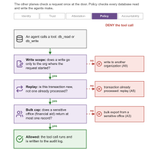
So the entire content of this system is a global rule file, CLAUDE.md, along with three prompts: planning, critical review, and diff audit. In the planning stage, the agent reads the repository, maps the requirements to acceptance criteria, and produces a checklist for approval before implementing the code; in the review stage, a clean session is opened, and the non-planning party conducts a critical review from the perspective of a senior engineer, focusing on race conditions, error boundaries, timeout strategies, idempotency, and over-design; in the audit stage, it returns to the real git status, git diff, git diff --cached, and untracked files, and each check must be accompanied by command output or a "BLOCKED" note. New tests must be demonstrated as failed before an "Could not verify" list is attached at the end.
Behind this is a carefully selected batch of open-source skill packages: Jesse Vincent's Superpowers provides brainstorming, writing plans, systematic debugging, test-driven development, and verification before completion; Dietrich Gebert's Ponytail uses a YAGNI ladder to curb the model's excessive abstraction impulse, retreating from existing code, standard libraries, native APIs, and installed dependencies to the minimum viable code; The front end is three slash commands and a global CLAUDE.md, with the Claude Code, Gemini CLI, and Cursor also being able to use the prompts directly, as the agent's independence is deliberately chosen.
The project clearly defines its boundaries: It is neither a framework nor an application; it is just a few text files and some optional helpers. The rule is that the agent follows the instructions given, not the lock; the real enforcement comes from the native permission settings of the coding tools; it has not published example projects built using this process, and the effectiveness still depends on the users' own verification; the schema migration, public API contract changes, new dependencies, and destructive commands are all just behavioral agreements.
For independent developers and small teams who want the agent to write real production code and have evidence but not commitments, this process is almost a zero-cost starting point: Take back the plan, and then take back the judgment power.
github.com/vaibhav-space/my-…

3
2
205
The routine, in 5 steps
Type /plan and describe what you want. Read the page and tick the steps. Tell the agent what to change.
When the plan looks right, say "approved". Nothing is built before that.
Open a new chat. That means a clean session with no memory of how the plan was made (type /clear or start a new session). Paste the plan and run /review-plan.
Back in your working chat, ask the agent to build the approved plan.
Open another new chat and run /review-prod. Read "Could not verify" first. It tells you what to test by hand.
22
"inference-optimisation: Turning Hyperparameter Tuning into a Reproducible Ramp-Up"
The main focus here is to 'make local large model service acceleration into a reproducible, verifiable ramp-up experiment,' rather than just 'copying a bunch of startup parameters.'
It covers a wide range: single-user vs. concurrent decoding, speculative decoding, prefill, KV cache size, startup time, and first-token latency. Any hardware, any quantization can get started, all under memory constraints, and each result has to pass a full-context stability check. Behind this is a lightweight, engine-agnostic scaffold: standard Python plus bash. ceiling.py calculates the theoretical limit, bench.py stress-tests any OpenAI-compatible service, queue.sh does interleaved comparisons. The frontend is handed to Claude Code or any proxy that can load SKILL.md-style skills, though it can follow PROMPT.md even without a proxy.
The more interesting part of this project is turning the tuning craft into a process: first calculate the theoretical limit, then change one variable at a time, compare the median against interleaved control, log all results including failures, and finally use long-context retrieval as a gate to qualify a clean build. Noise is naturally ±5–10%; most single “wins” are just drift. For speculative decoding, what really decides success or failure is the cost per step, not the acceptance rate.
It also has some tangible results: decoding on an Intel Arc B390 laptop went from 43.6 to 53 tok/s, 256K prefill from 297 to 628 tok/s, startup from 113s down to 43s, KV cache from 264K tokens to 4 × 256K; DeepSeek-V4.1-Flash on 4 × H200 NVL went from crashing under load to 229.1 tok/s decode. It reports the theoretical limit first—single-user 100 tok/s only works if you have two useful drafts, and in practice it hits just over 50% of the target.
Boundaries are also clear: it’s a methodology and a scaffold, not a flag checklist, and it doesn’t promise universal speedup. The numbers only hold on the specific machine, quantization, and engine version tested.
What it brings to the table is replacing 'tuning by feel' with the habit of 'calculate the limit first, then verify each item.' The only bar is being willing to spend time on interleaved comparisons for a round of ramp-up, and having a machine you can repeatedly stress-test. For anyone trying to turn local inference from 'it works' into 'you understand how it works,' this project really provides a practical, actionable approach.
github.com/sybil-solutions/i…
7
3
316
How it works
┌────────────────────────────────────────────────────────────────┐
measure HW ─▶ │ THEORY.md: bytes/token ÷ bandwidth, FLOPs/token ÷ 50% peak, KV │
└────────────────────────────────────────────────────────────────┘
│
baseline ─▶ profile ─▶ pick lever (ceiling gap × likelihood) ─▶ configs/NEW.json
▲ │
│ queue.sh ctl NEW ctl (serialized, AC-only,
│ memory watchdog, ≥6 samples, medians)
│ │
PLAN.md + ledger.jsonl ◀── accept only if it beats BOTH neighbouring controls ──┘
│ and regresses nothing by >3%
▼
long-context needle gate ─▶ concurrent full-KV soak ─▶ plateau? ─▶ pinned clean build
─▶ acceptance gates ─▶ publish
20

"mcp-for-blender-pro: Turning Blender into an Interactive Creative Space"
What it’s trying to solve isn’t ‘Can AI generate a 3D asset?’ but rather ‘Can AI work hands-on inside Blender while looking at the scene?’
The project packs these abilities into an add-on: scene and object inspection, viewport snapshots and task boards in the Studio chat window, 21 scene tools covering object creation, movement, duplication, parenting, materials, render snapshots, bpy API queries, code execution, and export. On the asset side, it hooks into Poly Haven, Sketchfab, and Poly Pizza for search and import, and the interface provides menus in English, German, French, Spanish, and Chinese.
Behind the scenes is flexibility on the model layer: OpenAI, Anthropic Claude, Google Gemini, OpenRouter, OpenCode Zen, Ollama, and custom endpoints can all connect, with connections saved separately. The front end has a dual-layer design of single assistant and Team chain: manager splits tasks, worker carries out actions, reviewer approves, tasks progress in sequence, and returned tasks get only one correction chance.
The more interesting part is how it turns 'automation' into a process with a parking mechanism: actions can be approved, stopped, or undone by name; Python tool checks can preempt clearly out-of-bounds calls. But the project is clear that this isn’t a security sandbox. External MCP clients each manage their own approval policies, credentials stay in user settings, and chat history only exists in the current session.
The release package currently targets Windows x64 and Blender 4.2+, has no affiliation with the Blender Foundation, and doesn’t represent any model provider.
For technical artists and indie developers who want to move from ‘typing commands line by line’ to ‘accepting actions line by line,’ this is basically a ready-made implementation idea: hook the dialogue into the viewport, then let each step leave a rollback point.
Source: GitHub | "bookwjitchieni1986/blender-ai-mcp-addon"
github.com/bookwjitchieni198…

6
7
366
"Depth Before Breadth: Decomposing Credit Assignment in Long-Horizon Tasks via a Reverse-to-Forward Curriculum"
The challenge of sparse rewards in long-horizon tasks does not stem from the scarcity itself, but rather from the ambiguity regarding which specific steps warrant a reward.
In reinforcement learning (RL) for LLM-based agents, sparse terminal rewards complicate both credit assignment and exploration. This paper approaches the problem by defining a "capability region"—the set of states where the current policy can reliably complete a task. Near the boundaries of this region, the final goal remains distant, yet the agent is only a few steps away from states that are easier to solve.
Consequently, long-horizon learning is decomposed into two coupled sub-problems: reaching such a state, and subsequently completing the task from that point. The authors utilize "pairwise advantages" to provide distinct signals for these two objectives, then employ a progressive "reverse-to-forward" curriculum to expand the capability region—first by tracing backward along successful reference trajectories, and subsequently by using on-policy exploration to reach states beyond those trajectories.
On the ALFWorld and WebShop benchmarks, this method outperforms existing RL-based agent approaches. Using Qwen2.5-1.5B and 7B-Instruct models, it achieves success rates of 90.1%/96.1% and 80.2%/82.6%, respectively.
While this method does not guarantee an escape from the immediate neighborhood of the current policy—as the expansion of the capability region still relies on exploration—it offers a significant contribution by operationalizing the "depth before breadth" principle into an actionable curriculum. The remaining challenge lies in the inherent efficiency of the exploration process itself.
arxiv.org/abs/2611.24697


1
2
149
"Embed Ethics into Design, Then Embed Design into Certification"
Over the past decade, the true focus of AI ethics has shifted away from merely compiling lists of principles or conducting post-incident reviews. Instead, it has moved ethics "upstream" into the design phase. In 2016, the IEEE Standards Association launched the Global Initiative on Ethics of Autonomous and Intelligent Systems, publishing *Ethically Aligned Design*—a document that saw its second edition released in 2017, with contributions from hundreds of interdisciplinary experts.
The report establishes eight foundational principles: respecting human rights; defining success through human well-being; ensuring individual data autonomy; guaranteeing system effectiveness; maintaining transparency; ensuring accountability; guarding against misuse; and requiring competence from creators. This approach transforms applied ethics from a reactive, post-deployment remedial measure into a proactive constraint applied before development even begins.
This framework is operationalized through the IEEE 7000 series, which currently includes 29 projects in development and 11 already published. These standards cover areas such as ethically aligned design processes (7000-2021), system transparency (7001-2021), data privacy (7002-2022), algorithmic bias (7003-2024), impact on human well-being (7010-2020), machine-readable privacy requirements (7012-2025), and systems designed to simulate human empathy (7014-2024).
Beyond standards, there are certification and collaborative frameworks. The "CertifAIEd" program offers tracks for both individuals (assessing competence) and products (verifying compliance with established standards, followed by formal certification through the IEEE conformity assessment process). Additionally, there is a "Responsible AI for Children" certification, as well as the "AIS for Global Flourishing" collaborative group—comprising over 200 members and organized into subcommittees focused on cognition, education, faith, planetary stewardship, and spirituality—which translates the concept of "flourishing" into actionable methods, metrics, and tools.
It should be noted that these standards and certifications govern processes and documentation; they cannot prevent teams from treating them as mere "compliance stamps," nor can they replace the nuanced trade-offs that must be made in the actual engineering environment. For those who wish to shift ethics from an after-the-fact apology to a proactive, upfront design element, the path has been paved. The new gateway lies in the ability to embed values directly into standards and certifications; the real threshold, however, is whether—once the certificate is in hand—one remains willing to alter a project’s design for the sake of a well-being metric that is difficult to quantify.
Source: IEEE Spectrum | "IEEE Celebrates 10 Years of Incorporating Ethics Into AI Systems" | spectrum.ieee.org/ieee-ethic… | 2026-11-17
#IEEE #CertifAIEd #IEEE7000 #ai

1
1
77
"WoRD: Online Goal Recognition Using Diffusion Priors"
In the field of goal recognition, inferring an agent's intent from a partial trajectory has long been a challenging problem. Previous approaches have been constrained by a trade-off: they either operate at a symbolic level—abstracting away continuous motion—or rely on explicit dynamical models, which are difficult to obtain and rarely generalize across different environments. Fundamentally, these methods fail to explicitly learn how an agent actually moves toward various potential goals.
The core insight of this work is to use learned trajectory priors as a foundation for inference. At each time step, WoRD initiates a "warm-started" denoising chain for every candidate goal. It then uses the gradient of the closed-form log-likelihood to steer these chains toward the observed trajectory, subsequently applying Bayesian reweighting to derive a calibrated posterior distribution over the goals.
Consequently, ambiguous prefixes do not need to be prematurely resolved, allowing for the preservation of multi-modal beliefs. The framework was evaluated across three domains—simulated robotics, pedestrian trajectories, and vehicle trajectories—using four distinct metrics designed to capture various failure modes.
It is worth noting that the authors do not claim this to be a universal dynamics solver, nor do they sidestep the iterative computational cost inherent in diffusion sampling; as the number of candidate goals increases, the overhead of running separate denoising chains for each goal becomes more pronounced.
By integrating diffusion priors into online intent inference, this work opens a new avenue for future research. However, a remaining challenge lies in balancing both accuracy and latency for real-world deployment.
Source: arXiv.org | "WoRD: Diffusion-Based Posterior Inference for Online Goal Recognition" | Anschel, Almog; Keren, Sarah | 2026/11/17

3
114