
Commodities + a bit on EM, macro and banking regs. Ran EM derivatives, external debt/commodities trading desks in the past (sell-side). No investment advice.
Joined March 2017
- Tweets4.7K
- Following626
- Followers10.6K
- Likes6.7K


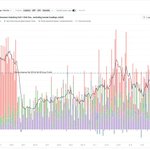


It was barely two weeks into the Iran war, on March 12, when brokers received a notification from Sinokor that it had hired out a ship to sail from the United Arab Emirates port of Zirku to Asia at a rate of at least 700 Worldscale points — far above the Baltic’s assessment for that day of 348.89...

This Oil Tanker Tycoon's WhatsApp Messages Drive Big Market Moves
The Iran war has thrown a spotlight on the arcane system used to price the world’s shipping contracts, and the centuries-old London institution that manages it. #oott bloomberg.com/news/articles/…

Trying to suggest some ideas for an Odd Lots podcast focused on the practical aspects of implementation of a wealth tax - as a follow-up to their French crisis episode.
I.e. even if in concept it is appealing - can it actually be done in a way that raises material amount of revenue and does not kill growth?
@tracyalloway, @TheStalwart

Thanks, @tracyalloway and @TheStalwart - was a good episode, as usual. Wanted to expand on the topic of wealth tax that you mentioned at the end and both seem to be interested in.
Would be great if there was an episode focused on the practical possibilities of implementation? With someone who is not an ivory tower economist, like Zucman, but actually understand how taxation/capital movements work in practice.
The idea of taxing wealth is understandable - esp. now - when there is less certainty about incomes due to AI revolution. I frankly would be ok with it even if the bar was set low enough so that I myself would pay it - assuming that the government in exchange would stop trying to raise my other taxes (CGT, income).
But the possibility of effective implementation - especially somewhere like Europe where people can and have been moving to lower tax jurisdictions regimes - even within the block with relative ease - is unclear.
Zucman, Piketty etc pretend that the problem does not exist and that flight risk is low. Or talk about global solutions that have no hope to be adopted.
@DanNeidle was arguing that in the context of the UK wealth tax does not work -
taxpolicy.org.uk/2025/07/22/…
He has several case studies; I do not think the list is fully comprehensive - e.g. it does not include Netherlands, where capital was taxed on "deemed return" recently, but as far as I know this Dutch tax also did not raise a lot of money - something like 0.5-0.7% of GDP (I could be wrong here).
Anyway, would be great to understand if there is a hope for a workable implementation that would raise material (say at least 1-2% of GDP) amount of revenue.
Or we should just forget it - and maybe taxation of AI billionaires should happen on companies' level (taxing tokens, robots etc).

Anton Likhodedov retweeted

Maybe we should try to get everyone to keep their commitments made in March? That would actually help immediately, although its still just a band-aid.


Great news from CMU.

Our new Commodities Quant Lab @CarnegieMellon is finally launched. I'm thrilled with an opportunity to lead it and wanted to thank many folks who already reached out with various collaboration ideas. Please spread the word.
cmu.edu/mscf/news/carnegie-m…
cmu.edu/mscf/commodities-qua…
PHYSICAL PREMIUMS #3: SCARCITY OR "MANIPULATION"?
will have another go at this.
Btw, if you are relatively new to crude and get overwhelmed with terminology, take a look at my article that explains what Dated Brent is:
xitter.cf/ALikhodedov/status/204…
While a large part of the current market mess is explainable with fundamental factors (like crazy high freight) one part - seeming destruction of intertemporal substitutability in North Sea market (i.e. postponing consumption by 1-2-3 weeks for a much cheaper price), manifesting as extremely steep backwardation in the very front of the Dated Brent curve - looks weird to me.
Why? Because crude commercial inventories are actually not that low- the market is of course much tighter than before but e.g. EU onshore crude inventories are close to last year level and 5y average.
How big is the problem? Let us look at some examples:
On Sept 15th - 3 weeks ago we had the following in the Dated window:
Vitol bids Oct. 2-12 at (Dated Brent) +$15.50 FOB
Total bids Oct. 7-9 at (Dated Brent) +$14.95, FOB
If those bids were filled they would be loading now. And what price would the buyer pay? Well, Dated Brent fixed at $136 yesterday. So the buyer will pay north of $150.
At the same time someone loading WTI in USGC would probably pay - what - 95-100? (if I am wrong please correct me).
Why is this $150 happening - especially when ICE Brent is "just" at 104?
Two reasons (or rather 2 instances of the same reason):
Someone (like for instance, Vitol) is bidding cargoes loading in 3 weeks at Dated + $25 - effectively putting the price tag for 3w delay at $25 dollars. This is how you get from levels close to ICE brent (3w forward Dated is just $5-8 above Dec ICE brent) to Dated Brent ($136). This pushes up the Dated fixing.
And the same someone was doing it for the last 3 weeks (albeit at lower levels - at +$15.5 - as in example above) - thereby pushing today's price at loading above $150.
Btw we do not need to cry for poor Vitol or Total or other traders - they are long CFDs for the same dates and surely make more money on the derivative side than it costs them to bid physical side.
The problem of course is that there is physically impossible to arb these high levels - too little time, contracts are fixed etc - so you cannot ship cheaper crude from elsewhere (not to mention freight).
But the end result is that you get very high landed prices in Europe and refiners struggle to make money even with current high cracks. Because Dated Brent is not some obscure benchmark, but the one that is linked to trillion dollar worth of purchase contract (annually).
Normally the solution to this would be inventory - basically buyers should not be buying, but drawing inventory - and this is what backwardation incentivises to do. And crude inventories are not that low (unlike products). Yet for some mysterious reason it does not work ....
Is this disbalance appropriate for the current distress level or it is the result of traders' games? I have no clue ... maybe a bit of both.
PHYSICAL PREMIUMS: ALL TIME HIGH AND LOW ON THE SAME DAY
Organised my thoughts on North Sea physical prices (being record-high premium-wise as of 2 days ago) vs other regions (esp WAF, which is record low) - discussed in the post below and here:
xitter.cf/ALikhodedov/status/210…
Thanks to those who replied.
The disparity can be indeed explained by a combination of factors
- timing: e.g. WAF loadings references end of November, while Brent window is end of October (on average) + voyage time for arbs.
With a hugely backwardated Brent structure (e.g. on Oct 5th - previous peak in physical premiums - this week CFD was +25, while 4th week (end of October) is +5.9 and end of November is +3.7 (which is vs Jan BFOET swap - which is pretty much equal to Jan ICE Brent future, not vs Dec like October CFDs) - so another $5.5 difference vs end of October ....
So by the time the oil from another region could arrive large part of the disparity would disappear, eaten by the massive backwardation in Brent
- crazy freight costs
- quality issues (they were always there, but perhaps got even worse with refining bottleneck) - e.g. most European refiners do not have the setup to make money off the cheapest WAF crudes etc.
But I think this decomposition kind of obscures the nature of what is happening: in a "normal" market, when oil today is not too different from oil 3 weeks from now, freight is 10x lower and cracks are 4-5x lower everything is global, futures price explains absolute majority of a physical crude and product prices pretty much anywhere and curve shapes between grades are not that different.
Now the market is much more fragmented:
1) there is no intertemporal substitutability (look at CFD - shifting delivery by 3 weeks can shave almost $20 from the price); this btw seems like the weirdest part of all the mess - at the end commercial inventory is not that low still, yet we keep having these bouts of crazy premiums.
2) geographical substitutability is much more limited, given how expensive freight is
3) front parts of the curve are shaped very differently - which leads to weird effects
4) quality substitutability was never there, but probably got worse....
So e.g. today's Dated Brent is $136, someone who bought a cargo loading today in a window 3 weeks ago fixed it at Dated +$15 - so will end up paying like $150, at the same time ICE Brent is $104, and you can load WTI in the Gulf below $100 - and yet there is no way to arb this massive front difference ....
Very interesting points by @TheStalwart.
Also, given the progress in cheaper/open models and the obvious fact that 99% of tasks do not require frontier model capabilities (where will the moat come from then?) the leading AI Labs may be forced into discovery and it's monetisation, which makes Joe's point even mode valid.
Btw, whoever is still not listening to Odd Lots podcast, strongly recommend.


PHYSICAL PREMIUMS: ALL TIME HIGH AND LOW ON THE SAME DAY
Organised my thoughts on North Sea physical prices (being record-high premium-wise as of 2 days ago) vs other regions (esp WAF, which is record low) - discussed in the post below and here:
xitter.cf/ALikhodedov/status/210…
Thanks to those who replied.
The disparity can be indeed explained by a combination of factors
- timing: e.g. WAF loadings references end of November, while Brent window is end of October (on average) + voyage time for arbs.
With a hugely backwardated Brent structure (e.g. on Oct 5th - previous peak in physical premiums - this week CFD was +25, while 4th week (end of October) is +5.9 and end of November is +3.7 (which is vs Jan BFOET swap - which is pretty much equal to Jan ICE Brent future, not vs Dec like October CFDs) - so another $5.5 difference vs end of October ....
So by the time the oil from another region could arrive large part of the disparity would disappear, eaten by the massive backwardation in Brent
- crazy freight costs
- quality issues (they were always there, but perhaps got even worse with refining bottleneck) - e.g. most European refiners do not have the setup to make money off the cheapest WAF crudes etc.
But I think this decomposition kind of obscures the nature of what is happening: in a "normal" market, when oil today is not too different from oil 3 weeks from now, freight is 10x lower and cracks are 4-5x lower everything is global, futures price explains absolute majority of a physical crude and product prices pretty much anywhere and curve shapes between grades are not that different.
Now the market is much more fragmented:
1) there is no intertemporal substitutability (look at CFD - shifting delivery by 3 weeks can shave almost $20 from the price); this btw seems like the weirdest part of all the mess - at the end commercial inventory is not that low still, yet we keep having these bouts of crazy premiums.
2) geographical substitutability is much more limited, given how expensive freight is
3) front parts of the curve are shaped very differently - which leads to weird effects
4) quality substitutability was never there, but probably got worse....
So e.g. today's Dated Brent is $136, someone who bought a cargo loading today in a window 3 weeks ago fixed it at Dated +$15 - so will end up paying like $150, at the same time ICE Brent is $104, and you can load WTI in the Gulf below $100 - and yet there is no way to arb this massive front difference ....
North Sea vs WAF headlines look really weird these days:
Vitol raised bids for all (North Sea) benchmark grades to new records, surpassing previous highs in early April.
vs
Exxon Mobil bought Hungo from Eni at the lowest price for a WAF cargo on the Platts window in data compiled by Bloomberg going back to 2011.
I guess dates / freight / grades / quality etc ... but still market looks pretty f&*ked up.
************************************************
North Sea:
"Forties, FOB:Vitol bid Oct. 20-Nov. 5 at +$24.05, vs +$22.50 on Monday
Ekofisk, FOB:Vitol bid Nov. 1-3 at +$21.80, vs +$20.95 on Monday
Brent, FOB:Vitol bid Oct. 20-Nov. 5 at +$25.60, vs +$24.15 previously
Oseberg, FOB:Vitol bid Oct. 28-Nov. 2 at +$22.45, vs +$21.55 previously
Troll, FOB:Vitol bid Oct. 18-24 at +$25.90, vs +$24.45 on Monday"
and on the same day:
WAF:
"Exxon Mobil bought 950k bbl of Angola’s Hungo from Eni at Dated -$19.60/bbl (the lowest price for a WAF cargo on the Platts window in data compiled by Bloomberg going back to 2011) for Nov. 19-20 loading: trader monitoring windowThat’s the weakest observed deal price in the window for a West African cargo in data compiled by Bloomberg starting from 2011
Cargo previously offered at -$9.90 on Oct. 2, -$2.70 on Oct. 1
TotalEnergies offered 920k bbl of Republic of the Congo’s Djeno at Dated -$23.10/bbl for Nov. 24-25 loadingThe company withdrew an offer at -$16.05 on Djeno for Nov. 10-11 loading on Oct. 5
"
Really liked this episode.

🎙️ NEW PODCAST 🎧
In the latest ep of Oil Ground Up I was joined by Michelle Brouhard, head of policy and geopol risk at @Kpler, to talk about oil’s spiralling geopolitical mess, the diesel crisis, and what she really thinks about rising Hormuz oil flows
youtu.be/v72t8SYw8z8?si=rFc-…

North Sea vs WAF headlines look really weird these days:
Vitol raised bids for all (North Sea) benchmark grades to new records, surpassing previous highs in early April.
vs
Exxon Mobil bought Hungo from Eni at the lowest price for a WAF cargo on the Platts window in data compiled by Bloomberg going back to 2011.
I guess dates / freight / grades / quality etc ... but still market looks pretty f&*ked up.
************************************************
North Sea:
"Forties, FOB:Vitol bid Oct. 20-Nov. 5 at +$24.05, vs +$22.50 on Monday
Ekofisk, FOB:Vitol bid Nov. 1-3 at +$21.80, vs +$20.95 on Monday
Brent, FOB:Vitol bid Oct. 20-Nov. 5 at +$25.60, vs +$24.15 previously
Oseberg, FOB:Vitol bid Oct. 28-Nov. 2 at +$22.45, vs +$21.55 previously
Troll, FOB:Vitol bid Oct. 18-24 at +$25.90, vs +$24.45 on Monday"
and on the same day:
WAF:
"Exxon Mobil bought 950k bbl of Angola’s Hungo from Eni at Dated -$19.60/bbl (the lowest price for a WAF cargo on the Platts window in data compiled by Bloomberg going back to 2011) for Nov. 19-20 loading: trader monitoring windowThat’s the weakest observed deal price in the window for a West African cargo in data compiled by Bloomberg starting from 2011
Cargo previously offered at -$9.90 on Oct. 2, -$2.70 on Oct. 1
TotalEnergies offered 920k bbl of Republic of the Congo’s Djeno at Dated -$23.10/bbl for Nov. 24-25 loadingThe company withdrew an offer at -$16.05 on Djeno for Nov. 10-11 loading on Oct. 5
"
Saudi OSP.
Still remain super confused around this topic. The part that is not clear - where can a customer load, paying OSP price these days? Does OSP still have any meaning?
I think historically Arab Light OSP for Asia was Ras Tanurah/Ju'aymah - i.e. inside PG. "-5" discount is obviously not enough to incentivise going through SoH.
But saw somewhere that Aramco may be using OSP to price non-PG loadings?
@OilCfd, @CRUDEOIL231, @Rory_Johnston, @JuneGoh_Sparta
Anton Likhodedov retweeted
ME supply is recovering, so why aren't oil prices falling?
I assumed folks has an idea of how price discovery works, but I keep seeing the same argument about supply vs price. It doesn't work that simply. Price is not just a function of supply. More supply doesn't automatically mean lower prices, especially not in the middle of a kinetic conflict where the pace and durability of supply recovery remains uncertain.
I am going to try to make this as simple as possible. For those of you who run balances every day, most of this will be old news, apologies in advance. But there seem to be plenty of people genuinely trying to understand why Middle East flows can normalize while oil stays around $100. This is for them.
<Thread>
Did not realise that the idea that the region with the biggest petroleum import dependency in the world should release at least *some* of their pretty substantial reserves after 7 months of the largest supply disruption in history by every measure was so controversial.
Especially when the partner that has been maxxing exports and draining its own storage (for a price, of course) started to threaten with an export ban ....
Going to add this to the list of topics that trigger people ("Hormuz flows" are on the list already).
Diesel is THE market pain point, being hit by both Hormuz crisis and absent RU exports, EU have pretty large diesel reserves ...
US has been exporting way more diesel than last year and low stocks / high prices really put the ban or some form of restrictions in play.
Which would send ICE Gasoil into stratosphere ... Why not release 100mb instead and buy some time?
Clearly "Germany and others" think they do not have enough problems - between natural gas and fuel prices, rates and elevated inflation.

Great news from alma mater ....
Griffin’s $3 billion gift will consist of $1 billion to support CMU’s Pittsburgh campus, split evenly between flexible support for the university’s highest priorities and a $500 million investment in its top-ranked School of Computer Science, which will be renamed the Kenneth C. Griffin School of Computer Science. An additional $2 billion will support the launch of CMU Miami.
Would of course prefer if SCS was renamed the Peter Griffin School of Computer Science but it would be too good to be true. Still amazing move by Ken.

Ken Griffin donates $3bn to Carnegie Mellon as university plots Miami campus ft.trib.al/UF4Pl9s

China and the A.I. Race
Tried to understand the issues around potential cooperation on AI safety with China. My own uninformed view prior to them was that cooperation on containing SSI risks would actually be possible - on the basis of US 5-8x advantage in compute and the fact that training frontier models require huge infrastructure (thus hard to hide and possible to monitor).
2 useful podcasts - Matt Sheehan with Ezra Klein
podcasts.apple.com/gb/podcas…
and
Alvin Wang Graylin with Peter Diamandis (thnx to @GringoInvesting for flagging it)
podcasts.apple.com/gb/podcas…
I would say that after listening to them I am probably more optimistic on eventual cooperation.
Couple of quick points:
- both experts agree that China is much less obsessed with RSI/SSI (only entered discussion late summer)
- general strategy seems to be focused more on applications/diffusion, less on creating a digital god
- no attempt so far to concentrate compute, in fact the strategy is the opposite
It kind of points further to the argument that the "race" is driven by the US - hence US could take some unilateral steps without endangering it's lead.
Another interesting aspect is that while Chinese AI ecosystem is pretty diverse it is a heavily regulated one. They do not yet try to regulate anything wrt frontier risk, but there is a bunch of other stuff.
So clearly there is an example of AI regulated environment (esp. if you apply it to just the largest labs/companies) which does not lead to a monopoly/duopoly.
At this point we cannot know how real are RSI/SSI risks, but starting a dialog and creating a framework for cooperation (even if initially there is little substance) seems important.


Finally! BOE Scraps Long-End Gilt Sales, Helping Ease Pressure on Yields
I wrote about it last year - BOE approach to QT was much more orthodox than that of other central banks - with selling of the long-dated gilts into the open market.
That might be a theoretically correct way to run things, but the fact of the matter is that noone in the developed world is doing that.
UK is not going to be rewarded for being a monetary B- student in the company of D's. They got highest DM yields instead.
So this is finally over. The other advantage UK may have is the longest debt duration in developed world. So it is easier for DMO to reprofile (which they are doing already). It may or may not be enough, but these are two fairly obvious steps.
UK LONG RATES
Once more on UK problem with long rates is being largely self-inflicted (and not by fiscal profligacy - UK policy is actually more resonsible than that of the US in this sense and deficits trajectory is better).
Here is a chart from @Econimica showing that the Fed has increased it's holdings of 10y+ paper by 58bln in 2025. Even though we are in QT phase, reinvestment above the QT cap led to an actual increase of 10y+ purchases.
In the UK BOE not only does not cap the QT (i.e. does not reinvest), but is also selling the gilts in the open market (although the long dated bucket is now greatly reduced).
This might be the theoretically correct way to run things, but the fact of the matter is that noone in the developed world is doing that. UK is not going to be rewarded for being a monetary B- student the company of D's. And the current policy is costly for the budget and for the economy (directly - via higher rates and indirectly, because higher forecasted debt cost erode fiscal headroom and trigger even more tax increases).
Given the change in the structural demand due to LDI crisis and pension plans going defined contribution, rather than defined benefit, it makes sense to adapt ... In my view BOE should stop the active sales (and take APF onto it's balance sheet) while DMO could be even more aggressive cutting long-dated issuance.
UK average debt profile, which is the longest in the developed world and almost triple that of US does allow to do it....

Another great piece by @Rory_Johnston - looking at China apparent demand drop through the product lens.
Quite a few questions remain, but there is a lot of v. useful data.
🚨 NEW POST 🚨
The Beijing Swing, Part 2: Refined Products
Apparent Chinese petroleum product demand fell far more sharply than activity in end-use sectors, with inventories likely buttressing domestic supply and putting a timer on the Swing.
commoditycontext.com/p/the-b…

Boy, that escalated quickly ...
Just a week ago it felt like the reports on Hugging Face/OpenAI incidents do not get enough coverage and now we have Dario/Sama/Elon calling for a slowdown in model training.
Leaving for a second the very serious issues in implementation aside I think it is true that conceptually pause/slowdown makes a lot of sense:
existing models are already extremely capable. Adoption on the other hand is lagging + there are a lot of potential benefits in fine-tuning the existing open models on a specific domain.
I would think that adoption will explain 90%+ of the economic gains (vs better frontier models) in the next 5 years and will also give a very big boost to research (although not as big as an unconstrained model development would yield). Still this is enough to ensure the pace of change that is already much higher than anything experienced in human history.
In this sense slowing down frontier makes a lot of sense from risk/reward point of view. Do not really understand what is the point of automatically dismissing the warnings as PR/pre-IPO setup/campaign to create regulatory capture. I mean - you cannot open a freaking restaurant without regulations, but sure - let us rush towards superintelligence without thinking twice.
PS I liked this podcast from Odd Lots:
podcasts.apple.com/gb/podcas…
Among other things Greg Jehnsen addresses the "China will do it anyway" point and talks about the role of open models (he is a heavy user at Bridgewater, but also an early backer of OAI and Anthopic).


Reading IEA report:
"Total oil exports from Gulf countries in August are currently estimated around 13 mb/d, nearly half their pre-war level. Crude losses appear to have narrowed to just below 45%, supported by increased flows bypassing the Strait, as well as US military escorts protecting flows through Hormuz. However, refined product and LPG exports remain nearly 60%, or 3.7 mb/d, less than in February."
cannot figure out what are they talking about - from their own table production in core OPEC is 5.66mbd down vs target, so circa 5mbd down vs pre-war. Iran is another 1.5mbd. UAE is above pre-war.
ME own demand is down - so how can export delta be "around 13mbd"?
@Rory_Johnston, @staunovo - any ideas?
