






Huge kudos to the entire team—experimentalists, computational scientists, collaborators, and clinicians, who contributed their expertise, time, and energy. Huge thanks to BRIC, @cancer_dk and @UCPH_Research for support and scientific environment
Understanding, and potentially resetting, these early programs may be key to preventing pancreatic cancer before it starts. Particularly relevant in the context of new revolutionary KRAS inhibitors!
Cancer risk may be encoded in transient regenerative states that emerge upon tissue injury—not just in genetic mutations. Enhancer-derived RNAs activated during these processes also emerge as potential therapeutic targets.
In this study, we uncover a previously underappreciated regulatory layer linking development, regeneration, and cancer. Importantly, this work shifts the focus from cancer cells alone to the regulatory microenvironment that enables tumor initiation. Why is this important?
Pancreatic ductal adenocarcinoma remains one of the most challenging cancers to treat, largely because we still lack a deep understanding of the earliest events that drive disease initiation.
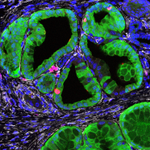
Excited to share our latest work led by Marta Ballester, Anita Kurilla, and colleagues, now accepted in Cell Reports. The amazing regulatory elements of Sox9 in regeneration and cancer! cell.com/cell-reports/fullte…

Luis Arnes retweeted

We are excited to announce that today, @HRMrqz successfully defended her PhD thesis!
A new Doctor has emerged from our lab! 👏👏👏
Congrats Henar! 🥳🥳


Luis Arnes retweeted

We are excited to share our latest publication in @GenesDev! pubmed.ncbi.nlm.nih.gov/3979…

Luis Arnes retweeted

Did YOU fill out the survey on the shortage of PERT 🤔??
From the #EPC Public Affairs Committee!!
Help us analyze the current situation in Europe 🙏
1️⃣ QR-code for patients👇
1️⃣ QR-code for clinicians 👇 – at Lund, Sverige

Many thanks to collaborators @JonathanBaldan, #PhilSeymour, @CVRift ,#JaneHasselby, @albin_san and all members of @ARNesLab for comments
Work supported by funding from @cancer_dk
@UCPH_BRIC
Next steps: We’ll explore mechanisms behind the impaired regeneration, potentially leading to a new understanding of cancer risk factors and opportunities to prevent cancerous changes in the pancreas.
Despite minimal differences in normal pancreas function, aged mice had reduced capacity to recover from pancreatitis, showing tissue atrophy and fibroinflammatory stroma. A key finding in how aging affects recovery.
The study found a pre-existing proinflammatory state in the pancreas of aged mice, similar to conditions that predispose individuals to cancer. This could be key to understanding how aging impacts cancer risk.
Age is the biggest risk factor for pancreatic cancer (PDAC), but the underlying causes are still unclear. Kristina’s work focuses on how aging affects pancreas regeneration and cancer susceptibility
I am excited to see this story by my talented Master's Student, Kristina Høj. Her research dives into age-related decline in pancreas regeneration and how it’s linked to a proinflammatory response to injury. @AGA_GHAdvances,@UCPH_BRIC, tinyurl.com/4e2uz2sb
