Pre-IPO Stock Secondary Market Update | as of Nov 17, 2026 | Anthropic IPO, Groq 2.0 & NeoClouds, Jensen Huang's Exit, SpaceX & Grok Bot
Watch full video = youtube.com/watch?v=hWRnG3bi…
Anthropic came to market with a target of about $1.4 trillion, and we saw that as a fair valuation. The book was reported at about six times oversubscribed, and the stock priced at $83 per share, above its expected range. The demand does not surprise us: Anthropic was bid in the secondary market the entire time it was private, and we expected that demand to carry into the public market. The structure deserves as much attention as the headline number. Like SpaceX, Anthropic has a staggered release schedule, with an extended lockup for insiders, a regular lockup and multiple early releases, and index providers are now adding these large listings quickly, so early releases line up with index buying at each quarterly rebalance. New listings typically see heavy volatility in the first 30 to 60 days, and we would rather wait for a dip than add on day one, much as SpaceX traded slightly below its IPO price before recovering. We expect Anthropic to do very well from here.
Groq 2.0 is now a pure-play neocloud. After Nvidia's licensing deal of roughly $20 billion, the remaining company buys Groq chips from Nvidia, puts them in its own data centers and sells inference compute to third parties, the same category as Lambda, CoreWeave and Nebius. It has a new cap table, separate from the legacy company, which is buying back stock from original shareholders with one payment still to come. Groq is reportedly seeking a Series B at an $8 billion pre-money valuation, which does not surprise us, and Together AI at $8.3 billion post-money remains an attractive valuation in our view. We are high conviction on neoclouds despite the negative press around their debt. Debt is the point of the model: a data center is funded with equity or debt, and when the math ties, debt avoids diluting shareholders. If a neocloud is profitable today, it is doing it wrong. CoreWeave's backlog reached $132.5 billion at Q3, Crusoe reports more than $140 billion in contracted value, and Nebius says customer prepayments covered over 100% of the capex on deals it signed in Q3. That revenue cannot be recognized until the capacity is built. The market may need a couple of bad quarters to reset expectations, but we believe we are in the first inning of AI and that whoever stands up inference capacity fastest will capture the revenue over the next five years.
Jensen Huang has stepped down from Nvidia after 33 years. We do not expect him to return to Nvidia, and we see the situation as very different from Sam Altman's return to OpenAI. If he chooses to build again, we think he would have no trouble raising capital or recruiting from Nvidia, and a new company led by him would likely be one of the most sought-after pre-IPO rounds in the market. If he joins an existing company, SpaceX looks like the most natural fit given its startup momentum and its push into AI compute.
We see SpaceX as a data center company as much as a space company. It just caught its first Starship upper stage at the tower, and Musk is targeting $500 billion in annualized revenue by December 2027, with Starlink contributing but almost all of it coming from selling data center compute. SpaceX says its compute buildout pays back in less than a year, and given its record of execution, we expect it to keep building as fast as it can. Always-on AI agents show where that compute demand is heading. We run Grok Bot around the clock as our CRM and as a research assistant that monitors the market and turns unstructured data into structured data we can act on, and it supports parts of the day-to-day running of our funds without access to customer or investor data. The key is setup: we treat the agent like a 25-year-old employee, with its own email address, its own Drive folder, a shared drive for joint work, and access to data through APIs and MCP connections. If every person ends up with one agent for work and one for home running all day, the compute buildout still has a long way to go, and that is before robotics.
1
700
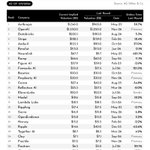
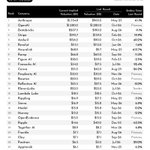
Pre-IPO Stocks Secondary Market Valuations | as of November 16, 2026 | Download full report = agdillon.com/reports
2
582
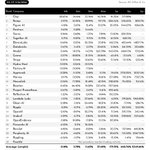
Pre-IPO Stocks Secondary Market Performance | as of November 16, 2026 | Download full report = agdillon.com/reports
2
2,180
Pre-IPO Stock Secondary Market Update | as of Nov 10, 2026 | VAST Data's $10B Commitments, Baseten Eyes $30B, fal Doubles & Revolut at $115B
Watch full video = youtube.com/watch?v=jT57KvYb…
VAST Data reportedly has 14 customers committing more than $10 billion to VAST-powered infrastructure in 2026, including four customers committing more than $1 billion each, and we think the company is getting too big to ignore. VAST works in the software layer of the AI stack, helping customers get more out of memory and storage rather than making the hardware itself. Memory hardware has been one of the strongest public trades, with Micron and SanDisk rallying sharply over the past year and a half, and VAST gives investors a way to approach the same bottleneck from the software side. The technology is highly specialized, which makes the business hard to evaluate at a deeper level, as with most deep AI infrastructure companies. Even so, customers committing more than $1 billion each shows how much sophistication it takes to deliver AI at scale, which we think most investors do not fully appreciate. VAST is not yet under our research coverage, and we plan to dig in further.
AI inference valuations are moving quickly, and we would build exposure across the group rather than pick a single name. fal, which runs inference for video, images and audio, is raising at a $16 billion valuation, double its $8 billion mark in April. Baseten is reportedly raising at $30 billion in a quick follow-on after $26 billion, up from $13 billion in June, and Fireworks AI is reportedly in talks at $30 billion to $40 billion, more than 2x this year. Our framework is an overweight to AI infrastructure across three buckets, data centers, inference providers and semiconductors, held at roughly equal weight, and if we had to overweight one it would be the inference platforms. Within each bucket, entry point matters. Together AI is valued below $10 billion with revenue we see as on par with peers valued at $15 billion to $40 billion, which looks like the better entry to us. In chips, we would rather own Positron at around $6 billion to $7 billion than Etched at $20 billion to $30 billion or more before it has a product in market. A proven founder can earn some premium, but at some point the revenue has to tie to the valuation.
Revolut's $115 billion valuation looks healthy for the business, but we question how much upside is left at this size. The leading fintech companies are now large enough that their private marks no longer line up with incumbent valuations: SoFi has a market cap of about $21 billion, roughly a fifth of Revolut's valuation. We would need to review Revolut's revenue in detail, but we find it hard to see a revenue gap large enough to justify a 5x difference. A move to $300 billion or $400 billion would put Revolut in the conversation with JPMorgan, which has a market cap of about $900 billion. Its international approach may work, but we are unsure how much growth remains in the category from here.
Stripe trades at about $190 billion in the secondary market, and of the fintech giants it is the one we like most, because AI agents could open a new market for its payments business. As agents start buying across the internet, they will need a provider to facilitate those transactions, and Stripe is building its own rails, including a blockchain system for tokenized payments, although regulation of tokenized payments is still unsettled. In that scenario Stripe could take Visa and Mastercard-like share in agent payments and become a company worth several hundred billion dollars. Even so, a move from $190 billion to $500 billion is a 2.5x return, and we think the largest private companies such as Databricks, Stripe and Revolut may be able to 3x over 10 years but not over three. Investors targeting 10% to 30% a year can get that in public stocks with daily liquidity, so for 2.5x to 4x-plus potential we look past the largest names to the next tranche: companies valued at $5 billion to $30 billion, such as Baseten, Together AI and Positron, that are not on the front page every day. With Anthropic's IPO roadshow underway and OpenAI possibly following next year, we expect those exits to make room for that next group.
1
1
724
Pre-IPO Stocks Secondary Market Valuations | as of November 9, 2026 | Download full report = agdillon.com/reports
19
10,750
Pre-IPO Stocks Secondary Market Performance | as of November 9, 2026 | Download full report = agdillon.com/reports
6
2,918
Pre-IPO Stock Secondary Market Update | as of Nov 3, 2026 | AWS Capacity Constraints, Anduril's BlueChip Laptop, Nvidia Robotics and Kalshi
Watch full video = youtube.com/watch?v=8IZhNhR6…
AWS is reportedly fully sold out of compute through 2027 and mostly sold out through 2028, which we see as clear evidence that demand remains ahead of capacity. Public markets keep questioning whether neoclouds can fund their buildouts, but we do not see how that skepticism sits alongside an inability to get Amazon compute until 2028. We agree the hard part is pricing a company that is already at full capacity for years, even if Amazon keeps taking share. Data center build timelines and demand timelines are not the same, and the market worry is that capital floods into projects and then demand plateaus into an overbuild. We do not think we are close to that cycle. In our view we are still in the first inning, and sold-out capacity into 2028 while still early points to years before a real overbuild conversation.
Anduril is developing BlueChip, a security-focused laptop with Qualcomm, and we see it as an ambitious expansion beyond defense technology into personal computing. The initial focus on government, police and other public-sector users fits Anduril's existing business, while the emphasis on domestic manufacturing addresses an important market need. The move also fits a founder willingness to build personal electronics, alongside the ModRetro gaming device. We would not be surprised to see a phone or other personal technology products follow, although that is our speculation rather than an announced plan.
The Microduck demonstration from Nvidia, Hugging Face and Pollen Robotics puts home robotics in focus, and we think it could mark the beginning of robots becoming common in homes. The demonstration recalls Star Wars, with the small Microduck resembling R2-D2. Microduck is ready to use out of the box, while the related ReachyMini arrives in parts and takes about four hours to assemble. Orders are taking months rather than days to arrive. We are excited about the products and view them as an early step toward useful robots in the home, rather than just another technology demonstration.
Kalshi is a prediction-market and betting platform that lets users wager on outcomes including elections, and we think the core business works because people like to gamble. The open question is whether they gamble specifically on Kalshi versus peers such as Polymarket or other online gaming providers. Brand, user traction, and sponsorship reach look strong to us. Election odds with real money at risk can be more useful than traditional polls, though overseas capital on domestic races shows how these markets can be distorted. Regulation is the clear risk if a future administration turns less friendly. We also see proprietary value in what people actually bet, not just what they say. We expect both Kalshi and Polymarket to remain relevant and continue to watch their progress, although regulation is an important risk.
2
460
Pre-IPO Stocks Secondary Market Valuations | as of November 2, 2026 | Download full report = agdillon.com/reports
Pre-IPO Stocks Secondary Market Performance | as of November 2, 2026 | Download full report = agdillon.com/reports
2
332
Pre-IPO Stock Secondary Market Update | as of Oct 27, 2026 | Anthropic's IPO S-1, SpaceX's AI Playbook & Fireworks AI's Potential $40B Round
Watch full video = youtube.com/watch?v=Gv6Ykc2u…
Anthropic's S-1 landed on the good side of expectations, and we read the headline $80 billion net loss as mostly an accounting item rather than a cash problem. Of that $80 billion, roughly $72 billion is a non-cash accounting treatment, so the underlying loss for the first half of the year was about $8 billion. That loss is set against roughly $130 billion of cash and short-term investments on the balance sheet, which is why the market's reaction to cash burn has been measured. GAAP accounting is GAAP accounting, and we think the charge is easily explained to public investors. Revenue held up well, and the customer mix has improved materially: early on the business appeared heavily concentrated in one or two customers, and it now serves ballpark 10,000+ customers with $100,000+ in trailing 12 month revenue, which we view as a better and more diversified revenue base. Our net read on the filing is very positive. We believe Anthropic can also serve as a hedge for a pure-play software portfolio, since in our opinion the company is positioned to take a large share of the software and knowledge-work market, and we expect capital to keep rotating out of software and into hardware. The open question is whether Anthropic can grow revenue by something like 10x from here into 2027/8, and that is what the public market will test.
Anthropic is reportedly targeting a $2 trillion IPO, and while we think that level is achievable, our preference would be a price nearer $1.5 trillion to $1.6 trillion that leaves room for the stock to run. The secondary market is trading Anthropic at about $1.55 trillion today. Ahead of the SpaceX listing, some private holders sold at discounts to avoid the lockup while other buyers paid premiums to get in early, and we expect similar volatility here. Anthropic is using a staggered early-release lockup much like SpaceX's, with eight+ release cycles, and we expect inclusion in the major indices. SpaceX listed at $135, ran to about $220 a share for a day or two, and has since pulled back to around $150. If Anthropic prices at $1.5 trillion to $1.6 trillion, we would expect it to settle around $1.7 trillion after the initial post-IPO swings. We spoke with one investor who wants to buy now at a discount on the view that the stock goes north of $2 trillion, and to sell when the lockup ends, a trade that in our opinion has a lot of moving parts. We think OpenAI's reported $1.25 trillion target is the smarter approach, and we believe pricing Anthropic for investor returns rather than for the largest IPO in history could push the stock above $2 trillion on its own. There is also a case for a $2 trillion debut that still trades up in the first six months, given that public investors have never been able to buy a pure-play large language model company.
Public markets will want both the growth story and the revenue, and on the question of who finishes 2027 with more revenue, our view is SpaceX. SpaceX is adding data center revenue, and Elon Musk has talked about going from roughly $18 billion of revenue to as much as $500 billion next year. Musk has said he expects SpaceX to reach $100 billion of annualized revenue in December, and the company was profitable this past quarter. We believe SpaceX can secure the GPUs, appears to have a plan for power, and has shown it can stand up data centers quickly, and we expect strong demand for compute on the other side. On that math we see SpaceX as an AI data center business rather than a space company: if it does $100 billion a year in revenue and only a few billion comes from Starlink and launch, the data center business defines it, and data centers in Nashville, Tennessee have nothing to do with space. Anthropic, by contrast, needs to keep revenue growth going, and we are watching whether Claude Duet, the AI assistant it launched on October 21, takes off against heavy competition. We also question how its CEO's famously candid style will play on public company earnings calls. More broadly, we think the world is moving toward hardware, and Anthropic will likely need to become more of a compute company to deliver strong model results (...Anthropic will need to have their own data centers).
Fireworks AI is reportedly looking to raise at $30 billion to $40 billion, up from a $17.5 billion round in July, and in our opinion the AI inference category deserves a close look. Fireworks is an AI inference platform and had about $1 billion in annualized revenue at the time of the July round, which Gavin Baker backed. We expect the new round to land in the $35 billion to $40 billion range, roughly three months after the last one. Unlike Etched, which has moved from $12 billion to $21 billion and is now reportedly considering $41 billion with no revenue, Fireworks is showing the revenue behind its step-up. Databricks offers a reference point: it was at about $212 billion in the secondary market this past week, making it the third-largest pre-IPO stock in the world, after a round at $190 billion in August. Databricks runs a business similar to Fireworks AI and Baseten, so we ask whether Fireworks could become a $200 billion company within two years, which would be a 5x from $40 billion before dilution. We see the platforms that help businesses run and customize open-source models as an intriguing part of the AI market. Together AI trades at about a $10 billion secondary market valuation with more revenue than Fireworks, and our preference is to keep Fireworks AI, Baseten and Together AI on the watch list as a group.
1
517
Pre-IPO Stocks Secondary Market Valuations | as of Oct 26, 2026 | Download full report = agdillon.com/reports
4
424
Pre-IPO Stocks Secondary Market Performance | as of Oct 26, 2026 | Download full report = agdillon.com/reports
1
242
Pre-IPO Stock Secondary Market Update | as of Oct 20, 2026 | CoreWeave's 15% Bonds vs. $104B Backlog, Modal, ElevenLabs & Science Corp
Watch full video = youtube.com/watch?v=b_41YRvH…
CoreWeave's bonds have sold off, with yields approaching 15%, even as the company carries a $104 billion backlog, and we see the disconnect as a dislocation in the market and a buying opportunity. When a company faces a tidal wave of demand it cannot fully meet and executes on par with or slightly better than its peers, we view that as a strong setup for investment returns. Even if SpaceX executes twice as well as CoreWeave, demand is large enough that CoreWeave still looks good … in our opinion.
Modal has reportedly crossed $1 billion in annualized run rate revenue and raised a $750 million Series D at a $15.75 billion post-money valuation led by Accel, and we like both the company and the category it represents. Modal is an AI inference and training platform, part of an emerging group of developer tools that are not data centers or chips but are clearly infrastructure, helping developers customize their own models, run them in a harness and work with open-source models.
ElevenLabs has reached a $22 billion valuation and released a real-time voice model, and we see it as an interesting AI application company that has clearly found its market in voice. The new real-time model is designed to remove the lag in current voice assistants and respond with human-like inflection and back-and-forth timing, which matters as more users talk to AI assistants instead of typing.
Max Hodak's Science Corp, a brain-computer interface company and an emerging Neuralink competitor, is showing promise, but we are not yet convinced by the business model for implanted devices. Restoring sight to the blind and treating other neurological diseases and disabilities is valuable work that we want to see succeed, but an investor targeting 3x to 10x returns needs a very large addressable market, and we question whether the patient population is large enough to support exponential revenue growth.
1
393
Pre-IPO Stocks Secondary Market Valuations | as of Oct 19, 2026 | Download full report = agdillon.com/reports
1
2
389
Pre-IPO Stocks Secondary Market Performance | as of Oct 19, 2026 | Download full report = agdillon.com/reports
1
205
Pre-IPO Stock Secondary Market Update | as of Oct 13, 2026 | Lambda's $18.5B Raise, Reflection AI's Open-Source Model, micro1 Buys Enterprise Data, and Ghost's Local AI Computer
Watch full video = youtube.com/watch?v=Lae3x6uC…
Lambda Labs is reportedly raising $4 billion at a $18.5 billion post-money valuation ahead of a planned 2027 IPO, and we view it as a core AI infrastructure holding despite the balance sheet optics. The business buys GPUs from Nvidia, stands them up and rents out the compute, and Nvidia is also an investor, which we read as a signal that the company will receive chip allocation. Lambda reportedly carries a $50 billion backlog, so the company is raising capital to build capacity fast enough to capture demand it cannot yet serve. We expect the financial statements of Lambda, Nscale and CoreWeave to look like a disaster until they do not, and then to look very strong. Lambda has moved founder and CEO Stephen Balaban into the chief technology officer role and brought in a slate of public-company executives, which we see as the right call because the neocloud model is in large part a capital-raising exercise with banks, debt markets and large asset managers. CoreWeave is down 45% over the past year and trades at about $42 billion, which makes Lambda at $18.5 billion look attractive, and OpenAI cutting ChatGPT Pro usage in half at the same price as evidence of how tight compute remains. Our thesis rests on the logic Mark Zuckerberg: if AI succeeds at the macro level, unused data center capacity can simply be rented to someone else, so the real risk is that AI does not play out. We believe investors without an allocation to neocloud data centers should consider one, sized appropriately for the risk.
Reflection AI has released a US open-source model that appears to perform well, particularly for coding, and reportedly uses less inference compute than some of the Chinese open-source models, but we are not convinced by the equity at a $25 billion valuation. That price is roughly a third of DeepSeek's roughly $75 billion IPO valuation even though Reflection has just shipped its first offering, which reflects the discount applied to Chinese technology companies more than relative scale. The commercial case leans on US versus China sourcing, and we expect that question to be polarizing enough to win Reflection customers as long as it outperforms Nvidia's Nemotron. There is also buzz that Nvidia, already an investor, may try to acquire Reflection, and we would be surprised if Nvidia does not ultimately dominate US open-source models. A separate risk: OpenAI and Anthropic are indirectly responsible for about 7% of US debt over the past two years, so if open source takes share faster than the overall AI market grows, the circular financing around the frontier labs could be disrupted. Even in that case, the compute would still be needed, which reinforces our preference for neoclouds. As investors, we would rather express the open-source trend through AI inference providers such as Together AI, Baseten, Fireworks and Modal, which host these models and have a clearer revenue model than the model developers themselves.
micro1 has announced a $1 billion commitment to acquire enterprise data over the next 12 months, and it is reportedly past $1 billion in annual recurring revenue, but we see real uncertainty in the model. The thesis is that public internet data has largely been scraped and high-quality data is now the scarce input, so micro1 is buying Slack messages, emails and workflows from top firms and selling the processed data to model companies, with founders on X posting tutorials on how to sell a workflow to micro1 for $1.2 million. This is the first company we have seen try to buy enterprise data directly, which differs from players such as Scale AI that pay doctors and lawyers to complete questionnaires. Private company and personal data is a large share of the world's data and is not readily available, and pairing it with an open-source model inside a harness could deliver better results at much lower cost. Our main concern is historical behavior: people tend to give away data in exchange for free products, so a small law firm may hand over its data to get Harvey or a similar tool for free rather than sell it. Large incumbents such as Meta, which Zuckerberg said will collect interaction data as people use Meta Muse every day, may acquire this data at no cost, leaving smaller incumbents as the more likely buyers. We remain undecided on micro1's risk-adjusted return profile, but some market participants are calling micro1 the next Anthropic.
Ghost is a hardware company selling a roughly $3,500 home computer with a high-powered GPU that runs a user's AI agents locally, and while the first batch reportedly sold out quickly, we are skeptical of privacy as the investment case. The product pairs the hardware with its own personal agent and is pitched on keeping sensitive connections, such as bank accounts, health data from a Whoop and home cameras, off third-party systems, and its founder is 19 and has been working since age 12. We see it as competing with Apple's Mac Mini, which can be stacked for more local compute, and competing with Apple is a difficult position. Our view is that most people do not meaningfully care about data privacy, as social media and the widespread loading of bank, brokerage and email accounts into assistants such as Instinct suggest. The case changes if local compute becomes an economic driver, much like rooftop solar versus buying from the utility: if a family of four faces a $3,000 monthly bill from a cloud assistant, a one-time $3,500 device becomes an easy decision, especially as robots, appliances and automated tasks run around the clock.
Pre-IPO Stocks Secondary Market Valuations | as of Oct 12, 2026 | Download full report = agdillon.com/reports
1
370
Pre-IPO Stocks Secondary Market Performance | as of Oct 12, 2026 | Download full report = agdillon.com/reports
1
263
Pre-IPO Stock Secondary Market Update | as of Oct 7, 2026 | DeepSeek’s China Discount, Hark AI Personal Assistant Launches, Anduril Goes to Sea, and the Inference Chip Race (Etched, Fractile, Positron)
Watch full video = youtube.com/watch?v=BPp4ei4l…
DeepSeek’s reported push to raise at least $12 billion at a valuation of about $74 billion ahead of a listing on Shanghai’s STAR Market will be the first real test of how the China discount applies to a frontier AI lab. That discount is structural. Alibaba and Baidu serve hundreds of millions of customers on large and growing revenue bases, yet trade at valuation multiples well below their US counterparts, and we see little reason a mainland listing of an AI lab will escape the same overhang. A STAR Market debut should find strong domestic demand, but US investors will likely be limited to indirect access through China-focused ETFs, and we do not expect the hundred-billion-plus outcomes we anticipate from US AI leaders. The more important story is the model itself. DeepSeek’s open-source models are competitive and far cheaper than closed alternatives, and they can run locally or on US inference platforms such as Together AI and Baseten with no data flowing back to China. One recent estimate attributes roughly 7% of all debt created over the past seven years indirectly to OpenAI and Anthropic, so the real pressure point for the frontier labs is not a bubble in AI demand but a shift of that demand toward open models. That shift would not strand the infrastructure: if Anthropic’s reported $518 billion in compute commitments went underused, providers like Lambda would rationally release the capacity and resell it to other buyers rather than litigate for years. Our house view is that if AI demand holds, compute finds a buyer whether workloads run on closed or open models, which makes the neoclouds a natural hedge across both outcomes.
Brett Adcock, CEO of Figure AI and founder of publicly traded eVTOL maker Archer, has launched Hark Pro into a personal-agent market forming quickly around Meta’s Muse, OpenAI’s Dots, and Instinct. The launch demo shows where the category is heading: a single request to plan a date night produced concert tickets matched to both partners’ Spotify playlists, a reserved parking spot, and a calendar entry timed to the drive. Tasks that once took an hour of planning collapse into one sentence, and as these agents become proactive they will increasingly suggest the plan before the user asks. Adcock’s record of multiple exits makes Hark worth taking seriously, and Meta’s context across WhatsApp and Instagram gives it a strong position as well. Our house view, however, is that the long-term consumer winners will be Apple and Google, which already hold users’ email, messages, photos, payments, and app usage across iOS and Android and can deliver an exceptional AI personal agent the moment they choose to switch it on. For that reason we are cautious on private B2C agent startups, which may carve out niches but lack the data advantage, while B2B agents remain an open field. In the enterprise, agents are likely to follow the data, favoring incumbents like Microsoft Copilot and Google Workspace, where firms such as RIAs can deploy an agent without moving client information to a new vendor. We expect widespread personal-agent adoption within 6 to 12 months.
Anduril’s Arsenal-2, a $3.7 billion shipyard at Sparrows Point, Maryland, backed by a Navy contract worth up to $2.9 billion, takes the company from existing undersea work into a full-scale maritime push and puts it in direct competition with Saronic and Huntington Ingalls. The facility will build Virginia-class submarine components and undersea systems, and it reinforces how quickly Anduril converts new products into production capacity, even as talk of a defense bubble grows around richly valued peers such as Shield AI. Palmer Luckey, alongside Elon Musk, operates on a different level in real-world manufacturing, and it is hard to bet against him winning more mandates of this kind. The key structural question is concentration. With the US military as essentially its only customer, Anduril’s revenue is likely to follow an S-curve, accelerating sharply before eventually plateauing, which raises questions about the revenue multiple it can sustain absent a move into commercial markets. That need not be a problem, since a public listing followed by a healthy dividend once growth matures would be a successful outcome for early investors in what becomes a value stock. We also expect a meaningful founder premium at IPO, with demand that could resemble SpaceX’s but potentially without the same post-listing comedown, since private-market access to Anduril has been far tighter than it was for SpaceX.
Etched is reportedly fielding offers at $40 billion or more, roughly double the $21 billion valuation it set in September, despite not yet having a chip in market. The company has taped out its chip, reportedly holds about $1 billion in customer orders, and counts a strong investor roster, but paying that price for a business without revenue looks rich to us. We prefer Positron, last priced at $5 billion, which already has systems deployed in data centers and is generating revenue before its next-generation chip, combining memory and inference, has even shipped. The design differences matter for deployment: Etched’s chip is liquid-cooled, while Positron’s is air-cooled and built to drop into virtually any data center. The closest parallel is Groq, which later drew a deal from Nvidia, and which did not offer the most groundbreaking technology but delivered fast, US-fabricated, high-volume inference with clear customer value. Positron fits that same profile of solid technology meeting overwhelming demand. More broadly, we view AI inference semiconductors as a sector to watch, with real money to be made among the companies racing Nvidia.
2
2
1,203
Pre-IPO Stocks Secondary Market Valuations | as of Oct 5, 2026 | Download full report = agdillon.com/reports
1
412