

I speak for the oppressed and of my mind. Anti-All forms of injustice. Alumnus of @WitsUniversity & @go2uj
Land of poets
Joined January 2012
- Tweets18.7K
- Following2K
- Followers5.6K
- Likes23.3K




Pinned Tweet
Organising his kinsmen into a rebellion against British imperialism in the Juba Valley, Abdirahman Mursal, a Somali Suldan, in 1917 declared "By Allah, I will not be a slave to the government."
Singing a praise for & Pedestrian Loyalty to a Sitting President/PM is to be a slave.
Afwerk might not be as eloquent as Nkrumah of Ghana but his understanding of the global system & Africa's miserably state is as sharp & accurate as Nkrumah's.
Gaining its freedom in 1993, Eritrea is th SECOND youngest country but th ONLY independent country on the continent!

EXCLUSIVE 🔥
President Isaias Afwerki blasts AU and OAU as Dysfunctional and Irrelevant
** The African Union does not exist in any meaningful sense, and it will not produce solutions.
** Anyone who expects otherwise is simply ignoring the historical record.
** The OAU was established in the 1960s, after the decolonization process, at a time when aspirations across the continent were very high. People expected a great deal from it, yet it failed to deliver and proved dysfunctional.
** It was later replaced by another continental organization, the African Union. The AU has turned out to be even worse than the OAU.
** No one should wait for solutions from them. Expecting anything useful from these bodies is a complete waste of time.
Start Video at 9:29
It didn't only lead to fighting. It led to freedom!

History: Back then still Isaias Afwerki (deputy commander, EPLF) – interview. The video is from 29 November 1984.#Eritrea
To talk about Somali "marginalization" is to senitase colonialism. Somalis are not marginalized. They are colonised. Secondly, all most all the colonial boys in Jigjiga are TPLF/EPRDF cadres. Economically, Somalis are the most exploited. Everything, including

Are Somalis Marginalised Under the Current Ethiopian Government?
The latest clashes around Moyale have subsided, as usual. Yet the media campaigns and narratives that accompanied them warrant closer scrutiny. Although the fighting was another episode in a longstanding rivalry between two closely related clans, it was framed as a Somali grievance against an “Oromo-led” Ethiopian government. Specifically, the episode was presented through two main complaints: Oromo territorial expansionism and the political marginalization of the Somali people of Ethiopia.
Let us examine the substance of these two supposed Somali grievances against the Prosperity Party-led government, starting with the claim that the Somali people and region are more marginalised and abused under the current government than under previous regimes. Have Somali people faced greater marginalisation and abuse? Do they have less representation in the federal government? Has there been greater encroachment on the autonomy of their regional administration?
Marginalization or Improved Autonomy and Representation?
There is no denying that the Prosperity Party government is a continuation of its predecessors’ authoritarianism. It is also true that Abiy is a ruthless warmonger whose leadership has engulfed the country in numerous civil wars and who has sought to personalise state power. However, perhaps because he has been bogged down by wars in Oromia, Amhara, and Tigray, he has shown little to no interest in interfering in the internal administrative affairs of other regions, including the Somali region.
The president of one of these “peripheral” regional states once illustrated this shift to me: in the past, they complained about aggressive federal interference, whereas now they complain about being neglected and largely left to handle their own affairs with little guidance from the centre. “We used to struggle for more autonomy; now we are seeking more attention.”
Moreover, under the EPRDF, parties governing peripheral states such as Afar, Benishangul-Gumuz, Gambella, and Somali were treated as junior allies of the four-party EPRDF coalition. Consequently, they were excluded from the ruling coalition’s policy deliberations and decision-making processes. Today, these regions have proportional representation in the ruling party’s executive committee and central committee. Today, these regions have representation in the ruling party’s executive and central committees. For example, of the 45 members of the executive committee, ten are Oromo, eight Amhara, and four Somali and so on.
Among the former peripheral states, the Somali region is perhaps one of those that have most effectively capitalised on reduced federal intervention in regional affairs. One federal institution that used to intervene heavily in Somali regional affairs was the military. With the federal army preoccupied with wars elsewhere, its heavy presence in the Somali region has shrunk, along with its influence over regional affairs.
The Somali region is also perhaps the only region to have undertaken relatively meaningful political reforms by removing a significant portion of the former ruling-party EPRDF cadres and replacing them with newcomers and outsiders. In other regions, the old cadres largely changed their uniforms and continued ruling.
The Somali region also undertook significant reforms within its security apparatus, accompanied by improvements in the human rights situation, particularly compared with the abuses associated with the previous regional administration. By contrast, Oromia continues to experience serious human rights violations amid ongoing armed conflict. By contrast, little meaningful reform has taken place in states such as Oromia, where human rights violations are worse than they were under the EPRDF.
In light of these changes, I do not think it is disputable that the Somali region has been among the most stable regions in Ethiopia over the past eight years, particularly when compared with many earlier periods in its own history. Ironically, this relative stability has coincided with one of Ethiopia’s most turbulent periods, marked by multiple civil wars and widespread unrest.
In terms of development, too, available indicators suggest that the Somali region has made considerable progress relative to many other regions. The region, once known for food insecurity, is now sending irrigated agricultural produce to other regions. Diplomats and NGO workers frequently praise the region’s administration as comparatively well managed.
The Somali region’s representation and role in the federal executive have also improved significantly. This extends beyond representation in the ruling party’s decision-making bodies. Somali representatives have secured influential positions, with Adem Farah serving as a deputy to Abiy Ahmed in the ruling party’s leadership. Somalis also hold prominent ministerial and state-ministerial portfolios, not to mention the speakership of parliament.
One major issue that remains unresolved is the Somali region’s underrepresentation in the House of Peoples’ Representatives, where its number of seats does not adequately reflect its population. This imbalance is a legacy of the previous government and remains uncorrected.
There are two further legitimate issues that Somali Ethiopians can raise. The first concerns the legitimacy of their representatives in both regional and federal governments, none of whom have been elected through a free and fair process. The same could be said all other regions as the ruling party organized sham lections. The second is their inadequate representation in the federal military, a problem shared by much of the country’s pastoral and Muslim population, partly because military service has not traditionally been widely pursued as a career option in these communities.
Therefore, if I were a Somali activist, I would focus on preserving the gains made so far while advocating for what remains missing. Upon my release from prison in 2022, Somali elders and activists came to visit me at my home. During our lengthy discussion of the political affairs of the time, they raised numerous complaints against their regional government, led by Mustefa Mohammed. Mustefa was a comrade during the struggle, and they were therefore also hinting at holding me responsible for his shortcomings.
After listening to their list of complaints, I asked a few questions. How many people were being killed by security forces each day or each week? How many political prisoners were there, and were they being tortured as in the past?
They told me that killings by security forces had become very rare and that no such incidents had occurred recently. They also said that there were few arrests for political reasons and that, when such arrests occurred, the public protested and secured the release of those arrested. They had not heard of prisoners being tortured since the closure of the notorious Jail Ogaden.
I then described the situation in Oromia for comparison, where tens, if not hundreds, of people used to be killed daily, and hundreds of thousands of political prisoners languished in makeshift jails set up in converted schools. Torture was common, and prisoners were regularly executed without due process.
I then told them to say Alhamdulillah that they were not facing a situation similar to that in Oromia. They should ensure that the political situation did not deteriorate into armed confrontation and focus instead on fighting corruption and addressing other grievances through nonviolent means.
On the Claim of Oromo Expansionism
The second complaint, which dominated media coverage of the Moyale incident and was promoted by Somali political actors outside Ethiopia, concerns Oromo expansionism. The conflict has been framed as an attempt by Oromos to use their newfound power over Ethiopia to encroach territorially on other regions.
First, the Moyale conflict is not fundamentally a conflict between Oromos and Somalis, but one rooted in a longstanding rivalry between two clans. Their rivalry predates the current federal system and perhaps even the emergence of modern Oromo and Somali nationalisms.
Second, the conflict did not begin with the ascendancy of Abiy Ahmed to central power. The two clans have clashed repeatedly around Moyale under previous governments. In fact, the recent fighting has been relatively limited compared with the violence under the previous regime, when conflict raged along a stretch of the border from Moyale, at the southern tip of Borana, to Bordode in West Hararghe, near the Awash River.
We have witnessed relatively few such conflicts since the “ascendancy of Oromos to power” in 2018, with the recent Moyale clashes being the most significant. Some Oromos, in turn, attribute the Moyale conflict to Somali expansionism. Both interpretations are wrong.
Had either regional government been pursuing a deliberate effort to change boundaries through territorial encroachment, we would expect fighting to erupt at other longstanding flashpoints along the wider border. Instead, this conflict was confined to the area around Moyale and involved the Borana and Gari clans, with limited involvement by the security forces of the two regions. We did not witness similar clashes in other areas where Borana territory borders the Somali region, such as around Negele.
Some have gone as far as accusing Oromo nationalism of harbouring imperialist ambitions that extend beyond Ethiopia’s borders. This is far removed from the reality of Oromo political discourse. While Abiy has engaged in expansionist rhetoric, particularly regarding access to the sea, his views do not reflect those of most Oromo elites, whether in the ruling camp or the opposition.
Evidence of this can be seen in the significant internal opposition Abiy faced when he attempted to pursue his maritime ambitions through a deal with Somaliland. Even his push for sea access through Eritrea gained support partly because of the overtly anti-Oromo rhetoric of the Tsimdo alliance.
Abiy himself does not come from the Oromo nationalist camp. His nationalist orientation is rooted more in Ethiopianism, as historically espoused by Amhara elites. Let us also not forget that Oromo nationalists were his first enemies and among the earliest targets of his crackdown, and that Oromia was where he faced his first armed rebellion.
Contrary to the accusations of imperialism levelled against it, Oromo nationalism is still struggling to reconcile itself with Ethiopian state nationalism. Those of us who try to move beyond the confines of ethnonationalism often face significant backlash from hardliners. Moreover, Oromo elites are still squabbling over resources and influence within Oromia rather than seeking to project their interests into other Ethiopian regions, let alone neighbouring countries. Among Oromos generally, there is little discussion of Somali affairs and even less animosity towards Somalis, except in some border communities where longstanding clan rivalries persist.
My Advice to Somali Political Actors Outside Ethiopia
First, do not inflate a localised border conflict into an ethnic or national confrontation. These clashes flare up frequently and die down quickly unless they are aggravated by highly sensationalised media coverage and inflammatory narratives. The recent fighting has already cost civilian lives and displaced thousands of people, including families forced to seek refuge across the border in Kenya. Such consequences make it even more important to prevent localised disputes from escalating into wider ethnic confrontations.
Second, do not repeat the mistake of the Eritrean government-led Tsimdo group, whose anti-Oromo rhetoric helped Abiy rally support among Oromos to a level he had not enjoyed since the first few months after his rise to power.
Third, do not underestimate Abiy and his ruling clique, as other groups have done at their own peril. Abiy and his associates may not have an impressive record in certain areas of development and governance, but their ruthlessness and effectiveness in destroying their adversaries are unmatched. Just ask those who have confronted them in the recent past.
Fourth, do not revive the anti-Ethiopian narrative associated with Somali nationalism during the feuds between Mengistu Hailemariam and Siad Barre. Reopening this old wound between the Ethiopian state and Somali nationalism could have dire consequences for the security of both countries and their societies. It would also undermine efforts to rebuild the Somali state and jeopardise the gains Somali people within Ethiopia have made over the past few decades in securing regional autonomy and reducing the securitisation of their region.
the lives of the Somali people & their livelihoods are branded as "contraband!" One commonality between the Oromo nation & that of the Somali is that their political class are Abyssinianised. But some of the Oromos, including you, think that Oromos must now use state power to
You better write in Amharic. Nobody is gonna read an AI generated panic!

Somalia’s Political Future: Somali-Led Dialogue and Constructive Regional Partnership
The recent statements by some Somali officials concerning the alleged involvement of neighbouring countries in Somalia’s internal political affairs underscore the sensitivity of the country’s current political environment. While legitimate security and political concerns deserve appropriate attention, such matters are best addressed through credible evidence, constructive engagement, and established diplomatic channels. Public allegations, particularly when not substantiated, risk undermining mutual trust and diverting attention from the political dialogue needed to resolve outstanding differences.
It is important, in this context, to acknowledge the considerable sacrifices made by neighbouring countries and regional partners in supporting Somalia’s state-building efforts, strengthening its security institutions, and combating the persistent threat posed by Al-Shabaab. Their contributions reflect the interconnected nature of security and stability in the Horn of Africa and underscore the importance of preserving constructive relations, even when concerns or disagreements arise.
A Somali-led solution means that Somalia’s political disagreements must be addressed primarily by Somalis themselves, through inclusive dialogue among the Federal Government, the leadership of South West State, federal member states, political leaders, civil society, and other relevant stakeholders. Such engagement should be guided by constitutional principles, mutually agreed political processes, respect for institutional mandates, and the legitimate aspirations of the Somali people. Rather than allowing disagreements to deepen divisions or attributing domestic political difficulties to external actors without credible evidence, Somali leaders should focus on identifying the underlying causes of their differences and negotiating a peaceful, mutually acceptable way forward.
This approach does not exclude the role of neighbouring countries or international partners. On the contrary, their diplomatic engagement, security cooperation, and support for reconciliation can be valuable when offered in a manner that respects Somalia’s sovereignty and ownership of its political process. The distinction is that external partners can facilitate and support a settlement, but the legitimacy and durability of that settlement must ultimately rest on Somali consensus and institutions.
I therefore respectfully call upon all Somali political stakeholders to exercise restraint, avoid rhetoric that could unnecessarily strain regional relations, and commit to a structured and inclusive process of dialogue. Where concerns about external interference exist, they should be examined impartially through appropriate diplomatic mechanisms. At the same time, neighbouring countries should continue to be engaged as partners in peace and regional stability, rather than becoming the focus of unsubstantiated political accusations.
The peace and security of Somalia are inseparable from the stability of the wider Horn of Africa. Preserving mutual trust, strengthening regional cooperation, and respecting national sovereignty are therefore shared responsibilities.
Ultimately, Somalia’s challenges will not be resolved by searching for external explanations alone, but by building internal political consensus, strengthening democratic institutions, and cultivating a culture of negotiation and compromise. The responsibility rests with Somali leaders to place national unity and the welfare of their people above immediate political interests, while regional partners support an inclusive, peaceful, and Somali-owned process.
The objective should be clear: a stable, sovereign, and democratic Somalia, at peace with itself and its neighbours, where political differences are resolved through dialogue and where regional cooperation reinforces—not substitutes for—national responsibility.
In your father's words, "you came in solidarity with Ethiopia in the first place!" Your withdrawal is a sigh of relief.
Somalia would definitely stand on its feet but not in the leadership of the current culprits, the political hawkers, the stooges.
This quoted post is unavailable.
Abdirizak Muhumed retweeted
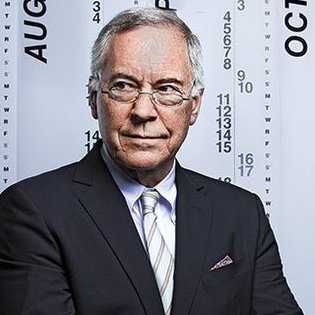
#EthiopiaWatch🇪🇹: While PM Abiy wages war in Tigray, Ethiopia ranks a TERRIBLE 139th of 143 countries for protecting the right to life and security of dissidents in the newly released @TheWJP 2026 RULE OF LAW INDEX.

Xoogga dalku soo kuwaad Xabashida ka iibsan jirtay ma aha?
#Qalbidhagax
Anaga aammus dawdar yahow!


Go for "weapons of mass destruction!"
The "king," Abiy, "the first," is definitely aimed at arms superiority in Sub-saharan African.
But Ethiopia's predicament is internal not external.
Remember, the Soviet Union failed to keep Eritrea's EPLF at bay or Mengistu in power!

Our comprehensive efforts to sustainably ensure our country's peace and security have reached a new milestone today. The state of readiness being built within Ethiopia's defense forces is endowing the nation with the capability to preemptively deter aggression.
In accordance with our prior agreement with the Russian government, we have today taken delivery of the first twelve Su-35 4++ Generation fighter jets. Additionally, Ethiopia will receive four S-400 air defense system batteries.
I would like to express my gratitude to my friend, Russian President Vladimir Putin, for his dedication in ensuring we received these warplanes a year ahead of our agreed schedule. By equipping itself with these fighter jets, Ethiopia has taken the lead among Sub-Saharan African nations.
This historic achievement further strengthens our nation's sovereignty, and it will serve as a massive capability boost that allows us to confidently continue our journey toward ensuring our collective security and regional stability in the future.


Madaxa-na furan, is the proverbial squirrel that roamed in the forest asking inhabitants about, "how tall he is!"
Like the squirrel, he is obsessed with his empty image & soul. Like the squirrel, he argues with "elephants" about his "admirable height!"
"There was a country!"

I have arrived in Nairobi, Kenya, to participate in the Extraordinary Meeting of the Bureau of EAC Speakers.
I look forward to constructive discussions on strengthening cooperation among the parliaments of East African Community Partner States, deepening our working relations and advancing shared regional priorities.
Ease up "king," Abiy, the first!
You look tense.
I held a fruitful bilateral meeting with President Vladimir Putin to discuss avenues for further strengthening the longstanding relations between Ethiopia and Russia. Our discussions addressed cooperation in nuclear energy, health, and trade, as well as bilateral and multilateral matters of mutual interest. I also personally presented President Putin with the Russian edition of my book, Medemer, reflecting our shared commitment to dialogue, mutual understanding, and the continued advancement of Ethiopia–Russia relations.


To be precise, there isn't one single living Somali who understands Abyssinia- Ethiopia's political history than @FarahMaalimM.
For sure, none among the political hawkers of what used to be Somalia, is comparable to his political consciousness, particularly the role of history
Which other country in the unfortunate Horn of Africa can be said is more stable than Eritrea?
The answer is none!

I am fascinated to see a publication from US AFRICOM refer to Eritrea as "one of the only stable countries in the troubled [Red Sea] region." That explains a lot. adf-magazine.com/2026/10/red…

This is a tragedy but what is missed is that the ordinary Oromos in Oromia, do not regard the Amhara as "peaceful neighbours."
They see them as colonial settlers.
Therefore, religious identity is secondary to them. For them, they are "killing" colonial settlers!

Over 60 Amhara Orthodox Christians—including children and the elderly—were massacred in Arsi, Oromia, with homes torched and churches targeted. When Abiy’s government enables or fails to halt the systematic slaughter of its own citizens, it loses every shred of sovereign legitimacy.
Ethiopia’s internal collapse is no longer theoretical; it is an active atrocity crisis. While innocent civilians are slaughtered in Arsi and rural corridors descend into mass graves, Prime Minister Abiy Ahmed is provoking Eritrea, Egypt, entangling in Sudan, and violating Somalia’s sovereignty via Somaliland.
A state burning from within cannot be a stable regional anchor or Red Sea partner. While the US and EU hide behind diplomatic calls for "de-escalation," an ethnic and humanitarian catastrophe is accelerating in plain sight.
@SecRubio @StateDept @US_SrAdvisorAF This is not “tension.” We are staring at the next Rwanda.
#Ethiopia #AmharaGenocide #Eritrea #AbiyAhmedAli
If the myopic political hawkers in Somalia, with the massive backing of regional & continental forces have not been able to defeat Al-Shabaab, why not open dialogue with them?
For how long, can this terrible status quo be maintained?
For how long, can Somalia survive?
Abdirizak Muhumed retweeted

1. I have made the case for and look forward to Helen Zille becoming mayor of JHB. I will also probably reiterate my case for voting for her just before November 4. But now I want to reflect on the character of some of the engagement & what it means for progressive change.
History does not repeat itself.
It, in the words of Karl Marx, comes first as"tragdey" & second, as "farce!"
The search for the Red Sea has always been an Abyssinian tragedy.
Now, it is an Oromo "farce" of epic proportion!

Abiy Has 99 Security Problems, but Access to the Sea Ain’t One!
The Tana Forum @TanaForum was the brainchild of Meles Zenawi, established to discuss the security concerns of #African states. From its inaugural meeting onwards, the Forum identified several central challenges to African security, including:
1) State Fragility in #Africa
2) Managing Diversity
3) Nation-Building
Meles used the #TanaForum to highlight the importance of managing Africa’s ethnic, religious, cultural, linguistic and social diversity as a central issue affecting peace and security. He argued that diversity itself was not the problem; rather, problems arose from poor management, neglect, and a lack of equity, fairness and justice.
The Forum also called for discussions on why #African states were weak, what made them fragile, and what was needed to make them stronger. It also raised a fundamental question: How strong are states that are described as strong?
Fast-forward to 2026, and Abiy’s lightweight politics are on full display at the very same forum. He has used the platform to promote his stillborn idea that being landlocked constitutes an existential threat to #Ethiopia’s sovereignty, and that the solution is to negotiate away the sovereignty of other African states.
This is an anathema to the principles of African security. In fact, it is a textbook example of what not to do if the goal is a peaceful and secure Africa.
The irony is that the Tana Forum was not held in 2023 or 2024 amid security concerns in the #Amhara region, where the Forum is held annually.
Abiy Ahmed has 99 security problems at home, ranging from civil wars and ethnic-based politics to religious violence, a struggling economy, the rising cost of living, poverty, crime and a lack of leadership. Yet access to the sea isn’t one of them.
No wonder the presidents of #Djibouti, #Kenya, #Somalia, #Uganda, #Rwanda and others stayed away from this farce. He managed to hoodwink the Presidents of Ghana, Mozambique and Brundi this year.
CC:
President Daniel Francisco Chapo of Mozambique @PresidenciaMoz.
President John Dramani Mahama of Ghana @JDMahama
Brundi's President Évariste Ndayishimiye @GeneralNeva @NtareHouse
@Haavisto @_AfricanUnion @ymahmoudali @EgyptForeignMin @MfaEgypt @SudanTribune_EN @TheVillaSomalia
Abdirizak Muhumed retweeted

Security Misunderstood: an army needs a national purpose that its soldiers and citizens understand and share. When that purpose gives way to political expediency, those who serve bear the cost. We owe them leadership worthy of their sacrifice.

In speech, he, with no doubt, outperforms @M_Farmaajo.
Politically, he is as myopic as Farmaajo.
He is neither a president nor a national leader. Still, he has not committed a betrayal as historic as Farmajo's rendition of #Qalbidhagax to Abyssinia.
"There was a country!"
