






Pinned Tweet
Important reminder: We are always looking for talented PhD and Postdoc students with excellent backgrounds in physics, electrical engineering, or computer science. Interested? Please contact Prof. Ori Katz at: [email protected]

Advanced Imaging Lab retweeted

New article online: Resource-efficient photonic quantum computation with high-dimensional cluster states.
go.nature.com/4eKkuGx

Advanced Imaging Lab retweeted

New scattering compensation method is compatible with widefield #Fluorescence #Microscopy, requiring tens of frames of raw data acquired using random illumination patterns, but without the need for a spatial light modulator or target sparsity: bit.ly/4i9ivOW

Our paper, "Noninvasive megapixel fluorescence microscopy through scattering layers by a virtual incoherent reflection matrix," has been published! Check out the full paper at @ScienceAdvances: science.org/doi/10.1126/scia….

Make sure to check out the coverage of our work @physorg_com: phys.org/news/2024-11-megapi…
Advanced Imaging Lab retweeted

A new #HUJI study presents a breakthrough in non-invasive imaging through scattering media! This computational holography method corrects 190,000 scattered modes with only 25 frames, bypassing traditional tools. Potential impact spans from medical diagnostics to autonomous tech.
The full article👇
analyticalscience.wiley.com/…
Advanced Imaging Lab retweeted
A distinguished achievement for the Hebrew University, which has climbed in the Shanghai Global Ranking of Academic Subjects in Mathematics, Communication, and Law!
The university now ranks 14th globally in both Mathematics and Communication and 42nd in Law among the world’s top universities.
Additionally, Hebrew University holds an overall global ranking of 81st for 2024.
Published annually in November, the Shanghai Global Ranking of Academic Subjects evaluates research performance in universities worldwide, focusing on five main criteria: world-class faculty, research output, quality of research, research influence, and international collaboration.

Excited to share our latest paper: 'Image-guided computational holographic wavefront shaping' is finally out!
Read more:
@NaturePhotonics: nature.com/articles/s41566-0…
@physorg_com: phys.org/news/2024-10-image-…
See how the optimization reveals onion cells through a scattering layer!
Advanced Imaging Lab retweeted

Check out our new @NaturePhotonics paper on the generation of cluster states at record-high rates using high-dimensional entanglement:
nature.com/articles/s41566-0…
We use spatial entanglement to reduce the number of photons and feed-forward steps in photonic quantum computation (a 🧵)

For more information about our research, please visit our group website: scholars.huji.ac.il/orikatz
For more information about studies in Jerusalem, where we are located, visit: international.huji.ac.il/

Advanced Imaging Lab retweeted

Zuckerman Postdoctoral Scholars Program has been published! Consider joining one of our outstanding researchers for a postdoctoral stay.
Contact anyone of our PI's whom you wish to work with!
Internal submission deadline: 28 JULY 2024, so act fast!
#ZuckermanSTEMLeadershipProgram

Excited to announce our latest research on "Ptychographic Lensless Coherent Endomicroscopy through Fiber Bundles" with the Choi Group @KoreaUniversity!
Fiber bundles, since the 50s, have shown great potential for non-invasive deep tissue imaging. nature.com/articles/173039b0
1/3
However, coherent imaging with these fibers requires correcting core-to-core phase distortions.
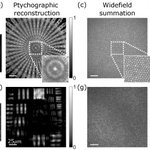
We show that conventional raster scanning in confocal endoscopy with multicore fibers (MCFs) is analogous to probe scanning in ptychography.
2/3

Leveraging this analogy, we show Ptychographic imaging of reflective targets using a commercial MCF and simple intensity-only camera-based detection.
Interested? Check out the full paper here: opg.optica.org/oe/fulltext.c…
3/3

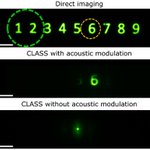
Imaging through scattering media at optical resolution is crucial for applications like deep tissue imaging in biomedicine. Current techniques highly depend on the optical 'memory effect', which significantly limits their field of view.

We repeat this and scan the ultrasound focus over several areas of the object, resulting in a field of view much larger than the 'memory effect'

Advanced Imaging Lab retweeted

Advertising for the #Amazing "Image Science" @GordonConf to take place in June in Maine.
Official deadline is in May, but better to apply ASAP to secure a seat. We are currently gathering significant sponsors to support Junior Researchers.
grc.org/image-science-confer…
