

Step-by-step tutorials on molecular biology & lab techniques. Western blot quantification 📊 Fold change uses 📈LoD & LoQ, Nucleic Acid Extraction🧬 Malaria
Earth (usually)
Joined December 2014
- Tweets2.2K
- Following208
- Followers199
- Likes1.6K
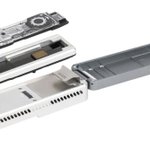




OXFORD NANOPORE LONG READ PLATFORM
How many MOLECULES can one flow cell read?
That depends on which flow cell you hold in your hand. 🧵


DIFFERENT CAS PROTEINS RECOGNISE DIFFERENT 🧬 MOTIFs
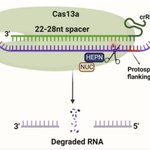
Cas13 recognises RNA instead of DNA.
After it finds its target, it turns into a tiny shredder & cuts nearby RNA that has nothing to do with the target.
That collateral activity has been co-opted for diagnostics (SHERLOCK)


Most RNA sequencing begins with a small act of conversion.
You take RNA, convert it into cDNA with reverse transcriptase, amplify it,
& only then do you read it.
It works beautifully, & I have used it for years, but every 1 of those steps leaves fingerprints on the data 📊

3/ How many RNA molecules can 1 pore read?
One MOLECULE at a time.
A pore captures one RNA strand, reads it to the end, releases it, then captures the next.
A molecule isn’t read nucleotide by nucleotide in isolation, though.
More on the blog: adwoabiotech.blogspot.com/20…


Let’s talk about IMMUNE SYSTEMS.
Specifically, the immune system that is present in bacteria.
Bacteria, including pathogenic ones also have their enemies called phages (viruses of bacteria).


While CRISPR-associated proteins (CAS) can cut anywhere in a genome, there is caveat.
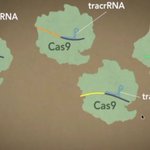
Each Cas protein needs a specific Protospacer Adjacent Motif (PAM).
Even if the guide RNA perfectly matches the DNA, Cas9 won't cut unless the appropriate PAM sequence is beside the target.
11/ TnpB uses RNA to recognise a target DNA sequence & makes a double-strand break.
It also requires an adjacent sequence that the researchers call the TAM (transposon-associated motif).