

Assistant Professor @chinta_tcgcrest Previously, #HudspethLab @RockefellerUniv & LR patterning @amacklab
Joined June 2010
- Tweets688
- Following398
- Followers224
- Likes3.1K




Agnik Dasgupta retweeted

Single-cell atlases give us marker genes. Where are they expressed in the embryo? 🐟🧬🔬
gene2fish shows 53,595 in situ images of 8,263 zebrafish genes side by side, in one gene × stage grid. Free, in the browser. Led by Vera Janssen at @biohub 🧵
Our first zebrafish conference in India @CSIR IGIB. We had a great time at #IZIM
Sharmistha Pal presented her research at the poster session. Thanks for the generous support from @ANRFIndia #PMECRG
#HearingResearch #BalanceDisorders #Zebrafish @chinta_tcgcrest @tcgcrestuniv


Agnik Dasgupta retweeted

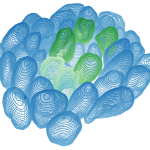
I was blown away in grad school in 2006 to learn sea anemones have hair cells. Look at these bundles! 🤯
Now, 20 years later, a major advance in PNAS: evidence that cnidarian stinging cells and vertebrate hair cells share an ancient TMC-based mechanosensory toolkit.
doi.org/10.1073/pnas.2607106…
Image credit: Watson, Mire & Hudson, Hearing Research (1997), “Hair bundles of sea anemones as a model system for vertebrate hair bundles.”

Agnik Dasgupta retweeted
What if any dataset, any size, any number of dimensions, opened in a browser tab from a link? 🔬🧪💻
Luxar is out today: write it in Python, share it as a link, explore it in any browser. Open source. 🧵 @biohub
Agnik Dasgupta retweeted

“Almost everything you learn in biology textbooks is a hallucination.”
This week we spoke with Nobel Prize-winning physicist @Eric_Betzig about one of the biggest challenges in biology: actually seeing what happens inside a living cell.
Betzig’s work in super-resolution microscopy revealed a dynamic molecular world that often looks very different from the static picture in biology textbooks.
We discuss PALM, the diffraction limit, live-cell imaging, and his ambitious Cell Observatory project to combine automated microscopy, massive datasets, and AI to understand the complexity of living cells.
Full episode here on X and YouTube (see comment).
Timestamps:
00:00 - Intro
01:30 - The Diffraction Limit
12:30 - Imaging Cells
19:04 - Betzig's Transition from Physics to Biology
32:37 - Getting Fed Up with Science
34:57 - Leaving Science for the Automotive Industry
55:55 - 2008 and the Fall of the Automotive Industry
1:09:50 - Building a Microscope in a Living Room
1:34:01 - Insights from Super-Resolution Microscopy
1:47:53 - AI for Analyzing Petabytes of Data
2:10:35 - Improving Microscopes
2:15:27 - Nuclear Energy and Politics
2:23:18 - The Magic of Bell Labs
2:36:17 - Is SpaceX the New Bell Labs?
Agnik Dasgupta retweeted

🧵 What if one reason fertility declines with age isn’t just genetic-but mechanical?
Thrilled to share our new paper in @NatureCellBio:
Elevated contractility drives implantation failure in mouse embryos from aged females… here’s what we found 👇
1/11
nature.com/articles/s41556-0…

Agnik Dasgupta retweeted

Ever wondered how organs take shape? Join us to find out! The Organ Mechanobiology Lab @NCBS_Bangalore is recruiting Graduate Trainees. Perfect for final-year students curious about tissue mechanics, development & cell biology. Check out the ad below 👇 Please RT! Thanks 🙏

Agnik Dasgupta retweeted

Homo sapiens gets current brain size long ago (300 kya) but only gets modern brain shape (globular) more recently (100 kya). science.org/doi/10.1126/scia…

Agnik Dasgupta retweeted

The Burgess Lab has just updated the ZebrafishGenomics public data hub for the UCSC browser (available all the way at the bottom here: genome.ucsc.edu/cgi-bin/hgHu…). They added several useful tracks, including CRISPR guides and variants.
Agnik Dasgupta retweeted

Proud to share that @ManasPratimCha1 recently got the npdf fellowship in our group. He will be working on understanding the molecular mechanisms underlying behavioral timescale synaptic plasticity. Congratulations! 🎊🎈🍾 @chinta_tcgcrest @tcgcrestuniv @ANRFIndia

Agnik Dasgupta retweeted

For most of our lives, we are measured by ordinary questions.
How much do you earn? How much have you saved? What car do you drive? What is your company's valuation? Where did you spend your vacation? Which restaurants you eat in?
But every once in a while, you come across people who have quietly stopped playing that game.
They choose to wager their youth, their careers, their savings, and often their peace of mind on an idea that appears absurd to everyone else. They are drawn not by certainty, but by possibility. Their ambitions are so disproportionate to the odds that failure is almost the expected outcome.
Engineers who attempt moonshots belong to this rare tribe.
Today's Skyroot launch is one of those moments.

We’ll be watching this ignition on loop all day.
Kalam-1200 — Vikram-1's first stage, named for Dr. A.P.J. Abdul Kalam — roaring to life and lifting Vikram-1 off the pad, on a flight that reached orbit.
#Vikram1 #MissionAagaman
Agnik Dasgupta retweeted

Check out our new virtual seminar series called the Conceptual Biology Forum, aimed at creating a space for experimental biologists to consider and develop concepts for living systems. We host Zoom talks from philosophers, historians, and experimentalists. Join via Zoom to hear tomorrow's talk from Dr. Ruslan Medzhitov (Yale) entitled, "Cell Communities and Tissue Organization"
Date: June 16th, 2026
Time: 10am – 11am EDT
Zoom link: rocku.zoom.us/j/99940265457?…
Meeting ID: 999 4026 5457 Passcode: 564924
Previous talk recordings here: youtube.com/@ConceptualBiolo…

Agnik Dasgupta retweeted

2026 marks a major milestone for Rockefeller: 125 years ago, the university was founded as the Rockefeller Research Institute. In this in-depth Q&A, President Rick Lifton discusses the enduring power of our guiding mission.
#125YearsofRockefeller
🔗: bit.ly/3RAUzeq

This is such an amazing work!

The last work of my PhD is finally out :). A big thanks to all authors, and especially to my PhD supervisor @florianjug! Hope to do similar quality work in India in the future ☀️.
Agnik Dasgupta retweeted

Out now in @naturemethods: "GloBIAS: strengthening the foundations of bioimage analysis." A new Correspondence article published with @SpringerNature. 📢
Access here: rdcu.be/feOiw#research #bioimageanalysis
doi.org/10.1038/s41592-026-0…
@VSCHT @CharlesUniPRG
Agnik Dasgupta retweeted

New preprint: How is multicellular handedness determined? The same cell chirality can produce opposite multicellular handedness. Just as a car move forward or backward from the same engine rotation. By @TomokiIshibashi, et al. doi.org/10.64898/2026.04.04.…
Agnik Dasgupta retweeted

Kupffer's vesicle is a ciliated epithelial organ important for symmetry breaking during #zebrafish development. @ononiwu_favour, @LovelessRadio & co establish volumetric electron microscopy as a platform for high-resolution, 3D analysis of KV architecture. doi.org/10.1242/bio.062489
Agnik Dasgupta retweeted

Are you learning #DataScience, #DataAnalytics, #Geostatistics, #MachineLearning, #DeepLearning, or anything related? They all build on a foundation of probability!
I’ve got you covered with a free e-book chapter on probability:
geostatsguy.github.io/Machin… clear notes, Python code, demonstration workflows, interactive examples, and YouTube lectures. I’m here to help. #WhatStartsHere

Agnik Dasgupta retweeted
New era of plasticity research, it was a fun experience interacting with @yasemin_sap and other members of @QuantaMagazine. Check out the article here quantamagazine.org/a-new-typ…

Agnik Dasgupta retweeted

🧵We just published in @NatureComms and I'm excited to share what we've been working on.
We expanded the speed-optimized DNA-PAINT sequences from 6 to 12 — enabling faster, higher-resolution multiplexed super-resolution imaging of up to 10 cellular targets. Here's the story. 1/n
