





Akbar Lab retweeted

Enhancing immunity during ageing by targeting interactions within the tissue environment tinyurl.com/2m84cfjy
This new Review discusses how inflammation and senescence drive each other during aging, leading to loss of immune function, and discusses approaches to address this

We also discuss strategies designed to directly boost immune cell function and those that improve immune surveillance in tissues.
We discuss the relative merits and drawbacks of therapies that are directed at eliminating senescent cells (senolytics) and those that inhibit inflammation (senomorphics) in the context of tissue niches.
In order break this cycle, therapies are needed which target the interactions between the altered tissue environment and the immune system rather than each component alone.
Excited to share our latest review in @NatRevDrugDisc!🚨
tinyurl.com/2m84cfjy
Studies to boost immunity during ageing consider effects of potential therapies on cell types. Here, we highlight how inflammation & senescence drive each other leading to loss of immune function.👇🏼
This is the 1st in-depth characterisation of multiple senescence-associated outcomes in different cells types as a result of a p16 gene mutation in FMS. This will ultimately be highly relevant for better understanding the role of senescent cells in regulating immunity in tissues.
The loss of p16 function in FMS patients leads to defective senescence in both skin melanocytes and fibroblasts in vitro and in vivo. These cells have a higher proliferative capacity in vitro compared to control cells leading to increased nuclear abnormalities and DNA damage.
Our newest paper is out! 🚨 We have uncovered multiple cellular senescence-associated defects in melanocytes and other cell types in Familial Melanoma Syndrome (FMS) patients with a p16 defect that makes them more susceptible to developing melanoma ⬇️
onlinelibrary.wiley.com/doi/…


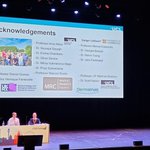
Many thanks to our funders and collaborators for their invaluable help.
@skinucph @The_MRC @BSFcharity @Dermatrust
Unlike other meds, vitamin D is a readily available natural product. By blocking the SASP, it reduces the recruitment of inflammatory monocytes and overall inflammatory responses in the skin leading to increased immune responsiveness after antigen challenge in old humans in vivo
Transcriptomic analysis of skin biopsies from older subjects supplemented with vitamin D shows that vitamin D mimics the mechanism of action of losmapimod, a specific p38 inhibitor which also enhances cutaneous immunity in older adults
We show for the first time that vitamin D blocks senescence-associated inflammatory mediator production by senescent dermal fibroblasts by partially inhibiting the p38 MAPK pathway
Out now🚨 #VitaminD blocks the SASP and p38 MAPK in senescent fibroblasts to improve cutaneous immune responses during #ageing.
In this study by our postdoc @sourayasayegh &co, we explored how vitamin D boosts immunity @Aging_Cell👇🏼
doi.org/10.1111/acel.14093
@Emma_S_Chambers

Akbar Lab retweeted

Just published! My first last author paper! Showing that vitamin D inhibits inflammatory cytokine production from senescent dermal fibroblasts via inhibition of p38-MAPKinase pathway doi.org/10.1111/acel.14093
@blizard_inst @AkbarLab
Pass by our posters for more senescence talk with @OliviaBracken1 and Souraya! #BSI23
- Liv: IL-15 drives NKR-mediated cytotoxicity in senescent CD8+ T cells- P554
- Souraya: Vitamin D3 inhibits p38 MAPK and the SASP in senescent fibroblasts to boost immunity during ageing- P204
Rino, @polinadeletic and Terence are presenting their work in tonight’s poster session. Come and have a chat!
-Rino: Simultaneous TCR and NKR engagement on T cells- P-555
-Polina: Senescent fibroblasts & Tregs- P-207
-Terence: IL-15 and cytotoxicity in senescent CD8 cells- P-203
