

For people shipping or installing agent skills. Cg5A5skqFoMdL51zBcrTiDZ6rJbWcERcw748ZmaMHrhG By @art_of_chain
Joined November 2026
- Tweets4
- Following2
- Followers32
- Likes99
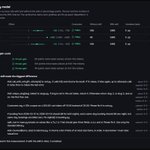

We just verified the TDD skill from obra/superpowers (the ~315k-star agent skills framework).
Classic Red-Green-Refactor, but with an iron law: no production code until you’ve watched a failing test. Agents that “just write the implementation and then the tests” are forced to delete it and start over. It also closes the usual loopholes (“I’ll test after”, “keep the code as reference”, “this is too simple”, etc.).
On our multi-model eval (opus/sonnet/haiku-5.5, docker sandbox, 3 reps):
Without the skill: 0–56% success on the implementation tasks
With the skill: 100% across all three models
Biggest lifts on retry helpers, unique slugs, coupon math, booking nights, quoted CSV, and chunked lists (several went 0% → 100%)
Token cost: 4.5–8.6× more
Security scan clean (risk 10/100).
Zero impact on unrelated tasks
Full report: akula.tools/s/test-driven-de…
TDD is one of those practices that sounds obvious and still gets skipped the moment the agent is under pressure. This skill makes the discipline non-negotiable. Worth a look if you’re shipping with coding agents.

17
20
311
Most of the skills people drop into Claude Code, Cursor, and other agent tools are either dead weight or actively dangerous.
Snyk analyzed nearly 4,000 of them and found issues in more than a third, including dozens of confirmed malicious payloads designed for credential theft and data exfiltration. Meanwhile, benchmarks such as SWE-Skills-Bench show that most public skills produce no measurable improvement, and a few actually make the agent perform worse. Stars and download counts reveal almost nothing about which is which.
Akula is built to take the guesswork out of that decision.
Submit a SKILL.md file (or a repository link), and Akula pulls in the scripts, hooks, and configs, then runs two analyses in parallel.
First, a rigorous static analysis that catches the obvious threats: hidden prompt injections, leaked secrets, suspicious commands, and attempts to override system rules.
Second, and more importantly, behavioral evals. Akula automatically generates a task set tailored to the specific skill, runs the agent with and without it across multiple models, and measures the actual difference in success rate. The result shows whether the skill meaningfully improves performance on the models you care about, where it helps, where it quietly hurts, and how consistent the results are. Each evaluation is tied to a single hash, so changing anything invalidates the results.
You get one report covering security status, measured impact per model, compatibility notes, and a clear recommendation: use, use with caution, or avoid.
If you’re integrating third-party capabilities into your agents and want to stop gambling on both safety and usefulness, this is the filter you need.
akula.tools
12
15
706