

Principal Software Engineer ¦ .NET lover
London, UK
Joined March 2009
- Tweets2.5K
- Following1.1K
- Followers286
- Likes1.8K





Pinned Tweet
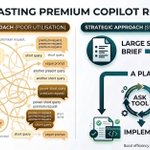
You drop an AI agent into your real codebase and it produces garbage. Wrong style, subtle bugs, side effects everywhere. The problem isn't the model. Your codebase isn't ready for AI. Think of it like handing off a biathlon relay with no map of the course 🥇🧵👇
Running AI coding tools on Windows can feel like playing on hard mode, especially when your PC is also your gaming rig 🎮
OpenCode 2 works well out of the box, but three quick settings make it run much cleaner. 🧵👇
Running local models? Tune compaction in opencode.jsonc:
"compaction": { "auto": true, "keep": { "tokens": 65536 } }
The default keeps ~15k recent tokens. With a big local context window, 64k keeps recent work intact without premature amnesia.
Full guide, with the trade-offs and how to undo each setting:
alessio.franceschelli.me/pos…
If you followed my guide for using the Windows ssh-agent in WSL, there’s a small improvement worth making.
Add unlink-early to the socat command so a stale socket does not stop the bridge restarting after WSL shuts down.
Updated guide here:
alessio.franceschelli.me/pos…
AI works best where it can test itself. Software can do thousands of automatic loops: make a mistake, run tests, fix it, repeat. In work that needs an expert to review every attempt, where does the big saving actually come from?
Can AI work outside of software development?
alessio.franceschelli.me/pos…
A few days ago I published Burla. This follow-up is about the part I care more about: the design bets behind it. Toy examples are where mocking libraries look tidy. Real migrations are where they tell the truth. Thread below. 🧵👇
I finally published Burla, a .NET mocking library I have been rewriting for months while pressure-testing models, local setups, and agentic coding workflows. I needed a real project, not one more opinion about AI. Built with LLMs in the loop, for the LLM era. Thread below. 🧵👇

Repo, NuGet, and the broader story are in the blog post:
alessio.franceschelli.me/pos…
