

Co-founder of Axiom - AI for drug toxicity
Joined December 2014
- Tweets107
- Following279
- Followers555
- Likes1.1K



Alex Beatson retweeted

btw by far the most interesting new pattern we are seeing in @latentspacepod (upcoming with @olivierddr and @sdrzn and @pashmerepat)
is that people are using @claude_code and @Cline for non-coding tasks and this is becoming surprisingly effective for things like sales/BI automation and Gsuite (read my emails, slacks, linears, search web, make report, etc etc)
ofc enabled by MCP, but somehow BOTH chatgpt and claude desktop have not captured this kind of organic integration/white collar work automation behavior
part of this i guess is driven by the generous $200 claude max plan limits, part of it is maturity of MCP, but that still doesnt explain why people don't seem to use Claude Desktop for this stuff?


Alex Beatson retweeted

everybody wants to do fun experiments
nobody wants to write core infrastructure code
Alex Beatson retweeted

To replace animal testing with AI, we need MASSIVE human datasets.
Today, we're thrilled to share Axiom's new data exploration tool, providing the ability to visually explore the world's largest primary human liver toxicity dataset. Built with Axiom's proprietary wetlab protocols, our dataset includes detailed liver toxicity profiles for over 100,000 distinct molecules.
The key to this dataset is our ability to do high-throughput, multiplexed high-content screening with primary human liver cells. Traditionally, toxicity assays either sacrifice throughput or sacrifice biological relevance (using easy-to-grow immortalized cell lines instead of real human cells). We managed to combine throughput, physiological relevance, and multiplexing in one platform. The assays run in a high throughput format using automation, meaning thousands of compound-dose conditions can be tested in one experiment. We achieved this using pooled primary human hepatocytes, which are often fragile and expensive. By systemizing our automation and quality control processes, we were able to run over 120+ batches on the same donor pool with incredible reproducibility and consistency.
We did this while integrating many readouts per well, whereas many existing toxicity assays only do a single readout. Our multiplexed approach provides far more data per experiment enabling us to measure 10-20 different toxicity phenotypes such as apoptosis, necrosis, mitochondrial fission, endoplasmic reticulum stress, stress granule formation, microtubules, and more all from a single well on a 384-well plate! The combination of scale, high content information, and data quality is exactly what is needed to train highly accurate AI models in biology.
If you're interested, please explore the dataset in the comments below and let me know if you want to chat about the details!
Alex Beatson retweeted

Exclusive: Amplify Partners has raised $200 million for its first biotech-specific fund
Targeting ~20 investments of $1.5m-$10m in pre-seed/seed/Series A-stage startups.
The Silicon Valley VC has also hired @ElliotHershberg as a partner: endpoints.news/amplify-raise…

Alex Beatson retweeted

Axiom is one of the few techbio startups that I'm bullish on. They're focused on a simple problem (liver toxicity prediction) for which ML is a likely value-add, as opposed to chasing a vague, sprawling, unfocused scaling story. So refreshing!

Announcing Axiom: Eliminating drug toxicity, without using animals!
Alex Beatson and I founded Axiom a little over over a year ago with the mission of eliminating drug toxicity by replacing traditional experiments, such as animal testing, with AI models. We are excited to announce that we've raised $15M in seed funding from Amplify Partners, Dimension Capital, and Zetta Ventures to get this done.
It has been a wild ride since we got started. Within our first year, we've created the world's largest human toxicity dataset, encompassing data on over 100,000 molecules generated through proprietary lab methods combined with 1000s of clinical outcomes structured using LLMs. With this dataset, we trained an AI model which predicts drug-induced liver injury more accurately than traditional physical experiments, addressing a leading cause of clinical failure recently exemplified by Pfizer's discontinued obesity drug.
We publicly launched this model at the Society of Toxicology conference in March and the response has been tremendous! We're actively conducting or finalizing pilot studies with diverse partners, including six of the twenty top pharmaceutical companies, a major agrochemicals firm, many biotechnology companies, hedge funds, and strategic partners. We're honored to partner with these insanely great scientists to rigorously assess our AI models and explore how to best integrate them into their drug discovery workflows. The expertise of these scientists is crucial for validating and thoroughly evaluating these new methods. We have multiple publications out already but we plan to share a lot more data from these early pilot studies in the coming months.
At the same time, the FDA recently announced plans to phase out animal testing over the next few years, emphasizing that animal studies will become "the exception rather than the norm." The HHS Secretary RFK has said that "they have found AI to be much more precise in identifying the impacts of toxins" on the human body. With our recent progress, Axiom is uniquely positioned to support the FDA and scientific community in realizing this shift.
We will eliminate clinical trial failures due to toxicity. And we don't need animals to do it.
For more, you can read Andrew Dunn's Endpoints article on Axiom in the comments.
Alex Beatson retweeted

20 trillion dollars to axi.om

Today, the FDA is taking a groundbreaking step to advance public health by replacing animal testing in the development of monoclonal antibody therapies and other drugs with more effective, human-relevant methods.
fda.gov/news-events/press-an…

ALT Text reads "FDA announces plan to phase out animal testing requirement for monoclonal antibodies and other drugs"
Alex Beatson retweeted

I'm incredibly excited to announce our new company, @datologyai!
Training models is hard and identifying the right data is the most important and difficult part -- our goal @datologyai to make optimizing training data at scale easy and automatic across modalities.
techcrunch.com/2024/02/22/da…
Alex Beatson retweeted
Wrote a blogpost on selling AI products + services to big pharma! Check it out below!

Alex Beatson retweeted

Unlike GPT-3 or PaLM, ChatGPT is not just a raw language model trained with maximum likelihood. It's fine-tuned with a combination of additional supervised and reinforcement learning signals based on human preferences.
Video covering the training recipe: youtu.be/VPRSBzXzavo
Alex Beatson retweeted
Why are random walks recurrent in 1 & 2D, but transient in 3D? Let's try to get some intuition for this 1921 result by mathematician George Pólya.
Video: youtu.be/byvEzyFgv44


Alex Beatson retweeted

We are hiring PhD interns for my team at Google Research: research.google/teams/applie…
We use computational methods (especially ML) to advance research in a variety of scientific fields. For full consideration, please apply by January 15: careers.google.com/jobs/resu…

Alex Beatson retweeted

Want to use Gaussian processes for your problem but sometimes find it too costly to afford?
Our #NeurIPS2020 paper introduces an amortized inference method as a lightweight alternative to the conventional MLL-opt for training GPs.
w/ Xingyuan Sun, Peter Ramadge, @ryan_p_adams

Alex Beatson retweeted

The Bias-Variance Trade-Off & "DOUBLE DESCENT" 🧵
Remember the bias-variance trade-off? It says that models perform well for an "intermediate level of flexibility". You've seen the picture of the U-shape test error curve.
We try to hit the "sweet spot" of flexibility.
1/🧵

Alex Beatson retweeted
Automatic differentiation lets you efficiently compute derivatives of functions implemented as programs. But how does it actually work? Check out this video I made covering the basics of this neat set of techniques.
youtu.be/wG_nF1awSSY

Alex Beatson retweeted

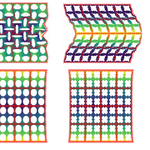
Excited to share our recent paper "Nano-topology optimization for materials design with atom-by-atom control" published in Nature Communications:
nature.com/articles/s41467-0…
@Cal_Engineer @UCBerkeley @UCB_ME @NatureComms
Alex Beatson retweeted

The adjoint method for PDE-constrained optimization: the conclusions of my 9-month struggle to understand the word "adjoint".
I'll be talking about how automatic differentiation (AD) can help us better understand the adjoint method, and vice versa. Let's get started!
1/

Alex Beatson retweeted

At the price of adding noise to gradients, we can save lots of memory. This makes backprop ~1 order of magnitude more memory-efficient (depends on model), without hurting optimization much. I'd like to see this on larger problems.
You’re unable to view this Post because this account owner limits who can view their Posts. Learn more
Alex Beatson retweeted
Releasing a new dataset, SketchGraphs, which contains 15 million CAD sketches coupled with their geometric constraint graphs.
youtu.be/ki784S3wjqw
arxiv.org/abs/2007.08506
github.com/PrincetonLIPS/Ske…
w/ Yaniv Ovadia, @zhouwenda, @ryan_p_adams