

US-educated Chinese engineer. Translating CCP newspeak into plain English 🇨🇳→🗳️ Follow for what Chinese state media won't tell you.
Joined June 2026
- Tweets1K
- Following309
- Followers357
- Likes1.2K






Pinned Tweet
Two Kinds of Free Speech
Chinese nationalists love telling the West: "You don't have real free speech either."
Okay. Let's compare. Not slogans, cases.
In China, the powerful have a name that can't be touched.
Luo Changping, a former investigative journalist, wrote one sarcastic post about Chinese soldiers in the Korean War movie hype. Sentenced to 7 months in prison (2022) for "damaging the reputation of heroes and martyrs."
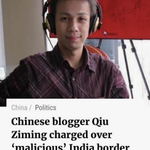
Qiu Ziming, a blogger with 2.5 million followers, questioned the official death toll from the Galwan border clash. Sentenced to 8 months (2021), and made to apologize on state TV.
BYD sued a car blogger for trashing its cars and won ¥313,800 plus a public apology. Regulators shut his account down on top of that.
And when a car review site proves a problem? In October, Dongchedi bought brand-new Huawei-backed Zunjie V800s with its own money and slammed the brakes from 100 km/h. In three cars out of three, the brake pedal bracket snapped. One car had 3 km on it.
The government did open an investigation into the car. But within about a week, the test videos had vanished from Douyin, WeChat, Bilibili, Weibo, even Dongchedi's own app. No one has explained who ordered it.
A broken brake is a safety issue. A video of a broken brake, apparently, is a bigger one.
But ordinary people have no name at all.
Zheng Linghua, 23, dyed her hair pink and posted a photo with her grandfather to celebrate getting into grad school. Strangers called her a whore, a "demon," an old man's mistress. She tried to fight back legally: months of collecting evidence, chasing platforms, finding lawyers. She was diagnosed with depression. She died in January 2023.
No 7 months for anyone. No state TV apology. Her abusers just moved on to the next target.
Now look at America.
You can call the President an idiot, a fascist, a clown, every day, on TV, and nothing happens. That's not a loophole. The Supreme Court built it on purpose. New York Times v. Sullivan (1964): public figures must prove "actual malice" to win a defamation case. Hustler v. Falwell (1988): you can even mock a famous preacher in a vulgar parody. The more power you have, the more criticism you have to take.
But there's still a line. Threats aren't speech. Last month in Kansas, a 24-year-old commented "Let's shoot Trump" on Facebook before a rally. Federal agents arrested him within days.
And when the powerful attack the powerless? Two Black election workers in Georgia, Ruby Freeman and her daughter Shaye Moss, were falsely accused by Rudy Giuliani, Trump's own lawyer, of rigging the 2020 election. They got death threats. They sued. A jury awarded them $148 million.
Sandy Hook parents were told by Alex Jones that their murdered children were "actors." Courts ordered him to pay over $1.4 billion.
Ordinary people, beating the most powerful men in the room.
So here's the difference.
In China, freedom points down. You can't touch the people above you, so you're "free" to crush the people below you. Free to bully a girl with pink hair. Free to call a foreign athlete a monkey. Free to dox a stranger. That's not freedom. That's permission.
In America, freedom points up. Mock the President all you want. But if you lie about a nobody and wreck her life, the law, and usually a crowd of strangers online, comes for you.
Lu Xun wrote this almost exactly 100 years ago:
勇者愤怒,抽刃向更强者;怯者愤怒,却抽刃向更弱者。
"The brave, when angry, draw their blade against the stronger. The coward, when angry, draws it against the weaker."
A civilized country isn't one that bows to the strong and stomps on the weak.
So I'll ask you: which freedom would you want? The freedom to criticize those in power, or the freedom to bully those who can't fight back?
The China I love is made of people who stand up for what's right, not social Darwinists who kneel to the strong and prey on the weak.


Alex | Decoding China retweeted

We're giving away a Hogwarts Legacy custom wrapped NVIDIA GeForce RTX 5090 to celebrate its official release with DLSS 5 🪄
To enter:
🟢 Share this post
🟢 Comment #RTXON
Terms and Conditions: nvidia.com/en-us/geforce/con…


Called Mao a Dictator? It is a CRIME, literally.
Chinese people have a name for laws like this: a "pocket crime." A charge so loose that the state can fit almost anyone inside it.
This one is called "infringing on the reputation and honor of heroes and martyrs." Article 299-1 of the Criminal Law, in force since March 1, 2021. Up to three years in prison.
Here is what it looks like in practice.
1. The blogger who questioned a death toll
Qiu Ziming had 2.5 million followers on Weibo. In February 2021, after China finally announced the soldiers it lost in the border clash with India, he suggested more had died than Beijing admitted.
His posts were read about 200,000 times. Police detained him the next day. Eight months in prison, plus a public apology on national media.
2. The journalist who made a pun
Luo Changping was a well-known investigative journalist. In October 2021 he watched a blockbuster about the Battle of Chosin Reservoir, where Chinese troops froze to death fighting US Marines. He posted a pun calling the frozen company the "silly sculpture company" and asked whether the war was just.
The post was read about 22,000 times before Weibo removed it. He deleted it, apologized, and turned himself in. Seven months in prison. He also had to apologize in the PLA Daily and pay 80,000 yuan.
3. The artist who mocked Mao
Gao Zhen made sculptures satirizing Mao between 2005 and 2009. One shows Mao kneeling, as if confessing.
This August a court sentenced him to three years. The maximum.
Why this law fails as law
First, nobody knows who counts. The law never says who is a "hero." Prosecutors say it means anyone who has died. Mao died of illness at 82, and the court treated him as a martyr. Another man was convicted for insulting Yuan Longping, an agricultural scientist, in a WeChat group. If a scientist counts, who doesn't? China's own Criminal Law, Article 3, says no act is a crime unless the law clearly defines it. This law defines almost nothing.
Second, it reaches backward. Gao's sculptures were made more than ten years before the law existed. Chinese law itself says new crimes should not apply to past acts.
Third, there is no real victim. Defamation laws protect people from lies that damage them. The dead can't be damaged, and in most of the US you can't defame them at all. Here the victim is "the public interest," which means the official version of history. Qiu wasn't punished for lying. He was punished for doubting a government number.
Fourth, the crime is measured by other people's anger. Court rulings keep citing view counts and "strong public indignation." So whether you go to prison depends on how many people read you and how many get angry.
Fifth, the punishment includes forced speech. Convicted people must publish apologies in state media, written in the state's language.
This is what people mean when they say China has rule by law, not rule of law. The law is a tool the state uses on you. It doesn't limit what the state can do to you.
In the US people make memes of Washington and Lincoln every day. Some are pretty rude. Nobody gets arrested for it.


The Emperor's New Ballot
Zhai Xiang wrote a long post about Beijing's "election day," with a dorm-room story about a Dutch roommate who went silent. However, a lie is always a lie, even if you write it on paper.
1. "Local deputies are directly elected."
On paper, yes. Any 10 voters can nominate someone. But the final list of candidates is decided by an election committee that works under the Party. If they don't like you, you don't get on the ballot.
Liu Ping found that out. In 2011 she ran as an independent candidate in Xinyu, Jiangxi. She had enough supporters to qualify. The local election office ruled her ineligible anyway, and police harassed her and her supporters. In 2014 a court sentenced her to six and a half years in prison.
That's what happens to people who take the "direct election" part seriously.
2. "Higher levels are elected indirectly."
That means ordinary Chinese people never vote for anyone above the district or county level. Not the provincial congress. Not the National People's Congress. Not the president.
The district deputies Beijingers voted for today pick the next level up. That level picks the next one. By the time you reach the top, the people have been filtered out several times.
3. Xi "marked his choice."
What choice? Who put those names on his ballot? He voted for a district-level deputy in Zhongnanhai. Nobody in China gets to vote for or against Xi.
The NPC does. Here's how that goes:
2018, removing presidential term limits: 2,958 yes, 2 no, 3 abstentions.
2023, Xi's third term as president: 2,952 yes, 0 no.
The most divided vote in NPC history was the Three Gorges Dam in 1992. Even that passed with about two-thirds.
If a legislature never says no to the leader, what is it for?
4. "All 55 ethnic minorities have representatives."
True. Chinese law guarantees every group at least one seat. But who picks those deputies? The same Party.
Uyghurs have seats in the NPC. Those seats did nothing when Uyghurs were sent into camps in Xinjiang. Tibetans have seats too. Ask them how much their deputies can say about the Dalai Lama.
In Xinjiang and Tibet, the government chairman is from the local ethnic group. The person who actually runs the region is the Party secretary above him.
Representation means your representative can say no to power. A seat that can only say yes is decoration.
5. "Can the US Congress guarantee every minority a voice?"
No. And it doesn't need to. In the US any group can run its own candidates, start its own party, vote out the people in power, protest in the street, and sue the government in court when voting rights are violated.
Nobody in Washington assigns you a representative. You choose one. If you lose, you can try again in two years, and you won't go to prison for trying.
6. "9.57 million registered voters, 13,000 polling stations."
Big numbers don't make an election real. North Korea reports almost 100% turnout. Turnout tells you how well people are organized. It doesn't tell you whether they had a choice.
The post says Zhai's community and his workplace both contacted him to ask where he'd vote. In a free country, your employer asking how you plan to vote would be a scandal.
7. The roommate.
A nice story. Unnamed roommate, unnamed deputy prime minister uncle, and he went silent. Maybe he was convinced. Maybe it was late and he wanted to sleep.
Either way, one quiet roommate doesn't change the vote counts above. And marrying a Chinese woman has nothing to do with whether China's elections are free.

Americans have just cast their ballots, and now voters in Beijing are heading to the polls today. How do two very different political systems approach elections, political representation, and democratic participation?
Many years ago, when I was studying at Cornell, I had a roommate for one semester who was an exchange student from the Netherlands.
His uncle was the deputy prime minister of the Netherlands at the time.
So, naturally, our dorm room had no shortage of political discussions. Unfortunately, neither of us had the authority to settle any of them at the beginning.
He knew relatively little about China, yet he had quite a few preconceived notions about the country, particularly its political system. And he's passionate.
On Friday and Saturday nights, after the lights went out in our dorm, we would often lie in our beds and engage in heated but friendly debates that sometimes lasted late into the late night.
While other college students spent their Friday nights partying, we spent ours debating in the dark. Not exactly the typical college experience, I know.
Like many others, he was skeptical about how elections worked in China.
I explained to him that deputies to the people's congresses at the county, county-level city, municipal district, township, are directly elected by citizens aged 18 and above who are entitled to vote. Representatives at higher levels are also elected, through an indirect electoral process.
I also pointed out something about China's political representation that he hadn't realized: all 55 ethnic minority groups have representatives in the National People's Congress, with special arrangements to ensure representation even for groups with very small populations.
I asked him: "Can the US Congress guarantee that every ethnic minority group has a voice of its own in the national legislature?"
Silence fell over his bed. And if you knew how much we loved arguing, you'd understand how unusual that was.
I continued:
If, under one political system, everyone formally has an equal vote, yet certain groups consistently struggle to achieve adequate representation, while another system specifically guarantees political participation for smaller ethnic groups through its allocation of seats and institutional arrangements, how should we understand what democratic representation truly means?
Through our countless late-night debates, some of his assumptions about China gradually began to shift.
Years later, our friendship had outlasted our disagreements-and his connection to China had taken a turn neither of us could have imagined. Two years ago, he married a Chinese woman.
And he invited me to their wedding! I guess China had found a more persuasive ambassador than me.
Of course, marrying a Chinese woman does not mean that he has to agree with everything about China. But I firmly believe that when someone truly gets to know China and its people, the China they come to see is often very different from the China they once imagined.
Today, I found myself thinking once again about my former Dutch roommate.
Because it is election day in Beijing for a new term of deputies to the people's congresses at the district and township levels.
Well before election day, both my local community and my workplace had both contacted me to ask where I intended to register and cast my ballot.
I could also clearly sense that Beijing has placed considerable emphasis this year on encouraging and organizing voter participation.
According to figures released by the Beijing municipal authorities, by late October 9.57 million voters have registered and been confirmed as eligible to vote in this round of elections.
More than 13,000 polling stations have been established across the city. Voters will elect 4,898 deputies to the new district-level people's congresses and 11,137 deputies to the township-level people's congresses.
On this very day, one polling station in particular attracted considerable public attention: the Huairentang (Hall of Cherished Benevolence/怀仁堂) polling station in the Zhongnanhai (中南海) electoral constituency of Beijing's Xicheng District.
Huairentang was once the residence and office of the Empress Dowager Cixi, who wielded the real power in China during the final years of the Qing Dynasty (1644-1911).
In 1900, when the Eight-Nation Alliance occupied Beijing, Marshal Alfred von Waldersee, the commander of the allied forces, unceremoniously chose Huairentang as his residence. The building was subsequently destroyed in a mysterious fire. Some accounts suggest that the blaze was accidentally started by Waldersee's cook.
During the Republican era, Huairentang became a venue for presidential receptions and official ceremonies. In 1949, it hosted the First Plenary Session of the Chinese People's Political Consultative Conference, a landmark gathering that helped lay the groundwork for the founding of the PRC. It subsequently became an important venue for meetings of senior CPC leaders.
Chinese President Xi cast his ballot at the Huairentang polling station in Beijing's Zhongnanhai leadership compound. Xi presented his voter registration card and was handed a ballot after officials verified his eligibility. He then marked his choice and dropped the ballot into a box.
Xi said electing deputies to people's congresses was essential to the functioning of China's people's congress system and a major event in the country's political life. He added voters should be ensured to elect representatives they are satisfied with.
All of this brought back memories of the many debates I used to have with my Dutch roommate. In fact, China's electoral system has a number of features that deserve closer examination.
The first is a basic question: How are deputies to China's people's congresses actually elected?
China uses a combination of direct and indirect elections. Deputies to people's congresses at the county level, including those in urban districts, counties, autonomous counties and cities without districts, as well as deputies at the township level, are directly elected by voters.
Deputies to people's congresses at higher levels, including cities, provincial regions and the NPC, are elected indirectly through people's congresses at the next lower level.
The second concerns political representation: China's electoral law explicitly seeks to ensure that deputies do not come exclusively from a narrow political or social elite. China's Electoral Law of the National People's Congress and Local People's Congresses stipulates an appropriate number of deputies from females, the grassroots, particularly workers, farmers and intellectuals.
It even provides for representation of returned overseas Chinese in the congresses in areas with significant populations of returned overseas Chinese.
In direct elections, the number of candidates must exceed the number of seats by between one-third and 100%. For example, if three seats are available, there must be between four and six candidates.
In indirect elections, where deputies are elected to the next higher level of people's congress, the number of candidates must exceed the number of seats by between 20% and 50%. Thus, an election for 10 seats would require between 12 and 15 candidates.
Looking back, the question my Dutch roommate and I debated most fiercely was not really whether China's political system was better or worse than those of Western countries.
It was something more fundamental:
Is there only one legitimate model of democracy, or can democratic participation and representation take different institutional forms?


Holy shit, 7696? Does this guy hold the Guinness record for most names? Or is he Voldemort? Who dares to call his name?✋🫵👍


这个帖子的评论区真的可见小粉红的文化水平和流氓心理。
首先,他们的文化水平可能真的不足,期待他们能读懂逻辑,看懂题目,真的很难。其次,从他们驴唇不对马嘴的回复里,可能可以看出他们真实想法。那就是可能他们真的会认为侵略是合理的。
从对侵华战争的想法,和现在夜郎自大的态度,还有对乌克兰战争,伊朗战争的嘲笑就能看出,他们被侵略,只会想是因为自己不够强大,觉得屈辱,现在情况好一点了,就觉得自己有资本去入侵别的国家了。而从不会去思考什么是正义。
作为曾经也是被侵略过的国家与人民,你期望唤醒他们的同情心和同理心?大错特错啦!他们可没有正常人的普世价值。
中共国,就像一个有黑暗森林思想钢印的流氓,闯入尊崇普世价值的世界,他弱小的时候,恨只恨自己为什么不强大,不能欺负别人,而被人欺负。他千方百计,坑蒙拐骗,强取豪夺,变强大之后,想的从来是,我终于可以欺负别人了,其他人不敢插手了。
却从来不会想,将来我强大了,我不会欺负别人,我要保护弱小。
被侵略,教会他们的只有,我只有强大,才能恃强凌弱。
跟这样的流氓真的,不能讲理,不能仁慈,不能给他们发展壮大的机会。否则就是农夫与蛇的故事,就像现在这样。


每次看到粉红提中文就好笑,中文又不是中共国专属。不要说任何国家华人都能用中文,港澳台都能用繁体中文。英文全世界都用。
英国能说说英文的都是英国人吗?英国能统一美国吗?英国能阻止世界用英文批评英国吗?
还有啊,中国的少数民族很多都有自己的语言和文字。
按官方白皮书的说法,除回族、满族通用汉语外,其他 53 个少数民族都有自己的语言,大约 22 个民族在使用 28 种文字。
历史悠久的有:藏文、维吾尔文(阿拉伯字母)、传统蒙古文(竖写)、朝鲜文(韩文)、彝文、傣文。
1950 年代政府帮一些民族新创或改革了文字,比如壮文用拉丁字母。纳西族的东巴文是现存很少见的象形文字,现在主要用于宗教仪式。
照粉红的说法,少数民族是不是自动独立了?当其他民族不想用中文时,你们却以民族团结为由,强迫学校使用普通话教学,想要抹去少数民族的语言,文字,文化认同。当逼迫他们学会中文之后,又得禁止他们用中文抹黑中国了。见过流氓,真的没见过中共这么流氓的。

Newspeak #5: “Picking Quarrels and Provoking Trouble”
In 2020, a former lawyer named Zhang Zhan went to Wuhan with her phone. She filmed packed hospitals and families looking for answers, and posted it online.
She got four years in prison for “picking quarrels and provoking trouble.”
She served all four years. She was released in May 2024. Three months later she was arrested again. In September 2025 she got another four years. Same charge.
So what is “picking quarrels and provoking trouble”? (寻衅滋事)
On paper, it’s Article 293 of China’s Criminal Law. It was written for street thugs: people who beat strangers, smash shops, or cause chaos in public places.
In practice, it’s the charge you use when someone did nothing illegal. Chinese lawyers have a nickname for it: 口袋罪, the “pocket crime.” Anything fits in the pocket.
A 2013 judicial interpretation stretched it to the internet. Posting “false information” online that “seriously disrupts public order” now counts. And who decides what’s false? The same people you’re criticizing.
It’s been used on petitioners, #MeToo activists, citizen journalists, lawyers, people who post about floods, and people who post about COVID.
The translation:
“Picking quarrels” = asking questions.
“Provoking trouble” = being heard.
And latest news according to RSF,
"August 2026: It has become known that Zhang Zhan was moved to Zone 5 in Shanghai’s Pudong Detention Centre, with no updates on her health status."

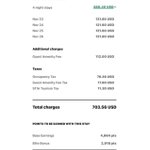
小红书上有人晒美国酒店账单,问:"美国酒店不觉得自己的账单看起来很好笑吗?"
房费多少,杂费多少,每一项税多少,列得清清楚楚。
我倒觉得中国的小票更好笑。因为你根本看不到税。
让我们来看看,中共政府是如何让商家出力不讨好,赚着最少的钱,背着最大的锅
(AI生成,虚构)
一件113块的东西,13块是增值税,这个是精确的。再加1.56的城建税和教育附加。算上企业替员工交的社保、所得税、房产税这些,政府拿走大概20块。
商家呢?按5%的利润率算,交完税到手不到4块。
你以为是商家赚了你的钱,其实拿大头的是政府。
· 今年1–9月,全国规模以上工业企业的营业收入利润率是5.68%,这还是税前。卖100块,赚不到6块。
· 派代调查了1000多个电商商家:2025年30%的商家是亏的,另外还有30%多利润率只有0–5%。将近三分之二基本是白干。
这还没完。地方财政没钱了,就去外地抓老板、冻企业账户,网上叫"远洋捕捞"。到2025年底,光检察院纠正的这类案子就有一万九千多件,退回违法冻结扣押的钱26亿多。山东成武县还有执法人员被录到说"干垮一个企业太简单了"。
然后呢?东西贵了大家骂商家黑心,工资低了骂老板剥削。官方再出来说几句"防止资本无序扩张"”减税降费",自己拿了大头,却要装正义卫士白莲花。
美国账单上那几行税,至少你看得见是谁拿走的,冤有头债有主,交了税就能找政府问责。中国的小票上没有啥也没有,你就只能痛骂黑心的资本家了。
但是谁的心更黑呢?

