

Postdoc at Genentech in the Henri Jasper Lab | Neuroscience PhD | Previously @PennNGG studying m6A in aging Drosophila brain with Nancy Bonini. Views my own.
Philadelphia, PA
Joined October 2021
- Tweets37
- Following173
- Followers80
- Likes98
Alexandra Perlegos retweeted

Nature research paper: Senescent glia link mitochondrial dysfunction and lipid accumulation go.nature.com/3Kvvhrj

Alexandra Perlegos retweeted

Mo’ m1A, mo’ problems: cell.com/cell-chemical-biolo…
Alexandra Perlegos retweeted

Thrilled to see our latest work out @ScienceAdvances, a new foray (for us) into sleep and neurodegenerative disease, in collaboration with the amazing Nancy Bonini, led by @AlexPerlegos @SamyBelfer & Jackie Durkin!!
science.org/doi/10.1126/scia…

Alexandra Perlegos retweeted

dTrmt10A impacts Hsp70 chaperone m6A levels and the stress response in the Drosophila brain @AlexPerlegos @LiuFange @EmilyJoan18 @KirbyDonnelly
nature.com/articles/s41598-0…

Alexandra Perlegos retweeted

Very cool - m1A in CAG repeat RNA binds to TDP-43 and induces neurodegeneration (in worms and flies)

Nature research paper: m1A in CAG repeat RNA binds to TDP-43 and induces neurodegeneration go.nature.com/49mbPbT
Alexandra Perlegos retweeted

NGG is proud to present our next Thesis Defense, courtesy of Alexandra Perlegos (@AlexPerlegos) of the Nancy Bonini Lab! Join us in-person or online (DM us for the link!) on this Friday, March 31st. Good luck, Alex! #AlmostPhDone #NGG

Alexandra Perlegos retweeted

Why are brain responses to stress different from other tissues? @AlexPerlegos shows that m6A RNA modification dampens the acute response to heat shock (HS) in fly brains, implicated the methyltransferase Mettl3 and the nuclear m6A reader protein YTHDC. doi.org/10.1038/s41467-022-3…
Alexandra Perlegos retweeted

Our collaborative paper with @LibertyMoutal
@may_khanna is available to read. Mixing fly genetics with biochemistry to show that the chaperone HSPA5 may be beneficial in motor neuron disease and related dementias. @acmedsci
rdcu.be/cNX8U

Alexandra Perlegos retweeted

Ladies and gentlemen, attention, please!
We are excited to share our latest discovery, “Sexually dimorphic RNA helicases DDX3X and DDX3Y differentially regulate RNA metabolism through phase separation” out in Mol Cell teapawt.net/MolecularCell/status/1…


Online Now: Sexually dimorphic RNA helicases DDX3X and DDX3Y differentially regulate RNA metabolism through phase separation dlvr.it/SQc7M7
Alexandra Perlegos retweeted

Janko and Karl's latest paper is published today in @CellCellPress! We found a transcription factor, Kr-h1, that maintains transcriptional and behavioral boundaries between castes in Harpegnathos ants 🐜 (1/5)

Now online! A single transcription factor is able to regulate caste identity in ants by acting as a core transcriptional regulator in response to caste-specific hormone signaling
#ants #sciencetwitter 🐜🐜
https://teapawt.net/t.co/Vx4XLK5SA9

Alexandra Perlegos retweeted

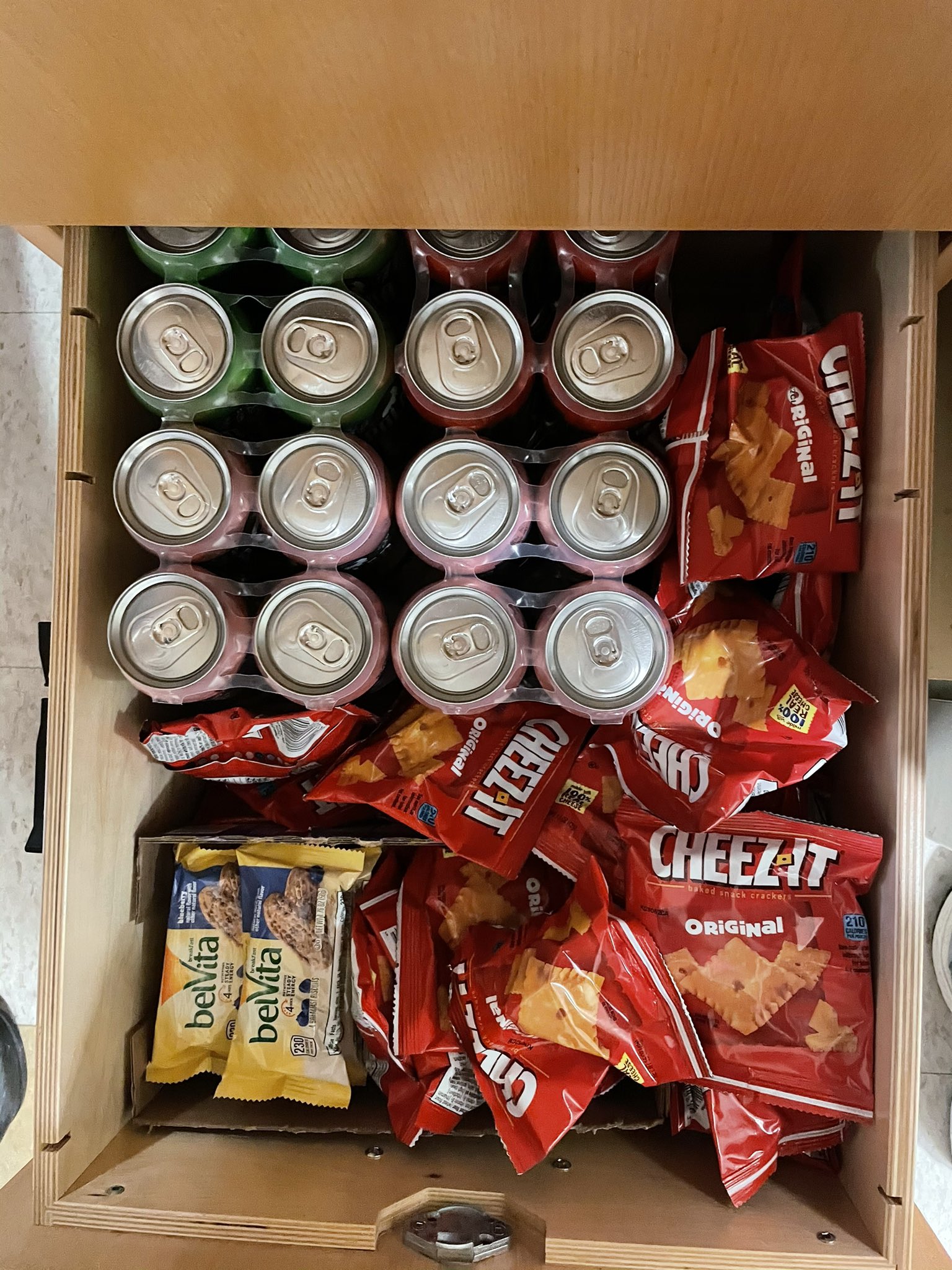
Bonini lab snack drawer is open for business! @AlexPerlegos @KayserLab with the crucial addition of gum and Advil 😅

Alexandra Perlegos retweeted

Just completed an amazing @FENSorg #BrainConference organised by @erin_schuman @MallucciLab @lundbeckfonden Brilliant scientists, insane science, and enthralling conversations! #RNAisBae – at Hørsholm, Danmark

Alexandra Perlegos retweeted
Wine 🍷and dine 🍛 (with a bit of science) 🤓
@KlannLab @EAHellerPhD @monika_piwecka @cledi_cj
#BrainConference

Alexandra Perlegos retweeted

Study by @LeeanneMcgurk & colleagues finds repeat expansions encoding glutamine in the ATXN2 gene are associated w/ multiple neurological diseases, including spinocerebellar ataxia type, parkinsonism & amyotrophic lateral sclerosis #SCA2 #Parkinsons #ALS doi.org/10.1093/hmg/ddab148
