

Sharing simple strategies, guides and ideas for robust and diversified algorithmic trading systems. - Systematic Trader from Sweden
Receive a Free Strategy →
Joined August 2022
- Tweets3.2K
- Following964
- Followers8.5K
- Likes3.7K







Algomatic Trading retweeted

quants, nerds and mathematicians thank me later...
quantmemo.com/
Some numbers from Strategy #24.
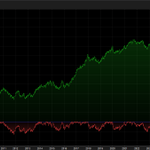
On Nasdaq CFDs from 2006 to 2026, the main exit took 497 trades with a 65% win rate, a max drawdown of -12.45%, and only about 31% time in the market.
On the S&P 500, with nothing re-optimised, it took 537 trades with a 66% win rate and a -12.99% max drawdown.
Intraday-triggered systems are usually the first to break when you change a setting. This one didn’t.
Full breakdown + equity curves: algomatictrading.substack.co…

Strategy #24 is live.
Long-only: buy when a weak day (lower high, lower low) gets reversed back above yesterday’s high.
Tested 2006–2026 with 17 different exits and two markets. It held up everywhere.
One of the most robust edges I’ve found 👇
algomatictrading.substack.co…
New strategy released on my Substack tomorrow morning!
Can’t wait until the incubation is completed and I can run this live.

Algomatic Trading retweeted
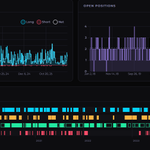
MT5 Genesis now has a full exposure tab that shows exactly where your risk is concentrated. I am currently using this tool to build my Darwinex portfolio.
It's available on my Substack.
10/
Real example: Strategy #5, a long-only Nasdaq 100 momentum system with 247 trades from 2005 to 2025.
Hidden in the code: entries only fire if RSI(2) < 90.
Does that one line earn its place?
12/
The surprise is that it isn’t mainly a loss-catcher. It removes 11 of the 34 worst trades, roughly its share, but only 2 of the 34 best, against ~9 expected by chance.
The real damage comes from 12 removed trades that drift lower for weeks with no stop, at −2.8% each.
13/
Gates 3–5 for Strategy #5 come in a follow-up. I’m also building a tool that takes filtered and unfiltered trade lists and outputs a full six-gate report.
Framework credit: Sergi Sánchez (Sersan Sistemas), found via @dmartin_trading
Full post: algomatictrading.substack.co…
9/
Gate 5: Robustness
You want a plateau, not a peak. Shift the threshold ±10–20% and the lookback ~25%. Swap the measure (ATR → stdev). Try related markets.
It should also beat ≥95% of 1,000 random filters that block the same share of trades.
7/
Gate 3: Net improvement
My screening rules: keep ≥100 trades and ≥50% of the sample, improve return/max DD by ≥20%, and keep net profit at ≥~80%.
Then double the costs and run a cost-only comparison. If cheaper trading explains the gain, the filter isn’t selecting.
5/
Gate 1: Clean backtest
Re-run the full system with and without the filter.
Never just delete rows from the old trade list, because blocking one trade changes which trades become possible later.
Then check that every input was known when the decision was made.
3/
So “did the backtest improve?” is the wrong question.
It almost always does.
The right one: does the filter help the system avoid the environments where it repeatedly suffers, without destroying the sample?
Here’s the six-gate test I use.

You add a filter.
The ugly drawdown disappears. Profit factor goes up.
For ten minutes you feel like a genius.
Most of the time, that filter didn’t improve your signal. It just made the sample smaller.
