

Sharing research on alpha-gal syndrome and related topics. Tweets≠medical advice.
Joined August 2020
- Tweets1.6K
- Following135
- Followers1.2K
- Likes828


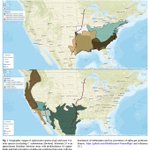


Tick-borne diseases in French Guiana: A comprehensive review pinpointing differences from mainland France
1/
pubmed.ncbi.nlm.nih.gov/4284…

Interesting case study: patient in Poland presents with atypical symptoms:
The case of a patient with alpha-gal syndrome with atypical symptoms and variable asthma control
termedia.pl/The-case-of-a-pa…
Fabulous new resource on perioperative care! Thank you, Anesthesia Patient Safety Foundation (APSF)
@APSForg —we are deeply grateful!
apsf.org/wp-content/uploads/…

Management of Symptomatic Carotid Stenosis in AGS Patients—A Case Study
1/
jvascsurg.org/article/S0741-…
"Because of his history of AGS and the consequent risk of heparinization and potential adverse reactions to a bovine patch, he was planned for an endarterectomy with an autologous great saphenous vein patch. Argatroban was used perioperatively for anticoagulation. The patient underwent the intervention successfully without any immediate or long-term complications."
3/
"AGS is a rare condition that has been noted to adversely affect patient outcomes if they are treated with biomedical products such as heparin or bovine patches as a part of their surgical care. Continued analysis of this condition and reproducible methods to use bovine and porcine products for these patients could solidify a new paradigm for vascular intervention in AGS patients."
4/4
Beyond red meat: fish roe-associated reactions in patients with alpha-gal syndrome—a case series from Sri Lanka
1/
link.springer.com/article/10…

"We describe the first South Asian case series of three patients with AGS who developed anaphylaxis following fish roe ingestion, highlighting this atypical trigger as a possible emerging cause of anaphylaxis associated with AGS in the region."
2/
Evolution of alpha-Gal synthesis - a growing risk for alpha Gal syndrome
1/
tandfonline.com/doi/full/10.…
"With global rapidly changing climate and population dynamics, it should be considered that multiple arthropod species evolved to synthesize alpha-Gal as a guidance to develop preventive and control measures to reduce the risks of exposure to AGS. Accordingly, research should focus on the role of other organisms in addition to ticks in the evaluation and prevention of risks associated with the AGS with education for patients and medical staff to improve prevention and management of patients with AGS."
2/

Human monoclonal antibodies targeting α-Gal restrict IgE engagement of α-Gal syndrome allergens.
1/
pubmed.ncbi.nlm.nih.gov/4267…
"We then screened these mAbs for their ability to bind α-Gal on AGS allergens and to block the binding of serum IgE of patients with AGS to AGS allergens. Thirteen mAbs bound to the AGS allergens angiotensin-I-converting enzyme (ACE), aminopeptidase-N (AP-N), and cetuximab, and 2 mAbs- AG028 as both IgA2 and IgM, and AG050 IgA1 - blocked the binding of serum IgE from patients with AGS to ACE and AP-N. Additionally, AG028 IgA2 and AG028 IgM suppressed ACE-mediated activation of basophils sensitized with serum of patients with AGS." 3/
Alpha-gal Syndrome Research retweeted

#Rare #antibodies with potential to combat #alpha-#gal #syndrome identified. medicalxpress.com/news/2026-…

ALT #Rare #antibodies with potential to combat #alpha-#gal #syndrome identified. https://medicalxpress.com/news/2026-09-rare-antibodies-potential-combat-alpha.html