






Joe retweeted

I've been in politics for a quarter century. It's hard to express how staggering it is to see a conversation like this on corporate US media. The Morning Joe panel gobsmacked by the directness of @AbdulElSayed's points.
(clip via @DropSiteNews)

Finally! This is the only hope we have.
teapawt.net/Amj0seh/status/1915295…


Joe retweeted

Apparently, in Kenya, you must first spend 30 years disappointing people before you're qualified to lead them. A newcomer with fresh ideas is considered inexperienced, while a veteran with a record of failure is called a statesman. What a system! 😂
There is a time Sifuna questioned why Nairobi disaster management unit is led by people with theology background. Maybe it's because all they can do after a disaster is "May God's will be done".

Joe retweeted

Once upon a time, Kenya Shujaa had the Buffalo. Enjoy!
#Scrumshutter


Can never and will never sympathise with these fools! We told them to impeach the incompetent governor but they refused. Now they are putting up a show to hoodwink us. Home you all shall go together with that governors! One term is inevitable!


Many people do not understand how grievous this is. Imagine KPLC switches off the grid for P.M , then your poorly done solar feeds the lines, you are risking lives.
Most inveters have anti-islanding setting to shut off solar production but still,in support of KPLC on this.

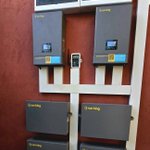
Kenya Power (KPLC) can now fine homes and businesses for illegal solar connections.
Here’s what that actually means.
If you have solar at home or at your business, you’re not being fined simply for having solar.
The problem is when your solar system is connected to Kenya Power’s grid and sends excess electricity back into the grid without approval.
Kenya Power says this can interfere with the stability of the electricity network, especially when solar production suddenly rises or falls.
There is a legal way to do it: net metering. You get approval, export your excess electricity to the grid, and receive a credit.
But if you connect without approval, the exported electricity can be treated as “dumping” and attract a surcharge.
Now here’s the interesting part: the new tariff is stated to apply from July 1, 2025, even though it was gazetted in September 2026.
So what happens to people who installed solar before these rules were formally gazetted?
Kenya needs to protect its electricity grid, but it also needs clear and predictable rules for people investing in solar.
I doubt if even most solar owners knew of this rule

