

AmniGate Security | Security analysis & risk assessments | Incident reporting | Mogadishu | Research & insights hub
Somalia
Joined March 2025
- Tweets381
- Following0
- Followers1.4K
- Likes582




INCIDENT UPDATE
Mogadishu, Banadir Region | Somalia
Political and security tensions remain elevated in Mogadishu following increased deployments of Federal Government security forces around the residences of former President Sharif Sheikh Ahmed and former Prime Minister Hassan Ali Khaire, particularly in the Jayga Road, Buulo Xuubey and Zoobe areas near Aden Adde International Airport.
NISA has accused armed men aligned with Sharif of attempting to provoke a confrontation in Wadajir district. Reports of a possible ultimatum for opposition linked armed personnel to disarm remain unconfirmed.
Security assessment: The concentration of security forces around politically sensitive locations increases the risk of a localized armed confrontation, particularly if disarmament demands are enforced. Further escalation could disrupt civilian movement and airport access. The situation remains high, and the likelihood of wider clashes is unclear.

INCIDENT UPDATE
Hees, Hiiraan Region | Somalia
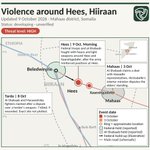
Al-Shabaab militants reportedly seized control of Hees, a settlement on the outskirts of Beledweyne, following a havy assault on a government military position, according to local sources.
Initial reports indicate that the attackers overran the position before moving into the settlement. Casualty figures, the status of the defending forces and any subsequent government counter-operation remain unclear.
Security assessment: The reported incident highlights continued pressure on government positions in Hiiraan, where Al-Shabaab has repeatedly targeted military installations and communities associated with government security operations. The extent of the group’s control in Hees and the likelihood of a government response remain unconfirmed.
#Somalia #Alshabaab

SECURITY UPDATE | JILIB, LOWER JUBA
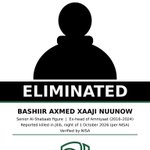
Somalia’s National Intelligence and Security Agency (NISA) says its forces, supported by international partners, conducted a planned operation in Jilib on the night of 1 October 2026, killing Bashiir Axmed Xaaji Nuunow, a senior Al-Shabaab figure.
According to NISA, Nuunow previously headed the group’s Amniyaat unit between 2016–2024 and operated under several aliases, including Geescadde, Fanax, Gardhuub and Cali Dheere.
NISA further links him to the planning and execution of several major attacks in Mogadishu, including the 14 October 2017 Zoobe bombing, the Ex-Control Afgooye attack, the second Zoobe attack, and attacks targeting hotels and public areas around Lido Beach.
The agency described the operation as part of an ongoing campaign, conducted with international support, targeting senior Al-Shabaab figures and the networks involved in planning and facilitating attacks.
Assessment: Nuunow’s reported death represents a significant disruption to Al-Shabaab’s senior operational and clandestine networks.

SECURITY ASSESSMENT | SOMALIA–YEMEN UAV LINK
Reports indicate that Al-Shabaab fighters may have spent several months in Yemen’s Saada province receiving training related to UAV assembly, maintenance, remote-control systems and operational use, reportedly in areas controlled by the Houthi movement.
The development draws added attention following the recent fighting in Baydhabo. The Somali government accused Al-Shabaab of supporting forces loyal to former South West leader Abdiaziz Laftagareen and linked the group to reported UAV use during the fighting. These claims, including the alleged role of Al-Shabaab and any external assistance, cannot currently be independently verified.
If the reported Yemen based training is confirmed, however, the timing and reported use of UAVs in Baydhabo could indicate a potential connection between external technical training and the emergence of drone capabilities on Somalia’s battlefield.
Assessment: The alleged Houthi–Al-Shabaab link remains unverified, but the reported training and subsequent UAV use provide a basis for monitoring possible channels of external technical knowledge transfer into Somalia.
#Somalia #Houthis #Terrorist

MARITIME SECURITY UPDATE | MT EUREKA
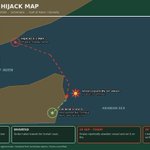
MT EUREKA, a Togo-flagged product tanker (IMO 1022823), was hijacked on 2 May off Qana, Shabwa, Yemen, and subsequently diverted toward Somalia. The vessel was carrying an estimated 20,400 barrels of diesel, with 12 crew members reportedly onboard, including eight Egyptians.
AmniGate has received reports that, following today’s developments, the pirate group abandoned the vessel, reportedly setting it on fire before releasing the crew into Holucaanood, Bari Somalia.
The reported decision to burn the tanker would represent a reckless escalation, potentially causing substantial losses to the vessel’s owners and wider commercial interests, while further increasing the risks associated with the recent resurgence of piracy along the Somali coast.
The EUREKA case follows the hijacking of MT HONOUR 25 and MV SWARD, highlighting a renewed maritime security challenge in the region.
#Somalia #Pirates

SECURITY INCIDENT | PUNTLAND COAST, SOMALIA.
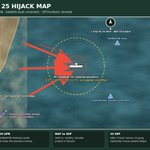
The MT Honour 25, a Palau-flagged vessel hijacked off the Puntland coast on 21 April while carrying 17 crew members, including 10 Pakistani nationals, is reportedly under attack at sea.
Ground sources indicate that Puntland forces launched an operation early this morning to retake the vessel. Sources also claim possible foreign support, reportedly involving Iraqi-linked elements, although AmniGate Security cannot independently verify this at present.
The operation remains ongoing in the waters off Bander-Bayla District. Further details on casualties, the status of the crew, and the identity of any external support remain unconfirmed.

INCIDENT REPORT | BAIDOA, SOUTH WEST STATE
28 Sep 2026 | Threat Level: HIGH | Status: ENDED.
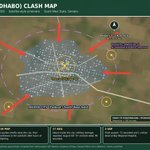
Heavy fighting erupted in Baidoa early in the morning as forces aligned with former South West leader Abdiaziz Laftagareen clashed with federal and regional forces. Fighting was reported in Boonkaay, Barwaaqo, Al-Axmaar and Onodka, among other areas. Heavy weapons and drone activity have also been reported.
Both sides are issuing conflicting claims over the course of the fighting and territorial control. Allegations of Al-Shabaab involvement remain contested, while casualty figures have not been independently verified.
MSF reports that Bay Regional Hospital has received 69 patients affected by the violence so far, with roads to medical facilities reportedly blocked. This follows major fighting on 17 August and 3 September.
Security assessment: Continued clashes remain possible, with the immediate risk concentrated around military positions, government facilities and key movement routes. Further disruption to civilian movement and critical infrastructure is possible.
Advisory: Avoid non-essential travel to Baidoa. Exercise extreme caution around military installations, government facilities and locations frequented by officials. Review shelter, communications and contingency plans.
AmniGate will continue monitoring and update as information is independently verified.
#Baidoa #Somalia #SecurityAlert #IncidentReport

NISA Operation Targets Senior al-Shabaab Leadership in Hiiraan.
NISA forces, working with international partners, conducted a planned operation on August 12 in Maxaas, Hiiraan, targeting a location where senior al-Shabaab commanders were reportedly gathered.
Three commanders were killed, while senior commander Mustaf Caato, reportedly the head of al-Shabaab’s so-called Hiiraan “Jabhadaha,” sustained serious injuries. He was later moved from Maxaas to Ceelbuur for medical treatment.
Caato is considered a significant figure within the group, with a reported history of overseeing explosives and suicide operations and helping coordinate attacks in Hiiraan.
Those reportedly killed include Cabdi Xaafid, linked to the explosives unit; Daalibaan, associated with the Hiiraan emergency-response unit; and Cumar Xuseen, a commander within the group’s so-called “Jabhadaha.” Commanders Maxamed Eeney and Salaad Buur were also reportedly seriously wounded.
The operation represents another targeted effort to disrupt al-Shabaab’s senior leadership and operational networks in Hiiraan, particularly those involved in planning and coordinating attacks.
Incident | Qandala District, Bari Region
Reports from the Sheebaab area in Qandala District indicate that ISIS-Somalia targeted a Puntland security vehicle with an improvised explosive device (IED) earlier today.
Initial information suggests the attack resulted in fatalities, although the exact number of casualties has not yet been confirmed.
According to local sources, the affected personnel were members of Puntland’s Qorrax Unit, reportedly based in Dasaan, and were en route to the former Sheebaab communications site to restore communications.
The casualty figures and additional operational details remain unconfirmed. Further updates will be provided as more information becomes available.

Galkio Puntland Tension.
Tensions continue to rise in Galkayo following the reported interception and blockade of a convoy of eight PSF vehicles by Puntland authorities in Laag Bari region. The incident has reportedly heightened tensions around the PSF base in Galkio, while additional Puntland military vehicles have been observed entering the city, indicating an elevated security posture.
The PSF has publicly stated that it has joined itself with the Somali National Army (SNA).
According to well-informed sources, the risk of renewed armed confrontation has increased, with both sides reportedly maintaining a high state of readiness. While no direct clashes have been reported at the time of writing, the security environment remains highly volatile and could deteriorate rapidly without de-escalation.
The developments revive memories of the December 2021 confrontation, when three days of intense fighting between Puntland forces and the PSF ended after Puntland President Said Abdullahi Deni announced a halt to military operations.

The Strategic Implications of Instability in Mogadishu for Somalia and East Africa.
Recent political and security tensions in Mogadishu underscore a recurring reality in Somalia’s state-building process, stability in the capital remains directly linked to stability across the country and to a significant extent, the wider Horn of Africa.
As Somalia’s political, economic, and administrative center, Mogadishu functions as the nerve center of national governance. Any sustained deterioration in security conditions or escalation of political confrontation within the capital has consequences that extend far beyond the city itself. History has repeatedly demonstrated that periods of instability in Mogadishu often generate ripple effects across Somalia’s political landscape, security architecture, and economic environment.
The most immediate impact is typically felt within state institutions. Political disputes and security uncertainty can disrupt government operations, slow decision making processes, and weaken public confidence in state structures. Economic activity also becomes increasingly vulnerable as investors, businesses, and international partners adopt a more cautious approach amid concerns over security and political predictability. For ordinary citizens, prolonged instability translates into uncertainty, disrupted livelihoods, reduced economic opportunities, and heightened concerns about personal security.
From a security perspective, political divisions create strategic opportunities for militant organizations such as Al-Shabaab. The group has historically sought to exploit moments of political fragmentation, institutional distraction, and security sector disunity. When national attention becomes focused on internal political disputes, extremist actors often gain greater freedom to regroup, recruit, conduct operations, and challenge state authority. In a security environment where Somalia continues to confront a resilient insurgency, political cohesion remains a critical component of national defense.
The implications are not confined to Somalia’s borders. Somalia occupies one of the most strategically important locations in East Africa, situated along maritime corridors connecting the Red Sea, Gulf of Aden, and the Indian Ocean. Any prolonged instability in Mogadishu raises broader regional concerns related to terrorism, maritime security, irregular migration, and the security of commercial shipping routes. Neighboring states including Kenya, Ethiopia, and Djibouti have significant security and economic interests tied to Somalia’s stability and would likely experience the secondary effects of any major deterioration in the situation.
The broader regional environment further amplifies these concerns. East Africa is currently navigating a complex security and geopolitical landscape shaped by interstate competition, transnational threats, and evolving strategic partnerships. A significant crisis in Mogadishu could complicate regional counterterrorism efforts, strain security cooperation mechanisms, and create additional challenges for ongoing stabilization initiatives across the Horn of Africa.
Ultimately, the stability of Mogadishu carries significance far beyond Somalia’s capital. It remains a strategic pillar for national security, economic development, and regional stability. The management of political disagreements through dialogue, the preservation of institutional cohesion, and the maintenance of effective security coordination will be critical in preventing localized tensions from evolving into a broader national or regional challenge.

4
709
Yemeni ISIS-Somalia Member Surrenders in Bari After Departing Shakaala Stronghold.
A Yemeni national identified as Mukhtaar Ali Nasir, reportedly affiliated with ISIS-Somalia, has surrendered to police forces in Ufeyn district, Bari region after emerging from the Cal Miskaad mountains, where the group maintains its presence.
According to local reports, the individual surrendered in the Afcad area of Ufeyn. He was reportedly accompanied by two other men and was searching for donkeys at the time of the incident.
Sources indicate that the men had departed from Shakaala, an ISIS-controlled hub in the Cal Miskaad range, and had been traveling for approximately three days before reaching Afcad. The surrender comes amid continued pressure on ISIS-Somalia networks operating in the mountainous areas of Bari.

Early this morning, IS-Somalia fighters launched an attack against Puntland security forces in In-Cidoole, near the Miraale well, an area the group targeted just days earlier. The assault continued until midday, reportedly unfolding amid ongoing communication disruptions following the recent destruction of local telecom infrastructure.
Over the past several days, the tempo of IS-Somalia operations in the area appears to be increasing, likely exploiting gaps created by the withdrawal of Puntland forces from multiple forward positions.

Clashes in Miraale Highlight IS-Somalia’s Tactical Shift.
Active fighting is underway between IS-Somalia elements and Puntland forces, with clashes focused on Miraale an area the group reestablished control After it was liberated a year ago and later reoccupied following Puntland’s withdrawal.
In recent months, IS-Somalia has largely targeted civilians and telecommunications infrastructure, aiming to disrupt communications, restrict information flow, and conceal its movements.
The current engagement indicates an effort not only to defend its foothold but also to sustain operational freedom by degrading both civilian connectivity and the state’s response capacity.
What we know About Abdulkadir Mohamed Abdulkadir (Ikrama).
Abdukadir Mohamed Abdukadir, known as Ikrima, represents a different category of operative within Al-Shabaab one shaped more by mobility, exposure, and network access than by battlefield presence.
His trajectory is central to understanding his profile. Originating from Eastleigh in Nairobi, he moved to Norway in 2004, where he spent several years, before relocating to the UK in 2007. By late 2007/early 2008, he entered Somalia, initially joining the Islamic Courts Union and later transitioning into Al-Shabaab as it emerged as the dominant militant force.
This pathway From East Africa, Europe to Somalia gave him a level of exposure uncommon within the group. Over time, he became associated less with frontline combat and more with coordination, facilitation, and external operations. Reporting has repeatedly linked him to cross-border plotting, particularly in Kenya, and to maintaining connections beyond Somalia, including with Al-Qaeda aligned elements.
What sets Ikrima apart is not visibility, but function. Individuals in his position tend to operate quietly, enabling networks rather than leading assaults. That makes them harder to track and harder to replace.
Recent claims indicate that Al-Shabaab may have detained or internally imprisoned him, reportedly on suspicion of links to Western intelligence services. While this has not been independently verified, the allegation itself is significant and aligns with patterns seen inside the group.
Al-Shabaab has historically shown deep internal paranoia, especially toward senior figures with:
extensive foreign exposure
broad operational knowledge
independent external connections
In that context, someone like Ikrima who has lived in Europe, understands multiple environments, and operates across networks could be viewed as both a high-value asset and a potential internal risk.
If such detention did occur, it would likely reflect counterintelligence concerns rather than a routine disciplinary measure. Internal actions of this kind are typically aimed at controlling information, preventing perceived infiltration, and reinforcing leadership authority during periods of uncertainty.
Operationally, sidelining a figure like Ikrima would most likely affect Al-Shabaab’s external coordination capabilities. Disruption would be expected in areas tied to cross-border planning and network linkage. However, as seen in past cases, the group tends to absorb such shocks over time.
In effect, the situation if accurate highlights a recurring dynamic within Al-Shabaab, the same individuals who strengthen the group’s external reach can also become the focus of internal suspicion.

IS-Somalia targeted a telecommunications company vehicle two days ago, reportedly en route to repair Sheebaab tower previously destroyed by the group to disrupt local communications.
The incident highlights two key dynamics. First, it underscores a continued willingness to target civilian-linked infrastructure, particularly businesses operating in contested areas. Second, it points to a likely attempt to reassert financial pressure through extortion, while simultaneously degrading communication networks to limit reporting on their movements and operations.
In response, Puntland authorities have increased military activity under the “Waran Brigade” initiative. However, no direct clashes with IS-Somalia elements have been reported so far, suggesting either limited contact or a deliberate effort by militants to avoid engagement at this stage.
IS-Somalia Targets Ambulance in Qurac Village Amid Rising Activity in Bari.
According to local sources, IS-Somalia established a roadblock in the Qurac village (10°59’38.18”N 50°01’06.36”E), intercepting a Puntland-operated ambulance that had evacuated casualties from recent clashes in Dhaadaar to Balidhidin. On its return route, the vehicle was attacked, resulting in both fatalities and injuries.
The incident aligns with a broader pattern observed in recent weeks, with IS-Somalia increasing the tempo of low-to-mid level operations across parts of Bari. The deliberate targeting of an ambulance indicates an effort to project control, intimidate local populations, and likely reassert extortion networks in areas where influence had previously declined.
The attack further suggests a growing willingness to target medical or humanitarian movements, reflecting reduced operational restraint and a more coercive posture on the ground.

IS-Somalia Attack in Dhaadaar Signals Escalation as They Target Local Defenders and Infrastructure.
Credible reporting indicates that IS-Somalia carried out a late-night raid on Dhaadaar village, directly targeting a small group of armed local residents. The objective was to destroy a water well recently constructed by Puntland authorities for pastoralist communities consistent with efforts to undermine essential civilian infrastructure.
In recent weeks, the group has largely targeted unarmed civilians and other soft assets. This incident, however, points to a shift, as they chose to engage local community defenders rather than avoid resistance.
The development suggests a measured escalation in their operational posture, testing community level defenses and signaling a growing willingness to confront even lightly armed local elements as they adapt to the terrain.

IS-Somalia Reasserts Presence in Al-Miskaad.
IS-Somalia fighters moved into Daray-Madoobe village in the Al-Miskaad range hours before sunset, raising their flag in a clear signal of intent to re-establish control over territory lost roughly a year ago. The development follows the withdrawal of Puntland forces from Dhasaan, previously their furthest defensive line against the group. As of now, IS-Somalia is assessed to be holding the village.
Over the past two weeks, the group has visibly expanded its footprint across the Daray-Madoobe to Tisjiic, operating across a wide and rugged area that supports mobility and concealment. The pattern points to a gradual reorganization phase, with IS-Somalia probing for gaps and reactivating movement corridors.
Reporting from the area also indicates punitive actions against civilians, including killings and looting, targeting communities perceived to have supported Puntland forces during earlier operations. This reflects a dual approach: rebuilding presence while reinforcing control through intimidation.
Overall, the activity suggests a measured attempt by IS-Somalia to regain localized operational depth in Al-Miskaad.
