

Amudim Community Resources
USA
Joined May 2014
- Tweets2K
- Following89
- Followers986
- Likes816







“Empathy minus boundaries is not empathy.”
That quote comes from Brené Brown, and it’s where the 10th-grade Darcheinu unit on boundaries begins. Mrs. Shira Berkowitz, LCSW, opens the class by writing it on the board because the two can’t be separated. We want to feel what our kids are feeling. But if we’re so enmeshed that their hurt becomes ours, we can’t help them anymore. We’re not separate.
Boundaries aren’t division. They’re respect. Here’s what’s okay for me, and here’s what’s not.
And as Rabbi Yisroel Grossberg, M.S.Ed., puts it, when a child feels heard and understood and is still told no, it makes a much deeper impression.

This week on Turning the Wheel, Rabbi Zvi Gluck explores how Hashem’s call to Avram to leave his land and his father’s home invites us to consider who we are beneath other people’s expectations, and how we help our children discover that for themselves.
When our children look up at us and ask, “Do I have to?” there’s an opportunity to help them find their voice, with us beside them.
Within the warmth of a loving family, we can help them express a preference kindly, hear someone else’s no, and know that being loved leaves room for both.
Good Shabbos 💜 @zgluck
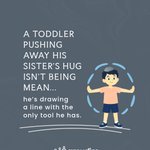
What if, from their very first steps, our children knew they could choose how they give and receive affection, even with the people they love?
Introducing My Space. My Feelings. My Voice., our new parenting series on helping our children feel comfortable having boundaries, and helping us grow alongside them.

Part of healing is allowing ourselves to believe that life still holds great things for us.
We begin to imagine new possibilities, laugh a little more freely, and feel hopeful about what’s to come.
What a beautiful thought: to one day find ourselves in a moment we wish we could hold onto, knowing how far we’ve come to be there.
If you find yourself in the thick of it, there is hope in healing, and we are here to help you take the next steps.

If your heart feels full today, we hope you find a place to put some of what you’re carrying. A page in your journal. A conversation with someone you trust. Somewhere you can be honest about how you feel and have a little more room to breathe.💜

We want our daughters to feel good about themselves. But what happens on the days they don’t like what they see in the mirror?
The way we talk about bodies, including our own, can help them build a sense of worth that holds steady through a changing appearance or someone else’s comment.
We sat down with Rebecca Klein, MSW, for “More Than a Number: Body Image, Shidduchim, and the Girls Caught in Between.” A conversation for girls in shidduchim and the parents who love them, exploring how we can help our girls feel comfortable being seen and knowing how much they have to offer.
Here’s a first look. Sign up to get notified when the full conversation drops: amudim.org/more-than-a-numbe…
Tomorrow night’s visitor is Yitzchak Avinu. 💜
There’s a whole story behind the boundaries we keep, and behind the things we’re still hoping someone will make right.
Yitzchak’s story brings us to a question we may recognize in ourselves: Am I waiting for someone else to make it right before I let myself move forward?
It’s a question to sit with gently, wherever we find ourselves this Yom Tov.
Gut Yom Tov from all of us at Amudim.


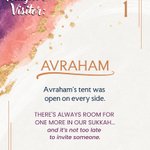
Tonight’s visitor is Avraham Avinu. 💜
We may have told someone a hundred times that they’re always welcome. Reaching out again before Yom Tov can still mean so much.
For those of us who spend each Yom Tov figuring out where we’ll be, being thought of feels good. So does knowing someone is hoping we’ll say yes.
Gut Yom Tov from all of us at Amudim.


Our free Family Sukkah printable turns the safety conversation into part of decorating. Fill it in together, then hang it up alongside the paper chains.
Download the printable and our full Sukkos guide: amudim.org/sukkos-2026/
We sit in the sukkah, trusting Hashem's protection…
WE STILL BUILD THE WALLS. 💜

We know Erev Sukkos is busy, so we made this year’s family safety conversation part of decorating the sukkah. Fill in the Family Sukkah printable with the kids, then hang it alongside their decorations.
The printable and our full Sukkos guide are here: amudim.org/sukkos-2026/
We sit in the sukkah, trusting Hashem’s protection…
WE STILL BUILD THE WALLS. 💜

The What Comes Next recording is live.
The full panel from Monsey, with Rabbi Zvi Gluck, Rabbi Avi Landa, Dr. Myriam Lankry, and Zeldy Broyde, moderated by Nachi Gordon. Released together with Meaningful Minute.
Watch: amudim.org/what-comes-next/
Yom Kippur can feel like a deadline. Like we are supposed to arrive having already figured everything out.
But Yom Kippur reminds us that we can begin again.
In this week’s Turning the Wheel, Rabbi Zvi Gluck looks at the message inside Parshas Ha’azinu: Moshe’s final words are not a closing argument. They are a song that looks toward the future.
For anyone fighting addiction, carrying trauma, or holding something in silence: you are not too late. There is still a way forward.
G’mar chasimah tovah. @zgluck
To every survivor living inside a story you never would have chosen: we see the courage it takes to keep meeting each day as it comes.
There may be pages you wish you could tear out and chapters that still feel unfinished, but this life is still yours to shape. And when showing up feels especially hard, you do not have to do it alone.
(646) 517-0222 | amudim.org

If you're living with or recovering from an eating disorder, or you take a medication that can't safely be skipped for a day, your Yom Kippur may need to look different than someone else's. That's not a lesser way to keep the day. Remember to reach out to your rav and doctor for guidance before Yom Kippur.
Need a rav who understands mental health? Amudim's is free and confidential. 646-517-0222

Survivors are too often left carrying the shame of the person who harmed them.
To every survivor: it was never yours to carry. Until you can believe that for yourself, we will hold that truth with you.
To our community: the way we respond matters. When we meet survivors with love and belief, we help place the shame where it has always belonged: with the perpetrator.
(646) 517-0222 | amudim.org
As we enter 5787, may we continue to show up for one another in the ways that make it easier to ask for help.
Wishing you and your loved ones a Shana Tova U’Metuka, filled with gentler days and more reasons to hope.
This new year, help us make sure that when someone reaches out, Amudim is there.
Donate: donateamudim.org/rh26

If someone disclosed abuse to you, would you know what to say first?
Start with three words: I believe you.
Then listen, thank them for telling you, and let them know they don't have to carry what comes next alone.
Maybe you watched “I Caught My Kid…” and thought, “Okay, but what do I do in my situation?”
If you discovered something your child has been hiding and have any questions about how to respond in that moment or what comes next…we want to hear it!
Rabbi Avi Landa and Shaya Sussman will sit down for a follow-up segment to answer your questions on this topic. Share as much or as little as you’re comfortable with. You can remain completely anonymous.
Submit your question here:
amudim.org/i-caught-my-kid/#…
