

Cattle die, and kinsmen die, and so must one die oneself. But there is one thing I know which never dies, and that is the fame of a dead man's deeds.
Europe
Joined November 2014
- Tweets4.5K
- Following176
- Followers21.9K
- Likes6.3K




Pinned Tweet
Garden landscape.
House of Golden Bracelet, Pompeii. Tiberian age, 14—37 AD. (Archaeological Park of Pompeii).


Once Upon a Time in Paris.
Paris (France) - Hubert Sattler (1866).
YouTube: youtu.be/ipS4viVOl4c

Faces of Ancient Europe retweeted

Caesar van Everdingen, Trompe l'Oeil with a Bust of Venus, 1665. (Mauritshuis, The Hague ). #art

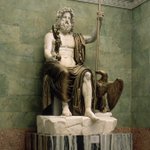
The statue of Jupiter in the Hermitage Museum is a colossal sculpture of the supreme ancient god, created by an unknown Roman master at the end of the 1st century AD.


Faces of Ancient Europe retweeted
The Vintage Festival - Lawrence Alma-Tadema, 1871.
The festival is set in the villa of Marcus Holconius Rufus, a prominent citizen of Pompeii at the time of that city’s destruction in AD 79. (National Gallery of Victoria, Melbourne).

Funerary Painting of Patron.
The tomb of Patron, a Greek physician of the first century BC, was discovered south of Rome, near the Capena Gate, in 1842. 1st century BC. (Paris, Louvre Museum).

Fragment of wall painting from the Patronus tomb.
Drawing: Giampietro Secchi (1798–1856). Monumenti inediti d’un antico sepolcro di famiglia greca scoperto in Roma su la via Latina / dichiarati dal P. Giampietro Secchi. Roma, 1843. Tav. II.


Marble relief depicting Antinous as Silvanus (god of woods and fields) harvesting grapes. He is accompanied by a hound and carries a pruning hook in his raised right hand. 130-138 AD. (Rome, Roman National Museum, Palazzo Massimo alle Terme). #ancient

Faces of Ancient Europe retweeted
The Eclipse of the Sun in Venice, July 6, 1842 - Ippolito Caffi (Italian, 1809–1866). #art

Seated statue of Zeus from Soluntum.
2nd—1st century BC. (Palermo, Regional Archaeological Museum “Antonino Salinas”). #ancient

The Abduction of Hylas by the Nymphs.
Fresco from Herculaneum, 1st century AD. (Naples, National Archaeological Museum).

Faces of Ancient Europe retweeted
Aurora and Cephalus - French Neoclassical School, c. 1810. This painting depicts Cephalus, son of Hermes and Herse, who in Greek mythology was beloved by the goddess of Dawn (Eos or Aurora), and was carried off by her to live on Mount Olympus.

Herm with a male portrait bust.
Early Severan period, 200—210 AD. (Archaeological Museum of Thessaloniki)


Faces of Ancient Europe retweeted
Joan of Arc - Sir John Everett Millais, 1865. (Private collection).

