
MD, U De Chile; PhD, U of Amsterdam. Intensivist following the principles of physiology and humanism! Septic Shock! And Winter/Wine Lover😍😍
Santiago, Chile
Joined June 2021
- Tweets2K
- Following617
- Followers8K
- Likes2.6K





ANDROMEDA-SHOCK retweeted

❤️🌺 Music truly brings us all together. Who needs an elaborate stage—all it takes is pure passion and the fresh, open air under the sun. The music and the singing—simply fantastic! 🎻🌞
ANDROMEDA-SHOCK retweeted

Tiempo de Llenado Capilar en pacientes críticos
Desde apretar con nuestros dedos 🫰
Luego usar una laminilla transparente (Andromeda-Shock 1 y 2)
Y ahora dispositivos biomédicos especiales para su evaluación…
serán mejores?
Serán costo-efectivos?
link.springer.com/article/10…


ANDROMEDA-SHOCK retweeted


How do you CRT?
Microscope slide vs. manual pressure?
🧐 No direct comparison in the literature
🧐 ANDROMEDA-SHOCK used slides, but the use of manual pressure has been investigated more rigorously and in greater detail (studies by Ait-Oufella et al)
🧐 Either is probably fine; manual pressure seems less clunky to me (until proven otherwise)
How to measure elapsed time?
⏱️ Most literature & data is based on using a stopwatch
⏱️ A wristwatch with a chronograph function may be the easiest to use
How many measurements?
🔁 Precision increases by repeating CRT 2-3 times (vs a single measurement)
🔁 But this is time-consuming and tedious
I'd be super interested to hear exactly how people do this. We talk about CRT a lot, but my guess is that everyone is doing it a bit differently.


ANDROMEDA-SHOCK retweeted

📍 Lisboa | #ESICM2026
Nuestro Servicio participando activamente en uno de los principales congresos internacionales de medicina intensiva y conociendo los últimos avances en cuidados críticos
#CriticalCare #Anestesiología @sedar_es @SCISEDAR

ANDROMEDA-SHOCK retweeted

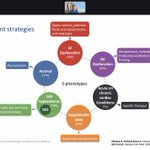
Same lactate, same MAP, same "septic shock" label. Different disease underneath. Maybe that's why so many sepsis trials come up empty. 🎩 tip to the authors
eddyjoemd.com/foamed

ANDROMEDA-SHOCK retweeted

Ayer recogí en el Museo Reina Sofía el reconocimiento de El Confidencial como uno de los mejores anestesiólogos de España, junto a Luis Muñoz y Alfonso Vidal, dentro de su selección de los 100 mejores médicos del país.
Me hizo mucha ilusión, especialmente porque llega por el voto de compañeros que conocen bien nuestro trabajo. Les agradezco que hayan pensado en mí. Lo comparto con todo el Servicio de Anestesiología, Reanimación y Terapéutica del Dolor del Hospital Universitario de La Princesa. Tengo la suerte de trabajar con un equipo del que aprendo cada día y del máximo nivel
La noticia llega, además, mientras trabajamos para conseguir el quinto año de formación en Anestesiología. Espero que podamos celebrarlo pronto: sería un paso importante para los futuros especialistas y para nuestra profesión.
La velada fue también una oportunidad para disfrutar sin prisas de la compañía de mis compañeras de La Princesa, las profesoras Elena Martín y Mónica Marazuela. Estuvo con nosotros el marido de Mónica, el arquitecto Ponce de León, y también mis hijos, Pedro y Amalia. Compartimos anécdotas, hablamos de lo que hacemos y de lo que viene, y pasamos un momento muy agradable entre distintas generaciones.
Pedro es ingeniero de Telecomunicaciones y trabaja en ciberseguridad en KPMG; Amalia estudia cuarto de Medicina en la Universidad Europea. Me hizo especialmente feliz que estuvieran allí. Al final, poder compartir una alegría así con las personas cercanas es lo que hace que la recuerdes de verdad.
#Anestesiología #Reanimación #HospitalLaPrincesa #Medicina #SEDAR
@sedar_es


ANDROMEDA-SHOCK retweeted

CRT(毛細血管再充満時間)の測り方を迷っている方はこちらの文献が参考になると思います。
指先の腹側を白くなるまでスライドガラスで圧迫
→10秒間待つ
→圧迫を離す
→指の色が回復するまでの秒数をカウント
です。
link.springer.com/article/10…

ANDROMEDA-SHOCK retweeted

Beautiful perspective. Twenty-five years of septic shock trials have taught us something fundamental: resuscitation cannot be reduced to a single number or universal target.
We moved from ScvO₂ and lactate-centered strategies toward peripheral perfusion, fluid responsiveness, bedside echocardiography and, increasingly, serial physiology-guided reassessment.
Perhaps the greatest lesson is that shock is dynamic: the intervention that is appropriate now may become harmful later.
From the Emergency Department, this evolution is particularly meaningful: resuscitate, reassess, phenotype, and adapt.
Excellent work and an extraordinary scientific journey.
Greetings from Peru 🇵🇪
ANDROMEDA-SHOCK retweeted
Your patient is in septic shock. Plan A, B, and C aren’t working. What’s next? 🎩 tip to the authors including @KhannaAshishCCM @RCastro_L @AndromedaShock @edu_kattan
eddyjoemd.com/foamed

ANDROMEDA-SHOCK retweeted

Yup. We have some of the absolute best educators for you next month. And yup, we got your CC/EM/IM/Anas CME covered, too. Time to level up with @icmteaching @TheEMNerd @khaycock2 @TrinaAugustinMD @SaraCrager @AndromedaShock @NephroP @ArgaizR @edu_kattan @FH_Verbrugge @francescorradi Andre Denault, Paul Marino, Sheldon Magder, @emcrit @katiewiskar @G2Disrupt and more...Don't miss #HR26. You'll wish you hadn't. #VExUS? Check. #SEVA ventilator course? Check. @ProtectedAirway ? Check. Elite Proceduralist Course? Check. Please RT & Share! thinkingcriticalcare.com/202…

ANDROMEDA-SHOCK retweeted

Porque un paciente con choque séptico puede requerir dosis crecientes de vasopresores y continuar hipoperfundido ?
- pensarías en choque séptico refractario … pero .. puede ser factores potencialmente reversibles que no han sido identificados ni corregidos
✅ Primer sospechoso: Control de la fuente infecciosa NO CORREGIDA
✅ Segundo sospechoso: Estatus de VOLEMIA: Deficiente y no administración de líquidos necesaria para optimizar
✅ Tercer sospechoso : Falta de CORTICOESTEROIDES
✅ Cuarto sospechoso: requerimiento de VASOPRESINA temprana
✅ Quinto sospechoso: ACIDOSIS
✅ Sexto sospechoso: Sedación innecesaria CAUSANTE de vasodilatación
✅ Séptimo sospechoso: el CORAZÓN
- Disfunción miocardica por sepsis
- Sindrome de takotsubo
- Disfunción de VD
- Desacoplamiento ventrículo/arterial
- Obstrucción Tracto de salida Vi dinámico

ANDROMEDA-SHOCK retweeted

🫀Before calling septic shock “refractory,” look again.
A patient remains hypoperfused. Norepinephrine requirements continue to rise. Additional vasopressors are being considered. It is tempting to conclude that we are dealing with refractory septic shock, but high vasopressor requirements do not necessarily mean true refractoriness.
Melo et al propose a framework for distinguishing an apparent refractory trajectory from established refractory septic shock.
The question at the bedside therefore becomes: What potentially reversible mechanism is still sustaining hypoperfusion or increasing vasopressor requirements?
The authors describe these mechanisms as the “usual suspects.”
First comes the foundation: adequate antimicrobial therapy and source control. Without control of the infectious stimulus, optimization of fluids and vasoactive drugs cannot eliminate the underlying inflammatory and vasoplegic drive.
Then comes fluid status, but with an important evolution beyond simply asking whether the patient is “fluid responsive.”
We should evaluate three different concepts ALWAYS fluid Responsiveness, Tolerance, cardiac efficiency. A patient can therefore be fluid responsive but fluid intolerant, and even an initial hemodynamic response may disappear rapidly. Fluid responsiveness alone is not an indication for fluid administration.
Persistent vasoplegia should also trigger evaluation of potentially reversible endocrine, metabolic and iatrogenic contributors. Corticosteroid insufficiency, relative vasopressin deficiency, severe acidemia and excessive sedation may all increase apparent catecholamine resistance. Importantly, sedation itself can reduce venous tone, venous return, myocardial contractility and vascular tone, potentially increasing preload dependence and vasopressor requirements.
Sepsis induced myocardial dysfunction may involve LV systolic or diastolic dysfunction, RV dysfunction or hyperdynamic phenotypes. The authors also emphasize VAC. Increasing arterial pressure by increasing effective arterial elastance may improve pressure and flow when ventricular reserve is adequate, but in another patient it may create afterload mismatch: MAP rises while stroke volume and tissue perfusion deteriorate.
Dynamic LVOT obstruction represents another easily missed mechanism. Low preload, low afterload and hypercontractility can generate obstruction and paradoxically reduce stroke volume despite an apparently excellent ejection fraction. More catecholamine stimulation can make the problem worse.
Reference 📚
Melo, P., Wendel-Garcia, P. D., Leone, M., Khanna, A. K., Morales, S., Ospina-Tascón, G. A., Castro, R., Hernández, G., & Kattan, E. (2026). The usual suspects: A pragmatic framework to identify and address reversible contributors in apparent refractory septic shock. Critical Care, 30, 378. doi.org/10.1186/s13054-026-0…

ALT


ANDROMEDA-SHOCK retweeted
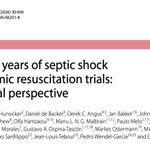
🫀Twenty-five years of septic shock research have taught us one essential lesson: physiology is more important than protocols.
For years, septic shock resuscitation revolved around correcting isolated variables. We targeted central venous oxygen saturation, serum lactate, mean arterial pressure, or fluid volume as if each represented the entire circulatory system. Landmark trials demonstrated that although these variables provide valuable physiological information, none should be interpreted in isolation. Septic shock is a heterogeneous syndrome, and identical hemodynamic values may reflect completely different pathophysiological states.
This outstanding perspective by Hernandez and colleagues reviews twenty-five years of evidence, from Early Goal Directed Therapy to the recently published ANDROMEDA SHOCK 2 trial. The evolution is striking. Resuscitation has progressively shifted from protocol driven algorithms toward individualized physiological assessment incorporating peripheral perfusion, fluid responsiveness, critical care echocardiography, hemodynamic phenotyping, and repeated bedside reassessment.
Perhaps the most important concept is that every intervention should become a reversible physiological test. Fluids should only be administered if the patient is fluid responsive and likely to tolerate them. Vasopressors should not simply normalize mean arterial pressure, but determine whether increasing perfusion pressure actually improves tissue perfusion. Dobutamine should be guided by cardiac phenotype rather than routine use. Most importantly, each intervention should be followed by immediate reassessment to determine whether it achieved its intended physiological objective.
Capillary refill time emerges as more than a simple bedside sign. Its rapid response to changes in perfusion makes it an attractive marker to guide sequential resuscitation while potentially reducing over-resuscitation. At the same time, lactate, ScvO₂, mean arterial pressure, and fluid balance retain their value when interpreted within the patient's overall physiological context rather than as isolated therapeutic goals.
The authors also remind us that many of the greatest advances in septic shock management have not resulted from new drugs or expensive technologies. Instead, they have come from a deeper understanding of cardiovascular physiology and better application of bedside monitoring. The future is unlikely to be defined by another universal algorithm. It will be defined by personalized, physiology-guided resuscitation tailored to each patient's evolving hemodynamic phenotype.
Reference 📚
Hernández G, Hunsicker O, de Backer D, et al. (2026). Twenty-five years of septic shock hemodynamic resuscitation trials: a conceptual perspective. Critical Care, 30, 400. doi.org/10.1186/s13054-026-0…

ALT
ANDROMEDA-SHOCK retweeted
Si la Meta es perfusion !!!
Aunque es un modelo conceptual , describe la incoherencia hemodinámica de manera fácil y sencilla : abordando las 4 interfaces de la pérdida de la coherencia hemodinámica.
1.- Interfase 1: VI-circulación arterial sistémica
Pregunta : el acoplamiento ventrículo arterial está óptimo ?
2.- Interfase 2: circulación arteriolar-capilar
Pregunta: la distribución del flujo arteriolar - capilar está fallando ?
3.- interfase 3: drenaje capilar-venular
Pregunta: el drenaje venoso está limitando el flujo ?
4.- interfase 4: ventrículo derecho-circulación pulmonar
Pregunta: el acoplamiento VD- pulmonar está óptimo ?

ANDROMEDA-SHOCK retweeted

✅️PAM normal
☑️Dosis altas de norepinefrina⚠️
❌️pero mala perfusión tisular.
🫀El desacoplamiento VA puede ser el origen de una incoherencia hemodinámica tipo 2.
🪣Papel de la congestión venosa
🚿La congestión deja de verse como un simple aumento de PVC.☝🏻
🫀Ahora se interpreta como una alteración de la Interface III.
⚠️Es importante
🔹️Cuando aumenta la presión venosa:🔽disminuye el gradiente de perfusión.
⬇️
Aumenta la presión capilar
⬇️
Edema
⬇️
Disminuye la difusión de oxígeno
⬇️
Empeora la extracción tisular
☝🏻🤓Por ello el tratamiento puede consistir en descongestionar, más que en administrar líquidos. 📚Evidencia reciente (2025–2026).
🔎Los trabajos más recientes consolidan esta evolución conceptual:
📌Las revisiones de Hernández, Kattan y Ospina-Tascón refuerzan el uso del CRT como un marcador dinámico y clínicamente relevante de perfusión tisular durante la reanimación del choque séptico.
📌Gruartmoner y Mesquida (Critical Care, 2025) proponen que la coherencia hemodinámica debe entenderse desde una perspectiva metabólica, donde el objetivo es restaurar la relación entre aporte y utilización de oxígeno, más que normalizar variables macrocirculatorias.
📌Huang et al. (Shock, 2025) describen distintos fenotipos de incoherencia hemodinámica y apoyan estrategias terapéuticas individualizadas según el mecanismo fisiopatológico predominante.
🤓☝🏻La reanimación moderna debe responder cuatro preguntas:
💎1. ¿Existe flujo suficiente?
💎2. ¿Ese flujo llega al capilar?
💎3. ¿Existe congestión que impida el drenaje?
💎4. ¿La célula puede utilizar el oxígeno recibido?
👀Si cualquiera falla, existe incoherencia hemodinámica.
Perlas cafeteras ☕
☕ La presión arterial no perfunde tejidos; solo genera el gradiente para hacerlo.
☕ El gasto cardíaco no garantiza perfusión celular.
☕ El mejor vasopresor no corrige una microcirculación lesionada.
☕ La congestión venosa es un determinante tan importante de la perfusión como el gasto cardíaco.
☕ La reanimación debe perseguir coherencia fisiológica, no únicamente normalización de variables.
☕ El acoplamiento ventrículo-arterial representa la primera transferencia de energía del sistema circulatorio; si falla, toda la cadena de perfusión se vuelve ineficiente.
☕ Un paciente puede tener PAM de 70–75 mmHg y permanecer en choque celular.
☕ El tiempo de llenado capilar probablemente representa hoy el biomarcador clínico más accesible de coherencia hemodinámica.
☕ Es importante estaurar la transferencia de energía desde el corazón hasta la mitocondria
👇🏽👇🏽👇🏽👇🏽
mdpi.com/2077-0383/15/15/581…
👇🏽👇🏽👇🏽👇🏽.
acrobat.adobe.com/id/urn:aai… – at Benito Juárez, Distrito Federal

ANDROMEDA-SHOCK retweeted
🫀Septic shock resuscitation is entering a new era. Physiology is replacing protocols.
For more than two decades, septic shock research has challenged one assumption after another. We targeted central venous oxygen saturation. We targeted lactate. We targeted mean arterial pressure. We restricted fluids. Yet despite these advances, improvements in patient-centered outcomes remained inconsistent.
This remarkable perspective from many of the world's leading experts argues that the problem was never the individual variables. The problem was expecting a single physiological target to represent an extraordinarily heterogeneous disease.
The evolution of septic shock management tells an important story. Early Goal Directed Therapy demonstrated that protocolized resuscitation could improve outcomes, but subsequent multicenter trials showed that fixed algorithms cannot account for the diversity of septic shock phenotypes. Lactate proved invaluable for risk stratification but increasingly unreliable as an isolated treatment target beyond the initial hours of resuscitation. Mean arterial pressure also evolved from a universal threshold to an individualized physiological variable whose optimal value depends on the patient's underlying cardiovascular state.
The most important conceptual shift has been moving from treating numbers to treating perfusion. Capillary refill time emerged as a rapidly responsive bedside marker that reflects the adequacy of tissue reperfusion. The ANDROMEDA-SHOCK program demonstrated that combining capillary refill time with systematic assessment of fluid responsiveness, focused critical care echocardiography, and sequential hemodynamic phenotyping allows clinicians to individualize therapy while reducing unnecessary interventions.
Another major lesson is that fluids are no longer considered inherently beneficial. Every fluid bolus should answer a physiological question. Is the patient fluid responsive? Will the patient tolerate additional volume? Is venous congestion already limiting organ perfusion? Fluid administration has evolved from a routine intervention into a reversible physiological test.
Perhaps the strongest message of this review is that hemodynamic resuscitation is no longer protocol driven but physiology guided. Septic shock should be understood as a dynamic process requiring repeated cycles of observation, bedside testing, intervention, and reassessment.
The future of resuscitation will not be defined by new numbers, but by a deeper understanding of physiology.
Reference 📚
Hernandez, G., Hunsicker, O., de Backer, D., Monnet, X., Pinsky, M. R., Teboul, J. L., et al. (2026). Twenty-five years of septic shock hemodynamic resuscitation trials: a conceptual perspective. Critical Care, 30, 400. doi.org/10.1186/s13054-026-0…

ALT
ANDROMEDA-SHOCK retweeted
Fluid responsiveness is a dynamic continuum rather than a simple binary state. From infusion rates to vasopressors and mechanical ventilation, these factors shape the time course of fluid therapy. 🎩 tip to the authors, including @RCastro_L & @edu_kattan
eddyjoemd.com/foamed

ANDROMEDA-SHOCK retweeted
25 años de Reanimación en choque séptico !!! NO TODO HA SIDO MALO !!
E. Rivers nos enseñó a Medir, tomar acciones y seguir metas: pero sobre todo NOS ENSEÑÓ A ESTAR PEGADOS CON EL PACIENTE GRAVE : Afortunadamente nos dimos cuenta que ALGUNAS metas estaban en contra de la fisiología. Hoy sabemos que la meta es LOGRAR PERFUSION y lo podemos lograr en recursos limitados !!! IMAGÍNATE EL FUTURO EN LA REANIMACIÓN !!!
Quizá no se trate de MENOS ES MÁS !!
Quizá se trate de HACER LO NECESARIO, EN EL MOMENTO JUSTO, CON EL PACIENTE ADECUADO !!!
Medicina enfocada en el Paciente
