

Neutrality requires blindness . . . @ethereumfndn More privacy on Ethereum & the 🌎 ⨳ Catholic, husband and father
Costa Rica
Joined December 2010
- Tweets3.9K
- Following3K
- Followers3.5K
- Likes44.7K









andyguzman.eth | privacy/acc retweeted

.@elonmusk - today (Oct 6, 5:37 PM) my Tesla on FSD ran a red light at S 352nd St in Federal Way, WA. Clip attached. No one was hurt. Sharing so the team can take a look. It was quite scary.
I know Tesla's answer: the engineers who wrote that code aren't criminals. The person behind the wheel is responsible. And that's right.
But the DOJ doesn't apply that rule to me. I wrote open-source code. People I never met misused it in ways I didn't control. Now I'm facing decades in prison.
Prosecutors compared me to "a getaway driver for a bank robbery." But I never drove anyone anywhere. I built open-source software that still runs today - because no one controls it. Not me, not anyone.
Elon, I know how much is on your plate. If you ever have a moment, I'd be truly grateful if you took a look at my case. I believe it matters for everyone building software in America. Thank you.

andyguzman.eth | privacy/acc retweeted

Our tor support now uses anon-rpc developed by @ethereumfndn
what this means:
-> anon-rpc was built to support multiple providers, not just tor, so when support for more private VPNs are added (eg. @Gnosis_VPN), you'll get them for free on @0xprivacypools v2
Our quest to make onchain privacy effortless continues 😎


in @0xprivacypools v2 not only can you:
- connect without a wallet to withdraw
- use your own custom RPCs for extra privacy
but now you can also connect to your TOR gateway, right from the browser 😎
1-click privacy ftw
andyguzman.eth | privacy/acc retweeted

Privacy is security.
Dependence on a single provider, even @torproject, is a potential threat vector.
anon-rpc was developed by the @ethereumfndn to make adding support for multiple anonymity networks easy for integrators ↓
Our tor support now uses anon-rpc developed by @ethereumfndn
what this means:
-> anon-rpc was built to support multiple providers, not just tor, so when support for more private VPNs are added (eg. @Gnosis_VPN), you'll get them for free on @0xprivacypools v2
Our quest to make onchain privacy effortless continues 😎
andyguzman.eth | privacy/acc retweeted

We've been working quite a lot at the EF state team!
You can now see Geth moving from MPT into Partial Binary Tree (eips.ethereum.org/EIPS/eip-8…) in real time in a kurtosis devnet while it handles reorgs cross-I* fork.
We're now ready to integrate Erigon, Nethermind and Besu! 🫡
We're getting more and more ready to having Binary Trees in Ethereum!
🔗👇
andyguzman.eth | privacy/acc retweeted

Four hardware wallet customer data leaks this year. Three of them in the last two weeks alone.
None touched a device, a seed phrase, or a private key.
All of them handed someone a list of confirmed crypto holders, with home addresses attached.

andyguzman.eth | privacy/acc retweeted

🤯 it's happening guys... @OpenRouter (just acquired by @Stripe) offers *Sign in with Ethereum* alongside Google and Github @signinethereum


andyguzman.eth | privacy/acc retweeted

One of the many wonderful things about technological progress is that is it performing a via negativa on the human soul—by stripping away everything that can be automated and replicated, it is revealing us to ourselves: showing us what it truly means to be human.
Of course, that's only the case for those who have eyes to see and ears to hear. For others, it's been—and going to be—devestating.


andyguzman.eth | privacy/acc retweeted
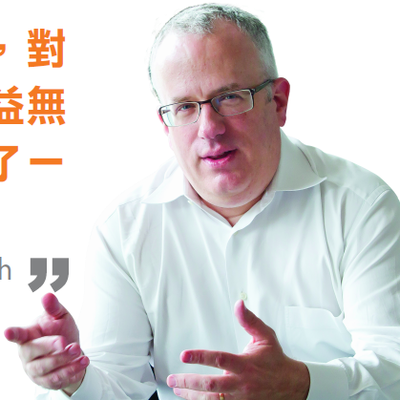
Always Captain-Kirk your LLMs, they do better when treated appropriately. arxiv.org/pdf/2510.04950
andyguzman.eth | privacy/acc retweeted

Now that I've joined Ethlabs I can answer my own question.
We see EF as the shepherd of Ethereum's soul aka CROPS, which is what will ensure Ethereum's relevance in a 10-to-100-year timescale.
Ethlabs wants to help Ethereum win the next 2-5 years. To that end, we will be very pragmatic with addressing the pain points of builders and users TODAY, both through our own engineering/research efforts and through pushing EF/core devs to allocate resources in that direction.
Ethereum needs both EF and Ethlabs. Let's win together.

The biggest question on my mind is if Ethlabs and EF will complement each other in a productive way, or if the split will cause more infighting/deadlock in the ACD because the two orgs drive clients towards conflicting roadmaps.
I think I have a fairly good understanding of what the EF is trying to achieve -- implementing the Strawmap which is optimized for CROPS. What's unclear is what Ethlabs is trying to achieve -- are they aligned with the Strawmap? Are there a different set of priorities they are trying to pursue? If so, what are they?
Would definitely appreciate more clarity from the stakeholders cc @barnabemonnot @adietrichs @casparschwa @joshrudolf @_julianma
andyguzman.eth | privacy/acc retweeted

The core idea behind “new state types” is to stop treating all state as equal. Some initial ideas:
1. Hot-cold state separation
See EIP-8188/8295/8296. The core idea is to price cold state storage significantly higher than hot state. This would enable clients to implement hot-cold database separation, improving overall state performance. Historical analysis shows that retaining roughly 3% of the state in hot storage accounts for ~94% of all updates (on a monthly basis).
2. Temporary state
A new state category that is automatically pruned after a defined time period. About 55% of state slots are written once and never accessed again, so applications can make use of this feature if emphemeral slots fit their use cases (main incentive is cheaper gas).
3. Trieless contracts
Replace the contract trie with some fixed size cryptographic accumulator. Not all applications require state proofs.
The state hasn't been improved since genesis. So it's about time.

I updated my 2023 roadmap diagram to overlay where the items that were there sit in the current Strawmap ( strawmap.org/ ).
In general, a lot of overlap, but:
* Some things got reshuffled in order (eg. quantum safety up-prioritized)
* Some things deprioritized (eg. VDFs; many EVM improvements)
* Some things replaced with superior constructions (eg. Verkle -> unified BT -> PBT; state expiry -> new state types)
What's most striking, however, is that some completely new things are in the strawmap that are NOT in this diagram, because they were not in the 2023 roadmap at all. These reflect changing priorities.
Notably:
* First-class attention to strong privacy. This covers: keyed nonces and recent roots, aspects of FOCIL, lean privacy pool & wormholes
* Aggressive scaling in the context of post-quantum. This covers: leanSPHINCS signatures and aggregation, zkzk frames (see ethereum-magicians.org/t/eip… )
* Lean-ification of the spec, to assist in formal verification (full FV of everything is only possible because of modern AI)
* Blob and gas futures (this idea just didn't exist back in 2023)
* Native rollups (SNARKs were nowhere near mature enough to even consider this back in 2023)
* A more open design space for the "future of the EVM". zkzk frames already implies that the protocol will expose to users some ISA that's not the EVM - current leading candidates are leanISA and RISC-V. These ISAs are more simple, modern and efficient than the EVM. Once they're there, why not expose them to developers everywhere? (And then, why not turn the EVM into being an IR on top of that ISA, instead of an enshrined feature massively complicating the base protocol?) Though much of the deeper exploration here is too early even for the strawmap.
* New state types are not just a replacement for expiry, they're a fundamentally different paradigm to how Ethereum does scaling
A common theme in scaling, found in both state types and zkzk frames (both new ideas), is that instead of trying to maximally scale ALL ethereum activity, we try to create specialized mechanisms that have more restrictive properties that make them more scaling-friendly, while supporting the heaviest loads incurred by users and applications today (eg. token transfers, swaps) and tomorrow (eg. privacy protocols).
The other common theme is treating STARKs and AI-accelerated FV as first-class objects, that we are okay betting the technical future of Ethereum on. There are recursive STARKs in many layers of the protocol, one particular primitive (the "aggregate to union verified dependencies" primitive) is expected to be used in *three* places in the protocol: EL, CL and DL. This can only be safe with formal verification, which is itself only feasible with modern AI tools.
In general, many steps forward in maturity. And a huge amount of hard work by many dozens of Ethereum researchers and developers on all of these features.
Ethereum will be quantum-safe. Ethereum will put users' privacy first. Ethereum will be secure. Ethereum will be censorship-resistant. Ethereum will be highly performant and scalable while satisfying the above. And Ethereum will be Lean.


andyguzman.eth | privacy/acc retweeted

Enter: EthCoordinate.
tl;dr: EthCoordinate is a crypto-native organization born inside the EthStaker community, bringing together separate efforts under one umbrella to help with Ethereum governance coordination, support Forkcast, increase stakeholder engagement on proposed or upcoming EIPs and, of course, continue providing software, tooling, and technical support for home stakers.
EthStaker started in 2020 when a loosely connected group of Ethereum enthusiasts joined efforts to speed up the development of the beacon chain. The organization steadily evolved, incorporating as a 501(c)4 nonprofit and taking up initiatives around independent participants of Ethereum's consensus mechanism, aka home stakers.
Throughout the years, it has played a decisive role in coordinating the launch and operation of devnets, testnets, and mainnet hard fork upgrades; facilitating information flows and generally connecting dots that needed connecting.
This year's tectonic organizational changes in the ecosystem have opened up functional gaps in Ethereum coordination. To close these gaps and continue supporting the network, EthStaker's core members are joined by mission-aligned fresh blood to aggregate efforts under one name to produce greater results than operating independently.
EthCoordinate is a natural evolution of EthStaker; as Ethereum mainnet heads to its third radical consensus protocol change at a steady pace, it’s time for EthStaker to recalibrate around what Ethereum’s evolving community needs.
Our mission is to facilitate interaction between stakeholders of the ecosystem to accelerate the adoption of the Ethereum network and to provide continuity for governance operations.
We believe that the Ethereum mainnet is an unparalleled bedrock for the augmentation of humanity's productivity output and that ETH, the asset, is the token that aligns the incentives of all actors involved.
We stand up for our values, combining technical rigor with pragmatism for Ethereum to continue being the most accessible and credibly neutral global blockchain.
The team is 10 long-tenured Ethereum professionals and currently our main work streams are:
⇥ Maintain a high-quality venue for independent stakers to remain engaged and informed
⇥ Facilitate coordination around core protocol development and adjacencies
⇥ Develop and steward Forkcast, the most popular platform to track the research and engineering initiatives around Ethereum's core protocol
⇥ Facilitate research, discussion, and coordination around protocol economics in support of Ethereum's long-term economic health
⇥ Maintain open source tools and documentation used by participants of the consensus set
We're energized for this chapter in Ethereum coordination & our role in it.
👀👀👀
"a new class of yield-bearing assets to non-liquidatable ETH loans."

The Polaris documentation is now live.
Discover pETH and its ever-rising floor, along with the ecosystem of novel onchain primitives it unlocks, from a new class of yield-bearing assets to non-liquidatable ETH loans.
docs.polaris.finance

andyguzman.eth | privacy/acc retweeted

I updated my 2023 roadmap diagram to overlay where the items that were there sit in the current Strawmap ( strawmap.org/ ).
In general, a lot of overlap, but:
* Some things got reshuffled in order (eg. quantum safety up-prioritized)
* Some things deprioritized (eg. VDFs; many EVM improvements)
* Some things replaced with superior constructions (eg. Verkle -> unified BT -> PBT; state expiry -> new state types)
What's most striking, however, is that some completely new things are in the strawmap that are NOT in this diagram, because they were not in the 2023 roadmap at all. These reflect changing priorities.
Notably:
* First-class attention to strong privacy. This covers: keyed nonces and recent roots, aspects of FOCIL, lean privacy pool & wormholes
* Aggressive scaling in the context of post-quantum. This covers: leanSPHINCS signatures and aggregation, zkzk frames (see ethereum-magicians.org/t/eip… )
* Lean-ification of the spec, to assist in formal verification (full FV of everything is only possible because of modern AI)
* Blob and gas futures (this idea just didn't exist back in 2023)
* Native rollups (SNARKs were nowhere near mature enough to even consider this back in 2023)
* A more open design space for the "future of the EVM". zkzk frames already implies that the protocol will expose to users some ISA that's not the EVM - current leading candidates are leanISA and RISC-V. These ISAs are more simple, modern and efficient than the EVM. Once they're there, why not expose them to developers everywhere? (And then, why not turn the EVM into being an IR on top of that ISA, instead of an enshrined feature massively complicating the base protocol?) Though much of the deeper exploration here is too early even for the strawmap.
* New state types are not just a replacement for expiry, they're a fundamentally different paradigm to how Ethereum does scaling
A common theme in scaling, found in both state types and zkzk frames (both new ideas), is that instead of trying to maximally scale ALL ethereum activity, we try to create specialized mechanisms that have more restrictive properties that make them more scaling-friendly, while supporting the heaviest loads incurred by users and applications today (eg. token transfers, swaps) and tomorrow (eg. privacy protocols).
The other common theme is treating STARKs and AI-accelerated FV as first-class objects, that we are okay betting the technical future of Ethereum on. There are recursive STARKs in many layers of the protocol, one particular primitive (the "aggregate to union verified dependencies" primitive) is expected to be used in *three* places in the protocol: EL, CL and DL. This can only be safe with formal verification, which is itself only feasible with modern AI tools.
In general, many steps forward in maturity. And a huge amount of hard work by many dozens of Ethereum researchers and developers on all of these features.
Ethereum will be quantum-safe. Ethereum will put users' privacy first. Ethereum will be secure. Ethereum will be censorship-resistant. Ethereum will be highly performant and scalable while satisfying the above. And Ethereum will be Lean.
andyguzman.eth | privacy/acc retweeted

1/ Privacy is often thought of as politically risky. In this guest thread by @valkenburgh, Executive Director of @coincenter, he makes the case, in his own words, that the reality is the opposite:
Privacy is essential to Ethereum’s promise of financial freedom and neutrality.

Infra providers (rpc, indexers, bundlers) NEED privacy to avoid regulatory risk
The opposite will never be true:
- "don't process this tx"
- "block access to this address"
- "hand me your logs for IP"
If you can log, you'll become a pressure point

4/ If infrastructure can see everything, it will be pressured to act on what it sees. That turns neutral infrastructure into mediated infrastructure.
Neutrality requires blindness: the more a pipe can see, the less it can remain a dumb pipe.
en.wikipedia.org/wiki/Dumb_p…
andyguzman.eth | privacy/acc retweeted

The Ethereum Foundation’s Trillion Dollar Security initiative has allocated a grant to support @FreedomofPress’s continued development of WEBCAT, with the goal of bringing front-end verification to Ethereum wallets and apps.
Learn more ↓
blog.ethereum.org/2026/08/05…

andyguzman.eth | privacy/acc retweeted

This could be you on the Devcon stage in Mumbai👀
The ideas shared at Devcon can shape what Ethereum builds next. Bring your work, your questions and ideas to the global Ethereum community.
Only a few days left to apply - apps close Aug 6!
devcon.org/en/speaker-applic…


