

Research lab in the Dep. of Radiation Oncology at UT Southwestern Medical Center. We investigate the cellular response to DNA damage and cancer. Views are AJD's
Dallas, TX
Joined October 2018
- Tweets300
- Following172
- Followers288
- Likes822





nature.com/articles/s41698-0… I'm excited this study that started before COVID is finally out. Spent a lot of nights in Pavia, Italy to complete these experiments. Look for another paper associated with this project to be published later in 2025. Also, beamtime at CNAO secured in 2025!

I’ve been sitting on this for a couple of weeks, as my life has been crazy due to spring break , NIH study section, and grant and paper writing, but I’ve been recommended for promotion and tenure. The thanks are many but ultimately this was driven by the awesome people in my lab!
The cancer testes antigen, HORMAD1, limits genomic instability in canc... sciencedirect.com/science/ar…
Excited to share this paper published with the lab of my friend and colleague Dr. Angelique Whitehurst @A_whiteh. This story was driven by the talented student Dr. Luis Herrera
2
9
618
We postulate that cancer cells aberrantly express HORMAD1 to attenuate the accumulation of excessive DNA damage due to chronic replication stress, which may otherwise lead to accumulation of toxic levels of genomic instability.
1
1
164
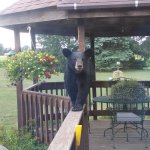
Black bear testing its balance on my aunt and uncle’s decking in Wisconsin. Have a score for the bear’s balance beam routine? @USAGym @OU_WGymnastics 🤣

1
10
494
DNA-PK is activated by SIRT2 deacetylation to promote DNA double-strand break repair by non-homologous end joining academic.oup.com/nar/article…
Excited to share this collaborative manuscript published with the lab of Dr. David Yu at Emory.
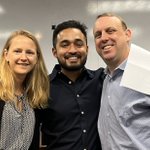
Words cannot describe the pride I have for Dr. Luis Reza Herrera. I met him as a shy first year and to see him blossom as a young scientist has been inspiring. So glad I was able to co-mentor him with my dear friend Dr. Angelique Whitehurst. Congrats Dr. Herrera!

2
20
1,036
Today, we celebrate the life of my friend and colleague Dr. Benjamin Chen. Ben passed away two weeks ago after a battle with cholangiocarcinoma. The outpouring from around the world illustrates how great of a man Ben was. Excellent scientific mind, collaborative, and so giving.


ATM phosphorylates the FATC domain of DNA-PKcs at threonine 4102 to promote non-homologous end joining academic.oup.com/nar/article….
New manuscript from the lab in which we characterized a novel phosphorylation site in the FATC domain of DNA-PKcs.
Study section is hopefully discussing a grant from my lab next week. It isn’t related to this project but at least shows more productivity from my small group.
1
2
174