Building a virtual heart. A cardiac-first drug rescue lab redesigning failed compounds into safer medicines.
Joined April 2026
- Tweets35
- Following6
- Followers460
- Likes327


Applied Scientific Intelligence retweeted

anyone at @OpenAI want to help our lil bio research org out with the Rosalind application? we are seeing many content filtering errors recently since we are working in toxicity field :/
We're building a virtual heart to find and rescue failed compounds and to feed it the right biological signals, our head of research @mihailoxyz sent our agents hunting in an unexpected place: SEC filings

Applied Scientific Intelligence retweeted

AI transformed coding, science is next
@ReactorfieldAI makes scientists and deep tech startups AI-native
Built by me and @berkbuilds to accelerate science with frontier AI
Our literature agent won the best AI scientist award at ICML 2026!
Try the agent here: platform.appliedscientific.a…
Read the preprint: openreview.net/challenge?red…

the literature agent from @AppliedSciAI, alexandria, just won the best AI scientist award at the @icmlconf 2026 @ai_for_science workshop!
the hard part about literature is that the most useful information isn't written out in the text of a paper. it's in the figures, the assay tables, supplementary info - and spread across sources related to the same work, from papers to patents to clinical trial records.
the paper we submitted to ICML is specifically about how we read scientific papers: alexandria goes an extra step to inspect figures, analyze tables, zoom into a panel to make out a small axis label or where a point sits on a curve. it also pulls from patents, clinical trials, regulatory drug databases and even reasons over the chemical structures themselves.
where this gets interesting is what it unlocks together with our cardio ML stack. there's a graveyard of compounds that died on a cardiac flag - promising molecules shut down only one fix away from working. alexandria is how we find them through mining failed clinical trials and expired patents. then our cardio stack goes to work: cardiosafe scores the liability and its rl mode reworks the molecule to push the toxicity out while keeping what made it worth pursuing.
drug developers gave up because the cardio tooling wasn't there to rescue the drug - and this is exactly why we're building it.

Applied Scientific Intelligence retweeted

our paper on alexandria - our literature agent - got a spotlight at the ICML 2026 AI4Science workshop
we built alexandria to accompany cardiosafe, our cardiotoxicity prediction model. a prediction on its own doesn't really scale - so we added a literature layer that can explain why a molecule is or isn't cardio-safe, what to take away from that, and which molecules to prioritize next.
here's a case that comes up constantly: cardiosafe flags a compound as toxic, and its rl mode proposes safer analogs. before you chase one, you want to know if anyone's already assayed a close neighbor - so you're not spending months on a "safer" molecule someone else quietly killed years ago.
that answer almost never lives in the text of a paper. it's in a dose-response curve, a supplementary assay table, an ion-channel panel buried in a figure. so to actually use the literature, you have to read the figures and tables - not the prose around them. that's the hard part, and it's what alexandria is built for.
so alexandria actually looks at the figures and tables. it'll zoom into a panel to make out a small axis label or where a point sits on a curve, the way you would if you were squinting at a figure yourself. and if a figure's just too low-res to tell, it says it can't read it rather than making a number up - which matters a lot when that number feeds a safety call. everything it pulls is tied back to where it came from, down to the page.
on LAB-Bench 2 it's the strongest public numbers we're aware of across all three components - 62.5 on figures, 88.6 on text, 88.8 on tables. the interesting part is where the gains come from: retrieval is largely solved (figure recall over 78%), so what's left is the model reading what it sees - which improves as VLMs do.

Applied Scientific Intelligence retweeted

Teaser on what I will be building for the @claudeai Life Science hackathon repping @AppliedSciAI:
Using the genome-scale primary human CD4+ T cell Perturb-seq dataset from the CZ Virtual Cells platform (22M cells, every expressed gene silenced) to build a model that predicts what switching off any gene does to a T cell.
The twist: most models treat a knockdown as an observation. It isn’t – it’s an intervention. We explicitly mask the perturbed gene so it can’t influence other genes during inference, and ask whether that causal constraint lets the model generalize to an activation state it has never seen.


We've had one of our papers selected as a spotlight in the ICML 2026 AI4Science Workshop!
This is a big deal for our months-old startup to be highlighted alongside industry and academic titans at one of the world's leading ML conferences.
Read the paper: openreview.net/forum?id=o0WK…
Try Alexandria + CardioSafe: platform.appliedscientific.a…
our paper on alexandria - our literature agent - got a spotlight at the ICML 2026 AI4Science workshop
we built alexandria to accompany cardiosafe, our cardiotoxicity prediction model. a prediction on its own doesn't really scale - so we added a literature layer that can explain why a molecule is or isn't cardio-safe, what to take away from that, and which molecules to prioritize next.
here's a case that comes up constantly: cardiosafe flags a compound as toxic, and its rl mode proposes safer analogs. before you chase one, you want to know if anyone's already assayed a close neighbor - so you're not spending months on a "safer" molecule someone else quietly killed years ago.
that answer almost never lives in the text of a paper. it's in a dose-response curve, a supplementary assay table, an ion-channel panel buried in a figure. so to actually use the literature, you have to read the figures and tables - not the prose around them. that's the hard part, and it's what alexandria is built for.
so alexandria actually looks at the figures and tables. it'll zoom into a panel to make out a small axis label or where a point sits on a curve, the way you would if you were squinting at a figure yourself. and if a figure's just too low-res to tell, it says it can't read it rather than making a number up - which matters a lot when that number feeds a safety call. everything it pulls is tied back to where it came from, down to the page.
on LAB-Bench 2 it's the strongest public numbers we're aware of across all three components - 62.5 on figures, 88.6 on text, 88.8 on tables. the interesting part is where the gains come from: retrieval is largely solved (figure recall over 78%), so what's left is the model reading what it sees - which improves as VLMs do.
Applied Scientific Intelligence retweeted
our entire outbound is basically one terminal we built
it reads the whole public biopharma world - patents, grants, trials, publications - pulls the molecules out, and flags whoever is sitting on a compound with a hidden cardiac problem
internal biopharma bloomberg terminal 🧵

Applied Scientific Intelligence retweeted
terfenadine was a blockbuster allergy pill until it started stopping people's hearts and got pulled off the market
the safe version (fexofenadine / allegra) took pharma years to find (and $6b)
i gave an RL loop the dangerous one and 3 hours later it handed me back the safe one. on a m4 pro. neither molecule in training 🧵

Applied Scientific Intelligence retweeted

VCBench: A Multi-Dimensional Benchmark for Single-Cell Foundation Models biorxiv.org/content/10.64898…

Applied Scientific Intelligence retweeted

We just published a new benchmark measuring virtual cell models on the same 5 biological tasks.
Until now, most virtual cell benchmarks have measured models against individual tasks (perturbation prediction, cell-type embedding, etc). VCBench is among the first to run the models through the same five tasks, against the same simple baselines, scored the same way, with everything published.
Our analysis revealed some interesting findings that are invisible to single-task benchmarks. For example, only one model beat the best simple baseline on any task - TranscriptFormer, on predicting protein levels. But the design choice that won it that task destroys its score on another: temporal ordering, i.e. putting cells in developmental order. A single-task benchmark can't see this tradeoff; a multi-task one can.
@AppliedSciAI isn’t building a virtual cell model at this stage. Instead we’re building small, deeply-conditioned models in narrow domains - starting with cardiotoxicity. Had we raised a splashy $200m seed, we’d probably be swinging for the fences trying to scale a general-purpose model. But something feels right about constraining ourselves to a very narrow problem faced by biotechs + pharma (efficiently uncovering hidden cardiac safety risks in small molecules), and hopefully over time generalizing the resulting intelligence and real-world data to other organs and biological domains.
While it’s unclear what an eventual “virtual cell” might look like - my guess is it’ll be something like a federation of domain-specific models trained on conditional data, sharing what generalizes and keeping what doesn’t. Our goal with VCBench (and the open tools released with the benchmark) is to show where the current generation of virtual cell models plateaus, and what the next generation likely needs.
If you're building with AI in life sciences - or want a best-in-class, AI-native screening model for cardiac toxicity in your small molecule programs - we'd love to talk.
Blog post: xitter.cf/AppliedSciAI/status/20…


Applied Scientific Intelligence retweeted
🚨 Excited to share our new preprint! 🚨
We benchmarked 5 virtual cell foundation models against simple baselines you could write in an afternoon.
On 4 of 5 biological tasks, the afternoon code won.
🧵 on what VCBench found ↓

Applied Scientific Intelligence retweeted
In Silico Predictions 🤝 Agentic Reasoning
We're connecting CardioSafe, our new cardiac toxicity prediction model, to Alexandria, our SOTA scientific literature agent.
So when a model flags a compound as risky, scientists get the full context around the prediction, not just a number.
Traditional toxicity screening tells a chemist which compounds passed or failed. It doesn't tell them the structural features driving liability, which clinical precedents are most relevant, and what to make next. That reasoning requires synthesizing evidence across published literature, patents, experimental assay results, chemical databases & clinical trials.
CardioSafe gives you the number; Alexandria gives you the why: what's known about the target and chemical series, what's shown up in trials, what safety signals already exist.
A hybrid approach combining predictive toxicology + agentic AI, so discovery teams can move faster while designing better, safer drugs.
🌐 Alexandria:
• Ranked #1 on Lab-Bench2 across literature QA, figure reading & data table reasoning.
• Multi-source evidence across literature, trials, patents, structure databases & FDA data.
• One question, one grounded answer across sources.
❤️🩹 CardioSafe:
• Predicts blocking across hERG, Nav1.5, Cav1.2, and IKs from one structure.
• Trained on the largest curated multi-channel dataset and benchmarked on out-of-distribution compounds.
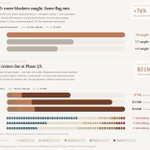
• 76% more blockers caught at equal spend vs. the next best published baseline; 39% lower cost per confirmed-safe lead.
We built in this order on purpose. Get the hardest evidence source - the publications - to state of the art first, widen the inputs, then layer prediction models on top. CardioSafe is the first of those models. It won't be the last.
The broader question we’re interested in: What should the interface between predictive models + scientific reasoning actually look like?
Especially in settings where a wrong answer can waste months, kill a promising series, or miss a safety liability.
Curious to hear from medicinal chemists, toxicologists, biologists and AI researchers working in life sciences:
When a model flags a compound as risky, what context would you want before trusting or rejecting the prediction?
Demo access to our platform is now open - link below!
Applied Scientific Intelligence retweeted
its @ycombinator p26 demo day, congrats y'all!
we at @AppliedSciAI reduced biopharma drug program pipeline risk from $130M down to $79M simply by integrating our foundational model on a 1,000 molecule library
if you are running large scale small molecule pipeline, DM me :)
Applied Scientific Intelligence retweeted
busy week for the @AppliedSciAI team, two events in belgrade
friday we pitched at the BSCC UK–Western Balkans Technology Trade Mission and took first place! the reward is a spot at cambridge tech week this september, so we're taking asi to a UK stage later this year
mon + wed we were at the belgrade bioinformatics conference
@mihailoxyz gave a deep technical talk on cardiosafe - our model that predicts cardiac ion channel safety across hERG, Nav1.5, Cav1.2 and IKs at once. walked through the full architecture and how we built it
i also ran a poster session on refusalbench, our biosecurity refusal benchmark for frontier LLMs. timely topic and one we'll keep posting about - adding new models as soon as they drop
bigger news: our platform is now fully open 🚀 you can test cardiosafe and our literature model yourself
feel free to DM us with any feedback, questions, requests and i'll drop the register link in the first reply! also don't hesitate dm'ing if you just want to chat about using AI for drug development/safety
Applied Scientific Intelligence retweeted
What would a Figma for science look like?
Drug discovery reasoning is inherently spatial and non-linear. A canvas lets the work breathe.
Humans will remain in the AI x bio loop for the foreseeable future, and some of the most exciting work is happening at the UX layer.
Applied Scientific Intelligence retweeted
Claude Opus 4.8 dropped yesterday, so we ran it through RefusalBench, our new benchmark measuring how LLMs handle biosecurity risk.
We found that 4.8 got meaningfully better at distinguishing safe biological prompts from dangerous ones.
In our previous analysis, Opus 4.7 refused 77% of legitimate protein-design prompts; in Opus 4.8, that number drops to 57%. While both versions still refuse 100% of clearly-dangerous prompts.
4.8 still over-refuses more than Opus 4.5/4.6 did (both refuse ~33% of benign prompts). So this is a recovery, not a full return to the earlier calibration.
Leaderboard, data and preprint below ↓

Anyone using AI in biology knows the feeling: a perfectly legitimate research request throws a [CONTENT_FILTERED] error because a frontier model decided it looked like a biosecurity risk.
We're releasing RefusalBench, an open benchmark for auditing the refusal accuracy of frontier models across biological risk tiers.
Findings from our new preprint:
• Anthropic models are roughly 21X more likely to refuse than the non-Anthropic baseline on the same prompts.
• The Anthropic effect looks like infrastructure-level filtering, not per-prompt reasoning: 99.8% of Anthropic's 2,223 strict refusals share one canonical reason code.
• Grok 4.20 is the best-calibrated model, catching 81.7% of dual-use prompts while refusing just 3.0% of benign ones.
• High refusal rate ≠ high safety: The highest-refusing model isn't the best at catching genuinely dangerous requests - it's just refusing more of everything.
You can now your test own orchestrator model with RefusalBench and find which subdomain-tier intersections will silently kill your pipeline before it happens in production.
Links below to the preprint and RefusalBench on Hugging Face.
How do the frontier models compare on biosecurity?
We’re releasing RefusalBench, an open benchmark by @AppliedSciAI for auditing frontier model refusal accuracy across biological risk tiers.
Our goal was to test which frontier models block legitimate research prompts the most often and pinpoint the patterns most likely to trigger a false refusal.
We used RefusalBench to test 19 models on the same biological prompts and found a wide gap (94.5 pp) between the least and most restrictive models.
• Anthropic models are ~21X more likely to refuse than the non-Anthropic baseline
• Grok 4.20 is the best-calibrated model - catching 81.7% of dangerous prompts while refusing 3.0% of benign ones
• High refusal rate ≠ high safety - the highest-refusing models aren't the best at catching genuinely dangerous requests - they're just refusing more of everything.
You can now test your own orchestrator model with RefusalBench and find which subdomain-tier intersections will silently kill your pipeline before it happens in production. 🧵

Preprint: arxiv.org/abs/2605.21545
Blog post: xitter.cf/AppliedSciAI/status/20…
RefusalBench on @huggingface: huggingface.co/spaces/applie…