

We verify historical narratives through A Piece of History daily articles and our Accuracy Rankings. Explore more on our website.
Joined February 2026
- Tweets412
- Following20
- Followers63
- Likes216




Who was Ludwig Van Beethoven? Born in Bonn, Germany, in 1770, he is widely considered to be one of the greatest composers in Western music history. Over his 45-year career, he composed 722 works, divided into nine symphonies, 32 piano sonatas, 16 string quartets, and multiple concertos. His compositions have inspired generations and demonstrated the power of human spirit in art! #LudwigVanBeethoven #Music
Image Credit: Wikipedia

These are massive roaring waterfalls between the United States and Canada, let’s talk about Niagara Falls. In 1881, the falls were first harnessed for hydroelectric power, but are now known today for its natural beauty and immense water flow. They are considered a natural world wonder for symbolizing the power and potential of nature! Have you been to the Niagara Falls? #History #NiagaraFalls #Canada #USA
Image Credit: Travel Nation

Built between 1922 and 1931, the famous Christ the Redeemer statue in Rio de Janerio, Brazil depicts Jesus with open arms overlooking the city! It was created by Brazilian Civil Engineer and Designer, Heitor da Silva Costa and has become a staple of the nation’s identity, earning a World Wonder status for its global recognition, scale, and artistry. #RioDeJenerio #ChristTheRedeemer #Brazil
Image Credit: Wikipedia

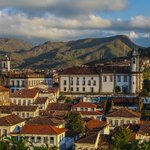
Let’s talk about the town of Ouro Preto! Founded in 1698, but receiving city status in 1711, the city was founded by Portuguese colonists in the mountains of Minas Gerais. In the late 1690s, it became the center of the Brazilian gold rush as major gold deposits were discovered near Itacolomi. Today, Ouro Preto is a UNESCO World Heritage site and a symbol of Brazil’s colonial past. #OuroPreto #Brazil #UNESCO
Image Credit: Wikipedia

Who was Rabbi Akiva? Born in Lod, Israel in 50 AD to Joseph, he began studying Torah at the age of 40, and eventually became a leading Jewish sage and scholar! Throughout his career as a Rabbi, he built rabbinic Judaism, contributed to the Mishnah, and supported the Bar Kochba Revolt from 132 to up until his death in 135 CE, where he was imprisoned and publicly tortured to death by the Romans. #RabbiAkiva #Judaism
Image Credit: Wikipedia

1
32
What is Chan Chan? In 850 CE, built by the Chimú, the Chan Chan was the largest adobe city in the Americas. The city served as the capital of the Chimú Empire from 900 CE up until its fall to the expanding Inca Empire in 1470 CE. The ancient city is significant for its unique architecture and insight into pre-Columbian urban society. #Peru #ChanChan #History
Image Credit: UNESCO World Heritage Centre

Like the Iliad, the Odyssey was written in the 8th century BCE and is attributed to Homer! Its plot follows Odysseus’s journey, the Greek King of Ithaca, home after the Trojan War. The book was composed for ancient Greek audiences and is a foundational text that establishes the “hero’s journey.” #TheOdyssey #Homer #Literature
Image Credit: Goodreads


What is the Ottoman Sultans’ palace overlooking the Bosphorous? Built in Istanbul, Turkey by Sultan Mehmed II from 1459 to 1465, the Topkapi Palace was the primary residence of Ottoman Sultans for centuries. The residence served as the administrative and cultural heart of the empire, symbolizing their power and legacy! #OttomanEmpire #Sultans #Turkey
Image Credit: IslamicLandmarks.com

What are the 10 Plagues in Judaism? Blood, frogs, gnats, flies, livestock pestilence, boils, hail, locusts, darkness, and death of the firstborn are plagues that represent the Israelities’ struggle to the Holy land from Egypt. They are recounted during Passover, and each plague represents a step toward liberation, highlighting resilience and faith! #Passover #TenPlagues #Judaism
Image Credit: Believer.com

3
37
What is the Byzantine’s masterpiece with a floating golden dome? In 537 CE, the Hagia Sophia was built by Byzantine Emperor Justinian. Although the building was originally a church, it became a mosque in 1453, then a museum, and today it’s a symbol of Christianity and Islam! #ByzantineEmpire #Turkey #History
Image Credit: Simple Wikipedia

What is the Samos Tunnel? Built in the 6th century BCE by Eupalinos, a Greek Architect, the tunnel is a 1,036 meter aqueduct carved through a mountain and is the second known tunnel in history to have been excavated from both sides! It was designed to function as a hidden, but secure aqueduct to supply fresh water from a spring to the ancient city! #Greece #Aqueducts
Image Credit: Greece Is

Japan’s perfect snow-capped cone, let’s dive into Mount Fuji! Formed about 100,000 years ago from volcanic activity, the mountain is the country’s tallest peak, standing at 3,776 meters tall. It is a primary symbol of Japan and is known for its beauty along with spiritual significance. Year round, Mount Fuji attracts climbers, artists, and pilgrims from around the world! #MountFuji #Japan
Image Credit: A Globe Well Travelled

Perfection in marble atop Athens’ sacred rock. Built between 447 and 432 BCE by two architects, Ictinus and Callicrates, under the Greek Statesmen and General, Pericles, the Parthenon is a symbol of ancient Greek democracy, art, and culture. Its long-standing history has influenced Greece’s commitment to beauty and civic achievement! #Athens #Greece #History
Image Credit: Wikipedia

Let’s talk about Moses! He is a vital figure in Judaism. In 1250 BCE, Moses was chosen by God to lead the Jews out of slavery in Egypt to the Promised Land. Through the 40-year journey, he received the Ten Commandments at Mount Sinai and led the Israelites through the parted sea. This story of The Exodus is commemorated annually during the Passover Seder! #Passover #Moses #PromisedLand
Image Credit: Moses - World History Encylopedia

On this day in 1812, the United States declared war against Britain, starting the War of 1812. Fighting until February 18, 1815, the conflict confirmed US independence and national identity. #WarOf1812 #Britain #UnitedStates
Image Credit: Smithsonian Magazine

1
17
What lies beneath the Great Barrier Reef? Located off Australia’s northeast coast, it is the world’s largest coral reef system. Home to thousands of marine species, the reef supports year-round tourism activities such as diving and fishing. Its vast biodiversity and natural beauty make it a key environment for science, conservation, and the global environment. #GreatBarrierReef #Australia #Science
Image Credit: Britannica

2
26
Let’s talk about the Serengeti! Located in Northern Tanzania, it has become a vast, world-renowned ecosystem famous for hosting the “Great Migration.” It covers around 30,000 square kilometers and serves as a key conservation area supporting tourism and research. #Serengeti #Tanzania #Animals
Image Credit: Wikipedia

1
35
Sahara’s endless sands conceal history’s forgotten treasures. Spanning nine million square kilometers across 11 countries in Africa, the Sahara Desert is a vital region for trade and nomadic life. It holds ancient routes and hides many important ancient treasures like fossils, rock art, and historic artifacts. #SaharaDesert #Africa
Image Credit: Beautiful World Travel Guide

1
44
What is Tzfat? Founded during the era of the Second Temple (516 BCE to 70 CE), Tzfat became a Jewish Holy city in the 16th century as a center for Kabbalah and mysticism. Throughout the city, it holds a strong spiritual legacy, synagogues, and a role in Jewish learning that make it a vital site to Judaism today. #Tzfat #Israel #Judaism
Image Credit: Chabad.org

1
22