

☄️Astrophotography & Smart Telescopes 🔭 Facebook:https://xitter.cf/t.co/GpkdZL5iu8 Instagram:https://xitter.cf/t.co/slBKl1BcyM
Joined May 2026
- Tweets332
- Following427
- Followers92
- Likes993





☄️🔭
📱
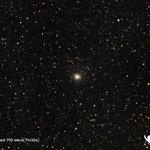
Name: Globular Cluster (M28)
Constellation: Sagittarius
Distance: 18 to 18.3 kly
Smart Telescope: Celestron Origin Mark II
Mount: Alt-Azimuth
Bortle Scale: Class 7
Exposure Time: 14 min
Filter: Built-in Filter
Image Processing: Origin App
#M28 #globularcluster #smarttelescope #celestronorigin #telescope #constellation #bortlescale #lightyear #astrophotography #astrofotografia #astrophotographer #space #astronomy #astronomer #observatory #deepskyphotography #deepskyastrophotography #deepskyobject

☄️🔭
📱
Name: Globular Cluster (M28)
Constellation: Sagittarius
Distance: 18 to 18.3 kly
Smart Telescope: Seestar S50
Mount: Alt-Azimuth
Bortle Scale: Class 7
Exposure Time: 7 min
Filter: Built-in Filter
Image Processing: Seestar App
#M28 #globularcluster #smarttelescope #seestar #telescope #constellation #bortlescale #lightyear #astrophotography #astrofotografia #astrophotographer #space #astronomy #astronomer #observatory #deepskyphotography #deepskyastrophotography #deepskyobject

☄️🔭
📱
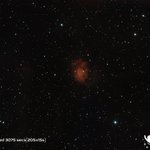
Name: Globular Cluster (M75)
Constellation: Sagittarius
Distance: 67.5 kly
Smart Telescope: Celestron Origin Mark II
Mount: Alt-Azimuth
Bortle Scale: Class 7
Exposure Time: 12 min
Filter: Built-in Filter
Image Processing: Origin App
#M75 #globularcluster #smarttelescope #celestronorigin #telescope #constellation #bortlescale #lightyear #astrophotography #astrofotografia #astrophotographer #space #astronomy #astronomer #observatory #deepskyphotography #deepskyastrophotography #deepskyobject

☄️🔭
📱
Name: Globular Cluster (M75)
Constellation: Sagittarius
Distance: 67.5 kly
Smart Telescope: Seestar S50
Mount: Alt-Azimuth
Bortle Scale: Class 7
Exposure Time: 9 min
Filter: Built-in Filter
Image Processing: Seestar App
#M75 #globularcluster #smarttelescope #seestar #telescope #constellation #bortlescale #lightyear #astrophotography #astrofotografia #astrophotographer #space #astronomy #astronomer #observatory #deepskyphotography #deepskyastrophotography #deepskyobject

☄️🔭
📱
Name: Globular Cluster (M54)
Constellation: Sagittarius
Distance: 87 to 90 kly
Smart Telescope: Celestron Origin Mark II
Mount: Alt-Azimuth
Bortle Scale: Class 7
Exposure Time: 11 min
Filter: Built-in Filter
Image Processing: Origin App
#M54 #globularcluster #smarttelescope #celestronorigin #telescope #constellation #bortlescale #lightyear #astrophotography #astrofotografia #astrophotographer #space #astronomy #astronomer #observatory #deepskyphotography #deepskyastrophotography #deepskyobject

☄️🔭
📱
Name: Globular Cluster (M54)
Constellation: Sagittarius
Distance: 87 to 90 kly
Smart Telescope: Seestar S50
Mount: Alt-Azimuth
Bortle Scale: Class 7
Exposure Time: 7 min
Filter: Built-in Filter
Image Processing: Seestar App
#M54 #globularcluster #smarttelescope #seestar #telescope #constellation #bortlescale #lightyear #astrophotography #astrofotografia #astrophotographer #space #astronomy #astronomer #observatory #deepskyphotography #deepskyastrophotography #deepskyobject

☄️🔭
📱
Name: Sun Eclipse
Location: Bragança Aerodrome 🇵🇹
Distance: 8.3 lm
Smart Telescope: Seestar S50
Mount: Alt-Azimuth
Bortle Scale: Class 3 to 4
Exposure Time: 120 min
Filter: Seestar Solar Filter
Image Processing: Seestar App
#sun #eclipse #smarttelescope #seestar #telescope #bortlescale #lightminute #astrophotography #astrofotografia #astrophotographer #space #astronomy #astronomer #observatory

☄️🔭
📱
Name: Emission Nebula (Sh2-235)
Constellation: Auriga
Distance: 5.8 to 6 kly
Smart Telescope: Seestar S50
Mount: Alt-Azimuth
Bortle Scale: Class 7
Exposure Time: 24 min
Filter: Svbony SV220 Filter
Image Processing: Seestar App
#Sh2235 #nebula #smarttelescope #seestar #telescope #constellation #bortlescale #lightyear #astrophotography #astrofotografia #astrophotographer #space #astronomy #astronomer #observatory #deepskyphotography #deepskyastrophotography #deepskyobject


☄️🔭
📱
Name: Emission Nebula (Sh2-235)
Constellation: Auriga
Distance: 5.8 to 6 kly
Smart Telescope: Celestron Origin Mark II
Mount: Alt-Azimuth
Bortle Scale: Class 7
Exposure Time: 51 min
Filter: Origin Nebula Filter
Image Processing: Origin App
#Sh2235 #nebula #smarttelescope #celestronorigin #telescope #constellation #bortlescale #lightyear #astrophotography #astrofotografia #astrophotographer #space #astronomy #astronomer #observatory #deepskyphotography #deepskyastrophotography #deepskyobject

☄️🔭
📱
Name: Moon
Distance: 1.28 ls
Smart Telescope: Seestar S50
Mount: Alt-Azimuth
Bortle Scale: Class 7
Filter: Built-in Filter (Scenery Mode)
Image Processing: Seestar App
#moon #smarttelescope #seestar #telescope #bortlescale #lightsecond #astrophotography #astrofotografia #astrophotographer #space #astronomy #astronomer #observatory

AstroSmartUniverse retweeted

Even After 1 Million Years, Voyager 1 Will Have Traveled Only This Far! 🌌🚀
A million years of traveling through space… and still barely a step across our galaxy.
Launched in 1977, Voyager 1 is humanity's most distant spacecraft, racing away from the Sun at roughly 38,000 mph (61,000 km/h). It crossed into interstellar space in 2012, carrying humanity's curiosity farther than any spacecraft before it.
But here's the mind-blowing part.
Even if Voyager 1 continues at its current speed for another one million years, it will travel only about 55 light-years farther.
That sounds enormous — until you realize our Milky Way stretches roughly 100,000 light-years across.
And Voyager's journey is far from over. NASA estimates it will take around 300 years to reach the inner region of the distant Oort Cloud and perhaps 30,000 years to pass beyond it.
Long before then, its power will fade and its transmissions will fall silent.
But Voyager 1 will carry something extraordinary into the darkness: the Golden Record, containing sounds, music, images, and greetings from Earth — a tiny message from a civilization on a distant blue planet.
One day, no one on Earth may be listening. Yet this silent messenger could continue wandering among the stars for billions of years.
A million years of travel. Just 55 light-years. And a galaxy that still stretches almost endlessly beyond.
If another civilization discovers Voyager's Golden Record millions of years from now, what do you think they would make of humanity? ✨
Illustrative visualization; distances are not shown to scale.
#Voyager1 #NASA #MilkyWay #SpaceExploration

AstroSmartUniverse retweeted

DWARFminiで撮影したM45昴とNGC1499カリフォルニア星雲
M45
gain80 30秒×642枚 総露光5時間21分
NGC1499
gain80 30秒×816枚 総露光6時間48分
Siril、Photoshopで画像処理
#DWARFLAB #dwarf #DWARFmini


AstroSmartUniverse retweeted

TRAPPIST-1 – seven Earth-sized worlds around an ultracool dwarf.
Seven Earth-sized planets.
Three in the habitable zone.
Distance: ~40 light-years.
Host star: ultracool dwarf.
Discovered in 2016 and fully characterized in 2017, the system is one of the most studied planetary systems outside our own. The planets orbit so closely that their years last only days. The three worlds in the temperate zone receive enough stellar energy for liquid water to be possible, though the intense flares of the ultracool dwarf keep the question of habitability open.
Image: NASA/JPL-Caltech
Animated by @Siccuma
#TRAPPIST1
AstroSmartUniverse retweeted

'Webb Captures Stellar Jets'
Image Credit: NASA, ESA, CSA, STScl; Image Processing: Alyssa Pagan (STScl)
nasa.gov/image-article/webb-…
#astronomy #space

AstroSmartUniverse retweeted

An Embraer E175LR (American Eagle 3956) cruising at 24,000 ft and 448 kts perfectly cuts across a 72% illuminated waxing gibbous Moon over Florida's Space Coast!
📸 Camera Specs: Canon R5 Mark II + RF 200-800mm (ISO 2500, f/9, 1/1250s, handheld)
🤝 Huge shoutout to John Kraus for the collab & Flightradar24 for tracking data

AstroSmartUniverse retweeted

変光星 T Tauriに照らされる、ハインドの変光星雲NGC1555 astroinaba.wordpress.com/202…
AstroSmartUniverse retweeted

Gaze into the churning fury of the Jovian giant! 🌀 Jupiter’s iconic Great Red Spot dominates this breathtaking cosmic portrait, a colossal storm big enough to swallow Earth whole. Layers of creamy beige clouds, rust-colored atmospheric bands, and intricate vortex swirls dance across the gas giant's surface in mesmerizing detail.
Nature’s most powerful tempest puts on an eternal show in the deep abyss of our solar system.
What is your favorite planet to look at? 👇

AstroSmartUniverse retweeted

2026年10月22日 13:19PM
太陽
さっきまで雪降っていたのに、突然の晴れ間
いそいで準備して撮影したら、一気に曇って雨降ってきた
ギリギリセーフ
今回はSER録画で処理
PST, Ceres-C, 0.5Xreducer,UV/IR cut 1000フレーム SER, Gain20, Exp3ms
AS!4 30%stacking
PixInsight:BXT,SolarToolbox


