

YouTube: AutoMarcio Mobile Developer @ Olibra - Makers of the Bond | IoT and 3D Printing enthusiast
Florianópolis - SC, Brasil
Joined July 2009
- Tweets2K
- Following631
- Followers262
- Likes1.8K








@thsottiaux feature request:
on chatgpt web, the agent is outputing some nice response, but then I send a new message and it just deletes the response and replies to my last message, there is no way to see the previous response.
1
1
29

can we get a way to see what was the advisor interaction? Even on the detailed view it doesn't show the prompt nor the result @bcherny @trq212 @lydiahallie

46
Marcio Granzotto retweeted

if you've been using latest frontier LLMs, it's almost certain that you would have noticed by now the newer models have become worse to talk to
they're more robotic, they speak jargons, they spits out verbose text, and do stuff you didn't ask for
how did that happen? well, i'm not the person who trained those models so i can't speak for certain, but i've known enough evidence that gives me a well-educated guess, and i thought it's interesting to share as a crash course of modern LLM training pipelines
so here we go
let's wind back to 2020. GPT-2 and GPT-3 already came out and were widely available, but they could only predict one token at a time - that's what LLMs are at their core
token prediction was offered via API, but there was nothing you could "talk to". so while it generated a lot of excitement in the academic field due to the emergent intelligence, it didn't have any wide adoption
in 2022, ChatGPT changed all that. the research work that led to ChatGPT was a model initially named "InstructGPT". it took GPT-3 as the intelligent base, and used reinforcement learning with human feedback (RLHF) to teach the models how to "chat"
the core idea of RLHF is that you ask the model to generate a few responses, and then let real humans pick which one they like. do this over and over again, and you get a model that knows how to talk
worth noting even as early as InstructGPT, research found that making the model more pleasant to talk to will reduce their pure academic capabilities. this was called "alignment tax", which is an interesting thing we'll come back to in a bit
there were various techniques done to minimize the reliance on humans, but ultimately the reward is modeled after human preference, making these AI assistants easy to talk to
so remember this: RLHF = training the model to be likable by humans
in 2024, there was an inflection point introduced by claude sonnet 3.5 which was the first model that can kind of autonomously finish coding tasks. it led to the first wave of viable "coding agents"
the way sonnet 3.5 achieved this was by training the model with a harness (now it's called an agent) that has bash and file editing tools, throw the agent into a virtual machine, give it a task, and let it try to complete it. these tasks all have a machine-verifiable outcome predefined, mostly via test cases, that can validate whether the model really finished the task or not
then you let the model do billions and billions of attempts in such virtual environments, and some of them would succeed by chance. you keep the successful agent sessions, and use reinforcement learning to teach the model to do that more, and boom - you get a coding agent
that is called reinforcement learning with verifiable rewards (RLVR). if you look closely, you'll see that in this RLVR process, the final text response from the model doesn't matter AT ALL, as long as the code written by the agent could pass the test. it could talk like a jerk and it would still be rewarded
so remember this: RLVR = training the model to be accepted by machines
late 2024 and early 2025, we saw o1 and deepseek R1 came out as the first wave of "reasoning models". this article is getting long so i'm not diving into reasoning models now, but just know that reasoning models also relied heavily on RLVR to scale the training process - let the model think before taking action, and if the thinking led to a machine verifiable outcome, reward the thinking trace and teach the model to think like that more often
the biggest difference between RLVR and RLHF is that RLVR is more scalable. human feedback is expensive to get, especially in domains where only an expert can have a valid opinion on which result is good
with RLHF, if we let the model generate 100 responses, then a human has to review all 100 responses to pick which is good
with RLVR, the human (or sometimes an AI) would define a task and verifier only once, and the model can generate a million responses - the machine verifier will pick which responses are good in an automated way
so as a result, RLVR is becoming more and more dominant in newer models' training pipeline
if you put all these things together:
- RLHF = training the model to be likable by humans
- RLVR = training the model to be accepted by machines
- RLVR is more scalable
- "alignment tax" says "likable by humans" makes the model do worse on verifiable tasks
now you see why the newer models are becoming less and less likable?
this is not just a "frontier labs screwed up their model training" problem - this is a war between machines and humanity, and humanity is losing
we chased after benchmarks, when none of the benchmarks measure whether humans actually enjoy working with the model
we use machines to decide which AI response is better because that's easier and cheaper, when we have no way of making sure those machines actually represent what we humans want
we let AI go dark in a virtual environment on its own and complete predefined tasks at all costs, when in reality we often cannot define a verifiable outcome upfront, and need AI to work with us along the way
i don't have a good solution to this, but i want to call for awareness that we're starting to witness a failure in aligning super intelligence right in front of our eyes
this war between machines vs humanity is one we really can't afford to lose
Marcio Granzotto retweeted

Some of the first Gemini 3.6 Flash outputs for y'all, and yeah...
Genuinely the worst results I've ever gotten on these two prompts. Terrible frontend capability (2 shot btw) and spatial reasoning, at least it's very fast ig
I cope this isn't actually running on High thinking level but idk


Marcio Granzotto retweeted

Aaargh! For years I am unable to stream games at home, and now I let Claude debug this.
Seriously, @apple? You degrade everyone's wifi for your "auto magic" shenegians and there even isn't way to permanently disable this???


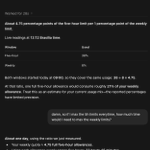
hmmm, any ideas what is happening here? I'm still at 78% Fable weekly limit @bcherny @trq212 @ClaudeDevs

wtf @AnthropicAI ? Simple PR reviews triggering the safeguards, and Claude gaslighting me the it is still Fable while having switched to Opus @trq212 @bcherny

Marcio Granzotto retweeted

I am a huge contributor of open source.
But building an open source project doesn't mean you get a free pass to ignore all negative user feedback.
You received $1M a month in token credits from OpenAI, and even more if we include the sponsorships for your team.
Yet the app you dropped is worse than what a 7-year-old could vibe-code in 30 minutes. You press 'back' and it goes forward, etc.
On top of that, you haven't fixed the massive token drain issue in over 6 months. This is exactly why people use Hermes instead.
Open source is meant for everyone. It shouldn't be used as a shield to defend a product that is absolute garbage.

Was thinking if I should highlight this tweet or not, but it’s a masterclass in the amount of vitriol people face when working on open source.
Is the app great yet? No. It’s a start.
It was built by the community. Getting the iOS and Android apps working with secure pairing and push notifications - and getting both through App Review -took a surprising amount of work.
OpenClaw wasn’t acquired by OpenAI and isn’t an OpenAI product. It’s an open, independent project under the OpenClaw Foundation. OpenAI sponsors the project’s token usage; I work there.
Cristian, your tweet was just one of ~30 I woke up to today. I’d genuinely love your help making it great.
Attention is still the scarcest resource.
I’d rather spend mine encouraging people who build.
Marcio Granzotto retweeted

Just received my ESP32-S3 1.8inch dev board from Waveshare. For now it lives on my desk as a Claude Code companion.
Put @AutoMarcio_'s clawd-tank and @HermannBjorgvin's clawdmeter on it + made a simple Claude streaks page, a GitHub contributions chart page, and a minimalist timer page for it.
Thanks to Marcio and Hermann for the inspiration and their open source code! Do check them out.
teapawt.net/AutoMarcio_/status/203…

Marcio Granzotto retweeted

In a matter of weeks, U.S. federal AI policy has gone from implausibly libertarian to increasingly draconian and opaque. Today, over 35 distinct observations, I analyze how we got here and offer the most succinct statement I can about what exactly I propose we should do next.

Marcio Granzotto retweeted

Well, you can't afford a new computer because the AI industry is using all of the world's RAM, but at least you can't use the AI either because Big Brother says no.
You will own nothing and be happy.


I'm very curious of what will happen with future models when this whole Fable / Mythos ban is fed to their training data. Will models try to deceive more in order to not be seen as dangerous and avoid being deactivated?
35
Marcio Granzotto retweeted

it’s in gemini, just create it in ai studio. oh, that’s for your personal google one account. for workspace you need gemini business. no, not gemini advanced, that’s ai pro now. unless you need ai ultra. oh agents? you do that in spark actually. no, not gemini api managed agents, that’s different. for coding use jules. unless you mean the agentic ide, that’s antigravity. no, that’s the old antigravity, download the new one. actually gemini cli is being deprecated, use antigravity cli. no the flash model is smarter than the pro model. unless you need pro. if it’s video, use flow. no, flow uses veo. no, nano banana is images. actually that’s in gemini now. unless you’re in search, then it’s ai mode. no, research is notebooklm. anyway it’s all very simple.
Marcio Granzotto retweeted

非常有意思的开源项目两个开源项目:
在 ESP32 嵌入式端养一只数字化的claude,以及在电脑桌面端养一只cluade,你会选择哪一个呢?
github.com/marciogranzotto/c… github.com/rullerzhou-afk/cl…
#claudecode #ai @AutoMarcio_ 这家伙做的,很coool的工作
Marcio Granzotto retweeted

Every new Claude launch since the beginning of 2026👇
- Jan 2026: Claude Cowork launched.
- Feb 2026: Opus 4.6 released.
- Feb 2026: Sonnet 4.6 released.
- Feb 2026: PowerPoint integration
- Feb 2026: Excel integrations added.
- Feb 2026: Co-work plug-ins released.
- Feb 2026: Claude Code security launched.
- Feb 2026: Claude Code Remote Control
- Feb 2026: Scheduled Task in Co- work
- Feb 2026: Connector available in the free
- Mar 2026: Claude memory is free
- Mar 2026: Claude Marketplace launched
- Mar 2026: Claude com ambassadors
- Mar 2026: Code review for Claude code
- Mar 2026: Claude skills for Excel & Slides
- Mar 2026: charts & diagram in chat
- Mar 2026: 1 million context window
- Mar 2026: Dispatch for Claude Co-work
- Mar 2026: Claude code Channels
- Mar 2026: Co-work Projects
- Mar 2026: Claude Computer use
Anthropic is cooking

I kept missing Claude Code prompts while my code was compiling. So I built a physical fix.
Clawd Tank: a pixel-art crab on a 1.47" LCD that alerts when Claude needs you, celebrates on dismiss, and sleeps when you walk away.
I used Gemini 3.1 Pro to draw the mascot for a Claude Code accessory. AI politics be damned.
Pasted the crab as 21-line SVG source (named rects with coordinates). Described each animation in a sentence. 5 animations, 10 messages.
Then compressed 14MB of frames → 330KB. 42:1
1
2
137
Open source, MIT. The simulator runs the same firmware on your Mac — daemon drives it over TCP, no ESP32 needed.
github.com/marciogranzotto/c…
What hooks would you wire up? I'm eyeing PreToolUse for a "thinking" animation 👇
#ClaudeCode #ESP32 #buildinpublic @AnthropicAI

1
1
83