
A podcast that explores the underlying principles of complex systems - systems that defy our rational view of the world. By Sean Brady (@BradyHeywood).
Joined October 2022
- Tweets2.7K
- Following2.5K
- Followers2.7K
- Likes715






Simplifying Complexity retweeted

In this video, we examine whether you are investigating the right incidents and events inside your organisation from a fatality prevention perspective.

Simplifying Complexity retweeted
"When you can't measure what's important, you make what you can measure important."
This week's video examines how we sometimes choose metrics inside our organisations because they are the only thing we can measure, not because they are a good measure.
But just because we can measure it, doesn't mean it's meaningful. Using the TRIF as a measure of how well we are managing fatality risk is a classic example.
Simplifying Complexity retweeted
Are organisations in high hazard industries going about managing psychosocial risk in an effective manner? Many organisations will have programs, but what are these programs actually designed to achieve?
#highreliabilityorganisations #psychosocialrisk
Simplifying Complexity retweeted
I talk quite a lot about the importance of taking a 'complex systems' approach to understanding certain systems, such as big organisations or the economy. This approach also provides us with a different way to think about why these systems fail.
#complexsystems #highreliabilityorganisations #safety
Simplifying Complexity retweeted
What causes fatalities in the mining industry? In this short video we discuss one of the key findings from our review into mining fatalities.
#mining #highreliabilityorganisations
Simplifying Complexity retweeted
The fundamental problem with organisations using personal safety metrics, such as the TRIFR, to measure how effectively they're managing fatality risk.
#highreliabilityorganisations #safety #highhazardindustries
Simplifying Complexity retweeted
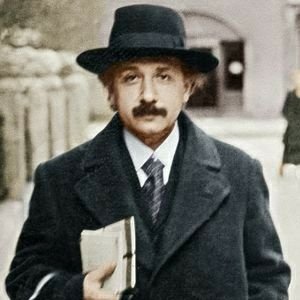
The Fourier Transform is a mathematical operation that transforms a function of time (or space) into a function of frequency. In essence, it decomposes a complex signal into its constituent sinusoidal components, each with a specific frequency, amplitude, and phase. This is particularly useful in many fields such as signal processing, physics, and engineering, because it allows for the analysis of the frequency characteristics of signals. The Fourier Transform provides a bridge between the time domain and the frequency domain, enabling the analysis and manipulation of signals in ways that are more intuitive and computationally efficient. The result of applying a Fourier Transform is often represented as a spectrum, showing how much of each frequency is present in the original signal.

Simplifying Complexity retweeted
How am I only discovering this book now. Terrific stuff by @carlorovelli in “Helgoland”

Simplifying Complexity retweeted
The first video in our Brady Heywood Core Concepts series is out. This short video explores what makes High Reliability Organisations (HRO) so safe.
youtube.com/watch?v=jQUF2N9m…

Simplifying Complexity retweeted

Lively conversation with Sean Brady (@BHComplexity) on my take on economic complexity. Enjoy!

In this ep of Simplifying Complexity, we chat to @ricardo_hausman on the role of 'knowledge' in an economy, and why examining a country's exports gives us a window into what it's good at making or can make.
Apple Podcasts: podcasts.apple.com/au/podcas…
Spotify: open.spotify.com/show/3SfqAp…
RT @BradyHeywood: The crashes of 3 Comet jet airliners resulted in 9 fatalities and changed the world of air crash investigations.
Watch t…

Simplifying Complexity retweeted
John v. Neumann on 'the usefulness of Mathematics'
A large part of mathematics which becomes useful developed with absolutely no desire to be useful, and in a situation where nobody could possibly know in what area it would become useful; and there were no general indications that it ever would be so. By and large it is uniformly true in mathematics that there is a time lapse between a mathematical discovery and the moment when it is useful; and that this lapse of time can be anything from 30 to 100 years, in some cases even more; and that the whole system seems to function without any direction, without any reference to usefulness, and without any desire to do things which are useful.
-- as mentioned in "The Role of Mathematics in the Sciences and in Society" (1954)

Simplifying Complexity retweeted
It was an absolute pleasure to be interviewed by @AnnaPloszajski for the Create The Future podcast. We spoke about forensic engineering and the organisational and technical causes of failure.
Listen at: lnkd.in/gWJS2Ywc

Simplifying Complexity retweeted
Mandelbrot sets are a collection of complex numbers that form a fractal, a never-ending pattern that is infinitely complex and self-similar across different scales. Named after mathematician Benoit Mandelbrot, who studied and popularized them, these sets are created by applying a simple mathematical equation repeatedly and tracking the results.

Simplifying Complexity retweeted

in complex systems, the only repeatable pattern is the failure to forecast the future

Simplifying Complexity retweeted
A brief history of Einstein's relativity: The special and general theory ✍️
1887: The Michelson–Morley experiment fails to detect any motion of the Earth through the luminiferous aether, a hypothetical medium for the propagation of light.
1892–1904: Hendrik Lorentz develops the Lorentz transformations, a set of equations that relate the coordinates and time of two inertial frames moving at a constant velocity relative to each other. He also introduces the concepts of length contraction and local time to explain the null result of the Michelson–Morley experiment.
1900: Max Planck proposes the quantum hypothesis, that light consists of discrete packets of energy called quanta, to explain the black-body radiation phenomenon.
1905: Albert Einstein publishes his paper on special relativity, in which he derives the Lorentz transformations from two postulates: the principle of relativity and the constancy of the speed of light. He also shows that mass and energy are equivalent, according to his famous equation E = mc².
1907: Einstein introduces the equivalence principle, which states that the effects of gravity are indistinguishable from those of acceleration.
1908: Hermann Minkowski presents his four-dimensional spacetime formulation of special relativity, which unifies space and time into a single entity.
1911: Einstein predicts the gravitational redshift, that light loses energy as it escapes from a gravitational field, thus shifting to lower frequencies.
1915: Einstein completes his general theory of relativity, a theory of gravity that describes gravity as a consequence of the curvature of spacetime caused by mass and energy. He also applies his theory to explain the anomalous precession of Mercury's orbit.
1916: Einstein predicts the existence of gravitational waves, ripples in spacetime that propagate at the speed of light and are produced by accelerating masses.
1919: Arthur Eddington confirms Einstein's prediction of the gravitational deflection of light by observing the bending of starlight during a solar eclipse.
1926: Einstein writes an essay on space-time for Britannica, explaining his theories in simple terms.
1960s–1970s: The golden age of general relativity, when many new solutions to Einstein's field equations are discovered, such as black holes, wormholes, and cosmological models.
1974: The discovery of the Hulse–Taylor binary system, a pair of neutron stars orbiting each other and emitting gravitational waves. This provides the first indirect evidence for gravitational waves.
2015: The first direct detection of gravitational waves by the LIGO and Virgo collaborations, from the merger of two black holes. This confirms one of the major predictions of general relativity.
2019: The first image of a black hole's shadow by the Event Horizon Telescope, showing the effects of extreme gravity on light around a supermassive black hole at the center of a galaxy. This provides another test for general relativity.

Simplifying Complexity retweeted
We have to remember that what we observe is not nature herself, but nature exposed to our method of questioning.
-- Werner Heisenberg

Simplifying Complexity retweeted
Claude Shannon, renowned as the "father of information theory," significantly impacted electrical engineering and computer science. His pioneering work, encapsulated in his 1948 paper "A Mathematical Theory of Communication," established the foundations of information theory, offering a quantitative framework for information transmission and compression.
His 1937 master's thesis demonstrated that electrical circuits could execute logical operations, laying the groundwork for digital circuit design. Shannon also contributed to cryptography during World War II, developed efficient data encoding methods like Shannon-Fano coding, and formulated principles for problem-solving known as Shannon's Maxims. The Shannon-Hartley Theorem and the concept of Shannon Entropy were central to his work. Shannon's contributions are pivotal in modern technologies like the internet, cellular communications, and digital media, and they continue to influence fields like artificial intelligence and data science.
