

Baloch National Movement is struggling for the independence of Balochistan. Select your language and follow. @BNMbalochi @BNMbrahui @BNMurdu @BNMfarsi
Occupied Balochistan
Joined March 2015
- Tweets3.8K
- Following25
- Followers37.5K
- Likes157





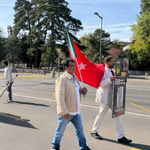
BNM holds Germany rally as thousands face forced eviction in Balochistan
Sunday, 25 October 2026 | #BNMInGermany , #BNMProtests
thebnm.org/bnmgermany/28960/
Activists of the Baloch National Movement (BNM) held an awareness campaign in the German city of Trier to draw European attention to enforced disappearances, extrajudicial “kill and dump” killings and forced displacement carried out by the Pakistan Army in Balochistan. Participants carried portraits of the forcibly disappeared, distributed leaflets and briefed passers-by on the situation in Balochistan.
The rally was addressed by Habib Baloch, Asif Baluch, Mujeeb Abdullah and Mohsin.
The speakers said decisions about Baloch land and resources are made without the consent of the people who live there. They asked what kind of development drives people out of their own homes, and who ultimately benefits from it.
The speakers said Baloch students, political activists and journalists face enforced disappearances and extrajudicial killings. They said that, according to human rights organisations, 105 people were forcibly disappeared and 59 were killed in July 2026, and demanded an independent investigation into these cases.
The speakers further said that, according to reports, around 30,000 residents of Shor Parod have been ordered to vacate their homes by 30 October 2026. Families who have lived there for generations are being pushed into tents.
The BNM called on the United Nations, the European Union and the international community to investigate these human rights violations, hold Pakistan accountable and take urgent action to stop the forced displacement of people from Shor Parod and other parts of Balochistan.
BNM Delegation Meets MEPs in The Hague, Intensifies Campaign to Revoke Pakistan’s GSP+ Status Ahead of 2027 Review
#BNMGlobalCampaigns , #BNMForeignDepartment | Sunday, October 25, 2026
thebnm.org/foreign-departmen…
A delegation of the Baloch National Movement (BNM), working under the Foreign Department’s GSP+ Accountability Team, held important meetings with Members of the European Parliament (MEPs) in The Hague on 23 October 2026, stepping up its campaign for the revocation of Pakistan’s GSP+ trade status ahead of the review expected in January 2027.
The meetings took place during the launch event of the Union of European Federalists (UEF) Netherlands, held at Europa Experience in The Hague under the theme “Global Challenges We’re Facing Together.”
During the event, the BNM delegation met with MEPs Anna Strolenberg and Raquel García Hermida-van der Walle, as well as Esther Láinez, President of the Young European Federalists (JEF) Netherlands.
The delegation briefed European representatives on the human rights situation in Balochistan, the Baloch national struggle for freedom and self-determination, and Pakistan’s failure to uphold its international human rights commitments.
The central focus of the meetings was Pakistan’s GSP+ status. The delegation called on European representatives to support the revocation of Pakistan’s preferential trade privileges, arguing that a country involved in widespread enforced disappearances, extrajudicial killings, collective punishment and other serious human rights violations should not continue receiving trade benefits without proper accountability.
The delegation also handed over a detailed dossier documenting human rights concerns in Balochistan and Pakistan’s non-compliance with the international conventions linked to the EU’s GSP+ scheme.
For the past two years, BNM’s Foreign Department has carried out an extensive diplomatic campaign challenging Pakistan’s GSP+ privileges. Through meetings with European representatives, formal submissions, documented evidence and sustained diplomatic engagement, BNM has made important progress in bringing Balochistan’s human rights situation to the attention of European policymakers.
With Pakistan’s GSP+ review expected in January 2027, BNM considers this a crucial period for its diplomatic efforts. The party hopes that the European Union will seriously consider its proposals, evidence and submissions when reviewing Pakistan’s compliance with the conditions of the scheme.
BNM believes that the European Union must remain committed to the human rights principles that underpin its trade policies. Trade preferences should not become a shield against accountability for serious human rights violations.
BNM’s Foreign Department will continue its diplomatic engagement with European institutions and policymakers, pressing for the revocation of Pakistan’s GSP+ status and ensuring that the human rights situation in Balochistan remains part of the EU’s discussions on trade and accountability.
BNM retweeted

I am deeply concerned over the detention of Baloch activist Rashid Ahmed, also known as Fida Baloch, by Dutch authorities. If deported to Pakistan, he could face a serious risk of enforced disappearance, torture, or even death in custody, as has happened to many Baloch activists.
The Dutch authorities must not ignore these risks. Rashid’s life and safety must be protected, and he must not be deported to a place where he could face such dangers.
#StopRashidsDeportation #RashidAhmedAkaFida #BalochistanIsNotPakistan

The #Netherlands must ensure that no one is returned to face persecution and death.@BNMovement_ member Rashid Ahmed faces an extreme threat if deported to Pakistan. We urge Dutch authorities to intervene immediately, suspend his removal and protect his right to seek asylum.
@HNeumannMEP
@MinisterAenM @Refugees @IND_NL @Europarl_EN @Europarl_NL @RechtspraakNL
#RashidAhmedAkaFida #HumanRights #NonRefoulement
#StopRashidsDeportation


BNM UK Chapter Holds Fifth Council in Honour of Mama Qadeer Baloch; Naseem Abbas Elected President, Saleem Elahi General Secretary
Monday, 13 October 2026 | #BNMOrganisationalActivities | #BNMinUK |#BNMElections
thebnm.org/organizational-pr…
The United Kingdom chapter of the Baloch National Movement (BNM) held its fifth council meeting in London, dedicating the occasion to Mama Qadeer Baloch in recognition of his longstanding struggle for the recovery of forcibly disappeared persons.
Following the electoral process, Naseem Abbas was elected President, Kambar Bakhshi Vice President, Saleem Elahi General Secretary, Kifayat Baloch Joint Secretary, and Ejaz Baran Finance Secretary. All members of the new cabinet were elected unopposed.
In his address, newly elected President Naseem Abbas said that the new cabinet would work collectively, bringing all members together to strengthen organisational unity and cooperation, reinforce the UK chapter, and advance the party’s political objectives. He also emphasised the importance of effective communication and coordination with the party’s Foreign Department to advance BNM’s foreign policy and diplomatic activities at the international level.
The council was attended by BNM Chairman Dr Naseem Baloch, Central Junior Joint Secretary Hassan Dost Baloch, Foreign Secretary Faheem Baloch, BNM Foreign Department Coordinator Niaz Baloch, outgoing UK Chapter President Manzoor Baloch, and other chapter members.
Former chapter secretary Kambar Bakhshi presented a report on organisational performance, while Finance Secretary Younas Baloch presented the financial report. Members reviewed both reports and shared their views and recommendations on organisational matters.
Following the announcement of the election results, BNM Chairman Dr Naseem Baloch administered the oath of office to the newly elected officials. Emphasising the importance of adhering to the party’s constitution and organisational principles, he commended the members for their patience, cooperation, and discipline throughout the council proceedings.
The fifth council of BNM’s UK chapter concluded with the formation of the new cabinet and the swearing-in of its members, marking the beginning of a new chapter in the organisation’s activities in the United Kingdom.
🤖 Made with AI
BNM Holds Protest Outside Lower Saxony State Parliament in Germany, Declares Baloch Nation Deserves Freedom
Monday, 12 October 2026 | #BNMProtests
#BNMinGermany
thebnm.org/protests/28937/
The Baloch National Movement (BNM) held a rally in Hannover to protest human rights violations, enforced disappearances, extrajudicial killings, and military aggression in Balochistan. The demonstrators marched to the Lower Saxony State Parliament, urging the international community to ensure independent investigations, hold those responsible accountable, and take effective measures to uphold the Baloch nation’s right to self-determination.
The gathering was addressed by BNM activists Asif Baloch and Aqib Baloch, along with Pashtun Tahafuz Movement (PTM) representatives Saeed Momand and Fazal Meena Khel. The speakers highlighted enforced disappearances, arbitrary detention, torture, and civilian casualties, emphasizing the need for unity and practical cooperation between the Baloch and Pashtun nations.
Referring to reports by Paank concerning the killings of Peer Jan, Shoaib Baloch, Hafiz Mudassir, Wazir Ahmed, and Jasim in Panjgur during August 2026, the speakers called for independent investigations into civilian deaths, including casualties resulting from military airstrikes and drone attacks. They urged the United Nations and international human rights organizations to take notice of these incidents and ensure that those responsible are held accountable.
The BNM reaffirmed its position that the Baloch nation has the right to freedom and to determine its own political future. It emphasized that the issue of Balochistan must be addressed through respect for human rights, justice, and the right to self-determination rather than the use of force.
The rally began in Hannover’s central Kröpcke area before proceeding through the city streets to the state parliament. Outside the parliament, participants chanted slogans and distributed informational leaflets to raise public awareness of the situation in Balochistan.
Follow BNM on WhatsApp 📱
Explore BNM’s multilingual channels and connect in your preferred language.
Find Your Language. Stay Connected.
🔹 بلوچ راجی زْرمبشت ( بی این ایم )
whatsapp.com/channel/0029Vb8…
🔹 بلوچ نیشنل موومنٹ (بی این ایم) - براہوئی
whatsapp.com/channel/0029Vb8…
🔹 بلوچ نیشنل موومنٹ ( بی این ایم ) - اردو
whatsapp.com/channel/0029VbD…
🔹 بلوچ نيشنل موومينٽ- بي اين ايم
whatsapp.com/channel/0029VbD…
🔹 بلوڅ ملي غورځنګ -بي این ایم
whatsapp.com/channel/0029VbE…
🔹 बलूच नेशनल मूवमेंट- बीएनएम
whatsapp.com/channel/0029Vb9…
🔹 الحركة الوطنية البلوشية - بي إن إم
whatsapp.com/channel/0029Vb8…
🔹 Baloch Nationale Beweging (BNM)
whatsapp.com/channel/0029Vb9…
🔹 Belutsch Nationalbewegung (BNM)
whatsapp.com/channel/0029Vb9…
🔹 Baloch National Movement (BNM)
whatsapp.com/channel/0029VbD…
National Freedom, Political Harmony and Practical Cooperation Are Essential for the Baloch and Sindhi Nations: Dr. Naseem Baloch
Sunday, 11 October 2026 | #BNMChairman
thebnm.org/chairperson/28907…
Dr. Naseem Baloch, Chairman of the Baloch National Movement (BNM), stated while addressing the 38th Sindh International Conference organised by the World Sindhi Congress that national freedom, democracy, peace and a sustainable future are deeply interconnected for the Baloch and Sindhi nations. Without national freedom, he said, democracy, peace and a sustainable future risk remaining nothing more than appealing words and distant dreams.
Speaking as Chairman of the Baloch National Movement, Dr. Naseem Baloch said he did not feel like a stranger among the people of Sindh. Sindh and Balochistan are not merely neighbouring lands; they share centuries-old human, cultural, economic and political ties. Their borders, cultural heritage, historical experiences and present-day challenges are closely interconnected.
He said that if national freedom could be achieved without clear political struggle, perseverance and sacrifice, millions of people throughout history would not have had to give their lives for it. National freedom is not merely a slogan; it requires a prolonged political struggle, a clear objective and immense sacrifices. He added that the continued exploitation and occupation of Baloch and Sindhi lands threatened not only the identities of these nations but also their future. For both nations, the question of their land is not simply about territory; it concerns their national existence, identity and the survival of future generations.
Dr. Naseem Baloch emphasised that Baloch and Sindhi leaders should respect their respective national identities, political organisations and distinct priorities while pursuing joint initiatives on issues such as human rights, enforced disappearances, political prisoners, natural resources, environmental protection and effective representation at international forums. He stressed that cooperation must be founded on mutual respect and equality rather than emotional slogans. Genuine unity, he said, means that both nations stand alongside one another as equals in addressing shared challenges while preserving their distinct identities and priorities, transforming sympathy into practical solidarity.
He said history had inflicted many wounds on the Baloch and Sindhi nations, but it had also presented opportunities. Today, both nations faced an important opportunity to rebuild their national states and political systems. The need of the hour, he said, was to organise their scattered potential into a coordinated political and diplomatic force by learning from one another’s experiences.
Expressing solidarity with the Sindhi nation, Dr. Naseem Baloch concluded: “Wherever you raise your voice, from political platforms to the most difficult fronts of struggle, you will find the Baloch standing by your side.”

BNM retweeted

**BNM Holds 12th Balochistan International Conference in Geneva**
The Baloch National Movement (BNM) held its 12th Balochistan International Conference at the Geneva Press Club on 26 September 2026, alongside the UN Human Rights Council session.
The conference focused on human rights violations, enforced disappearances, political repression, natural resources, self-determination and the political future of Balochistan.
Speakers included BNM Chairman Dr Naseem Baloch, Manzoor Pashteen, MP John McDonnell, Dr Lakhu Luhana, Antonio Stango, Shahid Qazi and others.
The event called for greater international attention to human rights, justice, and political rights in Balochistan and honored the legacy of Chairman Zubair Baloch.
#BNMatUNSep2026
#BNMGlobalCampaign
#BIC12
BNM Holds Protest in Seattle, Calls on the United States to Uphold Its Responsibility to Protect the Rights of the Baloch Nation
Thursday, 1 October , 2026 | #BNMProtests
thebnm.org/protests/28900/
A protest programme organized by the Baloch National Movement (BNM) was held in Seattle, Washington, to raise awareness among the American public about ongoing serious human rights violations in Balochistan, military aggressions against the Baloch population, and bombardments. Protesters carried posters highlighting various demands.
Addressing the protest, speakers said that the Baloch nation continues to face serious human rights violations, violence, and military aggressions in Balochistan. They stated that Baloch civilians are losing their lives as a result of operations and bombardments by the Pakistani military. The speakers appealed to the American public to raise their voices against the ongoing human rights violations in Balochistan, stating that assistance provided to Pakistan through US taxpayers’ funds is indirectly being used to support the Pakistani military.
The speakers urged the US government to review its relations with Pakistan and reconsider the assistance it provides, calling for any such support to be conditioned on respect for human rights. They said that the international community, particularly the United States, should fulfil its responsibility toward ending human rights violations in Balochistan and protecting the fundamental rights of the Baloch nation.
#BNMProtests
#BNMGlobalCampaign
#BNMinUSA
#TheBNM

BNM Representatives Raise Balochistan Human Rights Concerns at UN Human Rights Council
Thursday, 1 October 2026 | #BNMGlobalCampaign
thebnm.org/campaigns/28894/
Members of the Baloch National Movement (BNM) addressed the 63rd session of the United Nations Human Rights Council in Geneva, raising concerns over the situation in Balochistan, Pakistan Army airstrikes in Surab, Zehri, and Chiltan, and the challenges faced by Baloch women and girls.
BNM is continuing its political and diplomatic activities in Geneva during the 63rd session of the Council.
BNM member Mahrah Baloch drew the Council’s attention to the situation of Baloch women and girls. She stated that serious violations of their fundamental rights by Pakistani authorities continue, including enforced disappearances, arbitrary detention, torture, extrajudicial killings, and restrictions on peaceful political expression.
Mehrah Baloch said that Baloch women have played a prominent role in movements for justice and accountability. However, many women continue to bear the emotional, social, and economic consequences of the enforced disappearances and killings of their family members. According to her, their voices, rights, and participation in public life must be protected and respected.
She described this pattern of conduct by Pakistani state authorities as state terrorism and called on the Council to ensure independent monitoring of Balochistan, transparent investigations, and protection for those who peacefully document and challenge alleged abuses.
BNM member Ahmed Baloch drew the Council’s attention to Pakistan’s use of air power against civilians in Balochistan. He stated that a Pakistan Army airstrike took place in Surab on 12 September 2026, killing six civilians, including a woman and a two-year-old child. Nine others were injured, most of them young children.
Ahmed Baloch said that Pakistan attributed the deaths to concealed explosive devices, while photographs and footage from the area showed fragments of numbered munitions and damage consistent with aerial bombardment. According to him, the incident in Soorab was not an isolated occurrence; Pakistan Army had previously used air power in Zehri and in the Chiltan area of Shaal.
He stated that the increasing use of fighter jets, drones, and helicopter gunships in populated areas is putting thousands of lives at risk. Ahmed Baloch called for an end to airstrikes, international access to Balochistan, and recognition and support for the Baloch nations’s right to self-determination.
#BNMatUNSep2026
#TheBNM


The Silent Cry of Balochistan’s Enforcedly Disappeared: BNM Holds Photo Exhibition in Geneva
Tuesday, 29 September 2026 | #BNMGlobalCampaign
thebnm.org/programs/28888/
The Baloch National Movement (BNM) held a photo exhibition outside the United Nations Office, highlighting enforced disappearances, collective punishment, and the human rights situation in Balochistan. The exhibition featured photographs highlighting the plight of forcibly disappeared persons and the suffering of their families.
The exhibition was part of BNM’s three-day Geneva campaign, held from 24 to 26 September, which also included a conference, protest, and rally. According to BNM, the campaign aimed to highlight the situation in Balochistan at the international level and bring evidence of enforced disappearances to the attention of international institutions.
The BNM spokesperson said that enforced disappearance in Balochistan is not merely a claim or a statistic, but a painful reality affecting thousands of families. According to the spokesperson, the photographs displayed at the exhibition represent families who have been waiting for years for the return of their loved ones and for answers about their whereabouts.
The spokesperson said that despite protests by the families of enforcedly disappeared , the long march by Voice for Baloch Missing Persons, and prolonged hunger strikes in Balochistan, no effective action has been taken internationally on the issue. They said that BNM’s global campaign is an effort to bring this question, in the form of documentation and photographic evidence, to an international platform such as the United Nations.
They said that many of the children who joined Mama Qadeer’s long march in search of their parents have now grown up, while some of them have themselves faced enforced disappearance and state pressure.
Referring to Dr Mahrang Baloch, the spokesperson said that she raised her voice against the enforced disappearance of her father when she was a young girl and has now become a prominent voice for Baloch rights. They said that she has faced cases for her struggle for Baloch rights and was sentenced to life imprisonment in June 2026 in a false case.
The spokesperson also referred to the family of BNM Chairman Dr Naseem Baloch. According to the spokesperson, Dr Naseem Baloch’s father, Muhammad Bakhsh Sajidi, his uncle Naeem Sajidi, and his maternal uncle, Engineer Rafiq Baloch, were forcibly disappeared after being detained by the Pakistan Army during raids on their homes in Hub on 2 February 2026. Their whereabouts remain unknown. The issue has also been raised in an Early Day Motion in the British Parliament.
The spokesperson said that despite all these difficulties, the Baloch nation remains steadfast in its political struggle and freedom movement. They said that the photo exhibition is an expression of this steadfastness and of the sacrifices that the Baloch nation is making for their freedom.
Through the exhibition in Geneva, BNM presented photographs of victims of enforced disappearances to international institutions and the international community, and called for the human rights situation in Balochistan to be taken seriously at the global level.
#BNMatUNSep2026
#BNMGlobalCampaign

BNM Chairman @DrNaseemBaluch holds #TheBNM flag during the rally in #Geneva, as BNM raises its voice for #Balochistan and brings the Baloch cause to the international stage.
#BNMatUNSep2026
#BNMGlobalCampaign


📢 BNM’s Protest & March in Hannover, Germany
Against Human Rights Violations in #Balochistan
📅 Date: October 10, 2026
⏰ Start Time: 2:15 PM (14:15)
📍 Start Point: Kröpcke, Hannover
🏁 End Point: Hannah-Arendt-Platz (Landtag), Hannover
🕔 Expected End: 5:00 PM (17:00)
Join the BNM protest and march in Hannover to raise awareness about human rights violations in Balochistan.
#BNMProtests
#BNMinGermany

BNM Protest in Geneva: Pakistan Has Taken Away the Right to Live in Balochistan and the Dignity to Die
Sunday, 27 September 2026 | #BNMProtests
thebnm.org/protests/28883/
The Baloch National Movement (BNM) held a protest rally in Geneva against enforced disappearances, human rights violations, extrajudicial killings, and the sentencing of political activists in fabricated cases in Balochistan.
Participants in the protest rally gathered outside the United Nations Office at the Broken Chair, where speakers called for international attention to the human rights situation in Balochistan, Sindh, Pakhtunkhwa and Kashmir. The protest was part of BNM’s September 2026 Geneva campaign, aimed at highlighting the Balochistan issue on the international stage. With representatives of nations living under the Pakistani system of rule taking part, the BNM campaign extended beyond Balochistan, emerging as a collective campaign of the oppressed nations of the region, with representatives from Sindh, the Pashtun community, Gilgit-Baltistan and Kashmir joining the protest.
During BNM’s three-day special campaign in Geneva, BNM representatives also participated in demonstrations organised by Pashtuns and Sindhis, expressed solidarity with them, and described joint struggle for freedom as the path to liberation.
Addressing the BNM protest in Geneva were BNM Chairman Dr Naseem Baloch, Foreign Secretary Faheem Baloch, Central Junior Joint Secretary Hassan Dost Baloch, Foreign Department Focal Person Hakeem Baloch, Sarang Haider, Europe Chapter Coordinator of Voice for Missing Persons of Sindh, human rights activist Noor Maryam Kanwar, and Kamran Jatoi of the World Sindhi Congress.
The speakers said that people had come to Geneva from different parts of the world to express solidarity with mothers who had been waiting for years for the return of their forcibly disappeared children.
According to the speakers, these mothers “do not close their doors and cannot sleep properly” because they continue to wait for their sons and daughters.
The speakers said that fathers hold back their tears in front of others over the disappearance of their sons, but “when they sit alone, they cry deeply and remember their children.”
They said that sisters also cannot eat and drink normally because their brothers are being held in “dark and torturous cells.”
The speakers said that crimes against humanity continue in Balochistan and that no distinction is made on the basis of age or gender.
According to them, “thousands of people are being abducted, thousands are being killed, and bodies are being thrown onto the streets.”
They said the issue was not limited to the Baloch, but that Pashtuns, Sindhis and Kashmiris were also suffering from the same situation.
“We have to unite. We have to bring our voices together. Pashtuns, Baloch and Sindhis are all together. Whether in Gilgit-Baltistan, Sindh, Pakhtunkhwa or Balochistan, we are all oppressed and we are all suffering.”
The speakers said Balochistan had been “a land of suffering for decades” and that, according to them, human rights violations had continued since 1948, followed by further periods of repression in 1962, 1973 and 2006.
They said that thousands of Baloch had been subjected to enforced disappearances and extrajudicial killings.
According to them, “Balochistan has been turned into a military cantonment, and all freedoms and legal rights of the local people have been taken away.”
The speakers also referred to enforced disappearances and extrajudicial killings in Sindh and Khyber Pakhtunkhwa.
They said that over the past decades, “more than 3,500 enforced disappearances and more than 100 extrajudicial killings have been reported in Sindh,” while “more than 100 nationalist activists remain forcibly disappeared, and the number of ordinary citizens is four times higher.”
The protesters and speakers called on the United Nations to intervene in Balochistan, Sindh, Khyber Pakhtunkhwa, Kashmir and Saraiki Waseb and to send an independent fact-finding mission.
They said that the issue of enforced disappearances and human rights violations was no longer confined to Balochistan but had spread to Khyber Pakhtunkhwa, Kashmir and other major cities across the region.
The speakers said that the people of united India had achieved independence from British colonial rule in the 1940s, but now, “we are being forced to live under a new form of the same colonialism.”
Referring to Frantz Fanon, the speakers described opportunists and colonial intellectuals as forces that had taken control of people’s lives.
“They have taken away the right to live, and the right to die in peace and dignity.”
According to the speakers, following killings, the bodies of victims are not handed over to their families, while families are pressured into signing horrific agreements.
They said that “not enough is said about the terrifying reality of everyday life.”
The speakers said that it was not only Baloch, Pashtun and Sindhi activists who were being targeted, but also lawyers who represented their cases.
Referring to Imaan Mazari and her husband, Hadi Chatha, they said they were being harassed because they had taken up cases on behalf of families of forcibly disappeared Baloch and Pashtun people.
The speakers said, “There is no rule of law in Pakistan. There, power itself is the law, and that power is the Pakistan Army.”
They also referred to social activist Sabeen Mahmud, saying that she was “killed simply because she held a session with the families of forcibly disappeared persons. Half an hour later, she was shot in Karachi.”
The speakers said that the families of activists such as Mahrang, Bebo, Gul Zadi, Bebagar and Sibghatullah were also subjected to collective punishment, adding that they were harassed, suppressed and, at times, killed.
At the conclusion of the protest, the speakers once again called on the United Nations to take immediate and meaningful action on Balochistan.
They called for independent investigations and urged the United Nations not to ignore enforced disappearances, collective punishment and pressure on affected families.
Speakers from Sindh, Pakhtunkhwa and other regions who participated in the protest described the situation in Balochistan as a shared human rights issue and said that the voices of affected nations and families must be heard at the international level.
#BNMatUNSep2026
#BNMGlobalCampaign
#TheBNM

BNM Protest During Shehbaz Sharif’s Address at the United Nations, Chants of ‘Free Balochistan’
Sunday, 27 September 2026 | #BNMProtests
thebnm.org/protests/28876/
The Baloch National Movement (BNM) staged a protest outside the United Nations headquarters in New York, drawing the attention of the international community to the human rights situation in Balochistan, enforced disappearances, and incidents of extrajudicial killings, and called on the United Nations for “immediate action.”
The protest was held from 12 noon to 3 p.m. on First Avenue, between 42nd and 43rd Streets, on the occasion of the 81st session of the United Nations General Assembly.
During the protest, demonstrators raised slogans against human rights violations in Balochistan and held various placards and banners. On the occasion, a tableau was also presented on the subject of enforced disappearances and extrajudicial killings in Balochistan, symbolically highlighting these incidents and the situation of their victims.
The protest was addressed by Samiullah Baloch, President of the American Chapter of the BNM, and others.
During the protest, the BNM highlighted military actions in Balochistan, the enforced disappearance of thousands of people, the detention of Baloch Yakjehti Committee leaders, women and human rights activists, and collective punishment.
The organisation also included the targeting of women and children, the destruction of homes, and the displacement of communities among the key issues raised during the protest.
The BNM called on the United Nations and the international community to “end their silence” over the situation in Balochistan and take “immediate action.”
The protest featured various slogans, including “Free Balochistan” and calls for an end to enforced disappearances.
The protest took place while Pakistan’s Prime Minister Shehbaz Sharif was addressing the United Nations General Assembly.
According to the BNM, the protest in New York was part of its efforts to highlight the Balochistan issue at the international level on the occasion of the United Nations General Assembly session.
#BNMinUSA
#BNMatUN
#BNMGlobalCampaign

BNM Digital Truck Campaign in New York: An Effort to Raise Global Awareness of the Situation in Balochistan
Saturday, 26 September 2026 | #BNMinUSA
thebnm.org/campaigns/28871/
On Friday, as part of its campaign to raise international awareness about Balochistan, the Baloch National Movement (BNM) ran a promotional campaign in New York City using a digital truck. The campaign was held during the 81st session of the United Nations General Assembly and sought to bring the human rights situation in Balochistan and the demands of the Baloch nation before the international community.
During the digital truck campaign, messages and promotional material on Balochistan were displayed on digital screens as the truck moved along busy roads and public places across New York. The aim was to draw the attention of international representatives, journalists, residents, and participants in the UN session to the situation in Balochistan.
The campaign highlighted human rights violations in Balochistan, enforced disappearances, the arrest of political activists and women, military actions, the destruction of homes, the exploitation of natural resources, and the environmental problems arising from that exploitation.
The messages shown on the digital truck stressed global awareness of Balochistan, an end to enforced disappearances, and raising a voice for the rights of the Baloch nation. Through this publicity drive, BNM sought to place the Balochistan issue directly in New York’s urban environment and before an international audience.
The digital truck campaign was part of BNM’s wider global awareness effort, through which the organisation highlights Balochistan’s political and human rights situation in international cities and before global institutions. Holding the campaign in New York during the UN General Assembly was significant because political representatives, diplomats, journalists, and other international figures from around the world were in the city at the time.
BNM USA Chapter President Sami Baloch said the main purpose of the campaign was to take messages about Balochistan to as many people as possible through digital means and to inform the international community about the situation in Balochistan.
#BNMinUSA
#BNMatUN
#BNMGlobalCampaign

BNM’s 12th Balochistan International Conference in Geneva: Discussion on Human Rights, Justice and Baloch Political Future
Saturday, 26 September 2026 | #BIC12
thebnm.org/programs/conferen…
The Baloch National Movement (BNM) held its 12th Balochistan International Conference at the Geneva Press Club on the occasion of the 63rd session of the United Nations Human Rights Council. The conference discussed the human rights situation in Balochistan, enforced disappearances, arrests of political activists, natural resources, the right to self-determination, and the political future of the region.
The title of the conference was “Occupied Balochistan at the Crossroads: Human Rights, Justice and the Struggle for Freedom, Honouring the Legacy of Chairman Zubair Baloch.”
The conference was attended by Baloch political activists and human rights representatives, as well as representatives from Sindh, Pashtun, Afghan, Kashmiri and Gilgit-Baltistan communities. Human rights experts from Europe, a British Member of Parliament and journalists also addressed the conference. The conference was part of BNM’s three-day Geneva campaign, during which the organisation highlighted the situation in Balochistan before international institutions and representatives.
Speakers at the conference included Dr Naseem Baloch, Chairman of the Baloch National Movement; Manzoor Pashteen, leader of the Pashtun Tahafuz Movement (PTM); John McDonnell, British Labour Party Member of Parliament and former Shadow Chancellor; Dr Lakhu Luhana, Sindhi nationalist leader and prominent figure associated with the World Sindhi Congress; Jamal Baloch, Media Coordinator of Pang, BNM’s human rights organisation; Sohail Ahmed Abro, Chairman of the Jeay Sindh Freedom Movement; Sherbaz Khan, representative of the Worker Party Gilgit-Baltistan; Dr Ghafoor Leval, Afghan writer, author and former Afghan ambassador to Iran; Antonio Stango, President of the Italian Federation for Human Rights (FIDU) and Professor of International Organisations and Human Rights at Rome Link Campus University; and Shahid Qazi, a journalist from Balochistan. The conference was hosted by BNM members Mehrah Baloch and Saleem Baloch.
Dr Naseem Baloch: Behind Every Report and Statistic on Balochistan Is a Human Being
In his keynote address, BNM Chairman Dr Naseem Baloch said that this gathering was not merely another political gathering, but the voice of human lives that reflects the situation in Balochistan.
He said that behind every report, every photograph and every statistic about Balochistan, there is a human being.
According to him, a mother is waiting for the return of her forcibly disappeared son, a child is growing up without a father, and families are standing at the doors of prisons asking where their loved one is.
Dr Naseem Baloch also remembered Dr Abdul Rashid, alias Dr Nokap Baloch, a member of BNM’s Central Committee, who was killed by agents of the Pakistan Army on 10 September. He said that armed men came disguised as patients and killed the man whose work was to treat people.
Referring to the political struggle and thought of martyred Chairman Zubair Baloch, he said that he was targeted for speaking about national freedom, rejecting occupation, and creating political awareness among the youth.
According to him, the enemy took Zubair Baloch away from us, but could not take away his political vision.
Dr Naseem Baloch also mentioned the life imprisonment of Dr Mahrang Baloch, Sibghatullah Shah Ji and Gul Zadi Baloch. He said that BNM’s political position is for an independent and self-governing Balochistan, and that the struggle for human rights cannot be separated from the struggle for national freedom.
His address presented the humanitarian crisis in Balochistan not merely through statistics, but through the families and individuals directly affected by these circumstances.
Manzoor Pashteen: Peaceful Voices Are Being Imprisoned and Given Life Sentences
Manzoor Pashteen, leader of the Pashtun Tahafuz Movement (PTM), addressed the conference via video link.
Referring to Mahrang Baloch, Bibo Baloch, Gul Zadi Baloch, Bebgar Baloch, Sibghatullah Baloch and other activists, he said that the only crime of these individuals is raising a peaceful voice.
According to him, the state has imprisoned them and given them life sentences.
Manzoor Pashteen said that Baloch youth are being forcibly disappeared every day, while women and children in homes are being targeted by airstrikes. According to him, those who raise questions about natural resources are declared terrorists and sent to prison or forcibly disappeared.
He mentioned more than 200,000 victims, thousands of deaths and missing persons in Pashtun areas. According to him, 72 children aged one year or younger were killed in military drone attacks in Khyber Pakhtunkhwa during 2025 and 2026.
Addressing Europe, he said that if it is not possible to take a major political step, then at least no further funds or weapons should be provided to such a state.
Referring to the Pakistani prime minister as Trump’s sycophant, he said that the flattery of one man was being given more importance than the deaths of millions.
John McDonnell: Britain Should Recognise the Baloch People’s Right to Self-Determination
John McDonnell, British Labour Party Member of Parliament and former Shadow Chancellor, addressed the conference via video link. He has represented Hayes and Harlington since 1997.
He said that Britain’s colonial history places a special responsibility on it to recognise the Baloch people’s demands for peace, justice and the right to self-determination.
John McDonnell said that he would continue to provide political and diplomatic support in Britain to Baloch people affected by Pakistani repression.
Referring to the new restrictions, he said that they had increased the difficulties faced by asylum seekers. According to him, some people seek asylum because their lives are at risk.
He also acknowledged that changing British policy is not easy because of relations between London and Islamabad. However, he said that there is a need for extended discussions with the new leadership regarding immediate issues and civil liberties.
Dr Lakhu Luhana: Balochistan Is Not at a Crossroads; It Is on the Road to Freedom
Dr Lakhu Luhana, a Sindhi nationalist leader and a former prominent figure associated with the World Sindhi Congress, disagreed with part of the conference title, saying that Balochistan is not at a crossroads but is on the road to freedom.
He said that on 27 March 1948, a night of slavery fell upon Balochistan. “That night has not ended; it is becoming deeper.”
Dr Lakhu Luhana referred to Balochistan’s natural resources and said that despite the presence of gold, copper, coal, gas and oil, poverty and malnutrition persist in the region, while maternal and child mortality rates also remain high.
Referring to Sui gas, he said that a large portion of the gas has been extracted, but women still travel for miles to obtain water.
He asked how many more bodies would bleed from Balochistan before the world would acknowledge that atrocities are taking place and need to be stopped.
He invited Sindh and Balochistan to move together on a shared political journey, saying that Balochistan is not at a crossroads but is on the road to freedom.
Paank: 485 Enforced Disappearances and 181 Deaths Reported in Six Months
At the conference, Jamal Baloch, Media Coordinator of Paank, a human rights organisation in Balochistan, presented figures from the organisation’s documented report.
According to Jamal Baloch, during the past six months, Paank received reports of 485 enforced disappearances and 181 extrajudicial killings. According to him, 32 disappearances of women and children were also recorded.
He clarified that these were only the incidents that reached Paank, while many families do not report incidents because of threats.
According to him, based on the six-month figures, an average of 81 enforced disappearances were reported each month, while an average of 30 forcibly missing persons were killed. The monthly average and reported figures presented by Paank were also highlighted by external reporting on 25 September.
Jamal Baloch also mentioned drone attacks and aerial bombardments in Balochistan. According to him, six people were killed in such attacks last month, including three children. He said that a 285-kilogram bomb was used in one attack.
Regarding political activists, he said that they are first forcibly disappeared, later shown as arrested, and then made to read prepared statements in the media.
He said, “We have the right to live. We want to be free. We have the right to be in our schools.”
Sohail Ahmed Abro: Referendums Should Be Held in Balochistan, Sindh and Other Regions
Sohail Ahmed Abro, Chairman of the Jeay Sindh Freedom Movement, said that Balochistan remained an independent state for centuries and came under military occupation on 27 March 1948.
He said, “The state sees mines and land, not the people.”
Sohail Ahmed Abro said that more than 30,000 Baloch are forcibly missing, while more than 8,000 people have been killed over the years. He also mentioned aerial bombardment in Sorab.
He described Sindhi, Baloch, Pashtun, Kashmiri, Gilgiti-Baltistani and Saraiki people as oppressed nations under the same occupation and proposed adopting a joint strategy.
He called on the United Nations to hold referendums in Balochistan, Sindh, Pakhtunkhwa, Jammu and Kashmir, Gilgit-Baltistan and Saraiki Waseb.
At the conclusion of his address, he repeated the words of G.M. Syed: “Freedom is our right, freedom is possible, and one day we will achieve freedom.”
Sherbaz Khan: Expression of Solidarity from Gilgit-Baltistan
Sherbaz Khan, representative of the Worker Party Gilgit-Baltistan, addressed the conference and expressed solidarity with the other oppressed nations of the region.
He expressed solidarity with the people of Gilgit-Baltistan and nations struggling for rights and political demands in the region.
Dr Ghafoor Liwal: The World Is Still Not Properly Hearing These Issues
Dr Ghafoor Liwal, Afghan writer, author and former Afghan ambassador to Iran, addressed the conference via video link.
He said that human rights violations in Balochistan and Pashtun areas have still not been properly understood at the international level.
According to him, families have lost loved ones. Women and children are taken from their homes. Tortured bodies are later found. Thousands have been forcibly disappeared.
He said that the issue is not only the violation of human rights, but also that the world is not fully aware of the demands of these people and the reasons behind their sacrifices.
Dr Ghafoor Liwal identified two fronts in this regard. According to him, one front is to inform people inside the country about their rights, while the other is to provide reliable information to the international community.
He said that people living under pressure cannot do this work themselves; therefore, exiled intellectuals, journalists and communities should become their voice.
He said, “This is not only a struggle for facts. It is a struggle of the audience, a struggle for truth, a struggle for education, and a struggle to have someone’s voice heard.”
Antonio Stango: Access of Many Nations to International Institutions Is Restricted
Antonio Stango, President of the Italian Federation for Human Rights (FIDU) and Professor of International Organisations and Human Rights at Rome Link Campus University, spoke about the global human rights system and its practical situation.
He said that the theory of human rights and the reality of human rights violations are moving further apart.
According to him, when representatives of nations deprived of collective rights participate in United Nations meetings, some government representatives call them terrorists and say that they should not be at the forum but in prison.
He said that this conference is being held at the Geneva Press Club rather than at the Palais des Nations because some governments oppose such meetings inside the United Nations.
Antonio Stango agreed with the conference’s position that sustainable peace is not possible without justice and reconciliation is not possible without trust.
Referring to the International Criminal Court in The Hague as a court for serious international crimes rather than a political court, he said, “International justice must work.”
Shahid Qazi: The Balochistan Issue Cannot Be Viewed Only from a Security Perspective
Shahid Qazi, a journalist from Balochistan who has hosted the programme The Unmuted Voice and previously worked with NBC News and ITV, spoke about the political and humanitarian dimensions of the Balochistan issue.
He said that the Balochistan issue has long been presented only from a security perspective, while its humanitarian and political dimensions cannot be ignored.
He said that student protests, the search for a missing son and the demand for justice are not a national security threat but a human rights issue.
According to him, “Death brings grief. Enforced disappearance brings uncertainty.”
He said that Balochistan’s natural resources are extracted, but people’s lives do not change. If people’s dignity is ignored, no port can become a symbol of prosperity.
He told the international community not to accept any claim blindly, but to listen, investigate and verify.
According to him, “Truth does not fear transparency.”
He said that if the disappearance of a person in Europe is an important issue, then disappearance in Balochistan should also be considered important, and if the right to freedom of expression exists in Geneva, then it should also exist in Shaal.
He concluded his address with the words: “Fear will make you a prisoner; hope will set you free.”
Conclusion of the Conference: Emphasis on Viewing Human Rights, Justice and Political Future Together
In the various addresses at the conference, the situation in Balochistan was presented as a set of interconnected questions involving human rights, enforced disappearances, arrests of political activists, natural resources, justice, the right to self-determination and the political future.
In their respective addresses, the speakers also referred to the issues of Sindh, Pashtun areas, Kashmir, Gilgit-Baltistan and the Saraiki region, and identified common political and human rights aspects among them.
At the conclusion of the conference, the common point among the speakers was that the questions of imprisonment, enforced disappearance, natural resources and the political future in Balochistan cannot be viewed separately from one another.
The conference was dedicated to the political struggle and thought of martyred BNM Chairman Zubair Baloch, while through the conference, the human rights and political issue of Balochistan was presented before international human rights circles, political representatives, journalists and other participants present in Geneva.
#BNMatUNSep2026
#BNMGlobalCampaign