

Rear Admiral, USN (Ret). Board Member. Speaker. Former Intel Officer. Veteran.Stage IV Cancer survivor. Author. Leadership: "Teamwork, Tone, Tenacity"™ Wash,DC
Washington, DC
Joined August 2015
- Tweets3.5K
- Following1.2K
- Followers951
- Likes25.9K




Medical “T3” Leadership!
Dr. Jonas Salk, d. OTD 1995. Born to Russian Jewish immigrants in New York City. The Virologist who developed the first successful polio vaccine in 1955. Less than 25 years later, polio was eliminated as a domestic threat in the U.S.
His inspirational style:
- TEAMWORK: Chose not to patent his polio vaccine or seek any profit from it in order to maximize its global distribution. Dr. Albert Sabin soon replaced Salk's vaccine with an oral version. In 1963, Salk founded the Salk Institute for Biological Sciences in La Jolla, California. "I couldn't possibly have become a member of this institute if I hadn't founded it myself," he said.
- TONE: “I have had dreams, and I've had nightmares. I overcame the nightmares because of my dreams.”
- TENACITY: “There is no such thing as failure; there's just giving up too soon.”

Presidential “T3” Leadership!
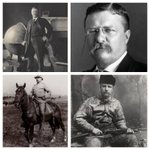
Theodore Roosevelt b. OTD 1858.
Our 26th President. Eminently worthy presence on Mount Rushmore.
His inspirational style:
- TEAMWORK: High-energy, high-performing team builder in areas such as conservation, national security, and progressive economics while POTUS, VEEP, NY Governor, Medal of Honor recipient, NYC Police Commissioner, and Cowboy. First President to appoint a Jewish Cabinet Secretary.
- TONE: Youngest President (age 42). First President to travel overseas while in office (to inspect construction of the Panama Canal - 1906). First President to ride in a submarine (USS PLUNGER 1904). Established the U.S. Forest Service (1905). Doubled the size of Midshipmen and infrastructure at the United States Naval Academy. Brought America’s first naval hero, John Paul Jones, back to the U.S. from a French burial site to a crypt in Annapolis (1906). Inspirational orator and writer. One of our most quoted Presidents, and one of the most credible, because his words matched his deeds... that's integrity.
- “People don't care how much you know until they know how much you care.” Roosevelt wrote over 30 books himself. His first, “History of the Naval War of 1812” (1882), was published not long after he graduated from Harvard. In it, he boldly challenged and refuted many accepted interpretations of the war, earning respect as a historian at 23. Within two years, the book had sold three editions and was being used as a textbook in some college classrooms. Within five years, the U.S. Navy required it.
- TENACITY: "Nothing in the world is worth having or worth doing unless it means effort, pain, difficulty. I have never envied a human being who led an easy life. I have envied a great many people who led difficult lives and led them well.”
- And my favorite … in taking a swipe at critics who only judge and don't do:
"Credit belongs to ‘The Man In The Arena’ .. marred by dust, sweat, blood .. who at worst, if he fails, at least fails daring greatly, so that his place shall never be with those cold and timid souls who neither know victory nor defeat"

Aviation “T3” Leadership!
Igor Sikorsky d. OTD 1972
Russian–American aviation pioneer and engineering and business leader in both helicopters and fixed-wing aircraft. His inspirational style:
- TEAMWORK: After immigrating to the United States in 1919, Sikorsky founded the Sikorsky Aircraft Corporation in 1923 and developed the first of Pan American Airways' ocean-crossing flying “Clipper” boats in the 1930s. In 1939, Sikorsky designed and flew the Vought-Sikorsky VS-300, the first viable American helicopter, which pioneered the rotor configuration used by most helicopters today. The Sikorsky R-4 became the world's first mass-produced helicopter in 1942.
- TONE: "If a man is in need of rescue, an airplane can come in and throw flowers on him, and that's just about all. But a direct lift aircraft could come in and save his life."
- TENACITY: Sikorsky’s active professional life covered virtually the entire span of practical flight by man, from the Wright brothers to space exploration. Few in aviation can claim such a span of personal participation and contribution, with such a wide range of innovative ideas. He only complained that, of all his past predictions, those that he lived to regret were on the “too conservative” side.

Shakespearean “T3” Leadership!
“We Few, We Happy Few … We Band of Brothers!”
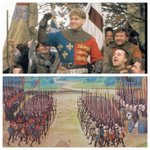
The Battle of Agincourt, France, was fought in 1415.
English King Henry V inspired his Army (according to the Bard) with a pre-battle exhortation that emphasized “Teamwork, Tone, Tenacity”:
- “From this day to the ending of the world, we in it shall be remembered. We few, we happy few, We Band of Brothers! For he today that sheds his blood with me shall be my brother. And gentlemen in England now a-bed shall think themselves accursed they were not here and hold their manhood cheap while any speaks that fought with us upon Saint Crispin's Day."
- The battle occurred 600+ years ago ("Henry V" was written by Shakespeare 400+ years ago). Leaders today still reference this speech as a ‘Gold Standard’ for encouragement, influence, and action!

“T3” Leadership With a Smile!
Johnny Carson b. OTD 1925.
Television personality, comedian, writer, and producer.
Host of The Tonight Show Starring Johnny Carson (1962–1992). A cultural icon widely regarded as the King of Late Night television. His inspirational style:
- TEAMWORK: WWII Navy Vet! Long-time loyalty with friends, sidekicks, and comic foils Ed McMahon and Doc Severinsen. Carson described their relationships as “as close as non-married persons can be.”
- TONE: Had a casual, conversational approach with extensive interaction with guests, an approach pioneered by others but enhanced by Carson's lightning-quick wit. Midwestern charm, combined with the type of insight we all wish we had. His generosity with his fame launched the careers of hundreds of people who are now household names because of their time on his couch or stage.
Very few people have the abilities in the right combination- recognize talent in others and share the spotlight. “Never continue in a job you don't enjoy. If you're happy in what you're doing, you'll like yourself, you'll have inner peace. And if you have that, along with physical health, you will have had more success than you could possibly have imagined.”
- TENACITY: During his 30-year run, he received six Primetime Emmy Awards and the 1985 Peabody Award. Was inducted into the Television Academy Hall of Fame in 1987 and awarded the Presidential Medal of Freedom in 1992.

Nine days until Halloween! 🎃
- America doesn’t only do “spooky”; we do funny-spooky!
- We put a ghost in a striped suit, let kids wait for a giant pumpkin that never shows up, and turn vampires into Mel Brooks punchlines. Here are nine movies or TV shows worth watching for maximum laughs and minimum actual terror:
* Beetlejuice: When your afterlife contractor is more chaotic than the haunting itself.
* The Addams Family: Proof that “creepy” is just a lifestyle choice.
* The Simpsons Treehouse of Horror: The annual reminder that nothing is sacred.
* Dracula: Dead and Loving It: Leslie Nielsen fangs and all. The bloodsucking is secondary to the one-liners.
* Ghostbusters: Who You Gonna Call? The guys with the proton packs and the Stay Puft marshmallow disaster.
* The Rocky Horror Picture Show: Time warp, fishnets, and audience participation. Halloween energy all year.
* It’s the Great Pumpkin, Charlie Brown: Linus’ eternal optimism is quintessentially American.
* Hocus Pocus: Three witches, one black flame candle, and Bette Midler stealing the entire season.
* Scary Movie: The real jump scare is how hard you’re laughing at the parody.
Nine days. Nine classics. One extremely unserious holiday! 🎃

“T3” Leadership With A Smile!
- “Curly” Howard (née Jerome Horwitz) d. OTD 1952 at age 49. Son of Lithuanian Jewish immigrants to New York City. May his memory be a blessing.
- Leaders are, inter alia, influencers and standard-setters. Curly was certainly that for slapstick and physical improvisational comedy. You can see Curly’s impact in the performances of Lou Costello, Jerry Lewis, Uncle Fester, John Belushi, Chris Farley, John Candy and Cosmo Kramer. Also a renowned musician (playing piano, clarinet, and saxophone) and a sympathetic dog lover and adopter.
His inspirational style:
- TEAMWORK: Indispensable contributions with Mo[rris] (his older brother) and Larry as one of cinema’s “Three Stooges.” Shemp (Samuel) was his real-life brother.
- TONE: "Nyuk, Nyuk, Nyuk," "Woob, Woob, Woob," and "Soitenly!" have become part of American pop culture.
- TENACITY: Over 100 uproarious short and feature films from 1933-1947.

Naval Combat “T3” Leadership!
The Battle of Trafalgar was fought OTD 1805.
Great Britain’s greatest naval victory, defeating a numerically superior French-Spanish fleet and ensuring Napoleon would not invade England. Admiral Nelson’s inspirational style and keys to victory:
- TEAMWORK: Delegation of authority to subordinate commanders, allowing for rapid, decisive action. Nelson called his Captains, "Entrepreneurs of Battle"
- TONE: Clear, motivational pre-combat direction, “England expects that every man will do his duty”
- TENACITY: Fighting fiercely using unorthodox tactics, superior British training and leadership won the day.
- Lord Nelson, at age 47, was mortally wounded at Trafalgar aboard his flagship, HMS VICTORY, but not before delivering final orders to the fleet to ensure their victory. The Admiral’s loss nearly overshadowed the spectacular triumph.
- His funeral was the grandest state occasion of the era and lasted over five days. As he had requested, Nelson's body was placed in a coffin made from the main mast of the French ship, L'ORIENT, destroyed during his famous victory at the Battle of the Nile and buried in St. Paul's Cathedral, London.
- His statue at Trafalgar Square in central London is one of the most visited tourist sites in the world.

“T3” Leadership With A Smile … Art Buchwald!
- Humorist Art Buchwald b. OTD 1925 in New York to Austro-Hungarian Jewish immigrants.
- Best known for his political satire column in “The Washington Post” from 1962 for 30+ years. At the height of his popularity, it was published nationwide as a syndicated column in more than 500 newspapers.
- His column, “Le Grande Thanksgiving,” written in 1952 when he lived in Paris, tries to explain that holiday to the French. The column was re-run for decades every late November and is one of my favorite pieces of writing. Ever! Buchwald’s inspirational style:
- TEAMWORK: WWII Marine Veteran in the Pacific! First started writing as a paid journalist in Paris after World War II, where he wrote a column on restaurants and nightclubs, "Paris After Dark", for the Paris Herald Tribune. He was part of a large American expatriate community in those years. After his return to the United States in 1962, he continued to publish columns and books for the rest of his life.
- TONE: “Whether it's the best of times or the worst of times, it's the only time we've got.” “You can't make up anything anymore. The world itself is a satire. All you're doing is recording it.” Had a funny bone to the very end … and beyond: The day after his death in 2007, The New York Times website posted a video obituary in which Buchwald said: "Hi. I'm Art Buchwald, and I just died.”
- TENACITY: Received the Pulitzer Prize in 1982 for Outstanding Commentary, and in 1991 was elected to the American Academy and Institute of Arts and Letters. Later in life, he continued to turn out his columns into the 21st Century. At age 80, he made headlines once again with the remarkable story of his non-death. Given a terminal diagnosis by doctors, he moved into a hospice in 2005 and put his affairs in order. But predictions of his death proved premature. His failing kidneys began to function again, and feeling better, he left hospice and headed to Martha's Vineyard. In late 2006, he published a new book, “Too Soon to Say Goodbye,” before ultimately passing in 2007.

Judicial “T3” Leadership!
John Jay was sworn in as the first Chief Justice of the Supreme Court in 1789. His inspirational style:
- TEAMWORK: Put public service before self. Co-author of the Federalist Papers, Ambassador to Spain, Negotiator of the Treaty of Paris ending our War for Independence, President of the Continental Congress, Secretary of State, President of the American Bible Society, Governor of New York, 1st US Chief Justice. A true “Founding Father.
- TONE: Allowed his work to speak louder than his few words … Jay lived quietly and died quietly, not on a battlefield, but in his library, at age 83. He was neither jovial like Franklin, nor intemperate like Hamilton, but universally acknowledged as dependable and honorable.
- TENACITY: Spent years abroad as a diplomat - away from family and enduring financial hardships - while contributing to our independence. Never lost his cool or dignity in the process.

Soldier Statesman "T3" Leadership … GEN Colin Powell!
General Colin Powell passed away OTD 2021.
- When I reported for duty to the Pentagon in 1987 as a LT(JG), my Mom said to me, "There's a guy I know from Morris High School [Bronx] and CCNY who's in DC, Colin Powell. If you run into him, say hello.” Well, I did a few years later, and he returned a warm greeting to Bella (nee) Sonnefeld!
- He was as gracious a gentleman as he was a fierce warrior and skilled diplomat.
- His 13 Rules for Leaders" are a 'Gold Standard' for anyone in a position of authority and influence (I just have a tough time remembering 13, so I boiled my list down to "T3").
Some of the General's inspirational excerpts:
- TEAMWORK: Rule #9 … "Share Credit."
- TONE: Rule #10 … ”Remain calm. Be kind."
- TENACITY: Rule #11 … "Have a vision. Be demanding."

Einstein “T3” Leadership!
- Nobel Prize-winning physicist Albert Einstein arrived in the U.S. as a refugee from Nazi Germany in 1933.
- Legally applied for American citizenship, which he received in 1940 while serving as a Professor of Theoretical Physics at Princeton.
- Rather than focus on his extraordinary intellectual accomplishments, Einstein’s journey to the U.S. is an inspirational story itself:
- TEAMWORK: Born in Germany in 1879, Einstein moved to Switzerland in 1895, earned his undergraduate, master’s, and doctoral degrees there, and became a Swiss citizen in 1905
- In 1914, he moved to Berlin to join the Prussian Academy of Sciences and the Humboldt University of Berlin.
- In 1917, he became director of the Kaiser Wilhelm Institute for Physics and regained German citizenship.
- In 1933, while he was visiting the United States and the Netherlands, the Gestapo ransacked his family's apartment in Berlin, confiscated his cottage and sailboat, and the German Reichstag passed the Enabling Act, which prevented him, as a Jew, from teaching in German Universities.
- The Nazis later sold his boat and converted his cottage into a Hitler Youth Camp (Jimmy Buffett wrote a song, "Einstein Was A Sailor!")
- Horrified by the Nazi war of extermination against his fellow Jews, Einstein decided to remain in the US and was granted American citizenship in 1940.
- His moral courage was followed by the immigration of his countrymen and fellow scientists, who contributed significantly to the U.S. nuclear program: Hans Bethe, John von Neumann, Leo Szilard, James Franck, Edward Teller, Rudolf Peierls, and Klaus Fuchs. Enrico Fermi's wife, Laura, was Jewish; after the 1938 Nobel Prize ceremony, he and his family also left for the U.S.
- Einstein bequeathed his personal archives and all literary rights to his works to the Hebrew University of Jerusalem.
- The bottom of the three pictures attached to this article is of Einstein and Israel’s “Founding Father,” David Ben-Gurion.
- TONE: “Learn from yesterday, live for today, hope for tomorrow. The important thing is not to stop questioning.”
- TENACITY: “A person who never made a mistake never tried anything new.”
“It's not that I'm so smart; it's just that I stay with problems longer.”

Papal “T3” Leadership!
Cardinal Karol Wojtyla of Poland (John Paul II) elected Pope OTD 1978 at age 48; the first non-Italian Pope in 456 years!
- Presided over the Catholic Church for 26 years.
- A clandestine seminarian in his native Poland during Nazi occupation, he helped many Jews during the Holocaust.
- Ordained in 1946, he was recognized for being the spiritual impetus for the end of Communist rule in Poland, and the building of bridges to people of other faiths.
- One of the most travelled world leaders in history, he visited 129 countries during his pontificate (five visits to the U.S. and the first visit by a Pope to Greece in over 1200 years).
- Saint John Paul II was canonized in 2014.
His inspirational style:
TEAMWORK: Took a large number of initiatives to promote friendly relations, practical humanitarian cooperation and theological dialog with a range of non-Catholic religions, especially Judaism.
Became the first Pope make an official visit to a synagogue (the Great Synagogue of Rome) in 1986.
In 1993, John Paul II established formal diplomatic relations between the Holy See and the State of Israel.
In 1994 he hosted the Papal Concert to Commemorate the Holocaust, the first-ever Vatican event dedicated to the memory of Jews murdered in World War II.
In 2000, John Paul II visited Yad Vashem, the national Holocaust memorial in Israel, and later made history by touching one of the holiest sites in Judaism, the Western Wall in Jerusalem.
TONE: "Faith leads us beyond ourselves. It leads us directly to God."
- TENACITY: "I plead with you, never, ever give up on hope, never doubt, never tire, and never become discouraged. Be not afraid."

Israeli “T3” Leadership … David Ben-Gurion!
David Ben-Gurion, “Founding Father” of the State of Israel, b. OTD in Poland, 1886.
He immigrated to the Ottoman Empire (what is now Israel) in 1906 and became the preeminent leader of the Jewish community in British-ruled Palestine from 1935 until the establishment of Israel in 1948, which he led until 1963.
Ben-Gurion was named one of “Time Magazine’s 100 Most Important People of the 20th century. His inspirational style:
-TEAMWORK: On 14 May 1948, he formally proclaimed the establishment of Israel, and was the first to sign the Israeli Declaration of Independence, which he helped to write. Under Ben-Gurion's leadership, the 1948 Arab–Israeli War saw the uniting of the various Jewish militias into the Israel Defense Forces (IDF), and the flight of a majority of the Palestinian Arab population. Following the war, Ben-Gurion served as Israel's first Prime Minister and Minister of Defense. He retired from political life in 1970, then moved to his modest home at the Sde Boker kibbutz in the Negev desert, where he lived until his death in 1973.
- TONE: “In Israel, in order to be a realist you must believe in miracles.” “Israel has created a new image of the Jew in the world - the image of a working and an intellectual people, of a people that can fight with heroism.”
- TENACITY: “If an expert says it can't be done, get another expert.”

Automotive and Patriotic “T3” Leadership!
Lee Iacocca b. OTD 1924. "America's First Corporate Folk Hero.”
- The son of Italian immigrants, he was an engineer from working-class Pennsylvania who became an auto exec at Ford (developed the iconic Mustang, but also the risible Pinto).
President and CEO of Chrysler from 1978-1992. Saved that company from bankruptcy (paid off Chrysler’s 10-year government loans in three years … which impressed President Regan and began a close friendship between them).
- Served as the foundation Chairman for the rehabilitation of the Statue of Liberty and Ellis Island in the 1980’s (I still have my donor card!). A brash, no-nonsense risk taker, he set a new standard for CEOs by serving as the mascot for his company.
- Iacocca’s inspirational style emphasized:
- TEAMWORK: “In the end, all business operations can be reduced to three words: People, Product, and Profits. Unless you’ve got good people on the team, you can’t do much with the other two.” “Start with good people, lay out the rules, communicate with your employees, motivate them, and reward them. If you do all those things effectively, you can't miss.”
- TONE: Capitalist and entrepreneurial mindset … “One of the things the government can’t do is run anything. The only things our government runs are the post office and the railroads, and both of them are bankrupt.”
- TENACITY: “You’ve got to say, I think that if I keep working at this and want it bad enough I can have it.” It’s called perseverance.” “If we screw it up, start over. Try something else. If we wait until we’ve satisfied all the uncertainties, it may be too late.”

I LIKE IKE “T3” LEADERSHIP!
Dwight Eisenhower b. OTD 1890. Our 34th President. Supreme Allied Commander in Europe during WWII. Also Army Chief of Staff, President of Columbia University, and NATO Commander. As President, Eisenhower initiated the “up or out” policy that still prevails in the U.S. military. Officers who are passed over for promotion twice are then usually ably but quickly discharged, o make way for younger, more able successors. Ike’s motivation for this policy? He was stuck at the rank of Major for 16 years between WWI and WWII!
Dwight Eisenhower b. OTD 1890. Our 34th President. Supreme Allied Commander in Europe during WWII. Also Army Chief of Staff, President of Columbia University, and NATO Commander. As President, Eisenhower initiated the “up or out” policy that still prevails in the U.S. military. Officers who are passed over for promotion twice are then usually, but quickly discharged, to make way for younger, more able successors. Ike’s motivation for this policy? He was stuck at the rank of Major for 16 years between WWI and WWII!
- TEAMWORK: “It is better to have one person working with you than three people working for you.”
- TONE: “A people that values its privileges above its principles soon loses both.” Ike was confident in his plans for D-Day on June 6th, 1944. He said, "This operation is planned as a victory, and that's the way it's going to be." In reality, he knew it might fail. On June 5th, as the Allies crossed the English Channel toward Normandy, he wrote a speech and put it in his wallet just in case. It announced that the campaign had failed, and ended: "The troops, the air and the Navy did all that bravery and devotion to duty could do. If any blame or fault attaches to the attempt it is mine alone."
- TENACITY: “In preparing for battle I have always found that plans are useless, but planning is indispensable.” In the summer of 1919, breveted LTC Eisenhower participated in the first Army Transcontinental Motor Convoy. The expedition consisted of 81 motorized Army vehicles (24 officers, 258 enlisted) that crossed from Washington, DC, to Oakland, then ferried to San Francisco, covering 3,251 miles in 62 days. As an observer for the War Department, LTC Eisenhower learned firsthand about the difficulties of traveling long distances on impassable roads, which led to frequent breakdowns of military vehicles. These early experiences influenced his later decisions concerning the building of the interstate highway system during his presidential administration.

Happy 251st B'Day U.S. Navy!
The greatest maritime organization the world has ever known.
We live "T3":
- TEAMWORK: With other Services, Allies and Military/Civilian partners
- TONE: "Damn the torpedoes, full speed ahead!"
- TENACITY: Valor + Tireless toughness in peace, crisis and combat

- Christopher Columbus set sail from Spain in 1492.
- The Italian-born navigator discovered “The New World” when he made landfall on what is now known as San Salvador in the Bahamas. He then visited Cuba and Hispaniola, establishing a colony in what is now Haiti.
- Had the courage to go against the “settled science” of his age that the Earth was the center of the universe and was flat. Opened the way for other European explorations and colonies in the Americas.
- Columbus Day matters not only for its historical significance, but also because it celebrates Columbus’ character traits that remain as vital today as they were more than 500 years ago: courage, independent thinking, persistence, and creativity.
His inspirational style:
- TEAMWORK: Departed Spain with a crew of 87 on three small ships: the NINA, the PINTA, and the SANTA MARIA. It was the longest voyage ever made at that time, out of sight of land, to find the western passage to India
- TONE: From Columbus’ diary … “Following the light of the sun, we left the Old World.” Columbus never doubted his vision, remarking that “there is no question that the inspiration was from God … encouraging me continually to press forward, and without ceasing for a moment.”
- TENACITY: He was so driven to accomplish the goal that he kept approaching multiple countries for their support for seven years, enduring ridicule along the way, with no success. Finally, his perseverance paid off in 1492 when Queen Isabella and King Ferdinand approved his request.nbsp; Columbus made three further voyages to the Americas, exploring the Lesser Antilles in 1493, Trinidad and the northern coast of South America in 1498, and the east coast of Central America in 1502.
For my Long Island Friends: Rocco, Tony, Dominic, Joey, Aldo, Ann-Therese, Maria and Filamina:
- "He discovered America is what he did! He was a brave Italian explorer! And in this house, Christopher Columbus is a hero! End of story! - Tony Soprano, furiously, after dismissing his son's school history book as B.S. and arguing that Columbus faced great dangers, like a flat-earth belief and harsh conditions.
