
Up and down trader
Ukraine
Joined July 2014
- Tweets1.5K
- Following728
- Followers105
- Likes21.2K


Adam Winter retweeted

COT Silver Report - November 13, 2026
silverseek.com/article/cot-s…

Adam Winter retweeted

中国的小偷为什么断崖式地下降?
我前阵子看过一个采访,一个开了二十多年手机维修店的老板说了一句话,我觉得特别有意思。
他说,“以前经常有人拿手机过来卖,我不用问都知道,多半不是自己的。现在这种人,几个月都碰不到一个。”
他说以前那些人进门都差不多一个样。
戴着帽子,眼神飘来飘去,手机没有盒子,没有发票,就一句话:”老板,你看看值多少钱。”
老板也不傻,大家都心照不宣。
可这几年,别说卖手机了,就连有人捡到手机,都恨不得马上联系失主。
很多外国人来中国以后,最惊讶的也是这一点。
快递放门口没人拿,外卖放楼下没人偷,手机掉在商场,回去找还有可能找得到。
于是很多人开始夸:中国是不是没有小偷了?
其实,不是。
真正消失的,不是小偷,而是”当小偷这份工作”。
很多人总觉得,一个人偷东西,是因为他坏。
可现实里,大多数小偷没把自己当坏人。
他只是觉得,这是门生意。
有利润,有风险,算完账,觉得还能干。
二十年前,偷一个钱包,里面可能就是几千块现金,转个弯钱就花了。
偷一部手机,找个地方刷机,再卖给二手手机贩子,又是一笔收入。
那个年代,小偷最重要的能力,不是技术有多高,而是跑得快。
可现在呢?
你偷一部手机,刚开机,人家就能定位。
刷不了机,解不开锁,很多手机还能直接远程锁死,最后拆零件卖的钱,可能还不够你冒这个险。
以前偷的是一万块。
现在偷回来,只剩几百块。
这买卖,越来越赔。
更关键的是,现金没了。
以前的钱包,就是钱。
现在的钱包,很多年轻人一年都不带一次。
不少人出门,就拿一部手机。
你把钱包偷走,里面可能只有身份证,还有两张已经忘了密码的银行卡。
忙活半天,收获二十块钱现金,找谁说理去。
最狠的还不是这个。
最狠的是,现在你想跑,都不知道该往哪儿跑。
以前一条街可能只有银行门口有监控。
现在呢?
小区、电梯、商场、地铁、停车场、便利店,甚至很多居民家门口,都挂着摄像头。
有人开玩笑说,现在不是没有监控死角,是死角里面还有个大爷举着手机拍短视频。
你还没走出这条街,业主群已经开始找人了。
很多人会问,那以前那些小偷都去哪儿了?
这个问题特别有意思。
如果你把小偷看成一种职业,这个问题就很好回答了。
一份工作,如果工资越来越低,风险越来越高,还随时可能进去几年,你觉得还会有人抢着干吗?
有人去送外卖了。
有人去跑网约车了。
有人进工厂了。
赚得未必更多,但至少晚上睡觉不用提心吊胆。
人其实没有大家想得那么复杂。
绝大多数人,不是在善恶之间反复挣扎。
而是在不断算账。
这件事划不划算。
值不值得。
风险有多大。
收益有多少。
只要账变了,人就会变。
很多人觉得,是中国人突然变好了。
我倒觉得,是整个社会慢慢把这笔账改了。
现金越来越少,手机越来越难销赃,监控越来越密,移动支付越来越成熟,身份信息越来越完善,违法的成本一点一点往上涨,合法赚钱的机会一点一点变多。
等一个人准备伸手的时候,他脑子里已经先算完了一遍。
偷这一单,可能赚不了多少钱。
可一旦被抓,后面好多年都赔进去。
那只手,自然就缩回来了。
所以外国人觉得中国安全,不只是因为小偷少了。
真正厉害的地方在于,一个社会慢慢把”偷东西”这件事,变成了一门没人愿意干的生意。
所以我觉得很多制度最成功的时候,并不是天天抓坏人。
而是让越来越多人觉得——
算了,不值得。

Ted Oakley: This Cycle Is Ending, I’m 50% in Cash and Treasuries youtu.be/B7rm7UUzqgA?si=qeWg… через @YouTube
7


Adam Winter retweeted
COT Silver Report - October 23, 2026
silverseek.com/article/cot-s…

Adam Winter retweeted

$Silver - At the weekly low(55.39) it almost hit the lower BB. That's close enough for a retest of the July low so we can start looking for a bullish reversal. A close above the 20 week MA will turn the weekly trend bullish but until that happens lower lows are still possible.


Adam Winter retweeted
COT Silver Report - October 2, 2026
silverseek.com/article/cot-s…

Adam Winter retweeted

Housing, Labor, Energy And Policy Are Starting To Point In The Same Direction
There is an important overlap between what Lennar is signaling from housing, Tom McClellan’s unemployment cycle work, restrictive monetary policy and rising energy costs.
They are not giving us the exact same calendar date, but together they describe a familiar late cycle sequence.
Housing Is Already Defensive
Lennar increasingly resembles housing during the 2007 stage of the financial crisis.
Builders are cutting costs, shortening construction times, using incentives, subsidizing financing and sacrificing margins to keep homes moving.
Housing usually weakens before employment fully breaks.
During the last cycle, housing deteriorated through 2006 and 2007. The recession began in December 2007. Lehman failed in September 2008. Unemployment did not reach its 10% peak until October 2009.
Housing warned first. Labor confirmed much later.
McClellan’s model suggests unemployment could peak around August 2027. If we mechanically line that timing up with the Great Financial Crisis, September 2026 would correspond roughly with November 2008 on the unemployment clock.
That does not mean conditions today equal November 2008. It means the model suggests we could be further through the cycle than headline employment data currently imply.
Now Add Restrictive Policy And Diesel
The economy is absorbing restrictive interest rates while energy costs are rising sharply.
Diesel matters far beyond the pump.
It powers trucking, agriculture, construction equipment, mining, freight and large parts of the industrial economy. When diesel rises, transportation costs spread through nearly every supply chain.
Food costs more to produce and deliver. Construction costs rise. Manufacturers pay more to move inputs and finished goods. Retailers absorb higher distribution expenses. Small businesses with thin margins either raise prices, absorb the cost or cut spending and labor.
That creates exactly the kind of inflation monetary policy is poorly designed to fix.
Higher rates can suppress demand. They cannot create diesel, increase refinery capacity or reopen disrupted shipping routes.
History has seen versions of this before.
The 1973 oil shock overlapped with restrictive policy and was followed by a deep recession.
The 1979 oil shock was followed by the Volcker tightening cycle and back to back recessions as policymakers attacked inflation while households and businesses were already absorbing much higher energy costs.
The 1990 Gulf shock hit an economy already weakened by tighter financial conditions and helped push it into recession.
In 2022, energy surged after Russia invaded Ukraine just as the Federal Reserve began one of its fastest tightening cycles in decades. Housing and other rate sensitive sectors were hit quickly even though the broader economy remained more resilient.
Why This Cycle Could Compress
This is where Lennar and McClellan become more interesting together.
Housing looks closer to the 2007 stage.
McClellan’s unemployment clock looks closer to late 2008.
Restrictive policy is pressing on credit sensitive sectors while diesel and broader energy costs attack margins and purchasing power.
Housing weakness reduces construction activity. High rates restrict refinancing and credit creation. Energy raises the cost of moving nearly everything through the economy. Businesses eventually respond by cutting investment, hours and payrolls.
If those forces begin reinforcing one another, the transmission into labor deterioration could happen much faster than housing alone would suggest.
Lennar is telling us housing has entered defense mode.
McClellan’s unemployment clock suggests the broader cycle may be further advanced.
And restrictive policy combined with an energy shock could be what closes the gap between the two.


Adam Winter retweeted

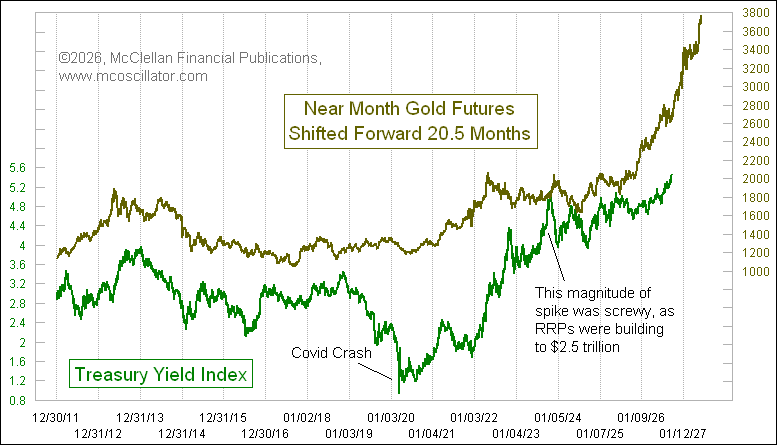
Gold's 20-1/2 month leading indication for LT bond yields says things are just getting started. Discussed in greater length at mcoscillator.com/learning_ce….
Adam Winter retweeted

Weekly Market Update:
📈 US 10Y: 5.16%, highest since 2007
🥇 Gold: Pulled back again, -2.3%
🥈 Silver: Heavier selling, -3.6%
☢️ Uranium: SRUUF held steady, -0.4%
🛢️ Oil: Gave it all back, -4.1%
Yields at 2007 levels put real pressure on metals. Gold and silver both felt it.
This week in Options Amplifier 👇
💰 6 new trades, $1,707 in fresh premium collected
✅ 3 closed, +$544 in realized gains
🔄 18 open positions
💵 $4,903 total premium on the books
The Wheel keeps spinning 🔄
Try SilverChartist PRO + Options Amplifier FREE for 14 days 👇
silverchartist.com/plans/199…

Adam Winter retweeted
COT Silver Report - September 18, 2026
silverseek.com/article/cot-s…

Adam Winter retweeted
Weekly Market Update:
🥇 Gold: Pulling back this week, -1.8%
🥈 Silver: Also cooling off, -2.3%
☢️ Uranium: SRUUF -2.8%
📊 Miners (URNM): hit harder, -8.2%
🛢️ Oil: Big move higher, +9.4%
A mixed week. Metals & uranium pulled back while energy ran hot.
This week in Options Amplifier 👈
💰 5 new trades, $1,612 in fresh premium collected
✅ 9 closed - Top wins: OKLO Put +$363, Call +$259
🔄 17 open positions
💵 $4,201 total premium on the books
The Wheel keeps spinning 🔄
Try SilverChartist PRO + Options Amplifier FREE for 14 days 👇
silverchartist.com/plans/199…