

https://teapawt.net/t.co/c34CM2Ttcw Creating intentional Christian community in a post-Christian world
Joined April 2020
- Tweets141
- Following114
- Followers46
- Likes5


BenedictOption retweeted

You’ve probably heard the words “Baroque,” “Gothic,” or “Romanesque” in relation to architecture—but what do these terms actually mean?
A guide on the major Western architectural styles🧵
(you’ll want to bookmark this thread)

BenedictOption retweeted

King Charles created a new town, Poundbury, to prove there is another way of developing places.
Instead of an ugly mono-functional dormitory town, this would be a beautiful, diverse, human-scaled, walkable community with plenty of employment.
Learn all about it in our video:


BenedictOption retweeted
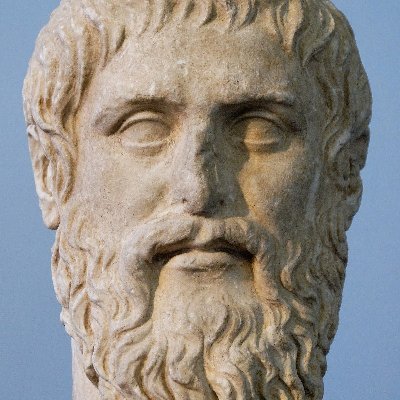
Some facts about history that might surprise you:
1. Ancient people knew the earth was round. Over 2,000 years ago an astronomer called Eratosthenes even calculated its circumference to within 1% of the real figure... using a stick.
2. "Ancient Greece" was not a country. It was a group of culturally Greek city states with political, religious, and economic links spread all around modern-day Greece, Turkey, Egypt, Italy, France, Ukraine, and further afield. An "Ancient Greek" could have been from any of those places.
3. The lives of Medieval people weren't quite as miserable as we sometimes think. Life expectancy figures are skewed by infant mortality. If you made it to your twenties then there was nothing unusual about reaching the age of 60 or even 70 — except during times of plague, of course.
4. Ancient Greek statues weren't originally pure white marble — they painted their statues in bright colours. To the Ancient Greeks a plain marble statue like Michelangelo's David would look unfinished.
5. Same for the Middle Ages. The sculptures on Medieval cathedrals were once painted (like at Amiens, in the image). Our impression of the Middle Ages as a drab and grayscale world would be unrecognisable to somebody who lived at the time — in fact, it's arguable that Medieval people loved colourful design much more than we do.
6. There isn't any evidence that Vikings wore horned helmets. Although some have been discovered, they pre-date the Vikings by more than 1,500 years and seem to be from the Bronze Age in Scandinavia.
7. Not everybody in the past was devoutly religious — there is evidence of atheism, or at least religious skepticism, going back millennia. The Pre-Socratic philosopher Heraclitus once wrote:
"This universe, which is the same for all, has not been made by any god or man."
And Xenophanes of Colophon, who lived in the 5th century, famously pointed out the irony that people all around the world always thought their gods looked like them. While the Epicurean poet and philosopher Lucretius, writing in the 1st century BC, even said:
"So potent was Religion in persuading to do wrong."
8. The Western Roman Empire never exactly "fell". The last emperor was deposed in 476 AD, but the Senate continued meeting for another two centuries and the administrative apparatus of the Roman state also survived for a long time afterwards. It was more of a gradual fading of what had once been the empire than a sudden collapse and disappearance.
9. People talk about the Renaissance like everybody in the Middle Ages knew nothing about Ancient Greece and Rome, but that couldn't be further from the truth. Throughout the Middle Ages people were very familiar with Aristotle, Ovid, Plato, Virgil, Boethius, and many more. The only reason the Renaissance was possible is because Charlemagne had his scribes scrupulously copy out surviving ancient books (during the Dark Ages!) and also thanks to the translations of Islamic scholars. The Renaissance was more of a change of mindset than the rediscovery of a lost past.
10. People in the past certainly didn't travel as much as we do now — there weren't cars, trains, or aeroplanes. But they did travel more than we might think. The Chinese admiral Zheng He sailed all around south east Asia, the Middle East, and east Africa. Then there's Ibn Battuta, a scholar from modern-day Morocco, who travelled more than 100,000 kilometres through 44 different modern countries.
But it wasn't only explorers. People also travelled for work, whether the Italian painter Gentile Bellini going to Istanbul or the composer Guillaume du Fay, who worked literally all around Europe. Leonardo da Vinci even left Italy to work in France!
11. There were global conflicts before the 20th century. The Nine Years' War (1688-1697) took place on four different continents, and the Seven Years' War (1754-1763) was spread over five continents. And, in terms of scale, the second-bloodiest conflict in history (after WWII) took place in 17th century China.
12. The story of Noah's Ark predates the Bible — the "Flood Myth" originated in Ancient Mesopotamia. The Sumerians even told a story about a wise man called Atrahasis who was warned by the god Enki about a deluge intended to destroy humanity, and advised him to build a boat in order to save himself, his family, and the animals.
What are some other surprising facts about history?


BenedictOption retweeted
Christian Nationalism is bad because of the Spanish Inquistion which killed *checks notes* about 5,000 people over the course of 354 years.
A neutral secular state is good, even though the secular Reign of Terror in France killed *checks notes* 40,000 people in under 11 months.


BenedictOption retweeted
What makes this street in Nuremberg, Germany, so charming?
It isn't magic. Here are 10 (very) specific reasons why people find it beautiful — and which can improve almost any street in the world.
1. Cobbles
When are cobbled streets not a good thing? They add texture and detail — every stone is slightly different, and so they create a wonderful, subtle interplay of light and shadow across the ground. It also feels more natural than flat and monotonous tarmac, since natural landscapes are rarely without some sort of variation and detail.
We don't want cobbled highways, of course, but when it comes to narrow urban streets they are almost always an improvement.
(These cobbles in Nuremberg are technically "setts", since they are squared off rather than round.)
2. No Adverts
Sometimes adverts can be aesthetically pleasing, but many streets would be improved by getting rid of billboards and posters which are literally designed to distract us, co-opt our attention, and influence our behaviour. Any street is inevitably more peaceful to the mind and to the eye without adverts all over the place.
3. Greenery
There isn't much here, but it makes a big difference. Those flowers hanging from the windows and gathered in front of the houses and shops add softness and variation to streets which could otherwise be rather angular and stony.
Notice the canopy of a tree peering overheard; trees, too, almost always improve urban environments for a variety of reasons, from psychological health to temperature control.
4. No Vehicles
A simple but profoundly important detail. Vehicles are not evil, but they do make most places uglier. Imagine if this street was lined with vans and motorcycles and trucks and, of course, cars. Safe to say that it probably wouldn't be quite as charming...
5. Street Lamps
Another minor detail — but that's where the devil is, as they say. They aren't remotely fancy here, but they are rather pretty and essentially unobtrusive; the street lighting is aesthetically coherent with its surroundings.
Sometimes aesthetic incoherence works well, adding excitement and vitality to an urban environment. But, if we want to figure out why this particular street is so appealing, the harmony between its architecture and street furniture is a big part of that.
6. Materials
Cobbles (or setts), bricks, stone, iron, timber, and slate. Notice that almost everything we see on this street is made from one of these materials. They are all more detailed, subtly coloured, smaller in scale, and feel more natural than plate glass, stainless steel, tarmac, and plastic. It's hard to go wrong with good materials, used simply.
7. Colour
This street is filled with colour — certainly compared with the grayscale urban environments most of us are used to. The houses themselves have a mixture of white or cream-coloured facing combined with the warm tones of old timbers, though some are painted brightly in orange or scarlet. The masonry is all varied in colour, from rugged grey to rusty gold to weathered ivory, and the flowers add greens and pinks and violets. All of this beneath the dark slates and tiles of the roofline, and above everything the whites and blues of the sky. A kaleidoscopic of mellow, colourful delight.
8. Variety
This is a combination of the other factors. Although there is an overall aesthetic cohesion here, no two parts of this street are the same. Every house is slightly different, whether in its size or overall shape, the arrangement or colour of its timbers, and the design of its windows and doors. Even the cobbles, already mentioned, add to this sense of variation.
Not to forget the curving shape of the street itself. There's nothing wrong with straight roads, but the way in which the cobbles and houses taper away from us, out of view, clearly adds to its aesthetic character.
You don't get the impression of a rigidly imposed design blueprint here; this is the opposite of an insipid, cookie-cutter urban environment where everything is identical.
9. Human Scale
The buildings are no more than four or five storeys tall and the street is fairly narrow. The concept of "human scale" has no precise definition, but you know it when you see it. If there are towering, faceless structures hundreds of metres tall on either side of a vast roadway filled with vehicles — that evidently isn't human scale. This street, however, surely is. And therefore it is more innately appealing to us.
10. Time
The most powerful force of all. Time shapes everything, both in terms of how a specific structure changes with the passing years and how, from one generation to another, every building and street is consciously altered and modified. The end result is something which can't quite be created in one go. If you leave a street for long enough it will almost always become more interesting — whether because of the natural process of aging or the restless hands of humanity.
It's entirely possible that you don't find this particular street appealing at all. Nor is there only one way to design a street, and it's not as if these ten characteristics should or even could be applied to every city or town.
But, in a world where so many places sorely lack aesthetically pleasing urban environments, there are surely at least a few things we could learn from this charming Nuremberg street.

BenedictOption retweeted

10 works boys should read before graduating high school:
1. The Chronicles of Narnia
2. Where the Red Fern Grows
3. Hatchet
4. Shane
5. The Lord of the Rings
6. Iliad & Odyssey
7. Beowulf
8. The Consolation of Philosophy
9. The Divine Comedy
10. Nicomachean Ethics

BenedictOption retweeted

Wow, IQ is most correlated with job performance while years of education ranks at the bottom. I wonder what this explains
You’re unable to view this Post because this account owner limits who can view their Posts. Learn more
BenedictOption retweeted

My heart is full.

BREAKING: Ugandan students from at least 13 universities take to the streets, protest against @JoeBiden in front of their parliament, and sing, "We don't want your pro-gay money. We want and love our country more than money." WATCH


BenedictOption retweeted

History remembers Edmund Burke as the father of conservatism
BUT few know about a philosophy book he wrote at 27: The Sublime and Beautiful (1757)
A masterpiece that touches on:
• Differences between men & women
• Aesthetics
• Self-help (from an unexpected angle)
Dig in👇🏻

BenedictOption retweeted

If my daughter was anorexic and I “helped her” to starve herself so she could “feel like her true self”, would that be loving and kind?
If I encouraged her to use appetite suppressants & have surgical interventions such as Lap-band surgery- would that be considered care?
BenedictOption retweeted

Slavery didn't "build America."
Black slaves were <20% of the population, concentrated in the poorest region of the country, only until 1865 - and contributed about proportionately.
This isn't an insult OR a compliment: it's just reality.
BenedictOption retweeted
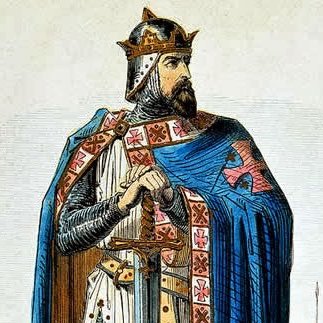
Lives worth studying:
- Fernando III
- Charlemagne
- William the Marshal
- Richard the Lionheart
- Rodrigo Diaz de Vivar
- Godfrey of Bouillon
These guys wrote the blueprint

BenedictOption retweeted

Gay movement: the sex you’re attracted to is hardwired at birth, even though there’s no gay gene.
Trans movement: your sex is entirely fluid, even though there is a definitive sex chromosome.
LGBT movement: you must believe both of those things at once, or else you’re a bigot.

