
Wellcome ECA Fellow trying to understand metabolism and virology with @JamesNathanLab in @MedCambridge, University of Cambridge (he/him)
Cambridge, UK
Joined July 2019
- Tweets572
- Following421
- Followers433
- Likes2.4K








Really pleased to see this work, looking at stability of the immune system after Long COVID, is published!
microbiologyresearch.org/con…
I'll write an explanation of our findings (and further scientific context) soon!

Ben Krishna retweeted

Have you heard our latest Session ? Dr Ben Krishna and the team at Cambridge University have identified a protein, elevated in the blood of #LongCovid patients. Available on all platforms, here is a link to one. @BenjaminKrishn3 @Cambridge_Uni available on all platforms.

Ben Krishna retweeted

The journal were generous with revision extensions while I was on maternity leave, and @BenjaminKrishn3 did heroic extra experiments to get us over the line.
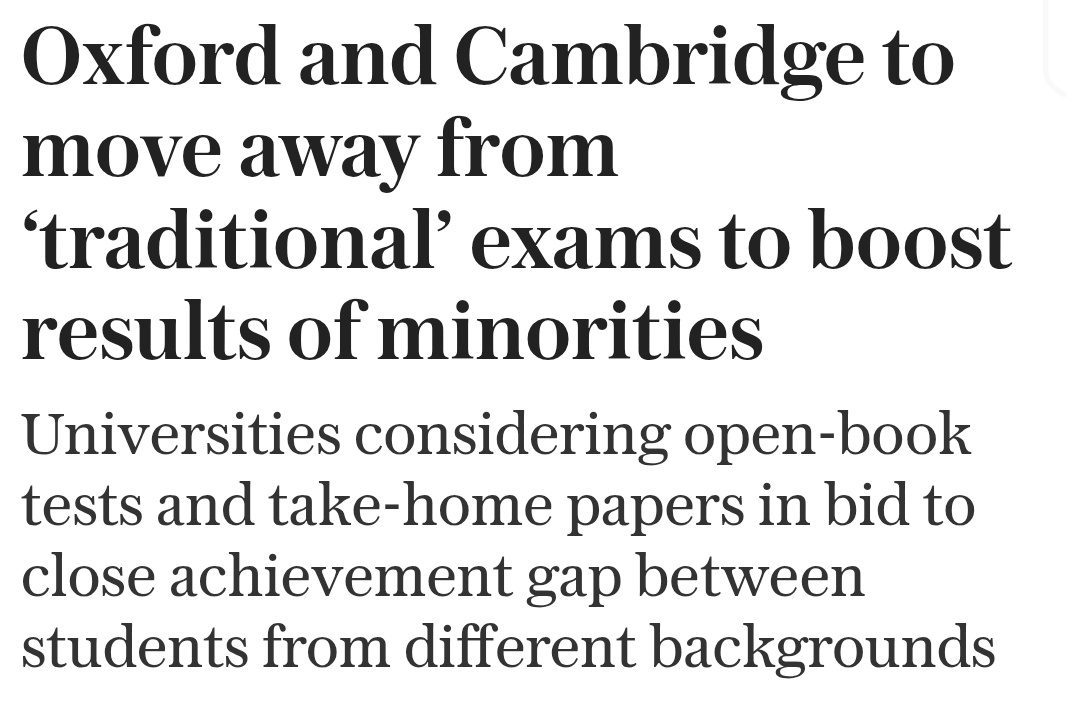
Can't find any evidence here that this is actually happening though?
Biochemistry has gone back to closed book exams now that COVID restrictions are over (ie for the last two years).

If @UniofOxford has decided to trash itself, it will deserve to crash down international league tables. But the dumbing down of education across the university sector is a disaster for the nation. The next gov’t should bring in a Royal Commission. telegraph.co.uk/news/2025/01…

Ben Krishna retweeted

At some point in the last ten years (it’s hard to tease out exactly when) we crossed a boundary that no one celebrated:
Most people diagnosed with cancer in the United States of America this year will not be killed by that cancer.
Yes, outcomes have improved.

Have cancer outcomes improved since all this money was allocated to cancer research?
Readers added context they thought people might want to know
Yes.
Childhood leukemia survival rates have increased to 90%
pmc.ncbi.nlm.nih.gov/articles/PMC28…
cancer.org/cancer/types/l…
"Overall cancer death rates during the most recent five years (2010 to 2014) decreased by 1.8% (95% CI = –1.8% to –1.8%) per year in men by 1.4% (95% CI = –1.4% to –1.3%) per year in women."
academic.oup.com/jnci/article/1…
I tried putting my biochemistry mock exam questions into ChatGPT. It does surprisingly well, but not brilliantly (high 2:2).
Right now the smoking gun is eloquent writing, vast information but poor knowledge synthesis. I’m sure it will cover that gap though

Our next KIER (Knowledge, Inclusion and Equity in Research) book club will be on the 28th February, where we'll be discussing Medical Apartheid, a book about the non-consensual use of African American people in medical research
You only get cake if you attend!

I hadn’t even realised the paper was out yet, thank you!

More of this please!
New from @BenjaminKrishn3, Nyarie Sithole w/relevance for #LongCOVID. Pertinent to 1st-wavers w/out timely access to appropriate diagnostics as well as those in the current don't-look-so-you-can't-find era.

There's a concept called the "Gentlemen's Third" where you get the lowest pass mark possible and spend your time making friends and having fun (essentially networking) which was much more useful in the long term


Research Culture committee for the win!

🚨 New article alert! 🚨
I wrote an article in @Nature about how anyone in a well-resourced lab can implement to democratise scientific resources and training worldwide. 🌍🧪
👉 nature.com/articles/d41586-0…
@Cambridge_Uni @MedCambridge @CaiusCollege @MRC_LMB

Been asked to review a paper on the protein BAK, which I’ve never worked on. I genuinely think I’ve been selected as BAK is my initials
"Please use mm3 for cubic millimetres and not CUMM"
I'm just going to leave it at that and hope the authors figure out why.
This year @MedCambridge hosted 4 EPLS students in our labs. It was a really fun and valuable experience for everyone involved. Looking forward to doing it again next year!


sciencedirect.com/science/ar…
Review written by us in collaboration with Alejandro Salinas-Botrán and colleagues (none of whom seem to be on twitter) thinking about cardiovascular disease and COVID-19. Essentially... (1/4)
2. How long this risk lasts isn't totally clear, and epidemiological research on this is really useful. Patients who have severe COVID-19 should have follow up checks to mitigate the chances of adverse cardiovascular events later on.