

My views do not reflect that of my employer. Financial Advisor / Philomath 🇨🇦
Toronto, Ontario, CA
Joined March 2021
- Tweets1K
- Following108
- Followers1.8K
- Likes2.6K





Pinned Tweet
$IREN (Formerly known as Iris Energy Limited)
Q1-24 Deep Dive: Sankey, Hashcosts, Portfolio & Expansion, Company Overview & Projection, TradFi & Cloud Services, Mining Operations, Childress Satellite Update & More.
July 1st, 2024
Hello everyone!🙂
Below, I've prepared an in-depth analysis of @IREN_Ltd covering its operations in their entirety and expansive future business prospects.
Please review the replies following the Sankey diagram, I've compiled an extensive expansion document addressing many frequently asked questions and concerns, which I hope will serve as a valuable reference.
Note: To view the images in high-quality please right click and select open image in new tab.
If you find this data useful or interesting, please consider RT/liking/following. I greatly appreciate it, and it helps me a ton. 🙏🏼🙌🏼
P.S. Apologies for my absence; I've been incredibly busy and haven't had the time to focus on research for extended periods. Over the past month, I've graduated from college, applied to universities, moved, and started a new job. However, my schedule is beginning to stabilize, and I'm now able to spend the time I need on these pieces.
----------
Diving In💥
Company Overview & Projection
IREN is debt-free and currently operates 260 megawatts (MW), supporting a hashrate of 10 EH/s at 25 J/TH. By H1 Q3 2024, IREN is projected to achieve 20 EH/s at 17 J/TH, expanding further to 510 MW and 30 EH/s at 16 J/TH by Q4 2024, positioning them as one of the largest and most efficient public miners in the industry. By 2025, IREN's fleet is expected to reach 40 EH/s at 15 J/TH, utilizing approximately 760 MW for Bitcoin mining.
Their expansion to 20 EH/s will cost ≈$301 million and is currently fully funded with $425.3 million in cash reserves, while the 30 EH/s and 40 EH/s expansions will utilize a mix of cash reserves, future profits, ATM proceeds, or other funding sources.
By late 2026 to early 2027, IREN plans to have over 2,400 MW available for colocation deals, joint ventures, and build-to-suit data centers, as well as for expanding their existing GPU fleet.
In total the company aims to exceed 3,160 MW in sustainable energy, primarily focusing on Texas, where energy rates averaged $0.033 per kWh in Q1 2024—significantly lower than the $0.045 per kWh at their BC facilities.
Projection
Recent contracts and business operations in the high-performance computing (HPC) sector have valued purpose-built, energy-dense infrastructure between approximately ≈$1-1.45 million per MW annually. Enabling IREN to generate $2.4 to $3.48 billion in gross revenue from their remaining 2,400 MW. Coupled with an estimated $761 million in revenue from mining operations in 2025, IREN's diversified revenue streams could potentially reach between $3.161 and $4.241 billion by 2027.
It's important to note that this is just one scenario; IREN has multiple verticals to leverage, as BTC mining is highly compatible with various other in-demand opportunities.
This projection also does not consider substantial increases in Bitcoin price over the next 2.5 years or the possibility of rising contract values as competition for AI and HPC infrastructure intensifies. Additionally, the market's commitment to ESG principles significantly enhances the value proposition of green compute infrastructure powered entirely by renewable energy.
2025 Mining Revenue Data Points
H1 2025, $319M: 850 EH/s Network w/30 EH/s @ 16 J/TH, 100k BTC
H2 2025, $442M: 900 EH/s Network, w/40 EH/s @ 15 J/TH, 110k BTC
----------
TradFi & Cloud Services
@MorganStanley valued access to power at $5-$12 per watt; based on this, IREN's future portfolio would be valued between $15.8 billion and $37.92 billion. While @jpmorgan recently stated that "Iris Energy (IREN) is best positioned to take advantage of the growing HPC/AI opportunity."
Cloud Services: At present, IREN's Cloud Services business will generate $14 million to $17 million annually utilizing 816 NVIDIA H100 GPUs, with 504 GPUs currently contracted with Poolside AI (3 month + 3 month option) and servicing the on-demand market, however, this should grow rapidly as revenue for the segment has grown by 118.63% from March-May 2024.
@poolsideai a Paris-based generative AI company, is raising $400 million at a $2 billion valuation, backed by Bain Capital Ventures and DST. Focused on accelerating software development, Poolside's experienced team enhances IREN's cloud services potential, validating IREN's capabilities and linking them with a promising AI startup.
----------
Energy Infrastructure and Mining Operations
Current Energy Infrastructure
British Columbia Sites
Canal Flats: 10 acres, 30 MW (0.9 EH/s), dual physical fiber paths, 20 full-time jobs, includes in-house fabrication facility.
Mackenzie: 11 acres, 80 MW (2.7 EH/s), BC Hydro transmission network, 15 full-time jobs.
Prince George: 12 acres, 50 MW (1.6 EH/s), dual physical fiber paths, over 20 full-time jobs, leased for 50 years with an option to purchase.
Texas Sites:
Childress: 600 MW capacity (4.8 EH/s), 100 MW operational, expansion to 350 MW planned for 2024 with 250 MW immediately available.
West Texas Site: 1400 MW capacity, scheduled for completion in 2026. Additional Pipeline: >1000 MW capacity, TBA.
Note: Located 250 miles northwest of Dallas, the Childress site supports flexible energy consumption in the West Texas Load Zone. The region has 37GW of renewable energy but only 18.5GW of transmission capacity, often limited to 12GW due to technical constraints.
IREN's strategic advantage lies in its immediate access to low-cost power and an expansive land portfolio (>1000 acres), both highly valued. Their ongoing investments in site expansion also aim to unlock further value from these assets.
----------
Operations & Expansion Summary
Current Operations
Childress Phase 1, TX: 100 MW, 4.8 EH/s, Operating
Total: 260 MW, 10 EH/s @ 25 J/TH, Operating
Near-Term Expansion
Q3 2024: Fleet Upgrade (+4 EH/s) and Childress Phase 2 (+100 MW, +6 EH/s; fully funded)
Q4 2024: Childress Phase 3 (+150 MW, +10 EH/s; fully funded). Total: 510 MW, 30 EH/s @ 16 J/TH
Future Developments
H1 2025: Childress Phases 4-6 (+250 MW, +40 EH/s @ 15 J/TH)
Late 2026: Development Site, TX (1,400 MW)
TBA 2027: Additional Pipeline (>1,000 MW)
Total Future Portfolio
>3,160 MW @ $0.035/kWh, >40 EH/s @ <15 J/TH
----------
Regulatory Approvals and Network Upgrades
ERCOT Approval: Both Texas sites have obtained ERCOT approval.
Childress Connection: Complete, with substation infrastructure ready to support the full 600 MW capacity.
1,400 MW Site: Load studies completed as per LFL interconnection requirements.
Network Upgrades: Required upgrades for the British Columbia (160 MW) and Childress, Texas (600 MW) sites have already been delivered. For the 1,400 MW Texas site, upgrades are to be completed by 2026.
----------
Childress Expansion Timeline
Satellite Imagery in Subsequent Message
Recent satellite images confirm that construction at IREN's Childress site follows a phased schedule, with approximately 20 days between the initiation of each building phase.
As of May 16, 2024, Phase 2 indicated foundations laid for three buildings, while no work had commenced on the fourth. By June 18, 2024, excavation for the fourth building's foundation was completed, and concrete pouring was more than halfway finished. Trenching and conduits are already being installed for the 10th building, and grading for the rest of Block 3 is ongoing despite some rain, with the construction team efficiently handling the heavy equipment. June 27, 2024 the foundation for the 9th building was scheduled to be completed, but rain caused delays, and completion is now expected June 28. The 6th, 7th, and 8th buildings are at various stages, with progress in metallic structure, cladding, fans, electrical switchgear, and electrical distribution.
The substation is nearing completion, with the commissioning team set to begin work soon, aiming for a July energization. Historically, building completion from foundation to final structure, including electrical and fan installations, averages ≈90 days.
Overall, all four buildings in Phase 2 are projected to finish by late September/October, allowing IREN to scale up to 30 EH/s @16 J/TH by year-end and add an additional 250 MW for colocation deals, joint ventures, build to-suit data centers, or expansion of their existing GPU fleet.
----------
Bitcoin Mining Operations
Mining KPI Overview (Jan 2024 - May 2024)
Total BTC Generated: 1,592 BTC
Total BTC Sold: 1,592 BTC (100% of production)
Average Production per Day: 10.49 BTC/day
Average Operating Hashrate: 7.44 EH/s
Current Average Operating Hashrate: 9.41 EH/s
Average Monthly Mining Revenue: $18,430,600
Average Monthly Electricity Expense: $6,991,600
Average Monthly Mining Gross Profit: $11,439,000
AI Cloud Services Revenue: $1,881,000
AI Cloud Services Revenue Growth (Mar-May 2024): 118.63%
----------
Bitmain Contract Summary
IREN has secured several hardware agreements for the latest-generation miners from Bitmain.
Existing Agreements: These provide a hashrate of 5 EH/s with an efficiency of 19 J/TH.
Amended Option Agreement: IREN can purchase either 48,000 T21 miners (providing 9 EH/s at 19 J/TH) or 48,000 S21 Pro miners (providing 11 EH/s at 15 J/TH). Pricing is $14/TH for the T21 and $18.9/TH for the S21 Pro, with option expiry dates in September 2024 and March 2025, respectively.
New Purchase Agreement: This covers 51,480 S21 Pro miners, delivering an additional 12 EH/s at 15 J/TH. Pricing is $15.1/TH, with an additional deferred payment of $3.8/TH due nine months after delivery.
New Option Agreement: IREN also has an option for another 51,480 S21 Pro miners, providing 12 EH/s at 15 J/TH, priced at $18.9/TH with an option expiry date in May 2025.
In total, IREN's contracts with Bitmain will provide a combined hashrate of 40 EH/s with a nameplate efficiency of 15 J/TH.
----------
Additional Notes, Digital Currency Security, Pool, & Liquidation, Technology Stack
Note: Mined Bitcoin is stored in a cold storage wallet managed by NYDIG Trust Company LLC. The company utilizes Foundry Digital LLC’s mining pool. Daily and weekly Bitcoin sales are managed by NYDIG under an execution agreement.
Note: IREN facilities utilize an in-house technology stack to optimize the performance of AI cloud services, Bitcoin mining, and energy trading operations.
Note: IREN has consistently liquidated their Bitcoin daily and does not HODL, instead preferring to utilize cash instead of dilution.
----------
$MARA $CLSK $PHX.AE $RIOT $CIFR $HUT $IREN $BTDR $WULF $BITF $CORZ $HIVE $BTBT $CAN $ARBK $GRDI.NE $GRYP $SDIG $GREE $BTCM
@mikealfred @cazenove_uk @Charge_Stack @Umbisam @Invst_Informant @Freedom_By_40 @sebastian_ski @mithcoons @Micro2Macr0 @penny_ether @McnallieM @Futur3_Th1nk3r @IREN_Ltd
----------
Congrats @danroberts0101 and Will Roberts, as-well as your team @IREN_Ltd on the incredible progress made thus far. I'm looking forward to 2027 and beyond. 👊🏼🙌🏼

Q2-2024, Bitcoin Network Data (Blocks, Tx Fees, Subsidy, Avgs, Difficulty, etc.), Imputed EH Calculator, BTC Price, & More
July 4, 2024
Hello everyone,
I hope you're having a great start to your day, and happy holidays to those celebrating the Fourth of July.
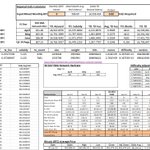
I've prepared an Excel document containing network data for Q2-2024. Additionally, I've included an imputed EH/s calculator with user-friendly drop-down menus. This calculator can help you determine the EH required to produce the output a miner has reported for any month during the quarter.
There's a wealth of information here, and as I prepare for Q2 analyses, I thought this could be useful to others as well.
Google Drive: docs.google.com/spreadsheets…
To edit the document you can download it.
Access Link > File > Download > Enable Editing
If you have any questions, please feel free to reach out.
(Note: The attached image is just an example; the actual file is organized and has multiple tabs of data.)
$MARA $CLSK $PHX.AE $RIOT $CIFR $HUT $IREN $BTDR $WULF $BITF $CORZ $HIVE $BTBT $CAN $ARBK $GRDI.NE $GRYP $SDIG $GREE $BTCM $BTC #Bitcoin


Finding BTC Network Data via API or Web-Based Methods
May 2, 2024
Hello everyone,
I hope your week is going great! With discussions about transaction fees, I've noticed several comments about accessing live transaction data and detailed block information. Below, I've compiled a comprehensive guide on how to do just that. It's a bit lengthy, so I've included a table of contents to help you navigate to the sections that interest you.
If you find this information useful or interesting, please consider retweeting, liking, or following. As a college student aiming to build my network, your support means a lot to me.🙏🥳
-----
Table of Contents
1. Diving In: What is the Mempool?
2. Frequently Visited Web Pages: Web Based Bitcoin Network Data.
3. Historical Block Data, Excel: 840,000 Blocks to Download.
4. API: What is it? How do I use it?
5. Setting up Visual Studio Code: Quick Setup
6. Python Code Template: Basic Template for GET Block Data Request.
7. Using an LLM to Error Handle: ChatGPT, LLama, Copilot.
8. Closing Thoughts: Now What?
-----
1. Diving In💥
I use two main methods to gather block data, both involving access to The Mempool Open Source Project through their API or web-based tools.
The mempool, short for memory pool, is a critical component of a blockchain node where unconfirmed transactions temporarily reside. When a Bitcoin transaction is initiated, it enters the mempool, which is maintained by each node in the network. Miners select transactions from the mempool to include in the next block they mine.
The Mempool Project provides open-source access to this data for everyone. Their API is free, though with limitations (they offer a paid service as well), yet it remains incredibly valuable.
2. Frequently Visited Web Pages:
@mempool
General Mining Info:
mempool.space/mining
Hashrate/Difficulty:
mempool.space/graphs/mining/…
Live TX Fees:
mempool.space/graphs/mining/…
You can navigate via the menu, I encourage you to explore every page; almost everything you'd ever want will be here. If you have any questions check the FAQ it's very thorough.
mempool.space/docs/faq
Also, @hashrateindex has some incredible data as-well:
Network Hashrate:
data.hashrateindex.com/chart…
Hashprice:
data.hashrateindex.com/chart…
Among many other links, definitely spend time on their site; there's lots to see, and you can also directly download much of it into Excel.
3. Historical Data:
Now regarding historical data the mempool API allows a max chunk size of 15 for free users, with 841,830 blocks in the chain currently, getting historical data is a headache and a bit painful for your PC (as-well as the API's servers). Luckily, I've completed this already.
drive.google.com/drive/folde…
In that folder, you'll find the block data from the past four halvings, totaling 840,000 blocks. The data includes the following fields:
height, timestamp, reward, tx_fee, subsidy, tx_count, size, weight, previousblockhash, bits, nonce, difficulty, merkle_root, version, and mediantime.
Please consider downloading the data instead of pulling it from the mempool again. Unless you're seeking additional data points not included in this dataset, it would be great to minimize the strain on the free service as much as possible. They are committed to providing free access, although I don't want to risk tempting them to change this.
4. What is an API?
"An API, or application programming interface, is a set of rules or protocols that enables software applications to communicate with each other to exchange data, features and functionality." - IBM
As such the mempool API has set GET and POST user requests, they can be found here: mempool.space/docs/api/rest
5. Downloading Visual Studio Code:
To execute your script, you'll need a terminal interface. If you're using Windows, I'd recommend downloading Visual Studio Code.
Here is a guide for setting up Visual Studio Code and an introduction to creating a Flask server.
youtube.com/watch?v=zsYIw6RX…
It's worth the watch; the YouTuber, Tech With Tim, is incredibly helpful and easy to follow. I'd recommend exploring his other videos as well.
6. Python Code Template:
There are various coding languages you can use to interact with data; my particular favorite is Python. It's incredibly powerful and multifunctional. If you engage in consistent data work, I'd recommend learning it.
Resources:
@Harvard CS50, the entire course for free (25 hrs)
youtube.com/watch?v=LfaMVlDa…
@freeCodeCamp, 6 hr boot camp
youtube.com/watch?v=rfscVS0v…
Now, some people may not be interested in learning Python or coding in general, and that's totally understandable. Although, I do recommend it; the power and efficiency achieved by combining the use of LLM's and Python when interacting with data cannot be overstated. However, for those who simply do not wish to spend the time, I've included a template below.
Basic Script Template:
drive.google.com/file/d/1XjV…
Copy this template into Visual Studio Code. You can follow the comments I've left and modify the parameters to suit your needs. Currently, the data is downloaded to an Excel file and organized in a directory of your choosing. Additionally, there are printouts showing progress as well as error handling.
This is a basic way to do it. However, you can take it a step further and set up a Flask server, which will automatically pull the chunks at set time intervals. I don't recommend this method as it requires your PC to be constantly on, but if you don't mind, I find it's the easiest—set it and forget it.
Also, if you go the flask route make sure the script iterates over the established excel file so you don't wakeup to a ridiculous amount of duplicates. If you happen to encounter duplicates I've included another script to help.
Remove Duplicates by Height:
drive.google.com/file/d/1JcD…
Sometimes the pool drops blocks, if you run the script below you can check your dataset for missing heights.
Check Height for Missing Values:
drive.google.com/file/d/1Zwn…
7. Using an LLM to Error Handle: @ChatGPTapp , @llama , @MSFTCopilot
Despite our best efforts to learn, coding isn't easy for everyone, and even experts struggle with syntax and random errors.
Enter language models (LLMs) and their incredible capabilities: simply copy/paste the code with the error, and they will show you exactly what went wrong and how to fix it in the future.
These are my preferred LLMs.
chat.openai.com/
llama.meta.com/llama3/
copilot.microsoft.com/
8. Closing Thoughts
Once you have a massive dataset, it can be a bit daunting. However, this is where it gets exciting—now you can have fun! Almost all the data you see on my page is gathered through these methods. Creating content around it and showcasing the development of the network and Bitcoin in its entirety is exciting. I know, it sounds🤓and maybe it is, but it's genuinely enjoyable to see what you can create and the models you can build from it.
If you create something with this data please tag me in it, I'd love to see what you come up with.
@theBTCMiningGuy @cazenove_uk @Charge_Stack
@Umbisam @Invst_Informant @Freedom_By_40 @sebastian_ski @mithcoons @Micro2Macr0 @penny_ether @McnallieM
$MARA $CLSK $PHX.AE $RIOT $CIFR $HUT $IREN $BTDR $WULF $BITF $CORZ $HIVE $BTBT $CAN $ARBK $GRDI.NE $GRYP $SDIG $GREE $BTCM #Python #Flask #Bitcoin $BTC #Network #Data
🥳🙏
P.S If you read to this point, thank you. I'll be putting out a ton of mining data in the coming weeks, I hope it's helpful.
🍻

4
3,873


$CORZ Core Scientific, Q1-24 Deep Dive:
Company Overview, Mining Report, HPC Expansion, Debt Restructuring, Current Operations, Financial Highlights & Performance, Outlook & Strategy, Summary & Conclusion
May 21, 2024
Hello everyone, I hope you're having a great Tuesday morning.
Below is an in-depth analysis of $CORZ and its Q1-24 performance, accompanied by a comprehensive overview of the company's operations. I was pleasantly surprised by the level of progress achieved in such a short time.
This is another long one. My hope in creating these long-form deep dives is that you'll be able to understand the company's operations in their entirety.
If you find this data useful or interesting, please consider RT/liking/following. I greatly appreciate it, and it helps me a ton. 🙏🎉
------------------
Diving In 💥⛏️
Company Overview
*Check Replies*
-------
Mining Report
*Check Replies, Includes Network Data, Site Operations, Network Data*
-------
High-Performance Computing (HPC) Expansion
Infrastructure Potential: $CORZ possesses ≈500 megawatts out of its 1.2 gigawatts of contracted power suitable for alternative compute workloads, benefiting from geographic proximity to major cities, fiber lines, and increasing demand for high-power sites.
Conversion Costs: Building a new Tier 1 HPC data center costs between $7M and $12M per megawatt (MW), while converting a bitcoin mining data center to HPC ranges from $5M to $8M per MW.
Revenue and Margins: Targeting Tier 1 HPC hosting revenue between $1.4M to $1.6M per MW per year with gross margins of 75% to 80%, excluding pass-through power and utility costs, which are billed to clients separately, with the remaining margin used for site maintenance.
Based on these values converting the available 500 MW to HPC could generate $700M to $800M annually, with a potential gross profit of $560M to $640M.
Timing: The conversion of existing infrastructure for HPC hosting is planned to be completed over the next three to four years, with incremental capacity coming online throughout that period.
Financial Strategy: The company is pursuing clients capable of prepaying construction CapEx against a portion of monthly hosting payments, aiding in funding the transition of unused MW to HPC. Additionally, by having clients supply their own GPUs, the company avoids potential fleet expenses of $25M to $30M per MW.
The strategy also includes receiving 100% of the total CapEx bill from clients while ensuring that no more than 50% of potential annual revenue is allocated to these payments. This approach aims to maintain significant free cash flow generation from these MWs even as the prepaid structure rolls off over the contract duration.
Balance Sheet Strategy: The cash-generating power of the HPC business will enable Core Scientific to retain some of its BTC production on its balance sheet in the future.
Currently, the bankruptcy order requires the company to sell its production within a maximum holding period of 10 days. However, they retain full optionality to reinvest the capital back into the business to accomplish their stated targets.
If Core Scientific achieves its targets within the HPC space, it will be positioned among the top ten data center businesses throughout the USA.
-----
Debt Restructuring
- Core Scientific (CORZQ) emerged from Chapter 11 bankruptcy protection on January 23, 2024, after its filing on December 21, 2022.
- The company reduced its debt through the conversion of equipment lender and convertible note holder debt to equity, decreasing total debt to $608M from just under $1B at the end of 2023.
Pathway to De-levering the Balance Sheet
- As of March 31, 2024, Core Scientific has 178M shares, $608M in debt, and $98M in cash.
- Conversion of Convertible Notes at $5.83 per share will reduce debt by $260M with mandatory conversion at $7.79.
- Exercise of Tranche 1 Warrants at $6.81 per share will reduce debt by $348M and generate $322M in cash, with total proceeds of $670M used partly to pay down debt.
- Exercise of Tranche 2 Warrants at $8.72 per share will not impact debt or cash but involves 82M shares.
Proforma totals: 403M shares, $420M in cash, and no remaining debt.
Core Scientific listed its common stock, tranche 1 warrants, and tranche 2 warrants on the Nasdaq Global Select Market under the symbols CORZ, CORZW, and CORZZ, respectively, on January 24, 2024.
The Reorganization Plan includes optionality, low-interest payments, and sufficient time; along with strategies for further balance sheet improvement contingent upon the conversion of remaining convertible debt, the cash exercise of all applicable warrants, and the utilization of cash to pay down debt.
- Paid $19M of additional debt in April 2024 associated with mechanics' liens at Denton, Texas, which paved the way for completion of 72 MW at the site.
- $CORZ will prioritize funding growth over paying down additional principal debt, as current market analysis indicates this approach is more beneficial to the bottom line. While some debt servicing will occur throughout the year, the primary focus remains on growth initiatives, with the strategy subject to reassessment as market conditions evolve.
-----
Current Operations Business Expansion: The company is uniquely positioned to support both bitcoin (BTC) mining and HPC hosting, with BTC mining serving as the platform for expansion into new markets.
Capital allocation will be evaluated on a month-by-month, quarter-by-quarter basis, ensuring sustained growth in bitcoin mining EH/s by seizing opportunities for significant upgrades and deploying new generation machines within the existing infrastructure, which can accommodate an additional 10 EH/s through upgrades. $CORZ plans to add 20+ EH/s through their multi-year self-mining growth plan.
Infrastructure: Core Scientific operates mining and hosting facilities across various locations throughout the USA, including Grand Forks, North Dakota; Pecos, Texas; Denton, Texas; Calvert City, Kentucky; Dalton, Georgia; and Marble, North Carolina.
- These sites collectively span 256 acres and encompass a total of 855,000 square feet of facility space. Denton, Texas, and Pecos, Texas, represent the latest additions to their portfolio, having commenced operations in 2022.
- Total operational power of 745 megawatts and contracts for up to 1.2 gigawatts (average power cost $0.043/kWh in Q1-24), with an average facility age of 4 years.
Note: $CORZ infrastructure portfolio renders additional M&A unnecessary to meet current operational goals for 2024 or 2025.
Bitcoin Production: $CORZ led in bitcoin production, mining 2,826 BTC in Q1-2024, outperforming all listed miners. Additionally, in April 2024, they earned 803 BTC and sold 847 BTC, generating $55.8M.
Deployment: Deployed an additional 18,000 new-generation mining units during Q1-24, contributing to a 20% increase in self-mining hashrate. Completed the deployment of an additional 2.5 EH/s in April.
Efficiency Improvements: The S21 fleet refresh led to an improvement in average energy efficiency, achieving 25.78 J/TH (+7.29%), with a self-mining hashrate of 20.4 EH/s as of April 30, 2024.
Client Projects: Accelerated deployment of a 16-megawatt data center for CoreWeave, more than 30 days ahead of schedule.
CoreWeave, originally an Ethereum mining operation, has rapidly evolved into a comprehensive cloud service provider. In 2024, the Nvidia-backed company raised a total of $7.5B in debt financing from prominent investors such as Blackstone, Carlyle, and Blackrock. This includes $1.1B from a previous equity funding round and an additional $2.3B in debt financing raised in 2023. The company plans to double from 14 data centers this year to 28 next year.
Software Strategy: The company has evaluated the potential to offer its proprietary firmware solution to the broader market but has decided to retain it as an in-house tool. This decision is based on maintaining a competitive advantage over peers. Core Scientific's proprietary firmware allows for greater gross profit by avoiding the significant development fees that competitors incur with third-party software solutions.
-----
Financial Highlights and Performance
Q1-2024 Performance: Total revenue was $179.3M, comprising $150M from digital asset mining and $29.3M from hosting, marking a 48.6% Y/Y increase.
Net Income and EBITDA: Net income for Q1-2024 was $210.7 million (+54,402% Y/Y), compared to a net loss of $388,000 in the same period last year. Adjusted EBITDA was $88M, up 118% Y/Y.
Cash: Cash and equivalents at the end of Q1-2024 were $98M (+96%), up from $50M at the end of 2023.
Balance Sheets
As of March 31, 2024, unless otherwise noted.
Assets
Current Assets: $124.1M (+81.17%) vs. $68.5M (Dec 31, 2023)
Non-Current Assets: $672.8M vs. $652.1M (Dec 31, 2023)
Total Assets: $796.9M (+10.59%) vs. $720.6M (Dec 31, 2023)
Liabilities
Current Liabilities: $141.3M vs. $127.8M (Dec 31, 2023)
Long-Term Liabilities: $466.2M vs. $527.2M (Dec 31, 2023)
Total Liabilities: $607.5M (-7.25%) vs. $655.0M (Dec 31, 2023)
Stockholders' Equity: $189.4M vs. $65.6M (Dec 31, 2023)
Revenue
Digital Asset Mining Revenue: $150.0M
Hosting Revenue: $29.3M
Total Revenue: $179.3M
Cost of Revenue
Digital Asset Mining Cost: $53.87M
Hosting Cost: $18.78M
Total Cost of Revenue: $72.65M
Gross Profit: $106.6M
Operating Expenses: $45.92M
Net Income: $210.7M
--
Fundraising
Recent Fundraising: Core Scientific has raised $347.9M over multiple funding rounds, with the latest being a $55M equity rights offering in January 2024. This fundraising was part of their strategy to emerge from Chapter 11 bankruptcy with enhanced liquidity and a stronger balance sheet.
-----
Outlook and Strategy
Strategic Priorities: Completing infrastructure projects in Texas, expanding hashrate through fleet refresh, and focusing on the emerging HPC business.
Balanced Portfolio: Aiming to balance its portfolio between bitcoin mining and alternative compute hosting to enhance value for stakeholders, offering stable revenue streams and exposure to the upside potential in bitcoin prices.
-----
Summary & Conclusion
Core Scientific's expansion into High-Performance Computing (HPC) allows the company to utilize 500 megawatts (MW) of its 1.2 gigawatts (GW) of contracted power, currently unused, for alternative compute workloads. This infrastructure is well-positioned geographically, near major cities and fiber lines, catering to the increasing demand for high-power sites.
With the cost of building new Tier 1 HPC data centers ranging from $7M to $12M per MW while converting existing bitcoin mining data centers to HPC costs between $5M and $8M per MW, $CORZ can quickly and inexpensively transition infrastructure to non-BTC correlated revenue streams. They aim to generate Tier 1 HPC hosting revenue of $1.4M to $1.6M per MW per year, with gross margins of 75% to 80%, excluding pass-through power and utility costs. Converting the available 500 MW to HPC could potentially generate $700M to $800M annually, with a gross profit of $560M to $640M.
The conversion of existing infrastructure for HPC hosting is planned to be completed over the next three to four years, with incremental capacity coming online throughout that period. The company is targeting clients capable of prepaying construction capital expenditures (CapEx) against a portion of monthly hosting payments, aiding in funding the transition of unused megawatts to HPC. By having clients supply their own GPUs, $CORZ avoids potential fleet expenses of $25M to $30M per MW.
The strategy also includes receiving 100% of the total CapEx bill from clients while ensuring that no more than 50% of potential annual revenue is allocated to these payments, aiming to maintain significant free cash flow even as the prepaid structure rolls off over the contract duration. The cash-generating power of the HPC business will enable Core Scientific to retain some of its bitcoin production on its balance sheet in the future. Currently, a bankruptcy order requires the company to sell its production within a maximum holding period of 10 days. However, they retain the option to reinvest the capital back into the business to accomplish their targets.
Should $CORZ successfully meet its targets in the HPC sector, it will rank among the top ten data center businesses in the USA. The significance of this achievement cannot be overstated, particularly as we approach the AI revolution.
$CORZ emerged from Chapter 11 bankruptcy protection on January 23, 2024, after filing on December 21, 2022. The company reduced its debt by converting equipment lender and convertible note holder debt to equity, decreasing total debt to $608M from just under $1B at the end of 2023 (≈38% reduction in debt).
The reorganization plan includes options for low-interest payments and ample time, along with strategies for further balance sheet improvement contingent upon the conversion of remaining convertible debt, the cash exercise of all applicable warrants, and the utilization of cash to pay down debt. This provides Core Scientific the opportunity to operate effectively and meet its targets.
The company also paid $19M of additional debt in April 2024 associated with mechanics' liens at Denton, paving the way to complete 72 MW of infrastructure at the site. Moving forward, Core Scientific will prioritize funding growth over paying down additional principal debt, with the strategy subject to reassessment as market conditions evolve.
Core Scientific is uniquely positioned to support both BTC mining and HPC hosting, with BTC mining serving as the platform for expansion into new markets. Capital allocation will be evaluated on a monthly and quarterly basis, ensuring sustained growth in bitcoin mining EH by seizing opportunities for significant upgrades and deploying new-generation machines within the existing infrastructure, which can accommodate an additional 10 EH/s through upgrades.
$CORZ operates mining and hosting facilities across various locations in the USA, including Grand Forks, North Dakota; Pecos, Texas; Denton, Texas; Calvert City, Kentucky; Dalton, Georgia; and Marble, North Carolina. These sites collectively span 256 acres and encompass a total of 855,000 square feet of facility space. Denton and Pecos, Texas, represent the latest additions to their portfolio, having commenced operations in 2022.
During Q1 2024, $CORZ deployed an additional 18,000 next-gen machines, contributing to a 20% increase in self-mining hashrate. They also completed the deployment of an additional 2.5 EH/s in April. The S21 fleet refresh led to an improvement in average energy efficiency, achieving 25.78 J/TH, with a self-mining hashrate of 20.4 EH/s as of April 30, 2024.
$CORZ also led in bitcoin production for Q1-2024, mining 2,826 BTC, outperforming all listed miners. In April 2024, they earned 803 BTC and sold 847 BTC, generating $55.8M.
Further, $CORZ accelerated the deployment of a 16-megawatt data center for CoreWeave, completing it more than 30 days ahead of schedule. CoreWeave, originally an Ethereum mining operation, has rapidly evolved into a comprehensive cloud service provider. In 2024, the Nvidia-backed company raised $7.5B in debt financing from prominent investors such as Blackstone, Carlyle, and Blackrock. This includes $1.1B from a previous equity funding round and an additional $2.3B in debt financing raised in 2023. CoreWeave also plans to double its data centers from 14 this year to 28 next year. Retaining and impressing CoreWeave as a client will be incredibly beneficial as both companies ramp up their HPC businesses in unison.
$CORZ reported a total revenue of $179.3M for Q1-2024, comprising $150M from digital asset mining and $29.3M from hosting, marking a 49% Y/Y increase. Net income was $210.7M (+54,401.8%), compared to a net loss of $388,000 in the same period last year. Adjusted EBITDA was $88M, up 118% Y/Y. Cash and equivalents at the end of Q12024 were $98M (+96%), up from $50M at the end of 2023.
Excluding the adjustments due to the reorganization and warrants, $CORZ would’ve achieved a net income of $39.1M for the quarter. This figure also excludes a digital asset fair value adjustment due to the company not holding any $BTC.
On the balance sheet, as of March 31, 2024, $CORZ reported current assets of $124.1M (up 81.17% from December 31, 2023), non-current assets of $672.8M, and total assets of $796.9M (up 10.59%). Current liabilities were $141.3M, long-term liabilities were $466.2M, and total liabilities were $607.5M (down 7.25%). Stockholders' equity increased significantly to $189.4M from $65.6M at the end of 2023.
The company has also raised $347.9M over multiple funding rounds, with the latest being a $55M equity rights offering in January 2024. This fundraising was part of their strategy to emerge from Chapter 11 bankruptcy with enhanced liquidity and a stronger balance sheet.
Moving forward, $CORZ strategic priorities include completing infrastructure projects in Texas, expanding hashrate through fleet refresh, and focusing on the emerging HPC business. They aim to balance their portfolio between BTC mining and alternative compute hosting to enhance value for stakeholders, offering stable revenue streams and exposure to the upside potential in bitcoin prices.
In conclusion, $CORZ financial performance and strategic initiatives position it strongly for future growth. The expansion into HPC, supported by significant power infrastructure and experienced leadership in the HPC space as well as bitcoin mining, underscores the company's potential to become a top data center business in the USA. The successful debt restructuring and fundraising efforts further solidify its financial stability, enabling ongoing investments in infrastructure and tech advancements.
Congrats to @_Adam_Sullivan1 and the team at @Core_Scientific. You’ve made remarkable progress, and under your leadership, $CORZ has established itself as a leader in the space, despite past challenges.
🥳
-------
@theBTCMiningGuy
@cazenove_uk @Charge_Stack @Umbisam @Invst_Informant @Freedom_By_40 @sebastian_ski
@mithcoons @Micro2Macr0 @penny_ether @McnallieM @Futur3_Th1nk3r 🤝🙂
$MARA $PHX.AE $RIOT $CIFR $HUT $IREN $BTDR $WULF $BITF $CORZ $HIVE $BTBT $CAN $ARBK $GRDI.NE $GRYP $SDIG $GREE $BTCM
-------
Next up is $WULF & then $IREN 💥⛏️


Q1-24, $MARA Deep Dive; Current Site Operations, Mining Report, Webcast Summary, 10-Q Breakdown, Current Mining Costs, Technology Stack (Auradine, Anduro, Slipstream, 2PIC, MARAFW, Control Board, MARA Pool), S&P 600, Expense Comments, Summary & Conclusion
May 11, 2024.
Hey everyone, I hope you're having a great Saturday.
This is by far the longest deep dive I have done. @MarathonDH has an incredible vertically integrated operation with many facets, and I tried to cover all of them. My hope is that reading this in its entirety will enable a holistic understanding of their operations.
If you find this data useful or interesting, please consider RT/liking/following. I greatly appreciate it, and it helps me a ton.
MARA Q1-24 EDGAR: sec.gov/Archives/edgar/data/…
MARA Website: mara.com/
------
Diving In 💥⛏️
Current Site Operations: *Full Detailed Table in Replies*
------
Mining Report
*Full Detailed Table in Replies*
Highlights
Despite operational issues MARA has still had massive growth in production throughout the past 12 months (March 31, 23 to March 31, 24).
Note: “Current” is as of April 31, 2024, and does not account for interim production.
Q1-23 EH/s: 15.4 Installed
Q1-24 EH/s: 27.8 Installed (+80.52%)
Machines/Efficiency
Q1-23: 105,200 (29.9 J/TH)
Q1-24: 235,000 (24.5 J/TH, +18.06% increase in efficiency)
Q1-23 Production: 2,195 BTC
Sold: 1,813
Q1-24 Production: 2,811 (+28.06%)
Sold: 730 (-59.74% reduction in selling)
Treasury Growth
Q1-23: 11,446 BTC
Q1-24: 17,381 BTC (+51.59%)
Current: 17,631 BTC
------
Webcast Summary
Quarterly Operational Overview:
- Marathon underwent significant transformation in Q1 2024, transitioning from an asset-light Bitcoin miner to a globally diversified company.
- Acquired and integrated first fully owned and operated Bitcoin mining sites, doubling portfolio size to 1.1 gigawatts of capacity.
- Portfolio expansion achieved through cost-effective acquisitions, with direct ownership and operation control over 54% of the portfolio.
- Launched products and services, including Slipstream for direct Bitcoin transaction submission.
Operational Challenges:
- Bitcoin production negatively impacted by unexpected equipment failures, transformer issues, transmission line maintenance, and weather-related curtailment.
- Operational hurdles included third-party hosted sites facing infrastructure challenges, resulting in reduced hashrates and production.
Financial Results:
- Reported net income of $337 million, representing a 184% increase year-over-year, driven by favorable Bitcoin prices and higher production.
- Revenues increased by 223% to $165 million.
- Total cost of revenues, including depreciation and amortization, increased to $168 million, reflecting growing energized hash rate and recent acquisitions.
- Adjusted EBITDA increased by 266% to $529 million.
Future Plans and Strategy:
- Marathon restructured into three business units: utility-scale mining, technological innovations, and energy harvesting.
- Long-term goal to derive 50% of revenues from non-utility-scale mining, with focus on expanding technology and energy harvesting divisions.
- International expansion planned, targeting approximately 50% of revenues from overseas markets by 2028.
- Revised compute capacity growth target to 50 exahash by the end of 2024, leveraging acquired and expanded capacity.
Q&A Highlights:
- Acquisitions of hosting companies and sites for capacity were discussed, with a focus on integration challenges and valuation considerations based on miner fleet age.
- Salman Khan (CFO) mentioned that Marathon has not accessed the new ATM as of March 31st, 2024. The company raised about $200 million through other means, “as a reminder, the ATM gives us no cost of capital to invest in accretive acquisitions or grow the company as we continue to use Bitcoin to fund our operating costs and G&A.”
To enhance operational efficiency and minimize downtime, Marathon is implementing various strategies and operational improvements. These include:
Standardizing equipment: Marathon aims to standardize the mining equipment used across its facilities. This approach can streamline maintenance processes, optimize spare parts inventory management, and simplify training for maintenance personnel.
Availability of spare parts: Ensuring the availability of spare parts is crucial for minimizing downtime. Marathon expressed its commitment to maintaining adequate inventories of critical spare parts to promptly address equipment failures and minimize production disruptions.
Deployment of immersion technology: Marathon highlighted the deployment of immersion technology as a method to enhance operational efficiency. Immersion technology involves submerging mining equipment in a cooling liquid to dissipate heat more effectively. This approach not only reduces the mechanical load on the equipment but also extends the lifespan of miners and improves heat management, thereby increasing operational efficiency.
- Salman Khan discussed the impact of direct ownership on power costs, highlighting Marathon's strategy of owning infrastructure to reduce operational expenses. He also mentioned the potential benefits of energy trading and economic curtailment at certain sites, emphasizing Marathon's efforts to optimize its cost structure.
- Fred Thiel (CEO/Chair) elaborated on Marathon's energy harvesting initiatives, explaining the concept of converting wasted or stranded energy into electricity for Bitcoin mining. He mentioned specific methods such as methane capture, anaerobic digestion, and heat reuse. Thiel outlined various sources of this wasted energy, including methane from landfills and oilfields, as well as agricultural processes like dairy farming and food processing plants. He described how Marathon is piloting projects in Utah to capture methane from landfills and mentioned the potential for using biowaste from ethanol and ethanol manufacturing for electricity generation through anaerobic digesters.
Emphasizing the importance of heat reuse, he continued stating that the heat generated by Bitcoin miners can be fed back into industrial processes such as ethanol and methanol manufacturing or used to heat buildings. He also highlighted the cost-saving potential of Marathon's 2PIC technology, which can replace traditional boilers for heating, potentially resulting in free Bitcoin mining operations. Ultimately aiming to position Marathon as one of the lowest cost operators in the industry post-Halving, with the end goal of offsetting the entirety of mining expenses.
-----
Technology (Auradine, Anduro, Slipstream, 2PIC, MARAFW, Control Board)
MARA's Investment in Auradine
What is Auradine?: Auradine provides web infrastructure solutions, including blockchain, security, and AI technologies. They offer software, hardware, and cloud-based offerings aimed at enabling scalable, sustainable, and secure solutions.
They've also developed the Teraflux™ family of Bitcoin ASIC Miners.
Current Models:
- The AT2880 is an air-cooled model capable of achieving an output of 260 TH/s, with an optimal efficiency of 16 J/TH.
- The AI3680 is an immersion-cooled model with an output of 375 TH/s at an optimal efficiency of 15 J/TH.
- Teraflux, AT2880 and AI3680 systems will begin shipping to customers in Q2 2024, with production volumes starting in Q3 2024.
auradine.com/auradine-raises…
finance.yahoo.com/news/aurad…
auradine.com/
--
Anduro Incubator
Overview: Anduro is a multi-sidechain network built on Bitcoin. It features merge-mined sidechains with Bitcoin-pegged native assets, governed by a consortium known as the Collective.
The initial launch includes two permissionless chains, Coordinate and Alys.
Purpose: To provide a robust application layer for Bitcoin by attracting application innovators and increasing transaction volumes, thereby sustaining miners' long-term incentives. It addresses the lack of a robust and incentive-compatible application layer in Bitcoin by offering trustless alternatives.
Network: The Anduro network comprises the Collective, sidechains, and sidechain native assets. The Collective administers the mainchain peg, ensures MEV-resistance, and promotes fast finality. Sidechains leverage Bitcoin mining for block production, ensuring security and minimizing energy demand.
Bitcoin-Compatible: Anduro sidechains are designed to be Bitcoin-native, featuring Bitcoin-pegged native assets and PoW-produced blocks to avoid inorganic activity.
Functional Decentralization: Anduro leverages production-ready governance tools, aiming for trustless implementations once they reach production readiness. The Collective governs the network initially, but trustless mechanisms will be adopted long-term.
Coordinate: A Bitcoin-compatible sidechain tailored to existing retail DeFi on Bitcoin, facilitating novel forms of retail Bitcoin transacting and scalability for Ordinals.
MARA's Benefit: Reinforcement of Marathon's technology stack, and a potential increase in TX fee revenue.
--
Slipstream
What is it?: Service for directly submitting large or non-standard Bitcoin transactions to Marathon for processing on MARA Pool.
Purpose: Enables inclusion of complex transactions in a block, overcoming rejection by standard nodes.
Guarantee: Transactions not guaranteed to be mined by Marathon; compete with others for inclusion (+TX fees).
Unique Advantage: Marathon's high hash rate allows for custom pool settings, facilitating diverse transaction acceptance.
MARA’s Benefit: As halving epochs continue and transaction fees represent increasingly larger portions of the block reward, the ability to capture significantly more TX fees than other miners will become a key differentiator for MARA, and beneficial for long-term production.
--
2PIC
What is it?: 2PIC involves submerging computing devices (ASCI's for example) in a dielectric fluid within a sealed tank. As the devices heat up, the fluid boils into gas, rises, cools, and condenses back into liquid, effectively dissipating heat.
Benefits for Bitcoin Mining: Significantly improves data center efficiency by reducing space requirements by up to 75% and increasing power density by 2-4 times compared to traditional cooling methods. Also, enables overclocking of ASIC miners by 60% to 100% and offers energy efficiency with up to 60% reduction in cooling overhead.
Key Features: The MARA 2PIC700 model has a cooling performance of 500 kW at 40°C ambient temperature and up to 670 kW at 35°C.
It also provides hurricane-resistant environmental protection and supports remote management for unmanned operations.
Differentiation: MARA's 2PIC system introduces several patent-pending innovations, including the use of a fluid with a higher boiling point for more effective cooling. This enables substantial overclocking of ASIC miners and denser packing of mining equipment, resulting in higher hash rates in a compact form factor.
--
MARAFW
What is it?: MARAFW (MARA's mining firmware) offers comprehensive optimization features for Bitcoin miners, ensuring peak performance and efficiency.
Customizable Clock Settings: MARAFW allows miners to overclock or underclock their rigs based on individual preferences, maximizing hash rate or optimizing power consumption.
Environment Profiles: Miners can seamlessly switch between air, hydro, or immersion cooling profiles, adapting to different environmental conditions without hassle.
Backup Pool Configuration: In case of pool connection loss, MARAFW supports multiple backup pools, enabling automatic switching for uninterrupted mining operations.
Chip-level Insights: Gain detailed insights into each chip within the hash board, facilitating troubleshooting and performance optimization.
Detailed Logging: MARAFW provides comprehensive logs for troubleshooting purposes, offering detailed insights into miner performance and operation.
Enterprise-grade Deployment: Can be deployed remotely via OTA updates or SD card installations, minimizing downtime and ensuring uniform optimization.
Immersion Optimization: Specifically designed for immersion cooling, MARAFW optimizes immersion profiles and offers control over fan checks.
Seamless Integration: Compatible with standard APIs and custom APIs, MARAFW integrates seamlessly with mining software for enhanced functionality.
Hardware Compatibility: MARAFW supports a wide range of Antminer models, including S19, S21, and T21 series, as well as various control boards and power supply units (more details on their website).
--
Control Board
MARATHON UCB 2100 is a specialized replacement control board for Bitmain Antminers, designed to enhance the performance, efficiency, and stability of Bitcoin mining rigs.
MARAFW Integration: Preloaded with Marathon's proprietary firmware, MARAFW, the UCB 2100 unlocks hidden capabilities within ASIC miners.
Enhanced Mining Performance: MARAFW facilitates hash rate optimization while maintaining efficiency. Miners can auto-tune or manually customize settings for targeted performance. It also allows for overclocking to increase Bitcoin production or underclocking for peak efficiency.
Product Options: MARATHON offers two product options with various benefits, fees, etc. (pricing information is on their website):
- MARA UCB 2100
- MARA UCB 2100
mara.com/control-board
------
Partnership Opportunities
Marathon offers partnership opportunities for companies, municipalities, and institutions, offering their expertise in energy, microgrids, and Bitcoin mining technologies.
Monetizing Stranded Energy: Assistance in converting stranded or under-utilized energy into economic value.
Emissions Reduction: Help for oil producers and landfill operators to increase productivity while reducing emissions to meet sustainability goals.
Educational Research: Support for researchers and inventors interested in Bitcoin mining or power markets, leveraging Marathon's expertise and resources.
Funding & Mentorship: Investment and mentorship for individuals passionate about leveraging technology to address challenges in the Bitcoin mining industry.
Power Demand Response: Ability to quickly power operations on or off, serving as a flexible, base-load customer for power facilities and grid operators.
Benefit to MARA: Due to their scale and reputation MARA can connect with a variety of key players across industries and gain access other miners struggle to or simply can’t.
------
S&P 600
MARA was recently added to the S&P 600, I’ve prepared a summary below of what that is and the requirements entailed.
The S&P SmallCap 600 Index (S&P 600) is a stock market index established by S&P Global Ratings, encompassing the small-cap range of American stocks. Its constituents must have a total market capitalization ranging from $1 billion to $6.7 billion for inclusion, with ongoing financial viability requirements, including positive earnings over the most recent quarter and four quarters combined. As of December 29, 2023, the index's median market cap was $1.74 billion, representing approximately three percent of the total US stock market.
Unlike the Russell 2000 Smallcap index, which ranges from $169 million to $4 billion, the S&P 600 covers a narrower range of capitalization.
The S&P 400 MidCap index, combined with the SmallCap 600, forms the S&P 1000, and the S&P 1000, along with the S&P 500, makes up the S&P 1500. The index was launched on October 28, 1994, and its ticker symbols vary depending on the financial website, including SML, ^SML, SP600, or ^SP600.
------
Q1-24 Expense Comments
From 10-Q1-24
Early termination expenses: “On January 30, 2024, the Company entered into a termination and transition agreement (“Agreement”) with the operator, US Bitcoin Corp (“USBTC”), of the two sites from the January 12, 2024, acquisition of GC Data Center Equity Holdings, LLC. The Company and USBTC agreed to terminate the acquired operating agreement for a termination fee of $13.5 million. In addition, the Company entered into an agreement to early terminate a data center hosting agreement with one of its customers and in accordance with the agreement, the Company forgave the outstanding accounts receivable balance of $8.6 million.”
This $22.1M expense will not occur again as MARA only chose to break the contract to immediately gain further control over their mining operations. Quite a big chunk of change but with the capital reserves MARA has, it was a drop in the bucket and well worth the outcome IMO.
Depreciation & Amortization: This is an expense that will continue to grow. However, I wanted to highlight it because the company was expensing machines from which it wasn’t receiving revenue. Throughout the quarter, they maintained an average installed EH/s hashrate of 27.73, with an average operational hashrate of 18.4, leaving 9.33 installed and unable to operate. Once these miners are brought in-house and hashing, they will start earning their keep again.
From 10-Q1-24
“General and Administrative Expenses: General and administrative expenses were $73.3 million for the three months ended March 31, 2024, compared to $15.1 million in the prior year period, an increase of $58.2 million or approximately 384%. The Company’s general and administrative expenses included stock-based (non-cash) compensation expense of $51.9 million in the current year period and $3.9 million in the prior year period.
The increase in stock-based compensation expense was primarily due to additional restricted stock unit awards granted in the current year period and as a result of an increase in the Company’s headcount, which grew from 30 employees as of March 31, 2023, to approximately 60 employees as of March 31, 2024. General and administrative expenses excluding stock-based compensation was $21.4 million in the current year period compared with $11.4 million in the prior year period. The $10.0 million or approximately 88% increase in expenses was primarily due to the increased scale of the business, including payroll and benefits, professional fees, and other third-party costs associated with the growth in the business.”
As evident from the explanation in the 10-Q, there are growing pains involved in transitioning from an asset-light model to owned facilities and subsequently increasing headcount by 100% to support those operations. This should eventually level off once they reach a comfortable scale and can service their operational needs adequately.
------
Conclusion
As a college student at the beginning of my career, I look to others who have been successful and try to absorb their knowledge and emulate their process. One of my favorite simplistic descriptions of value investing is from Bill Ackman recently during the Lex Fridman podcast. He describes his purchase of Chipotle and how the company, its processes, logistics, franchise expansion, etc., were sound; however, resolvable operational issues regarding health and safety had presented an opportunity to purchase shares at a discount; once the problem was resolved, the stock inevitably rebounded. Value investing is about finding these golden nuggets (opportunitites), or I suppose in MARA’s case, truffles.
Why do I bring this up? Because it resonates with $MARA; their hosting issues, and subsequently uptime, have presented a similar opportunity. Despite these issues, they have an incredible business, $802M in PP&E, $1,558B in cash/BTC primed for aggressive acquisitions, the largest and one of the most efficient mining fleets among pubcos (29.9 EH @ 24.5 J/TH), rapidly expanding owned infrastructure, recent inclusion in the S&P 600, auxiliary services, ambitious growth targets (50 EH/s EOY), and experienced leadership to bring those targets to fruition. Also, with the inclusion into the S&P 600, MARA should attract even more institutional investors (currently 44.58%), further enhancing its brand reputation and extending its lead as the largest MCAP miner.
Moreover, they own and operate their own mining pool, MARA pool, where they introduced Slipstream, an interface allowing users to submit large BTC transactions directly to them. This positions them to capture a larger share of transaction fees compared to other miners, which is incredibly advantageous as transaction fees increasingly represent a significant portion of the total block reward with each halving epoch.
However, I have yet to mention the most compelling part of MARA’s business: the technology stack. If you combine 2PIC, TeraFlux AI368, and MARAFW, you have a setup capable of 60-100% overclocking, all the benefits of immersion such as ≈60% reduced cooling overhead, and complete user control, producing 375 TH/s with an efficiency of 15 J/TH. MARA has the funds and access to capital (should they need it) to build out MW rich, energy-dense, and efficient owned facilities utilizing in-house tech.
Further, the company is developing energy harvesting solutions aimed at converting wasted or stranded energy into electricity, with a particular focus on leveraging methane capture, anaerobic digestion, and heat reuse technologies. These initiatives aim to substantially reduce energy costs by maximizing the utilization of various waste materials and selling excess heat back into industrial processes, with the eventual goal of offsetting the entirety of mining expenses.
While challenges exist, typical of any growing enterprise, I've done my best to outline them. Encouragingly, the team is diligently working to resolve these pain points, evident from the progress being made, specifically in owned site buildout/acquisitions and the transfer of 54% of mining capacity to owned facilities within a single quarter. There are costs associated with this, as evident from the expenses reported. Nevertheless, the hosting model has proven to be inadequate for industrial-level mining operations. As a small to midsize operation, the asset-light model is beneficial for accelerating fleet growth; however, there are far too many complications that arise without the ability to directly mitigate and manage them at a scale such as MARA’s. This was the correct choice and will prove to be beneficial for MARA long-term and, in turn, for the shareholders.
Congrats on the quarter and the tremendous amount of progress that has been made @fgthiel & team; you’ve built a behemoth of a company. 🤝
---
@theBTCMiningGuy @cazenove_uk @Charge_Stack
@Umbisam @Invst_Informant @Freedom_By_40 @sebastian_ski @mithcoons @Micro2Macr0 @penny_ether @smatthewschultz @McnallieM @CK_Cryptoklepto @dollar_mara
$MARA $CLSK $PHX.AE $RIOT $CIFR $HUT $IREN $BTDR $WULF $BITF $CORZ $HIVE $BTBT $CAN $ARBK $GRDI.NE $GRYP $SDIG
---
Holy guacamole that was a lot to type. 😂🎉⛏️


$CLSK Shareholder Webcast Summary, Operations Update, Q2 Deep Dive & Breakdown w/Current Costs, Mining Chart, Conclusion
May 9, 2024,Q2 (Ending March 31, 2024)
Hello, I hope everyone's having a great night. Below is full deep dive into $CLSK's Q2-2024 results, shareholder webcast, and future expansion.
If you find this data useful or interesting please consider RT/Liking/Following, I greatly appreciate and it helps me a ton 🤝🙏
*Note: Check Replies for Charts*
--------
Diving In 💥⛏️
Shareholder Call Summary/Operations Update
1. Expansion into Wyoming:
- CleanSpark announced definitive agreements for two sites outside of Cheyenne, Wyoming.
- The first site will provide 45 megawatts, and the second site will provide 30 megawatts of power. Upon completion, these sites are expected to support a total of approximately 4.2 EH/s of operational hashrate.
- The company aims to have the 45-megawatt site operational within 120 days and the 30-megawatt site developed in parallel. Target completion for both sites is before the onset of winter, expected around late October or November.
- Working with the utility on a load study to potentially expand the sites by an additional 55 megawatts, reaching a total of 130 megawatts and an expected 7.4 EH/s operational hashrate in Wyoming.
- CleanSpark's decision to expand into Wyoming was influenced by the state's supportive political environment for Bitcoin mining (Senator Lummis, et al.), abundant low-cost power, and established blockchain rates.
- The company has been in discussions with the utility in Wyoming for several years, indicating a strong relationship and favorable terms for accessing power.
- CleanSpark plans to leverage the low wholesale power prices in Wyoming to minimize operational expenses and achieve cost-effective Bitcoin mining.
2. Sandersville Expansion:
- The Sandersville facility is currently operating at 180 megawatts out of the expected 230 megawatts.
- Challenges have been faced with a 50-megawatt transformer that has not yet passed the required test before being shipped to the newly built substation next to CleanSpark's operations.
- While there's no specific time estimate for energization, the City of Sandersville is working to ensure prompt completion of necessary work. Despite this delay, CleanSpark remains optimistic about the expansion's potential to contribute to their operational growth.
3. Aggressive Pursuit of Machine Purchases:
- CleanSpark has been aggressively pursuing machine purchases and upgrades to enhance their mining capabilities significantly.
- The company took advantage of an opportunity to upgrade their purchase of already efficient S21 miners to the new, even more efficient S21 Pro miners. The upgrade resulted in a 17% increase in total purchased hashrate, adding 3.4 exahash per second to their previously announced future capacity.
- Notably, they acquired 100,000 S21 Pro miners (15.0 J/TH) and 60,000 S21 Miners (17.5 J/TH) totaling 35.4 EH/s for an avg. expense of $14,497M per EH. These machines represent the latest advancements in mining technology and have been requested for delivery in their entirety by EOY 2024. Further, they are fully funded.
4. Financial Preparedness and Strategic Acquisition:
- CleanSpark's financial position is robust, with significant liquidity to support strategic planning of future acquisitions. The company boasts a total liquidity of $681 million, including $323 million in cash and 5,021 Bitcoin valued at $358 million.
- With virtually no debt, CleanSpark's balance sheet demonstrates strong financial health and stability, with loans payable totaling less than $13 million.
- Positioned as one of the most measured and active acquirers in the industry, CleanSpark remains open to various acquisition opportunities, both big and small, through leveraging its access to capital and equity.
-----
Q2-2024 Breakdown:
($USD in Thousands, all % Y/Y)
Non Cash Cost
Stock Based Compensation: $9,797 (+71%)
Total BTC Mined: +2,031 (+8.6%)
Total Revenue: +$111,799 (+162.8%)
Cost of Revenue: $34,298 (+55.3%)
Hosted: $8,068 (+25.92%)
Owned: $26,228+$2 (+69.4%)
Gross Profit: $77,501 (+278.7%)
Operating Expenses: $58,034 (+25.1%)
Professional Fees: $2,208 (-41.1%)
General & Admin Expenses: $6,819 (+57.5%)
Payroll Expenses: $16,820 (+72.5%)
Depreciation & Amortization: $32,187 (+50.8%)
Operating Income: $19,467 (+638.8%)
Loss on Disposal + Impairment: $2,048
BTC Fair Value: +$119,702
Other Income: $1,209 (+277.8%)
Income Pre-Tax Expense: $138,330
Ttl. Income Tax Expense: $11,595
Net Income: $126,735 (+786.5%)
Weighted-Average Common Shares outstanding, Basic: 209,287,089 (+160.1%)
Basic EPS: $0.59
Note: $CLSK was profitable without the FASB FV change, with $7.033M in Net Income.
------
Current Cost Per Coin & Q2 Costs
CPC is retroactive, determined by expenses and network dynamics at the time of calculation; thus, these numbers will change as dynamics fluctuate.
Current
Energy: $32,974
Margin: 47.53%
Energy + OE: $61,548
Margin: 1.10%
Data Points Used For Calc.
BTC Price: $62,849
Blocks Per Hour: 6
Network EH/s: 585 (7 Day Avg.)
Block Reward: 3.125 BTC
Transaction Fee % of Reward: 10%
Fleet Efficiency: 24.22 J/TH
Wtd. Avg. kWh: $0.048
Q2-2024 CPC
Energy: $16,882
Energy + Operating Expenses (OE): $45,456.10
------
Mining Chart in Reply
Highlights
12 Months
Total Production: 8,272
Total Sold: 2,729.45
Sold to Production: 33%
Avg. BTC Daily Production: 20.89
BTC Treasury: 5,741
Market Value: ≈$358M
EH/s: 17.3
Miners: 136,496
J/TH: 24.22
------
Conclusion
In Q2-2024, CleanSpark made significant strides across various fronts, increasing the fleet by 6 EH/s and improving overall efficiency from 26.4 J/TH to 24.22 J/TH. They have also amassed considerable liquidity, with $323 million in cash and 5,021 Bitcoin valued at $358 million. With virtually no debt and a strong balance sheet, the company's financial health is evident.
Operationally, CleanSpark's Q2-2024 results show substantial growth in total revenue and net income, driven by increased BTC mined, BTC price, and improved gross profit margins. Further, they are one of the few miners to be profitable without the new FASB FV, with $7.033M in net income ($126.735M w/FV).
It is important to note that the company has significantly diluted its shares outstanding, which grew by 160.1% year-over-year to achieve expansion targets and HODL as much $BTC as possible. Despite this substantial dilution, I believe it will be accretive, considering the massive improvements throughout the past year, and the future goals laid out to efficiently utilize the capital.
Overall, I'm very impressed with @smatthewschultz @ZachKBradford, and I look forward to seeing their expansion plans come to fruition.
--------
@theBTCMiningGuy @cazenove_uk @Charge_Stack
@Umbisam @Invst_Informant @Freedom_By_40 @sebastian_ski @mithcoons @Micro2Macr0 @penny_ether @McnallieM @mikealfred 🤝🙏
$MARA $CLSK $PHX.AE $RIOT $CIFR $HUT $IREN $BTDR $WULF $BITF $CORZ $HIVE $BTBT $CAN $ARBK $GRDI.NE $GRYP $SDIG $GREE $BTCM
--------
Thank you! 🙂⛏️


$CIFR Q1-2024 Deep Dive
Operations Update, Q1 Breakdown, Conclusion.
May 8, 2024.
Cipher Mining reported their Q1 results yesterday. I've created a Sankey Diagram depicting their results, as well as a general operations update and conclusion.
If you find this data useful or interesting, please consider RT/Liking/Following. It helps me a ton, and I greatly appreciate it.
Q1-2024 10-Q: sec.gov/Archives/edgar/data/…
Q1-2024 Presentation:
investors.ciphermining.com/s…
*Note: 16 Month Mining Tracker in Replies*
------
Diving In💥
12 Month Operations Update
April 2023 to April 2024
Bear & Chief Expansions:
- 30 MW expansion at both Bear and Chief joint venture data centers.
- Expected to deliver approximately 1.25 EH/s of self-mining hashrate for Cipher.
- Full energization is on track for Q2 2024.
Black Pearl Expansion:
- Construction commenced for the Black Pearl Data Center.
- It will deliver 300 MW of total capacity.
- Full energization is anticipated in 2025.
Odessa Timeline:
- Pre-construction phase lasted for 14 months.
- Odessa Data Center construction started in November 2022.
Q1-2024 Financial Data
TradFi
Revenue: $48,137,000 (+119.85%)
Cost of Revenue: $14,820,000 (+82.04%)
Gross Profit: $33,317,000 (+142.23%)
Operating Expenses: $36,357,000 (+25.05%)
Pre-$BTC Fair Value: $6,230,000
Operating Income: $46,786,000
Net Income (Post-Tax/Other Income): $39,900,000
Outstanding Basic Shares:
Q1 2023: 248,654,082
Q1 2024: 296,641,499 (+19.29%)
GAAP Net Earnings Per Share: $0.13 (+750%)
Adj. Earnings Per Share: $0.21 (+600%)
Fleet
Installed Hashrate: 7.7 EH/s (+28.33%)
Imputed EH/s: 6.49 (Q1-24 avg.)
Hashrate Targets
Q3 2024: 9.3 EH/s
2025: 25.1 EH/s
Installed Miners: 70,000 (+18.64%)
Current Fleet Efficiency: 29.0 J/TH
2025 Target: 22.0 J/TH
Production
Avg. Daily Production: 12.86 $BTC
Treasury: 2,033 $BTC (+376.11%)
Market Value: $125,041,698 $USD
Total Production: 5,093 $BTC
Total Sold: 3,484 $BTC
Sold to Production: 68.41%
Cost Per Coin
Q1-24 Energy: $11,895
Post-Halving: $23,838
Q1-24 Energy + Operating Expenses: $47,504
Post-Halving: $59,447
Avg. kWh: $0.027
Conclusion
@CipherInc maintains a strong position post-halving with an average energy rate of $0.027 per kWh, resulting in an average energy cost per coin of $23,838. Their true all-in cost per coin is ≈$59,447, significantly lower than the vast majority of the sector.
Presently operating at an efficiency of 29.0 J/TH, Cipher aims to achieve 22.0 J/TH in 2025, placing them among the sector's most efficient miners. Combined with their competitive kWh rate, should they reach their goal this will position them as a leader in efficient mining operations.
Looking ahead, Cipher aims to achieve a hash rate of 9.3 EH/s by Q3 2024 and 25.1 EH/s by 2025. While their hashrate may not be the highest, their focus on low energy costs and efficiency ensures cost-effectiveness. Also, I'm curious what they have planned for Q4.
Recent operational updates, including 30 MW expansions at Bear and Chief data centers, and commencement of construction for the Black Pearl Data Center, reflect Cipher's commitment to strategic growth.
I'm looking forward to their future results, should $BTC hit $100k-$150k they'll be printing massive profits with net margins between 40.55% to 60.37% per coin.
💥⛏️
------
@theBTCMiningGuy @Charge_Stack @Umbisam @Invst_Informant @Freedom_By_40 @sebastian_ski @mithcoons @Micro2Macr0 @penny_ether @McnallieM @rftylerpage🙏🙌
$MARA $CLSK $PHX.AE $RIOT $CIFR $HUT $IREN $BTDR $WULF $BITF $CORZ $HIVE $BTBT $CAN $ARBK $GRDI.NE $GRYP $SDIG $GREE $BTCM
------
Cheers🥳🍻

