

Independently-produced radio show and podcast hosted by astronomer @SethShostak & journalist @mollycbentley | Linktree: https://xitter.cf/t.co/HgszRw9eaV
Oakland, CA
Joined October 2008
- Tweets9.4K
- Following757
- Followers5.7K
- Likes2.8K


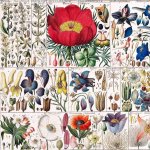


Biologist David Haskell provides pointers for how to “sit with a flower” and observe its shape, textures, and scent it as way to better connect with it and to strengthen our connection to the living world. buff.ly/COIOVqv

Flowers evolved to use scent as a long-distance communication system, releasing a stream of fragrance that insects follow upstream toward the awaiting plant buff.ly/COIOVqv

The soundscape of the natural world—bird song and the buzz of bees—is due in part to flowering plants. Some flowers even act like acoustic receivers, detecting the buzz of bees and responding by producing sweeter nectar: buff.ly/COIOVqv

Biologist David Haskell says flowering plants are more than decorative. We owe our existence to them. “There would be no humans on this planet because we evolved in the grasslands or at the edge of the African grasslands.” Take a tour of our Floral Planet: buff.ly/COIOVqv

Biologist David Haskell, author of “How Flowers Made Our World: The Story of Nature’s Revolutionaries,” describes how flowering plants transformed our world when they arrived on the scene 250 million years ago, giving rise to prairies and rainforests buff.ly/COIOVqv

“Flowers are often associated with being feminine, so in a patriarchal society, that means weak and not in charge. Whereas, if you look at the record of life on this planet, flowering plants built the habitats that we have today” – biologist David Haskell buff.ly/COIOVqv

Celebrated biologist David Haskell describes how flowering plants quickly transformed life on the planet when they arrived on the scene 250 million years ago and why nearly all life depends on flowering plants. Call it petal power! buff.ly/COIOVqv

Discover how flowering plants took over and transformed life on this planet when they arrived 250 million years ago and why there’s no such thing as a “vegetable.” If you are what you eat, part of you is probably flowers. Hear more on this week's episode: buff.ly/COIOVqv

The DUNE project will create and fire neutrinos 800 miles from Fermilab in Illinois to a detector nearly a mile underground in South Dakota, where enormous liquid-argon tanks will capture rare argon-neutrino interactions, says physicist Kate Shaw buff.ly/M01THVj

Neutrinos change identity as they travel. They oscillate among three types—electron, muon, and tau neutrinos—and can even change back again. This behavior reveals that they have mass, contrary to the Standard Model prediction of zero mass. buff.ly/M01THVj

You never feel the trillions of neutrinos that pass through your body every second, but IceCube and DUNE detectors can record interactions between these particles. Those collisions may help us understand why anything in the universe exists at all buff.ly/M01THVj

Scientists are investigating neutrinos—ghostlike particles that change identity and have tiny masses—to understand why matter, rather than antimatter, dominated the universe after the Big Bang buff.ly/M01THVj

Inside the Large Hadron Collider, scientists fire particle beams that travel close to the speed of light in the hopes of creating new fundamental particles when they collide. In 2012, they reached a smashing success. Hear more "On a Collision Course" buff.ly/M01THVj

Scientists at CERN use tools like the Large Hadron Collider to not only understand what the world is made of, but also what happened in the early days of the universe that gave rise to the world as we know it today. This week, we're "On a Collision Course" buff.ly/M01THVj

The Large Hadron Collider, the world's largest and most powerful particle accelerator, has been shut down for upgrades. But scientific research continues at CERN. We look towards the future of particle physics in this week's episode buff.ly/M01THVj

Astrophysicists like Kimberly Palladino travel deep underground in the pursuit of dark matter. "If we could just figure out what it was, we'd know what kind of matter was holding the universe together." buff.ly/M01THVj

From a few minutes after the Big Bang to 10 billion years later, dark matter has shaped our universe. But it still presents many mysteries for the physicists who study it. Learn more on this week's episode buff.ly/M01THVj

There's five times more dark matter in our universe than regular matter. Yet, it can't be seen by telescopes. We only know about it through its gravitational effects. This week, we're "On a Collision Course" buff.ly/M01THVj

The Nobel Prize in Physics celebrates the study of cosmic neutrinos, but self-styled neutrino hunters aren’t content to wait for the leptons to naturally occur. This week, we’re "On a Collision Course" buff.ly/M01THVj

A new neutrino experiment may help reveal why matter, not antimatter, fills the universe and how we came to be. Have scientists finally glimpsed the primary component of nearly all matter: dark matter? That and more on this week's episode. buff.ly/M01THVj
