

BJS Open is an #openaccess journal from @bjsurgery foundation and @BJSAcademy, featuring high-quality #surgicalresearch, Impact Factor of 4.5 (2024)
Global
Joined December 2016
- Tweets3.1K
- Following4.5K
- Followers12K
- Likes5.3K




Short-term outcomes after major lower limb amputation: meta-analysis
➡️doi.org/10.1093/bjsopen/zrag…
Decision-making regarding major lower limb amputation depends in part on expected short-term mortality. This systematic review and meta-analysis synthesized population-level studies published between 2008 and 2025 reporting in-hospital or 30-day mortality after amputation at or above the ankle. Fifty-two studies including 1 067 616 patients were analysed, only three of which originated from low- and middle-income countries. Pooled in-hospital mortality was 10.0% (95% CI 8.2 to 12.1%) and 30-day mortality 9.4% (95% CI 8.0 to 11.0%), with prediction intervals of 3.6 to 24.5% and 4.0 to 20.4% respectively. Heterogeneity was high, and prediction intervals may support shared decision-making.
👏👏👏Nick Moody, Rhiannon Nielsen, Megan Lyons, Leanne Murphy, Becky Sandford, David C Bosanquet, Kathryn Chu, Matthew Popplewell, Justine Davies
#SoMe4Surgery #MedTwitter #SurgEd #Surgery @BJSAcademy @BJSurgery #vascularsurgery #SystematicReview #MetaAnalysis #globalsurgery

Measures of physical fitness and postoperative mortality in patients with colorectal cancer: national cohort study
➡️doi.org/10.1093/bjsopen/zrag…
Measures of physical fitness are required to adjust for case mix when comparing surgical outcomes. This national cohort study compared the American Society of Anesthesiologists (ASA) grade, Eastern Cooperative Oncology Group performance status and the Secondary Care Administrative Records Frailty index for risk-adjusting 90-day postoperative mortality in 91 957 patients undergoing colorectal cancer surgery in England and Wales (2017–2022). Overall 90-day mortality was 2.8%. A model combining ASA grade and performance status performed equivalently to the full model (C-statistic 0.833 versus 0.834). Either measure alone may support risk-adjusted hospital benchmarking when only one is available.
👏👏👏Adil Rashid, Helen A Blake, Leo Watton, @cam_colorectal, Lu Han, Jan van der Meulen, Kate Walker
#SoMe4Surgery #MedTwitter #SurgEd #Surgery @BJSAcademy @BJSurgery #ColorectalSurgery #CRCSurg #colorectalcancer

Frailty assessment tools for preoperative evaluation of older adults: scoping review
➡️doi.org/10.1093/bjsopen/zrag…
The optimal approach to preoperative frailty assessment in surgery remains unclear, as the performance of available tools has been insufficiently evaluated. This scoping review, following JBI and PRISMA-ScR guidance, searched four databases from 2005 to May 2026 for studies of adults aged 65 years or older undergoing major intracavitary surgery. From 12 272 records, 160 studies evaluating 35 frailty tools were included, with 40% of tools examined in a single study. Predictive validity was most frequently assessed, whereas reliability, clinical impact and pragmatic factors were less explored. Research addressing clinical impact and tool-specific meta-analyses of performance metrics is indicated.
👏👏👏Tyler R Chesney, Camilla L Wong, Andrea C Tricco, Duminda N Wijeysundera, Marisa Louridas, Kesikan Jayaraj, Claire Sethuram, Amanda Mac, Shawn Khan, Victoria B Anthes, Madeline McDonald, Betty Yibrehu, Amanda Poxon, Anas Samman, Valerie Kim, Karim S Ladha, Teruko Kishibe, Samuel Dubé, Martine Puts, Shabbir M H Alibhai, Julian F Daza
#SoMe4Surgery #MedTwitter #SurgEd #Surgery @BJSAcademy @BJSurgery #EvidenceBasedSurgery #GeneralSurgery

Completion, publication, and outcome reporting of registered randomized trials in abdominal surgery: registry-based cohort study
➡️doi.org/10.1093/bjsopen/zrag…
Trial discontinuation, non-publication and selective outcome reporting may leave the evidence base in abdominal surgery incomplete. This registry-based cohort study followed abdominal surgery randomized trials from registration to publication, using ClinicalTrials.gov, the EU Clinical Trials Register and the International Clinical Trials Registry Platform. Of 295 eligible trials, 160 (54%) were listed as completed, and 119 of these (74%) had a corresponding publication. Completed superiority trials that added or modified primary endpoints were more likely to report P < 0.050 (OR 4.28; 95% CI 2.23 to 8.22). These findings are relevant to guideline development and meta-analysis.
👏👏👏Klaudia Narbekovas, Christoph Kuemmerli, Sandro Huegli, Jasper P Sijberden, Lukas W Widmer, Oliver Strobel, Max F Stauffer, Ethan B Ludmir, Carl-Stephan Leonhardt
#SoMe4Surgery #MedTwitter #SurgEd #Surgery @BJSAcademy @BJSurgery #EvidenceBasedSurgery #GeneralSurgery #RCT

Multimodal prehabilitation in colorectal cancer surgery: randomized clinical trial
➡️doi.org/10.1093/bjsopen/zrag…
Multidisciplinary prehabilitation has been proposed to reduce postoperative morbidity after colorectal cancer surgery, with effects possibly varying by baseline physical function. This single-centre randomized clinical trial at a Stockholm tertiary hospital allocated patients 1:1 to multidisciplinary prehabilitation or standard enhanced recovery care. Of 328 randomized patients, 242 underwent surgery and were analysed (122 intervention, 120 control). Postoperative complications occurred in 47.5% of the intervention group and 45.0% of the control group, without a significant difference. Lower weight loss and modest improvements in physical performance were observed at 30 days; exploratory analyses indicated a treatment-by-baseline-function interaction for severe complications.
👏👏👏Felix Bjerregaard, Klas Pekkari, Daniel Asklid, Claes Anderin, Karin Westberg, Richard Marsk, Ulf O Gustafsson
#SoMe4Surgery #MedTwitter #SurgEd #Surgery @BJSAcademy @BJSurgery #ColorectalSurgery #CRCSurg #prehabilitation #RCT

Multicentre parallel-group open-label non-inferiority randomized clinical trial of recooling versus no recooling after normothermic machine perfusion in liver transplantation: ARANMP-LT protocol
➡️doi.org/10.1093/bjsopen/zrag…
Liver grafts are frequently recooled before implantation after normothermic machine perfusion, although this step has never been evaluated in a randomized setting and temperature cycling may contribute to graft injury. This protocol describes ARANMP-LT, an investigator-initiated, open-label, parallel-group non-inferiority randomized clinical trial at multiple Italian centres. Adult recipients of machine-perfused deceased-donor livers will be randomized 1:1 to a portal flush with 5% albumin at 20–25°C without cold exposure or a cold preservation solution flush. The primary outcome is freedom from early allograft dysfunction within 7 days, with 170 patients planned.
👏👏👏Salvatore Gruttadauria, Roberta Vella, Fabrizio Di Francesco, Duilio Pagano, Marco Barbara, Monica Rizzo, Ivan Vella, Sergio Calamia, Alessandro Tropea, Pasquale Bonsignore, Caterina Accardo, Gaetano Burgio, Enzo Andorno, Marco Miggino, Stefania Camagni, Domenico Pinelli, Amedeo Carraro, Alex Borin, Matteo Cescon, Matteo Serenari, Umberto Cillo, Jacopo Lanari, Fabrizio Di Benedetto, Paolo Magistri, Giuseppe Maria Ettorre, Sara Ingallinella, Francesco Frongillo, Marco Maria Pascale, Davide Ghinolfi, Giulia Cirillo, Fabio Melandro, Gianluca Mennini, Francesco Tandoi, Irene Scalera, Giuseppe Tisone, Roberta Angelico, Marco Vivarelli, Federico Mocchegiani, Sergio Li Petri
#SoMe4Surgery #MedTwitter #SurgEd #Surgery @BJSAcademy @BJSurgery #protocol #RCT #livertransplant #HPBSurgery

Chyme reinfusion using The Insides® System to reduce parenteral nutrition dependence in type 2 intestinal failure: multicentre randomized clinical trial (REINFUSE)
➡️doi.org/10.1093/bjsopen/zrag…
Type 2 intestinal failure due to double enterostomy or enterocutaneous fistula entails dependence on parenteral nutrition (PN), and chyme reinfusion therapy (CRT) has not been evaluated in a randomized trial. This trial randomized 39 PN-dependent adults at 12 UK and US centres 2 : 1 to device-assisted CRT plus standard care or standard care alone. At 30 days, 8 of 26 active participants (31%) achieved a ≥ 50% PN calorie reduction versus none of 13 controls (P = 0.035; prespecified threshold P < 0.025). At 60 days, 10 active participants had ceased PN, with an acceptable safety profile.
👏👏👏Tony Milne, Simon Lal, Arun Abraham, Kirstine Farrer, Jonathan Evans, Kathryn Thomas, Carolynne Vaizey, Simon Gabe, David Layfield, Neena Randhawa, John Rogers, David F Mercer, Liran Barda, Robert E Carroll, Martin D Rosenthal, Syed-Mohammed Jafri, Chris Frampton, Dermot Burke
#SoMe4Surgery #MedTwitter #SurgEd #Surgery @BJSAcademy @BJSurgery #RCT #EvidenceBasedSurgery #IntestinalFailure

Survival impact of involvement of lymph node stations 16b1, 9, and 8a during pancreatoduodenectomy for pancreatic and periampullary cancers (PANODE): prospective multicentre study
➡️doi.org/10.1093/bjsopen/zrag…
Guidelines do not recommend routine sampling of lymph node stations (LNS) 16b1, 9, and 8a during pancreatoduodenectomy, as prospective multicentre data have been lacking. This prospective multicentre cohort study included 1218 patients undergoing pancreatoduodenectomy for pancreatic ductal adenocarcinoma (n = 673), distal cholangiocarcinoma, ampullary cancer, or duodenal cancer between 2015 and 2020. LNS 16b1 involvement was associated with worse overall survival across all four diagnoses, with an adjusted hazard ratio of 2.33 (95% c.i. 1.62 to 3.35) in pancreatic ductal adenocarcinoma. The authors propose that future studies assess routine preoperative and intraoperative LNS 16b1 sampling.
👏👏👏J Annelie Suurmeijer, Bobby K Pranger, Leonard W F Seelen, Mahsoem Ali, L Bengt van Rijssen, Dorine S Tseng, Tara M Mackay, Jacob L van Dam, Hjalmar C van Santvoort, Bas Groot Koerkamp, Arantza Farina Sarasqueta, Casper H van Eijck, Mike S L Liem, Geert Kazemier, Vincent B Nieuwenhuijs, Ignace H de Hingh, Joost M Klaase, Joris I Erdmann, Olivier R Busch, I Quintus Molenaar, Vincent E de Meijer, @MarcBesselink , on behalf of the Dutch Pancreatic Cancer Group
#SoMe4Surgery #MedTwitter #SurgEd #Surgery @BJSAcademy @BJSurgery #HPBSurgery #PancreaticSurgery #PancreaticCancer #SurgicalOncology

Early inflammatory signal in late-diagnosed anastomotic leakage after anterior resection
➡️doi.org/10.1093/bjsopen/zrag…
Anastomotic leakage after anterior resection for rectal cancer is frequently diagnosed late, and it has been suggested that such leaks may have been present but undetected earlier. This research letter reports a post hoc exploratory analysis of a retrospective multicentre cohort of 1118 patients from 11 Swedish centres, comparing maximum C-reactive protein within 14 days after surgery by timing of leakage. Median maximum values were 108.5 mg/L without leakage, 270 mg/L with early leakage, and 167.5 mg/L with late leakage. Late-diagnosed leaks were associated with an early inflammatory signal.
👏👏👏Martin Rutegård, Josefin Segelman, Peter Matthiessen, Marie-Louise Lydrup, Jennifer Parkon behalf of the RectoLeak Study Group
#SoMe4Surgery #MedTwitter #SurgEd #Surgery @BJSAcademy @BJSurgery #ColorectalSurgery #CRCSurg #colorectalcancer

Rationale and design of the SENTRY trial: sentinel node and organ-preserving surgery versus segmental resection in stage I colon cancer
➡️doi.org/10.1093/bjsopen/zrag…
Early-stage colon cancer is increasingly managed by local resection, after which histopathological risk factors determine whether segmental resection follows, often in patients without lymph node metastases. This research letter describes the rationale and design of SENTRY, a prospective, multicentre, partially randomised patient preference trial in the Netherlands comparing sentinel node and organ-preserving surgery, using indocyanine green and colonoscopy-assisted laparoscopic wedge resection, with segmental resection in stage I colon cancer. The primary outcome is 3-year overall recurrence, with a feasibility phase of 40 patients preceding the main non-inferiority phase.
👏👏👏Bart C T van de Laar, Daan J Sikkenk, Pieter J Tanis, Paul M Verheijen, Matthijs P Schwartz, Halil Akol, René Arensman, Frank J Voskens, Leon M G Moons, Wouter H de Vos tot Nederveen Cappel, Henderik L van Westreenen, Wouter B Nagengast, Esther C J Consten
#SoMe4Surgery #MedTwitter #SurgEd #Surgery @BJSAcademy @BJSurgery #ColorectalSurgery #CRCSurg #colorectalcancer #protocol #MinimallyInvasive

Revisiting lymphatic dissemination in gastric cancer: insights from a large Western multicentre cohort
➡️doi.org/10.1093/bjsopen/zrag…
This invited commentary discusses a Western multicentre retrospective cohort study of 950 patients from five European centres that examined patterns of lymph node spread in gastric cancer. The commentary considers whether nodal dissemination in Western patients follows the Eastern pattern, in the context of growing interest in less extensive gastrectomy. Diffuse and mixed histological subtypes were associated with nearly twice the incidence of nodal metastasis of intestinal-type tumours, and microsatellite-unstable tumours showed lower nodal involvement. The authors emphasise accurate specimen dissection and suggest that fluorescence-guided surgery may improve nodal assessment.
👏👏👏Marcus Fernando Kodama Pertille Ramos, Rubén Aguilar Zapag, Carlos García Carrasco
#SoMe4Surgery #MedTwitter #SurgEd #Surgery @BJSAcademy @BJSurgery #UpperGISurgery #GastricCancer #GISurg #SurgicalOncology

Long-term oncological outcomes after nipple-sparing mastectomy and implant-based immediate breast reconstruction in a population-based cohort of breast cancer patients
➡️doi.org/10.1093/bjsopen/zrag…
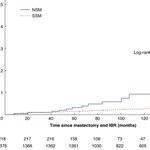
The oncological safety of nipple-sparing mastectomy (NSM) relative to skin-sparing mastectomy (SSM) remains debated. This population-based cohort study of 1537 women (1594 breasts) with breast cancer undergoing implant-based immediate reconstruction in Stockholm between 2005 and 2015 compared recurrence and survival after NSM (218 breasts) and SSM (1376 breasts). The 12-year cumulative incidence of local recurrence was 14.1% after NSM and 3.7% after SSM (adjusted HR 2.08, 95% c.i. 1.01 to 4.28), while overall survival did not differ significantly. These findings bear on patient selection for nipple preservation; the contribution of residual breast glandular tissue requires further study.
👏👏👏Helena Sackey, Ira Oikonomou, Yihang Liu, Axel Frisell, Hannah Coudé Adam, Dhirar Ansarei, Martin Halle, Anna L V Johansson, Jana de Boniface
#SoMe4Surgery #MedTwitter #SurgEd #Surgery @BJSAcademy @BJSurgery #BreastSurgery #BreastCancer #OncoPlastic #BreastReconstruction

Elective cholecystectomy benchmarks: nationwide registry study
➡️doi.org/10.1093/bjsopen/zrag…
Standardised benchmarks for elective laparoscopic cholecystectomy remain lacking. This registry-based study applies the Achievable Benchmark of Care methodology to 48 564 patients undergoing primary elective laparoscopic cholecystectomy across 81 Swedish surgical facilities between 2015 and 2023. The benchmark for severe postoperative complications (Clavien–Dindo ≥ III) was 1.0%, compared with an observed rate of 1.7%, and the benchmark for serious intraoperative adverse events was 0.2%, compared with 0.5%. ASA class ≥ III, previous abdominal surgery, and altered gallbladder morphology were independently associated with severe complications. These benchmarks may serve as reference values for facility self-audit.
👏👏👏Ebba Kihlstedt Pasquier, Ellen Andersson, Johanna Österberg, Per Sandström, Bergthor Björnsson
#SoMe4Surgery #MedTwitter #SurgEd #Surgery @BJSAcademy @BJSurgery #HPBSurgery #GeneralSurgery #Laparoscopy #QualityImprovement

BJS Open retweeted

Restorative resection in robot-assisted versuslaparoscopic total mesorectal excision: systematic review and meta-analysis
➡️ doi.org/10.1093/bjs/znag106
R-TME is associated with a higher likelihood of primary anastomosis formation while maintaining a comparable safety profile
The more pronounced effect in recent studies likely reflects increasing surgical expertise
Work by Charlotte M S Genders , Jory Wentink , Ritch T J Geitenbeek , Roel Hompes , Jasper B van Praagh , Esther C J Consten
#SoMe4Surgery #MedTwitter #SurgEd #Surgery @RCPSGTrainees @aecirujanos @SEIQuirurgica @iss_sic #MedicalTechniques @BJSAcademy @young_bjs @BJSOpen @evanscolorectal @robhinchliffe1 @bplwijn @MalinASund @nfmkok @TejedorPat @paulo_sutt @PVaughanShaw @JJEarnshaw @juliomayol @ksoreide #colorectalsurgery #StepUp4CRC @FightCRC @ACPGBI #ERAS @dice_europe #Crohn #proctology @Dukes_Club @ACPGBI_EduTrain @AECP_FAECP @PelvExGroup @escp_tweets @YouESCP #TeachMeColoproctology
#Some4COLoprocto

BJS Open retweeted
Standard reporting on duodenal stump leakage after gastric cancer resections: multicentre analysis from the GASTRODATA Study Group (the STARDUST study)
➡️ doi.org/10.1093/bjs/znag105
Postoperative DSL was uncommon (2.6%), but it was associated with a 90-day mortality rate of 17.2%, which varied according to the severity of the clinical presentation and the invasiveness of the treatment
Preoperative weight loss, unreinforced duodenal stump, Billroth II reconstruction, and postoperative blood transfusion were prognostic factors associated with complication occurrence.
Work by Mattia Molteni , Francesco Puccetti , Gian Luca Baiocchi , Guillaume Piessen , William Allum , Andrew Davies , Arnulf Hoelscher , Ines Gockel , Daniel Reim , Paolo Morgagni , Uberto Fumagalli Romario , Domenico D’Ugo , Rossella Reddavid , Giovanni De Manzoni , Johanna van Sandick , Suzanne Gisbertz , Bas Wijnhoven , Wojciech Polkowski , Piotr Kołodziejczyk , Wojciech Kielan , Paulo Matos da Costa , Lucio Lara Santos , Manuel Pera , Stefan Moenig , Paul M Schneider , Christian A Gutschow , Ugo Elmore , Riccardo Rosati , Other Members of the GASTRODATA Study Group
#SoMe4Surgery #MedTwitter #SurgEd #Surgery @RCPSGTrainees @aecirujanos @SEIQuirurgica @iss_sic #MedicalTechniques @BJSAcademy @young_bjs @BJSOpen @evanscolorectal @robhinchliffe1 @bplwijn @MalinASund @nfmkok @TejedorPat @paulo_sutt @PVaughanShaw @JJEarnshaw @juliomayol @ksoreide #some4UGI #uppergi #esophagealcancer #gastriccancer #reflux @ISDE_net @Augishealth @roux_group @T4UGIS @SARONG_Trial @YoungIFSO #bariatricsurgery

The iBRA-NET localization study: international IDEAL 2a/2b multicentre cohort study comparing the safety and effectiveness of wire- and radar-guided localization for impalpable breast lesions
➡️doi.org/10.1093/bjsopen/zrag…
Wire-guided localization, the historical standard for impalpable breast lesions, carries logistical constraints and a risk of preoperative dislodgement. This IDEAL 2a/2b multicentre platform cohort study compares SCOUT® radar-guided localization (979 eligible patients, 27 units, 2021–2024) with a historical wire-guided cohort (1170 patients). Index lesion identification was 95.2% with radar and 99.1% with wire (P = 0.001); after excluding neoadjuvant chemotherapy, rates were 99.6% and 98.9% (P = 0.114). Positive margins were 9.0% versus 15.0% (P < 0.001), with similar re-excision rates, and operations started earlier with radar localization. The authors conclude radar localization is a safe, effective technique.
👏👏👏Rajiv V Dave, Jenna Morgan, Simon Lowes, Robert Milligan, Rachel Foster, Emma Barrett, Amtul R Carmichael, Suzanne Elgammal, Edward St. John, Chris Holcombe, Yazan Masannat, Shelley Potter, Suzanne Krizak, Vidya Raghavan, James Harvey, on behalf of the iBRA-NET Localisation Study collaborative
#SoMe4Surgery #MedTwitter #SurgEd #Surgery @BJSAcademy @BJSurgery #BreastSurgery #BreastCancer #OncoPlastic

Association between preoperative physical exercise and the risk of postoperative venous thromboembolism: nationwide population-based cohort study
➡️doi.org/10.1093/bjsopen/zrag…
Preoperative exercise is promoted within prehabilitation programmes, yet the association between habitual exercise and postoperative venous thromboembolism (VTE) remains unclear. This nationwide population-based cohort study analyses 118 340 adults who underwent surgery and preoperative health screening in the Korean National Health Insurance Service–National Sample Cohort (2009–2016). Self-reported preoperative exercise was associated with a lower risk of postoperative VTE (adjusted odds ratio [aOR] 0.69, 95% c.i. 0.49–0.99), with the lowest risk among patients exercising three or more times per week (aOR 0.66, 95% c.i. 0.45–0.96). These findings identify exercise frequency as a modifiable factor associated with VTE risk.
👏👏👏Chan-Sik Kim, Bumwoo Park, Hyeong-Seok Yoon, Ji-Hoon Sim
#SoMe4Surgery #MedTwitter #SurgEd #Surgery @BJSAcademy @BJSurgery #Prehabilitation #VenousThromboembolism #PerioperativeCare #GeneralSurgery

Outpatient non-operative treatment of uncomplicated acute appendicitis: meta-analysis ➡️doi.org/10.1093/bjsopen/zrag…
Antibiotic-first treatment is an accepted option for selected patients with imaging-confirmed uncomplicated acute appendicitis, yet the need for hospital admission remains uncertain. This systematic review and meta-analysis of three comparative studies (1064 patients; 502 outpatient, 562 in-hospital) found that outpatient management was associated with a lower 30-day appendicectomy rate (OR 0.52, 95% c.i. 0.36 to 0.76), with similar overall complications and unplanned healthcare use. Certainty of evidence was low to very low. Outpatient antibiotic treatment may be feasible in appropriately selected patients within structured pathways offering prompt reassessment.
👏👏👏Mauro Podda, Adolfo Pisanu, Fausto Catena, Marco Ceresoli
#SoMe4Surgery #MedTwitter #SurgEd #Surgery @BJSAcademy @BJSurgery #EmergencySurgery #AcuteCare #Appendicitis #SystematicReview #MetaAnalysis

Methodological challenges in surgical randomized trials: systematic review of rectal cancer studies
➡️doi.org/10.1093/bjsopen/zrag…
Surgical randomized clinical trials have structural features that may complicate appraisal with standard frameworks. This methodological systematic review used rectal cancer surgery as a high-complexity exemplar: of 1529 records, 45 publications reporting on 35 trials were included and classified into five surgical trial categories. Surgically specific challenges were most frequent in RoB 2 domains D2 (deviations from intended interventions) and D4 (outcome measurement), and in GRADE indirectness. These challenges appear to reflect structural features of surgical trial design rather than obvious methodological shortcomings; contextualized appraisal may inform future trial design and evidence synthesis.
👏👏👏Daichi Kitaguchi, Mariano Giménez, Antonello Forgione, Tatsuya Oda, Jacques Marescaux
#SoMe4Surgery #MedTwitter #SurgEd #Surgery @BJSAcademy @BJSurgery #ColorectalSurgery #RectalCancer #CRCSurg #SystematicReview #EvidenceBasedSurgery

Costs and health burden of surgical site infections and anastomotic leakage in major abdominal surgery
➡️doi.org/10.1093/bjsopen/zrag…
Prospective data on the societal costs of surgical site infection (SSI), including anastomotic leakage, remain limited. This secondary analysis of the multicentre EPO2CH randomized trial evaluated costs and quality of life within 90 days in 1119 patients undergoing elective abdominal surgery. SSI was associated with higher mean total costs (€53 562 versus €23 969; difference €29 592), with the greatest difference observed for anastomotic leakage (€56 401). SSI was also associated with a mean loss of 0.035 quality-adjusted life-years, corresponding to 12.78 days in perfect health. These estimates may inform resource allocation for SSI prevention.
👏👏👏Nathan Bontekoning, Hannah Groenen, Stijn W de Jonge, Markus W Hollmann, Marja A Boermeester, Marcel G W Dijkgraaf, Niels Wolfhagen, on behalf of the EPO2CH Study Group #SoMe4Surgery #MedTwitter #SurgEd #Surgery @BJSAcademy @BJSurgery #SurgicalSiteInfection #AnastomoticLeak #HealthEconomics #GeneralSurgery
