

Editorial Strategist | Storyteller | Researcher Head of Content Strategy & Media Relations @AlphaWireHQ CCN | Cointelegraph | Data Science | Crypto & Fintech
England, United Kingdom
Joined July 2014
- Tweets14.6K
- Following27.8K
- Followers33K
- Likes1.1K


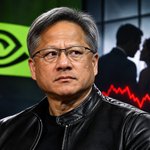





BREAKING: 🚨 Nvidia co-founder Jensen Huang and his wife transferred over $10.5 billion in $NVDA shares to a family trust for their heirs just eight months before he resigned as CEO.
SEC filings confirm the transfer of nearly 59 million shares in March 2026 as part of a decade-long estate planning strategy.
62
Dr. Guneet K retweeted

The first debate of the day, moderated by the main man himself @SeemoreCrypto 🔥

A different kind of Monday in London! 🇬🇧
We’re on the ground at Zebu Live Arms 2026, presented by @AlphaWireHQ, bringing together some of the brightest minds in crypto for conversations that go beyond the headlines.
Stay tuned for exclusive insights, interviews and more!
#ZebuLive #AlphaWire #Crypto #Breakpoint2026


Dr. Guneet K retweeted
🇬🇧 LESS THAN 24 HOURS TO GO!
Tomorrow, AlphaWire and @Zebu_Live take over a British pub for one of Solana Breakpoint's exclusive side events.
📍 Bush Tavern, London
📅 Monday, 16 November (11 AM – 9 PM)
Bringing together traders, market makers, founders and industry leaders for a full day of networking, debates, food and drinks.
Invite-only, limited capacity: luma.com/jzlkn59s


🚨 RWA protocol stUSDT is shutting down after its TVL plunged from $2.3 billion to just $8.6 million — a decline of over 99%.
Interest accrual has ended, and tokenholders have until May 14, 2027, to redeem their assets through the official portal.
No reason for the shutdown was disclosed.
🚨 Nvidia investors are pushing for Jensen Huang’s return as CEO following his reported resignation.
Supporters credit Huang with Nvidia’s AI dominance, CUDA innovation and strategic partnerships.
With $NVDA under pressure, calls for his reinstatement are growing.
Dr. Guneet K retweeted

A letter arrives at your home warning you that the hardware crypto wallet you bought has a security flaw. It has your real name and order details. The warning is fake.
That’s the scam hardware wallet maker SafePal confirmed on Nov. 12 after an Aug. 2026 breach exposed order records for nearly 40K customers.
The breach didn’t expose recovery phrases. The letters used a QR code to send recipients to a fake site and trick them into handing theirs over.
In my latest piece for @AlphaWireHQ, I look at 3 things.
📬 Why scammers pay for postage when phishing emails are nearly free
🔐 What to do if you’ve entered your recovery phrase on a fake site
📦 Why old shipping records can put crypto holders at risk years after a breach
Read the full story 👇
alphawire.xyz/news/crypto-ec…

Step 9: Change your X bio to "Long-Term Investor."
Step 10: Start posting about patience and conviction.
Step 11: Tell everyone "I'm here for the technology."
Step 12: Repeat with your next paycheck.
Be honest. At which step are you right now? 😂
8
Dr. Guneet K retweeted

The doors are open on Monday, and here's who's stepping up to the bar at the Bush Tavern🍻
Speakers for Zebu Live Arms, presented by @AlphaWireHQ 👇


Step 4: Watch it pump 300%.
Step 5: Screenshot your $400 portfolio.
Step 6: Tell your friends you're retiring at 30.
Step 7: Refuse to sell because "this is just the beginning."
Step 8: Wake up to -94%.
But here's the best part 👇
14
Jensen Huang just walked away from Nvidia after 33 years. But how much money is he actually losing?
The numbers are staggering.
Huang, who co-founded Nvidia in 1993 and transformed it into an AI powerhouse, has resigned as CEO following a controversy surrounding his personal relationships.
And his departure comes with a significant financial cost.
Here's the breakdown:
💰 Estimated net worth: $138.4 billion
💸 Unvested equity reportedly forfeited: $108 million
📉 Wealth erased following Nvidia's stock decline: More than $6 billion
💵 Fiscal 2026 total compensation: $36.34 million
📊 Nvidia voting stake: Approximately 3.5%
Here's what makes these figures fascinating.
The $108 million in forfeited equity represents just 0.08% of Huang's estimated fortune.
Imagine losing $108 million and still remaining worth more than $138 billion.
Unlike many corporate executives, Huang's wealth is overwhelmingly tied to the company he built. Nvidia shares account for approximately 97% of his fortune.
And despite his departure, those existing holdings don't simply disappear.
But what about severance pay?
Nvidia has not disclosed any severance package for Huang. Its executive compensation disclosures indicate that the company does not maintain traditional severance agreements with its top executives.
That means the reported $108 million is equity compensation being forfeited, not a severance payment.
There's a bigger story here.
Huang spent over three decades building one of the most influential companies in modern technology. Yet his departure demonstrates how quickly leadership, reputation and personal wealth can become entangled.
The question isn't whether Jensen Huang will remain extraordinarily wealthy. He almost certainly will.
The real question is whether losing control of the company he spent 33 years building is a greater loss than any amount of money.
What matters more to a billionaire founder: financial wealth, personal reputation or the company they built?
2
204
Jensen Huang Built an AI Empire: Should His Personal Life Overshadow 33 Years of Achievements?
Jensen Huang spent 33 years building #Nvidia into an #AI powerhouse. Could allegations about his personal life overshadow everything he achieved?
Consider his legacy:
• 1993: Co-founded Nvidia, betting on accelerated computing long before it became mainstream.
• 1999: Helped pioneer the GPU, transforming computer graphics and gaming.
• 2006: Introduced CUDA, opening GPU computing to researchers and laying the groundwork for modern AI.
• 2012: Nvidia GPUs powered the AlexNet breakthrough, helping accelerate the deep learning revolution.
• 2018: Advanced real-time ray tracing through Nvidia RTX.
• 2020s: Positioned Nvidia at the center of the generative AI boom, making its technology critical infrastructure for companies building advanced AI systems.
Huang didn't just build a successful company. He helped shape the technology behind an entire industry.
Yet, on November 12, 2026, Nvidia announced his departure as CEO and board member following reports of multiple extramarital relationships, including allegations involving a woman (previously) suspected by US intelligence of connections to China.
The allegations have raised questions about corporate governance, judgment and potential national security risks. Nvidia has said it has no reason to believe company secrets or national security were compromised.
Colette Kress has now taken over as interim CEO, bringing Huang's 33-year leadership tenure to an abrupt end.
But here's the bigger question:
Should a leader's personal relationships influence how we judge their professional achievements?
There is a difference between private misconduct and conduct that creates conflicts of interest, compromises professional judgment or exposes an organization to security risks.
A person's achievements don't disappear because of a scandal. Equally, extraordinary professional success shouldn't place anyone beyond accountability.
Huang's contributions to AI are undeniable. The questions surrounding his departure deserve serious examination.
Can we separate the visionary from the individual? Or does leadership require accountability both inside and outside the boardroom?
What do you think?

172
Being a crypto expert in 2015:
- Understand blockchain
- Read whitepapers
- Learn how Bitcoin works
- Spend years studying markets
Being a crypto expert in 2026:
1
254
Being a crypto expert in 2026:
- Buy a microphone
- Put "Crypto Analyst" in your bio
- Predict Bitcoin to $200K
- Delete the tweet when BTC crashes
- Post "I warned you" after the crash
- Launch a paid Telegram group
- Call every losing trade "a long-term hold"
Repeat until someone invites you on a podcast.
99
Meet Jensen Huang: The engineer who turned a startup into one of the most influential technology companies in the world.
Huang co-founded in 1993 alongside Chris Malachowsky and Curtis Priem, serving as its CEO for more than three decades.
An electrical engineer with degrees from Oregon State University and Stanford University, he helped transform NVIDIA from a graphics chipmaker into a global powerhouse in GPUs, accelerated computing and artificial intelligence.
Under his leadership, NVIDIA developed technologies such as GeForce GPUs and CUDA, helping reshape gaming, scientific computing, cryptocurrency mining and the AI industry.
His biggest achievement was positioning NVIDIA at the centre of the global #AI boom, making its chips essential infrastructure for the development and deployment of modern AI models.
After 33 years at the helm, Jensen Huang has resigned as NVIDIA's CEO, president and board member, effective immediately.

🚨 BREAKING: Hackers have hijacked 4,837 #GitHub accounts to steal credentials across more than 61,000 repositories.
The campaign is particularly dangerous because attackers are using legitimate developer accounts rather than exploiting GitHub itself.
Here's how it works:
Attackers use stolen GitHub tokens to open seemingly harmless pull requests from a branch called wfx-docs.
Once write access is confirmed, they inject malicious code into CI/CD workflows.
The malware harvests GitHub Actions secrets, cloud credentials, API keys and other sensitive data.
Attackers then revert their changes and delete workflow logs to cover their tracks.
At least 1,806 repositories have executed the credential-stealing payload.
Even more concerning, the malware can target AWS, Azure and Google Cloud credentials, potentially giving attackers access far beyond the compromised repositories.
How to check if you're affected:
Look for:
Pull requests titled docs: dependency audit notes
A branch named wfx-docs
Suspicious commits such as ci: refresh build cache
The campaign began on November 10, with security researchers warning that deleted logs can make detection difficult.
The bigger lesson? Your software supply chain can be compromised without hackers ever breaking into your infrastructure directly.
Sometimes, they simply borrow a developer's identity.

3
171
Everyone is asking what would happen if Jensen Huang left #NVIDIA .
But here's the question nobody seems to be asking:
Who would benefit the MOST from his departure?
Because in a trillion-dollar AI race, one man's exit could change everything.


🚨 BREAKING: MSCI IS DROPPING MICHAEL SAYLOR'S STRATEGY FROM ITS GLOBAL INDEXES.
This is bigger than an #MSTR stock sell-off. It raises a fundamental question about how traditional finance classifies companies that hold Bitcoin as their primary treasury asset.
Here's what happened and why it matters. 🧵
1/ Why did MSCI remove Strategy?
MSCI has decided that Strategy and certain other companies resemble investment funds rather than operating businesses.
Its new eligibility rules target companies whose balance sheets are dominated by non-operating assets.
Strategy's massive Bitcoin holdings put it in the firing line.
2/ What happens next?
MSCI will remove #Strategy from its MSCI USA and MSCI World indexes effective December 1.
Funds that passively track these indexes will have to adjust their portfolios and sell their MSTR holdings.
JPMorgan previously estimated potential outflows of $2.8 billion under an earlier proposal.
3/ Could this trigger a bigger problem?
Potentially.
Strategy's Bitcoin model relies heavily on raising capital through equity and debt to purchase more $BTC.
If index exclusion reduces institutional demand, future share issuance could become more difficult or expensive.
And that could weaken the financial engine behind Saylor's Bitcoin accumulation strategy.
4/ But Michael Saylor has faced a corporate crisis before.
One important historical correction: MicroStrategy's defining crisis came during the 2000 dot-com crash, not the 2008 financial crisis.
In March 2000, the company restated its financial results following accounting problems. Its stock plunged from around $260 to $86 in a single session.
Saylor's personal fortune reportedly lost more than $6 billion in one day.
5/ What about the 2008 financial crisis?
MicroStrategy was still a software business at the time, not a Bitcoin treasury company.
Its business intelligence software operations survived the global financial crisis. In 2009, revenue reached $377.8 million, up 5% from 2008, while operating income increased from $67.8 million to $86.3 million.
That was a very different business model from today's Strategy.
6/ The real question is whether history repeats itself.
In 2000, Saylor had to rebuild a software company after a devastating collapse.
Today, he has built a financial model around Bitcoin, using capital markets to expand one of the world's largest corporate BTC treasuries.
The risks are different, but the underlying challenge is familiar: can the company sustain its model when market confidence weakens?
7/ This is not the end of Strategy.
MSCI exclusion does not mean Nasdaq delisting, forced Bitcoin liquidation or an immediate balance-sheet crisis.
But it is a warning that traditional financial institutions are still debating whether Bitcoin treasury companies belong in conventional equity indexes.
And that debate could affect the entire digital asset treasury industry.
The bigger test for Saylor may not be how much Bitcoin he can buy during a bull market, but how resilient his model proves to be when capital becomes harder to access.
🚨 Strategy ($MSTR) is facing one of its biggest tests yet. And the MSCI decision could have implications far beyond Michael Saylor.
MSCI is set to publish its November index review tonight, with Strategy potentially facing exclusion under its new rules for non-operating companies.
The stakes are significant.
JPMorgan previously estimated that exclusion could trigger up to $2.8 billion in passive fund outflows.
But here's the bigger question:
If a company holding billions in Bitcoin can be classified as an investment vehicle rather than an operating business, what does that mean for the future of corporate Bitcoin treasuries?
This isn't just about MSTR losing index exposure.
It's about whether traditional financial benchmarks are ready to recognise Bitcoin treasury companies as a legitimate corporate model.
And that debate could shape the next chapter of institutional Bitcoin adoption.
All eyes on MSCI tonight. 👀


2
284