

A Research Laboratory (PI: Christos Katsanos, PhD) addressing a Grand Challenge: Make Exercise a Sustainable Habit. Our focus is on the Biology of the Brain.
Tempe, Arizona
Joined January 2020
- Tweets110
- Following6
- Followers50
- Likes15


Pinned Tweet
As once said “Exercise starts and ends in the brain” (doi.org/10.1007/s00421-003-0…) – a reminder that we need to understand the inner workings of the human brain as it relates to voluntary exercise to increase everyday exercise or spontaneous physical activity!
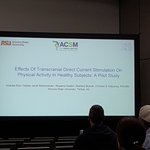
Two years of research finally on display at #ACSM2022. Congratulations Anaissa!
#brainandexercise
#biologyofexercisebehavior

Great job in summarizing of what we know so far about the role of #dopamine in regulating #motivation for #physicalactivity and #exercise
Congratulations Anaissa! #brainandexercise
#biologyofexercisebehavior @asuSOLS
You’re unable to view this post because this account owner limits who can view their posts. Learn more
Interesting findings showing that #cannabis use is associated with greater engagement in #physicalactivity
#brainandexercise
#biologyofexercisebehavior
This post is from an account that no longer exists. Learn more
Making regular exercise a priority can improve performance at work.
health.usnews.com/wellness/f…
#brainandexercise
#biologyofexercisebehavior
Physicians are in unique position to increase #motivation and #habit formation for #physicalactivity. They need, however, to first have the motivation and form the habit to promote physical activity.
#brainandexercise
#biologyofexercisebehavior

🚨 Check out the work of this team of SCAPPS scholars – McFadden et al., (2020). Demographic differences in Canadian medical students’ motivation and confidence to promote physical activity. Family practice, 37(1), 56-62 🚨•
•
•
•
#exerciseismedicine

Research in @JCI_insight shows that desire for voluntary #exercise is linked inversely to #caloricintake and both may be credited to a single gene!
#brainandexercise
#biologyofexercisebehavior

The gene Prkar2a, is highly expressed in the habenula, a tiny brain region involved in responses to pain, stress, anxiety, sleep and reward. It is suggested that Prkar2a controls the craving for fatty and sugary foods and the desire to exercise.
nichd.nih.gov/newsroom/news/…
A nice discussion in this article showing that "Choosing the less active option is hard wired in the genes; this explains why being sedentary is so common, and why reversing it is so difficult".
#brainandexercise
#biologyofexercisebehavior

An Evolutionary Perspective on Sedentary Behavior - PubMed - sounds like we evolved to prefer sitting around but could rarely get away with it. pubmed.ncbi.nlm.nih.gov/3183…

Although majority of Americans believe exercise to be the primary lifestyle factor impacting their health, more than 2/3 of Americans indicate they just don’t have enough time to exercise. nypost.com/2019/10/23/why-th… via @nypost
1
Early Life Stress and the Onset of Obesity: Proof of MicroRNAs’ Involvement Through Modulation of Serotonin and Dopamine Systems’ Homeostasis frontiersin.org/article/10.3…
Genetics linked to #dopamine signaling determine #physicalactivity #behavior in older individuals.
#brainandexercise
#biologyofexercisebehavior
This post is from an account that no longer exists. Learn more

“In this study (of individuals 60 and older), current cannabis use was associated with lower BMI and more exercise behavior in healthy older adults wishing to increase their physical activity.”
buff.ly/2WdWMNt

1
Interesting link between #inflammation and #motivation for/voluntary #exercise....
#biologyofexercisebehavior

This important rodent study showed how inflammatory signaling alters the motivation to exercise (and also shortens the time to fatigue during maximal exercise). It is evidence linking the inflammation that occurs after muscle-damaging exercise with CNS fatigue.

1
This is an excellent observation! Getting started is the hard part... mentally, it gets easier to finish up and somewhere along the run....
You’re unable to view this post because this account owner limits who can view their posts. Learn more
2


This is an interesting take from Dr. Noakes about fatigue and how it impacts exercise/sports behavior.

Fatigue is a Brain-Derived Emotion that Regulates the Exercise Behavior to Ensure the Protection of Whole Body Homeostasis frontiersin.org/article/10.3…
Great job!
You’re unable to view this post because this account owner limits who can view their posts. Learn more
1
1
Interesting #research showing that growth restriction during lactation in an animal model reduces #physicalactivity by reducing the central drive to be #physicallyactive.
#biologyofexercisebehavior

The Effect of Growth Restriction on Voluntary Physical Activity Engagement in Mice by Leszczynski and colleagues: ow.ly/iyow50wOQpm

1
Look forward to the results of this nicely-designed trial on the effects of transcranial direct current stimulation (#tDCS) on #exercise performance and associated #cognitive function.
#biologyofexercisebehavior

Effect of transcranial direct current stimulation on sports performance for two profiles of athletes (power and endurance) (COMPETE): a protocol for a randomised, crossover, double blind, controlled exploratory #trial trialsjournal.biomedcentral.…
#Exercise addiction ranges between 5% and 8.1% among exercisers. Would be interesting to see what clues can get to enhance exercise behavior among non-exercisers by investigating the #brain of exercise-addicted individuals…..
#biologyofexercisebehavior
This post is from an account that no longer exists. Learn more
1