

Braniff Airways, Inc., is the official page for Braniff Airways, Incorporated, d/b/a Braniff International. The World’s Most Colorful Airline.
Dallas, Texas
Joined March 2013
- Tweets7K
- Following467
- Followers2.2K
- Likes1.1K
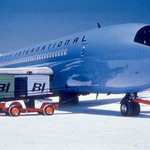


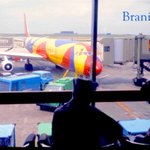


BRANIFF HISTORY TODAY - On this day, Friday, November 5, 1965, Braniff International welcomed a large contingent of invited guests and press from across nation to the Airline's Dallas, Texas, home base. The next day, Braniff unveiled the most dramatic image overhaul in the history of commercial aviation. Every corner of Braniff was redesigned to create the ultimate airline experience for its passengers. Special emphasis was placed on perfecting inflight service and cuisine and ensuring that the Braniff experience was the best in the industry.
Festivities in Dallas, Texas, began on Friday, November 5, 1965, at the Marriott Motor Hotel with the arrival of the press and special guests. Special Press and Hospitality Rooms were set up at the luxury hotel. The nation's press was well represented and included wire services, newspaper, radio, television stations and networks, and national trade and consumer magazines reporters. Braniff also set up a special registration desk to ensure that every guest was personally cared for and enjoyed the event.
Braniff President Harding L. Lawrence kicked off the events on Saturday morning by hosting a breakfast at the hotel where he outlined his plans for the new Braniff. The group then boarded buses and were taken to the Love Field Terminal where they were treated to the new Alexander Girard designs that would be implemented in all Braniff facilities. Alexander Girard was on hand to explain the new concepts. The group then proceeded to the 7701 Lemmon Avenue and the Dallas Operations and Maintenance Base to take their place on the viewing stand. Earlier in July 1965, Haute Couturier Emilio Pucci unveiled a magnificent new uniform collection called Gemini IV for Braniff's customer contact personnel. The uniforms were the perfect addition to the End of the Plain Plane Campaign.
Photo: New Mexico Architect and Herman Miller Designer Alexander "Sandro" Hayden Girard redesigned 17543 items for Braniff International's new End of the Plain Plane Campaign including this colorful scheme for Braniff International Boeing 720-027 Super Jet registered as N7076 and the equally colorful ground service equipment. Initially, eight new colors were selected by Mr. Girard, Mary Wells of Jack Tinker and Partners, Braniff's New York City think-tank advertising agency, and Braniff's Engineering and Maintenance Department. However, Periwinkle Blue or Lavender with black cockpit glare shield, was discontinued in late summer of 1965, before it was debuted to the public. Braniff was made aware that a purple and black jet was a symbol of sadness and death in South America and Mexico, which were Braniff's two main international destinations. The original Alexander Girard paint chips are housed in the Braniff International Heritage Archives in Dallas, Texas.
Braniff Airways Foundation
Copyright 1926 2026
Photo: Braniff Airways, Incorporated, Copyright
Braniff International Heritage Archives
Now Associated with The University of Texas at Dallas System
Braniff Airways Space Sciences Endowment
braniffinternational.com
braniffboutique.com
flybraniff.com
braniffinternationalhotels.c…

BRANIFF HISTORY TODAY - On this day, Wednesday, November 5, 1947, Braniff Airways, Incorporated, began the Airline's first service using its new Douglas DC-6 Skyliner four-engine airliners. The big 300 mile-per-hour DC-6 began daily round trip flights from both Houston and San Antonio to Chicago Midway Airport, which were made in less than five hours.
Once again, Braniff linked the Great Lakes to the Gulf Coast with the newest airliners that were operated between five cities on the Dallas-based Airline’s route system. In addition to Houston, San Antonio and Chicago, the DC-6 flights also stopped at Dallas Love Field and Kansas City Municipal Airport over the new Skyliner routes offering 52-passengers the finest inflight cuisine and comfort high above the clouds.
Six new DC-6 aircraft delivered to Braniff made four daily trips between Dallas and Chicago, Dallas and San Antonio and Dallas and Houston. Houston and San Antonio DC-6 flights were either single-plane service or they connected with the DC-6 at Dallas for the nonstop flight to Chicago that departed Dallas just before 7PM and arrived in Chicago just before 10PM. Southbound service included a nonstop that departed Chicago Midway at 4PM and arrived in Dallas just before 730PM. An additional flight operated with a stop at Kansas City, which was the first ever DC-6 service for the Missouri city.
On August 25, 1947, Braniff Airways, Incorporated, doing business as Braniff International Airways took delivery of its very first four-engine Douglas DC-6 Skyliner Sleeper aircraft, which was registered as NC90881. Braniff took possession of the airliner from the Douglas Aircraft Company two days earlier on August 23, 1947, and was then flown to the Airline’s Roanoke Drive Base at Dallas Love Field.
The new Douglas Six was the first of six of the spectacular new airliners that cost $700,000 USD each. Ship NC90881 along with its sister ships would be assigned to Braniff’s newly awarded service between the US Mainland and Latin America. Braniff’s legendary Director of Flight Operations Captain R. V. Carleton and Chief Pilot Captain Dan Hughes flew to Douglas’s Santa Monica, California, plant to pick up the new luxury liner and fly it back to Dallas.
The plush 52-passenger Douglas DC-6 would be the largest airliner ever operated over Braniff's system at the time. The DC-6 was the first airliner that was air-conditioned both in the air and on the ground for both temperature and humidity, which would be a welcome addition to the routes and airports in Latin America. In addition, onboard radiant heating systems ran through the floor and up the wall of the passenger cabin to ensure the finest in cabin comfort. This was accompanied with super comfort cabin pressurization to give on-the-ground comfort at any altitude that the DC-6 could fly. Inside, fog and frost free passenger windows ensured that guests could enjoy their flight free from obstruction. Retractable curtains separated the loading and galley areas from the passenger cabins keeping these areas free of food production noises.
Outfitted with four powerful Pratt and Whitney engines with “jet thrust” exhausts each producing 2400 horsepower enabled the new airliner to propel it to a cruising speed of 300 miles per hour and cover a range of 5000 miles. Four reversible pitch propellers also made pilot ground maneuvering simple and easy. The DC-6 was also a dream for ground operations with the placement of the main cabin door near the center of the fuselage. This enabled quick and efficient boarding of two people at the same time who could also move in either direction in the cabin. On one side of the entrance door, a buffet, folding seat and table for the hostess and an inter-phone system were installed. The passenger coat closet was on the opposite side of the entrance and all of this boarding area was separated from the main cabins by a retractable curtain at the aisle that could become enclosed during flight.
Plush dressing rooms were installed at each end of the aircraft cabins that featured built-in sofas, dressing tables and accommodations for overnight air travel. Elegant sleeper seats used by passengers during daylight hours could easily be converted into lower berths while pulldown compartments from above added overhead sleeper berths for 32 passengers. Both the upper and lower berths, were equipped with attendant call buttons and reading lights plus amenities such as makeup kits and thermos bottles while each berth had its own window.
The DC-6 was an instant favorite with Braniff’s passengers. In 1949, the Skyliner moniker was changed to El Conquistador to indicate Braniff’s First Class service from the US Mainland to South America. El Conquistadors flew routes to Latin America for nearly 15 years and flew with Braniff until 1965.
Photo: Braniff Airways Douglas DC-6 El Conquistador registered as N90885 is parked on the ramp at Lima's Limatambo Airport, Peru, in 1949. Ship N90885 is painted in the 1939 Red and Blue Striped Tail Color Scheme.
Braniff Airways Foundation
Copyright 1926 2026
Photo: Braniff Airways, Incorporated, Copyright
Braniff International Heritage Archives
Now Associated with The University of Texas at Dallas System
Braniff Airways Space Sciences Endowment
braniffinternational.com
braniffboutique.com
flybraniff.com
braniffinternationalhotels.c…

BRANIFF HISTORY TODAY - On this day, Wednesday, November 4, 1970, a French Concorde Prototype 001 registered as F-WTSS reached Mach 2. This was the first time that any Concorde SST had reached twice the speed of sound. Ship 001 was also the first Concorde that achieved Mach I six weeks earlier.
The sleek Concorde 001, the first prototype aircraft, was piloted to 1,404 miles per hour or twice the speed of sound by Aerospatiale test pilot Captain Andre Turcat. Captain Turcat had also piloted the same aircraft on the maiden flight of Concorde's type on March 2, 1969 at Toulouse, France. For the Mach 2 flight Captain Turcat took Prototype 001 up to 50,400 feet MSL and achieved Mach 2 and maintained it for 15 minutes in near standard temperatures before returning to Toulouse Airport. Captain Turcat stated that, "Concorde's handling was normal and as expected."
The achievement of obtaining Mach 2 speeds had been the primary aim of Concorde's testing program since it had begun nineteen months earlier in the spring of 1969. Concorde was specifically designed to operate over the Atlantic at speeds of Mach 2.1 to Mach 2.2 or the equivalent of 1,450 miles per hour at standard temperatures. Concorde was also designed to be most efficient at an altitude of 60,000 feet MSL. SUD Aviation officials noted that both the French Prototype 001 and the British Prototype 002 were scheduled to fly at Mach 2 speeds on November 4.
Inside the aircraft were tons of testing and analysis equipment to record every possible statistic that could be garnered from the historic flight. An array of electronic sensors and telemetry within the SST's fuselage recorded and transmitted more than a million pieces of information to SUD Aviation's computer system on the ground at Toulouse. There were 3500 sensors that monitored the airframe and the the four big Olympus engines, which took constant measurements for later analysis.
Concorde 001's airframe was both constructed at both Filton, England, and Toulouse, France, on September 11, 1965, and was completed in the spring of 1966. The French constructed 60 percent of the airframe and the British were responsible for 40 percent. The original agreement called for both companies to have equal shares in production but the British also played a major role in the design and development of the SNECMA Olympus 593 engines. Prototype 001 was rolled out for the first time to be viewed publicly by an audience of 1100 people on December 11, 1967.
During its lifetime, Ship F-WTSS operated 397 flights that included 249 supersonic operations. Total block time for the big Concorde test aircraft was 812 hours and 19 minutes of which 254 hours and 49 minutes were flown at supersonic speeds. The French Prototype was retired from testing service on October 19, 1973, and did not fly again. French Air Musuem at Le Bourget Airport, Paris, France, became the new home for the world's first Concorde. At this time it was decided that the aircraft would be named Concorde with an E. The "E" stood for Excellence, England, Europe, and Entente which means a friendly alliance between states.
Braniff International had shown an interest in supersonic flight since the early 1960s. In 1961, Braniff Vice President of Operations Captain R. V. Carleton acted as Chairman of the world's first Supersonic Transport Conference. The Conference, held at Montreal, Canada, began on April 17, 1961, and was sponsored by the International Air Transport Association and attended by some 500 aeronautical experts from around the world. As a result of this conference and Captain Carleton's leadership, Braniff placed an order for two US SST transport aircraft on April 13, 1964, and three Concorde SSTs on September 1, 1966. However, the US SST program would be canceled by Congress in 1971, and the Oil Embargo of 1973 and 1974 caused all airlines, other than British Airways and Air France, to cancel their Concorde orders. Braniff canceled its orders for three Concordes in February 1973.
However, the cancellation of its Concorde orders did not end the carrier's interest in supersonic air transport, which it felt that would be the next frontier of aviation. Because of the lobbying efforts of Braniff Chairman Harding L. Lawrence, Concorde made its first flight to the United States by flying to Dallas/Ft Worth Regional Airport for the new airport's dedication ceremonies that began on September 20, 1973. In 1977, Braniff entered talks with British Airways and Air France about the possibility of leasing Concordes for Braniff service from Texas to Europe and beyond. Braniff worked diligently for two years to bring Concorde to the United States and the dream of Braniff supersonic flight finally became a reality.
Once again, Harding Lawrence was highly instrumental in moving forward with Concorde service. Braniff President Russell Thayer performed a great deal of the legwork during the two-year process that included negotiations with two international airlines and aviation regulatory bodies in three countries. Braniff did not begin Concorde operations as a result of the freedoms that were granted to the industry as a result of the Airline Deregulation Act of 1978, as it had been working on the possibility of service since the mid 1960s. Lawrence felt that there was a large need for businessmen to be able to travel between Mid-America and Europe in one day's time. A busy executive could depart DFW at 830AM and arrive in London by 10PM or Paris by 1130PM.
Braniff had hoped to eventually operate Concorde service westbound between DFW and Singapore. An oil executive could depart Singapore at 1130AM and arrive in Dallas at 830PM via Bahrain, London, and Washington, all in the same day. Only the speed of Concorde could make such an ambitious time schedule possible. Mr. Lawrence felt that Concorde represented the greatest technology in the airline industry at the time and did not believe that further innovation would take the industry beyond the technology of the first SST model.
Braniff International began operating Concorde service between Dallas/Ft Worth Regional Airport and Washington Dulles Airport with continuing service to either London Heathrow or Paris Charles de Gaulle beginning on January 12, 1979. The inaugural event was highlighted with a dramatic simultaneous landing of both a British Airways and Air France Concorde on the East and West Side of the Manhattan-sized airport. This bold gesture signaled the beginning of Concorde service within the interior of the United States and the first time that a United States airline had flown the British Aircraft Corporation/Aerospatiale aircraft in scheduled service.
Ultimately, Braniff was the only US carrier to operate Concorde, via the moist leases of 11 aircraft (ultimately only 10 were leased including five British Airways and five Air France Concordes) and one of only two carriers to lease Concorde for passenger services. Singapore Airlines was the other carrier that operated a similar moist lease Concorde operation first in 1977 and again in 1979. British Airways and Air France were the only carriers in the world to own Concorde aircraft.
Boeing 747 service had already been inaugurated by Braniff between Dallas and London Gatwick on March 18, 1978. However, the airline felt that there would not be any diversion of passengers from the 747 flight to Concorde flights. Schedules for both flights were designed to where departures were half a day apart and the two were being marketed as two different types of operations that operated to two different airports.
Braniff paid approximately $2000.00 USD per flight hour to lease Concorde from British Airways and Air France. Crew training was expensive at $1 million USD for Braniff flight crews to fly the aircraft and maintain the cabin. Braniff International Captain Marion Griffith became the first US airline pilot to takeoff and land a Concorde aircraft in the United States.
Concorde service was operated by Braniff International until May 31, 1980. Public perception of Braniff's Concorde service was that it was highly expensive even though the First Class fares were only slightly higher than Braniff's Boeing 727 First Class fares between Dallas and Washington Dulles.
Photo: French Concorde registered as F-WTSA, Pre-Production Model 102, is parked on the ramp for the grand opening celebration of the new spectacular Dallas/Ft. Worth Regional Airport in September 1973. Concorde was flown from Caracas, Venezuela, to DFW, on a flight that was sponsored and made possible by Braniff International, which marked the first time that Concorde had ever flown to the United States. The SST was painted in Air France markings on the left side while British Airways colors were painted on the right side.
Braniff Airways Foundation
Copyright 1926 2026
Photo: Braniff Airways, Incorporated, Copyright
Braniff International Heritage Archives
Now Associated with The University of Texas at Dallas System
Braniff Airways Space Sciences Endowment
braniffinternational.com
braniffboutique.com
flybraniff.com
braniffinternationalhotels.c…

BRANIFF HISTORY TODAY - On this day, Monday, November 3, 1930, Thomas Elmer Braniff, an Oklahoma insurance entrepreneur and pioneer, and his younger brother Paul Revere Braniff, who had jointly formed Braniff Air Lines, Inc., on April 26, 1926, their first aviation company, and then Oklahoma Aero Club in 1927, the predecessors to their first airline venture, Paul R. Braniff, Inc., d/b/a Tulsa Oklahoma City Airline formed in 1928 and later Braniff Airlines, Inc., formed a new airline entity named Braniff Airways, Incorporated. The new airline was based at the Braniff Building on 324 North Robinson Street in Oklahoma City, Oklahoma, until 1932, and eventually grew to be one of the world's top ten largest air carriers.
What started as a group of investors desiring to have an aircraft available to them for business and pleasure trips in 1927 eventually led to the first airline that brothers Tom and Paul Braniff formed on May 29, 1928. Inspired by Charles Lindbergh's historic crossing of the Atlantic in 1927, the group of investors that included Tom Braniff and several close associates from the Oklahoma City area formed the Oklahoma Aero Club with a single 5-passenger Stinson Detroiter single-engine airliner registered as NC1929 that was owned by Tom's brother Paul who was highly interested in the excitement of aviation and had learned to fly during World War I. Paul still owed money on the Stinson and Tom, who had made his mark in the insurance business, paid the aircraft note in full. Mr. Braniff noted in an interview many years later that he, "Started out in this business by borrowing money and buying aircraft and I am still doing that."
Oklahoma Aero Club fell to the common problems associated with several people having access to one single aircraft, which was lack of interest and constant scheduling problems. Tom Braniff bought the other investors interests and in the Spring of 1928, he and his brother formed Paul. R. Braniff, Inc. d/b/a Tulsa Oklahoma City Airline. Paul Braniff felt that good money could be made by offering a quick and efficient scheduled service between Oklahoma City and Tulsa, to the state's oil executives. On June 20, 1928, the first flight of the new airline departed from Oklahoma City's Southwest 29th Street Field for Tulsa and the third chapter of Braniff began. Records indicate that several scheduled flights may have occurred as early as May 1928. The new airline featured one Stinson Detroiter (NC1929) and three employees that consisted of Paul Braniff as pilot and one employee at both Oklahoma City and Tulsa. The caretaker employee at each airport also served as mechanic and ticket agent among the many duties that was required of them.
The new airline was relatively successful in the beginning and additional service was added between Oklahoma City and Tulsa. Braniff was also operating as a Fixed Base Operator, flight school, Curtiss and Whirlwind parts distributor, and Travelair Aircraft Dealer at Oklahoma City's Southwest 29th Street Field. By the Summer of 1928, a second Stinson (NC7127 from National Air Transport) along with several Travel Airs (Braniff was also a Travel Air dealer in Oklahoma) was added by early 1929, and service had been expanded south to Wichita Falls, Ft Worth, and Dallas, Texas (service to Dallas at this early date is questionable although service did begin on July 15, 1929, after Paul R. Braniff was purchased by Universal Aviation).
Aircraft flying the routes were two Stinsons, two Travel Airs, and one Ryan. The new carrier was in need of airmail contracts to subsidize its passenger operations as there were not sufficient riders to generate a profit in 1929, the year that the Great Depression began. The contracts were not available and would not be until the mid-1930s. In response, the brothers sold the airline to Universal Aviation Corporation of St Louis, Missouri, in April 1929. Universal was hoping to combine a group of airlines and railroads to create a southern coast to coast air and rail route much like Transcontinental and Western, which was the predecessor to Trans World Airlines.
With the sale, Paul R. Braniff, Inc., was reorganized as Braniff Airlines, Inc., and the carrier grew by adding service from Oklahoma City to San Angelo, Texas, with intermediate stops at Wichita Falls, Breckenridge and Abilene, Texas, by the summer of 1929 and service at Denison, Texas was added on July 5, 1929. An additional route was operated between Oklahoma City and Ft Worth with intermediate stops at Wewoka, Oklahoma, and Dallas Love Field and a third route operated between Oklahoma City and Tulsa with intermediates stops at Wewoka and Seminole, Oklahoma, with all beginning on July 15, 1929 (this is most likely when the first Braniff service began at Dallas Love Field). The new airline performed as one of the best in the Universal System with a 99-percent completion rate reported during the month of July 1929 and the Airline also led the other divisions in number of passengers carried.
Service was added between Oklahoma City and Amarillo during the Summer of 1929. Package express and air freight service was added to the list of Braniff services on September 1, 1929, and included Dallas Love Field. Also during the Summer of 1929, Universal was purchased by AVCO or Aviation Corporation based in New York City and in 1930, all airlines under the AVCO umbrella were placed under a single company called American Airways, the predecessor to American Airlines, which was incorporated on January 24, 1930. By November 1929, the Braniff brothers were no longer in the airline business and were somewhat relieved because of the losses that Paul R. Braniff, Inc., had expierienced. Tom, of course, continued with his insurance businesses, and Paul Braniff moved to Torreon, Mexico, to work for the CAT Line airline that used Lockheed Vega's over their small network.
However, the two brothers were not separated from aviation for very long. The biggest problem that they faced with Paul R. Braniff, Inc., was the lack of airmail contracts to supplement its passenger operations. A number of developments occurred during 1930 that possessed the possibility of changing the landscape of airline operations. On April 29, 1930, President Herbert Hoover signed the McNary-Watres Air Mail Act of 1930 that enacted major changes to the Kelley Air Mail Act of 1925. President Hoover had appointed Walter Folger Brown as Postmaster in 1929, and Folger requested that he be given authority to change postal policy. The McNary-Watres Act gave Postmaster Brown this new authority allowing him to enter into postal contracts based on space and volume rather than weight, all at his discretion.
The key feature of the new Air Mail Act was how the transport of mail pay would be figured. Under the new system of payments, airlines would be paid for providing sufficient space made available for Air Mail shipments rather than being paid for the actual weight carried per mile as dictated under the 1925 Act. The Act went on to state that contracts would be awarded to the lowest responsible bidder who provided daily scheduled service for the last six months over at least a 250-mile distance. A key addition, besides the payments change, was the award of ten year service certificates to airlines that had provided exemplary service for the prior two years. These changes would give the airlines the solid base that they needed to form into respectable entities that would not only attract passengers but investors as well.
The Braniff brothers liked the new Air Mail Act and on November 3, 1930, Braniff Airways, Incorporated, was formed in Oklahoma City, Oklahoma, with offices at the Braniff Building on 324 North Robinson Street. Thomas Elmer Braniff provided the financing for the new venture and retained controlling interest. His brother Paul was named Secretary and Treasurer and former investor Mr. E. E. Westervelt, Vice President of Southwestern Bell Telephone Company, was named Vice President of Braniff Airways. Tom Braniff's wife Bess Thurman Braniff's brother Judge Hal C. Thurman was named as the Airline's General Counsel and drew up the original incorporation documents for the new airline venture.
Capitalization for the new company was $10,000.00 USD, which was divided into 1000 shares with a Par Value of $10.00 USD each that was paid in to the new company. Two aircraft at a cost of $10,000.00 USD each were also included in the initial capital of the new Braniff Airways. Shares were split up according to the amount that each of the three principals paid in capital. Mr. Braniff received 495 shares and paid in $4950.00 USD; Mr. Westervelt also paid in $4950.00 USD and received 495 shares; and Judge Thurman received 10 shares in exchange for $100.00 USD in services which consisted of creating and filing the Braniff Airways incorporation documents.
Braniff Airways purchased two six-passenger 450 horsepower Lockheed L-5 Vega single-engine aircraft capable of cruising at speeds of 150 miles-per-hour. Braniff's advertising touted the new carrier as The World's Fastest Airline, which was very similar to Torreon, Mexico-based Corporacion Aeronautica De Transportes S. A. or CAT's slogan of World's Fastest Commercial Airplanes. Clearly, Paul Braniff remembered his experiences in Mexico with the venerable Lockheed Vega airliners. Scheduled service would begin during the month of November, which would mark the beginning of 62 years of legendary airline service. Paid in Capital would not be increased again until May 1931.
On the 37th anniversary of the inauguration of Braniff International’s first service between London Gatwick Airport and Dallas/Ft. Worth Regional Airport, Braniff Airways Foundation reincorporated Braniff Airways, Inc., in Oklahoma, on March 18, 2015. The new Braniff Airways, Inc., was formed to administer the Airline’s intellectual property including trademarks and copyrights, for historical preservation reasons and to protect, promote, and preserve the Braniff name for future generations to admire and enjoy.
Photo: Braniff Airways, Incorporated, Lockheed Vega 5-C single engine 6 passenger airliner with Construction Number 123 and registered as NC106W is parked on the ramp at Oklahoma City Will Rogers Airport in the summer of 1934, with two Braniff agents taking a moment to admire the stunning aircraft. Ship NC106W was one of twelve speedy Vegas that Braniff operated beginning in 1930 until 1937. This big Vega was the first Braniff aircraft to have a radio receiver installed in March 1932. Braniff's first airmail route AM-5 had recently been awarded and the route was proudly displayed on the tail of the venerable Vega.
Braniff Airways Foundation
Copyright 1926 2026
Photo: Braniff Airways, Incorporated, Copyright
Braniff International Heritage Archives
Now Associated with The University of Texas at Dallas System
Braniff Airways Space Sciences Endowment
braniffinternational.com
braniffboutique.com
flybraniff.com
braniffinternationalhotels.c…

BRANIFF HISTORY TODAY - On this day, Saturday, November 3, 1923, Oklahoma City, Oklahoma's first skyscraper was opened to the public for the first time. The Braniff Building was welcomed to the Oklahoma City skyline with open arms of the thousands of well-wishers who gathered at the corner of Third Avenue and Robinson Avenue to celebrate the grand opening of the spectacular new building.
While the new ten-story building would initially house an array of tenants, the most prominent tenant and building owner was the insurance companies founded by Thomas Elmer Braniff. Three years later, Mr. Braniff and his aviation-minded brother Paul Revere Braniff founded Braniff Air Lines, Inc., their first aviation company, which would be followed by the founding of Paul R. Braniff, Inc., an air transportation company, in 1928, and its successor Braniff Airways, Inc, two years later in 1930. All three Braniff companies were housed in the magnificent new Braniff Building located at 324 North Robinson Avenue between April 1926 and June 1942.
The Oklahoma state capitol welcomed the new building because the city had been suffering from a severe shortage in office space and the new building was the first of a series of new office buildings that would help to relieve the scarceness of office square footage. In particular, office space for larger firms such as the T. E. Braniff Company 'Insurance Specialists' was highest in demand. The first tenants moved into the new building on July 1, 1923, followed by the remaining tenants including the Braniff companies, which initially occupied the entire second floor and first floor lobby, on August 1, 1923.
A special open house was conducted between 7PM and 9PM on the evening of November 3, 1923. This enabled the city's residents to view the tallest building in the city. Both the T. E. Braniff Company and Leonard and Braniff, a lending entity, were on hand to receive the building's first guests over the two hour period. Other tenants also welcomed the building's visitors such as the Everest Porter Mortgage Company, which occupied a suite on the 8th floor.
Local architect Andrew Solomon Layton designed the unique Braniff Building. One of the most notable architects in Oklahoma City, he also designed the historic Skirvin Hotel and the Oklahoma State Capitol Building. The Braniff Building is listed on the National Register of Historic Places.
In 2013, the building underwent a complete restoration and the primary tenant, Crowe & Dunlevy, Attorneys & Counselors at Law, which served as one of T. E. Braniff's first attorneys and today serves as legal counsel for Braniff Airways Foundation, Braniff Airways, Inc., and the other Braniff historical companies, occupies the majority of the building except for a restaurant and barber located on the first floor. The firm first represented Tom Braniff beginning in 1917. Crowe & Dunlevy, founded in 1902, moved into the newly restored building in 2014.
On Saturday, April 8, 2017, Braniff Airways Foundation, Crowe & Dunlevy and Oklahoma Historical Society hosted a tour of the Braniff Building. Over 60 guests attended the event including 17 descendants of the T. E. Braniff and Paul R. Braniff families. A Braniff Trail Historical Plaque denoting the Braniff Building's key role that it played in the development of Braniff Airways was also dedicated during the exciting day, which included a tour of the famed Skirvin Hotel and the Braniff Airways exhibits at the Oklahoma History Center.
Photo: The T. E. Braniff Company was housed in the new Braniff Building at the corner of Robinson and Third Avenues in downtown Oklahoma City. This Braniff company envelope proudly features the Braniff Building as its prominent masthead on this circa December 5, 1930, historical ephemera. Ironically, December 5, was the birthdate of Thomas Elmer Braniff.
Braniff Airways Foundation
Copyright 1926 2026
Photo: Braniff Airways, Incorporated, Copyright
Braniff International Heritage Archives
Now Associated with The University of Texas at Dallas System
Braniff Airways Space Sciences Endowment
braniffinternational.com
braniffboutique.com
flybraniff.com
braniffinternationalhotels.c…

BRANIFF HISTORY TODAY - There was the harmonious roar of four Pratt and Whitney JT3D-3B turbofan engines being brought up to takeoff power at Miami International Airport on this day, Friday, November 2, 1973, as the South America With Flying Colors jetliner sped down the runway, lifted off into the Florida skies, and headed southbound for the lands of her namesake. America's first flying artwork officially entered scheduled service between the US Mainland and Latin America.
Painted the week before at Braniff International's Dallas Love Field Operations and Maintenance Base, under the supervision of the design's creator Master Alexander Calder, the big McDonnell Douglas DC-8-62 Intercontinental Jet, registered as N1805, departed on its first scheduled passenger flight to Latin America adorned with the beautiful new Calder Color Scheme. The world's first flying artwork was now on its own to begin new chapters in not only aviation but in art history as well.
In just a few short months, the Calder DC-8 would be hailed as the most viewed artwork ever seen in history. A followup design by Mr. Calder for Braniff in 1975, to celebrate the United States' 200th birthday would also achieve the same monumental status. It has been estimated that over 1 billion people had seen the Calder painted airliners by the time their color schemes were retired at the end of the 1970s. Both airliners were deemed authentic works of art by global experts.
The Calder airliners, as hoped, became synonymous with Braniff International even though the carrier's name was nowhere on the aircraft's exterior. Only a huge Calder signature, some 13 feet long and 4 feet high, were the only words on the length of the forward fuselage above the left front entry door. Braniff and Calder were the prefect marriage of the purveyors of extravagant color, elegant design, and eye catching beauty.
The cost of the project to Braniff was nominal for the priceless amounts of publicity that the new Flying Colors created for the airline as well as Mr. Calder. Throughout the world, the media reported on the amazing new flying canvas with each article reporting on the exciting Dallas, Texas-based high-flying airline and its latest exploits to garner attention but also to obtain the flying public's business.
Braniff Chairman Harding L. Lawrence stated that, "The real purpose behind this spectacular plane is of vital interest to Braniff and all of BI personnel. That purpose is to focus international attention on South America as a colorful and exciting vacation destination." Mr. Lawrence was right and it certainly achieved the Airline's objectives plus an array of unforeseen positive contributions. Braniff International once again became the talk of the world!
Photo: Braniff International McDonnell Douglas DC-8-62 Intercontinental Jet registered as N1805 is parked at the gate at Dallas/Ft. Worth Regional Airport in 1977. The big four-engine McDonnell Douglas airliner was being readied for its next flight. The big jet is painted in the Flying Colors of South America Paint Scheme designed by Master Artist Alexander Calder in October 1973.
Braniff Airways Foundation
Copyright 1926 2026
Photo: Braniff Airways, Incorporated, Copyright
Braniff International Heritage Archives
Now Associated with The University of Texas at Dallas System
Braniff Airways Space Sciences Endowment
braniffinternational.com
braniffboutique.com
flybraniff.com
braniffinternationalhotels.c…

BRANIFF HISTORY TODAY - On this day, Monday, November 1, 1965, Braniff International unveiled its magnificent collection of South American artworks to the public. The Braniff International South American Art Collection went on view to the public at the University of Texas at Austin and was preceded by an invitation preview. The unveiling and exhibition marked the first time that the collection had ever been viewed publicly and it was on exhibition through mid-December 1965. However, Braniff first began accumulating South American artworks when it began service to the Continent in June 1948.
The collection was assembled by Dr. Thomas M. Cranfill, a University of Texas English Professor. Dr. Cranfill, a connoisseur of contemporary art, traveled extensively throughout South America to assemble the paintings. To embark on the art finding trip, Dr. Cranfill took a leave of absence and traveled to ten of the twelve republics of South America and also obtained essays about each work from the respective artist. Countries included in the trip included Argentina, Bolivia, Brazil, Chile, Colombia, Ecuador, Paraguay, Peru, Uruguay, and Venezuela.
A review of the works was published in Texas Quarterly, a publication of The University of Texas at Austin, in a special Fall issue that included a reproduction of each painting along with the associated artist's essay. The assemblage of the collection was a result of the collaboration of Braniff International and Texas Quarterly. Dr. Cranfill served as editor of the special issue of Texas Quarterly and oversaw the publishing.
Besides the 81 artists represented from the Braniff Collection, an additional 136 works from 107 South American artists were also included in the Fall edition of Texas Quarterly. This additional survey of artists from the same ten South American countries was conducted by Dr. Jose Gomez-Sicre from the Pan American Union's Department of Visual Arts. Braniff's collection was photographed by Austin photographer Hans Beacham and included still lifes, landscapes, figure studies, marines (art that draws inspiration from the sea), and pure abstractions.
Artist's featured in the Braniff assemblage included an age range of between 20 and 83 years. Mediums used were multiple and multi-faceted and included the standards such as conventional oils, watercolors, pastels but also unique mediums including aquatine in relief, oil and wax on wood, cement latex, vinavil (white glue), liquid graphite and sand, frottage (pencil rubbing over textured surface), collage and seriography.
Dr. Cranfill felt that the collaboration between the University and Braniff International was a perfect match. He noted, "The airline has since 1948 served the continent whose art it is now sponsoring." The Doctor continued, "For more than 15 years Braniff has supported an impressive scholarship program for worthy students in Latin America, and for some period has often been an active supporter of cultural events through the Americas." Dr. Cranfill further noted that ties between Latin America and the University of Texas had always been strong.
An invitation only preview was held prior to the public opening on November 1, at the University's Academic Center. Dr. Harry Ransom, University Chancellor and Editor of Texas Quarterly greeted the guests at the special event that included Braniff Senior Vice President of Traffic and Sales Rex Brack and Vice President of Public Relations Walter M. Henshel. Mr. Brack and Mr. Henshel were the key administrators of the art program and oversaw the entire collection process.
Also attending was Braniff's new President Harding L. Lawrence and W. W. Heath, Chairman of the University's Board of Regents. Other guests included Braniff Vice President of Traffic and Sales Robert H. "Bob" Burck, Sales Manager Roy Barnes, and Customer Service Manager R. B. Holmes of Austin, Texas.
The Braniff International South American Art Collection continues today and the remaining and recovered pieces are housed in the Braniff International Heritage Archives. Over 3200 pieces of Latin American art works are curated in the collection, including both painted and sculptural items. In 2019, 67 of the original artworks from the 1965 exhibition were recovered in Lima, Peru, and were graciously returned to Braniff Airways and placed in the Braniff International Heritage Archives. In addition, Braniff began curating a new collection of artworks from both well-established and current artists from the state of Texas. This collection now contains over 600 artworks and is growing as new pieces are discovered, which is the same curation plan for the Braniff International South American Art Collection.
Photo: A beautiful Panamanian Mola from Braniff's Terminal of the Future at Dallas Love Field (two are housed in the Braniff International Heritage Archives). These striking Mola's were used liberally by New Mexico Architect and Herman Miller Designer Alexander Sandro Girard during Braniff's 1965 End of the Plain Plan Campaign. The bright and colorful Mola formed the costumes of Kuna (now known as Guna) women who are the indigenous people of Panama and Colombia in Central and South America, respectively. Mola means shirt or clothing in Dulegaya which is the Kuna language.
The earliest forms of Mola consisted of Kuna women painting their bodies in geometric designs using vibrant colors. In later societies, the Mola began being woven from cotton fabrics of the brightest colors and still later from cloths purchased from Europeans who came to Panama. Molas are handmade using a reverse applique technique of construction. Layers of cotton, usually two to seven layers, are sewn together and then cut away to form each succeeding design.
The edges of each layer are then sewn down with much of the stitching in clear view. Threads are selected according to the color of the fabric being sewn. The greater the number of layers the better the quality of the Mola, generally. Molas that feature two layers of fabric are relatively standard quality and priced accordingly while three or even more layers are premium quality and command a higher price.
Braniff's Molas were of the highest quality available at the time. The Mola has been in use for several centuries and can take from two weeks to six months to construct. This remarkable Mola example is from the Braniff International South American Art Collection housed in the Braniff International Heritage Archives in Dallas, Texas.
Braniff Airways Foundation
Copyright 1926 2026
Photo: Braniff Airways, Incorporated, Copyright
Braniff International Heritage Archives
Now Associated with The University of Texas at Dallas System
Braniff Airways Space Sciences Endowment
braniffinternational.com
braniffboutique.com
flybraniff.com
braniffinternationalhotels.c…

BRANIFF HISTORY TODAY - On this day, Saturday, November 1, 1952, Braniff International Airways placed the new Convair 340-32 Cosmopolitan twin-engine piston-powered 44-passenger airliner into service. Braniff was the first carrier in the world to inaugurate service with the new Convairliner that was hailed as the replacement for the venerable Douglas DC-3.
Braniff placed an order for twenty Convair 340 aircraft, which was an improved version of the current Convair 240, on March 5, 1951, from Consolidated Vultee Aircraft Corporation of San Diego, California. The price for the order was $12 million USD with each aircraft possessing a price tag of $600,000 USD. Braniff would ultimately operate a total of 26 Convair 340-32 aircraft of which six orders were inherited from the merger with Mid-Continental Airlines in August 1952. A total of six sister Convair 440-32 Metropolitan airliners would also be operated by Braniff until 1966, when the last 440 was retired.
The first Braniff Convair 340 flew at the Convair Plant at San Diego on July 9, 1952. Braniff Operations Manager Captain R. V. Carleton was on hand for the first flight of the new 44-passenger twin-engine airliner capable of cruising at speeds of 300 miles-per-hour. Mr. Carleton noted that Braniff had invested over $500,000 USD in additional luxury equipment for Braniff's Convairs that included custom seats, seat covers, and luxury interiors. A well equipped galley or commissary as it was called in 1952 was purchased for each plane. The Braniff designed galley was liked by other airlines and became the industry standard for the Convair 340. Captain Carleton stated that special equipment was included up front for the pilots of Braniff's latest aircraft that included additional radio equipment that featured the latest technology. Navigation equipment upgrades included the installation of automatic approach systems.
Four Braniff crews were trained for each of the 20 new aircraft. Over 350 Braniff maintenance personnel were assigned specifically to the Convairliner to ensure that Braniff's reputation for maintenance and dispatch excellence would be continued. Training courses for flight crews and maintenance personnel were underway at the beginning of the Summer of 1952 in preparation for a July arrival of the first aircraft and a scheduled August 1952 inauguration. The inauguration of services would be delayed as a result of production problems at the factory until November 1, 1952.
The big Convair twins were powered by two Pratt and Whitney 2400 horsepower R-2800-CB-16 engines that pushed the 340 at a speedy 275 miles-per-hour cruise. Braniff's 340s were configured for 44 passengers and carried 1730 gallons of fuel with a payload of 13,774 pounds.
Radar was an important installation on the Convair 340 and as new systems were made available the Convair's classic nose took many different forms. The early Convairs featured a snub nose appearance but in 1960 and 1961, Braniff installed the new RCA AVQ-50 Weather Radar, which required the fitment of a new nipple nose style radome. The new radar and radome conversion was done at the Minneapolis/St Paul base. Only one aircraft, a Convair 440 Metropolitan registered as N3437, featured the more streamlined radome that would be featured on later Allison jet-powered Convairs after they were converted to turboprops.
Convair 340 service began on November 1, 1952, from Dallas to Austin, San Antonio then Corpus Christi. Also from Denver to Colorado Springs, Amarillo, Lubbock, Ft Worth Meacham Field and then Dallas Love Field. Service was expanded as new aircraft were delivered. Braniff merged with Mid-Continent Airlines on August 16, 1952, and Mid-Continent also had six Convair 340s on order and those orders were taken up by Braniff.
The Convair 340s remained in faithful service with Braniff until retirement on September 5, 1967. With the retirement of the 340, Braniff became an all jet-powered airline leaving only the Lockheed L-188 Electra II as the sole propeller aircraft in the fleet. Braniff operated the Convairs for fifteen years but two CV340 aircraft, Ships N3413 and N3416, were retained until 1969, as backup and maintenance-run aircraft.
Photo: Braniff Airways, Incorporated, Convair 340-32 registered as N3423 is taxiing in April 1965. The Convairliner had just arrived and was painted in the 1956 Red and Blue El Dorado Color Scheme. The 42-passenger airliner was outfitted with an upgraded airborne radar system at Braniff's Minneapolis/St. Paul, Minnesota, maintenance base in the early 1960s, which required an extended radome housing.
Braniff Airways Foundation
Copyright 1926 2026
Photo: Photographer Bob Garrard, Copyright
Braniff International Heritage Archives
Now Associated with The University of Texas at Dallas System
Braniff Airways Space Sciences Endowment
braniffinternational.com
braniffboutique.com
flybraniff.com
braniffinternationalhotels.c…

BRANIFF HISTORY TODAY - On this day, Sunday, October 31, 1976, Braniff International inaugurated the first single-plane service between Nashville, Tennessee, and Denver, Colorado. The new Boeing 727 Trijet service would make travel between the two metropolitan areas easier and more convenient for travelers since the change-of-plane would be eliminated.
Braniff International's Nashville Regional District Manager William Schriner announced the new service between Nashville Metropolitan Airport and Denver Stapleton International Airport. Mr. Schriner indicated that the new Flight 109 would depart Nashville every day at 3:10PM and arrive at Stapleton at 6PM. The eastbound Flight 112 would depart Denver at 1PM and arrive at BNA at 5:45PM. Both flights featured full meal service and only one-stop was made enroute at Dallas/Ft. Worth Regional Airport.
Additional service was also available between Denver and Nashville. Two connection flights were available from Denver to Nashville with one connecting at Memphis and the other at Dallas/Ft. Worth. From Nashville passengers could choose from two connection flights most days of the week with both changes-of-planes at Dallas/Ft. Worth Airport.
Photo: The Braniff International Fall 1976 Domestic and International Timetable featured the new Denver and Nashville single-plane service. Although Braniff operated a healthy route system it sadly lacked in east/west service and service beyond the heartland of the United States.
Braniff Airways Foundation
Copyright 1926 2026
Photo: Braniff Airways, Incorporated, Copyright
Braniff International Heritage Archives
Now Associated with The University of Texas at Dallas System
Braniff Airways Space Sciences Endowment
braniffinternational.com
braniffboutique.com
flybraniff.com
braniffinternationalhotels.c…

BRANIFF HISTORY TODAY - On this day, Monday, October 30, 1978, Braniff International celebrated its newly won local traffic rights over three key domestic routes. The Dallas-based luxury carrier had been awarded the rights almost immediately after the Airline Deregulation Act of 1978 was signed into law by President Jimmy Carter on October 24, 1978.
Braniff was now able to accept reservations and fly passengers between New York and Miami; Washington DC and Miami and Atlanta and Dallas/Ft. Worth. Both the New York and Washington DC service to Miami had been operated with the sole purpose of feeding Braniff's Latin America system with passengers from the Northeast United States. Braniff had also been authorized to fly between Dallas and Atlanta since August 1969 when it was awarded to operate between the US Mainland and Honolulu, and Hilo, Hawaii.
However, the service from Atlanta to Dallas was granted only to feed Braniff's flights from Dallas to Hawaii. Local passengers flying between the two cities could not purchase tickets over the route unless they were flying to or from Hawaii. The new traffic rights were a huge help to the airline by enabling it to strengthen its route system by filling seats that would normally have been empty because of the local traffic rights restrictions.
Braniff service to and from Atlanta was very limited prior to the new Civil Aeronautics Board award. Single-plane service to Hawaii had been reduced to only the summertime months (April through September) leaving only three daily nonstops to Oklahoma City and three to Denver. However, service to the Mile-High City also included two additional daily single-plane flights. Connection service was available only to Wichita, Kansas, and Colorado Springs, Colorado, but this left passengers with few destination choices or additional access to Braniff's extensive domestic and international route system.
However, with the gain of the new local traffic rights between Dallas and Atlanta, almost overnight passengers had complete access to Braniff's burgeoning selection of flights throughout its route system. On December 15, 1978, Braniff International inaugurated nonstop service between Dallas/Ft. Worth Regional Airport and Atlanta Hartsfield International Airport with only a single flight every Sunday, which was the seasonal Hawaii flight. It was a small start but Atlanta passengers were given immediate single-plane service to Honolulu, throughout the year along with connection service to Acapulco, Amarillo, Austin, Brownsville, Corpus Christi, Lubbock Mexico City and San Antonio.
New nonstop service was also begun between Atlanta and Kansas City, every day but Saturday. The new service was well received and the reinstated year-round service to Hawaii, was particularly popular. Braniff had reduced the service because the number of Hawaii passengers were not enough to justify the service between Atlanta and Dallas, without local traffic rights. By June 1, 1979, Atlanta service had increased significantly with a daily nonstop to Dallas and an additional nonstop flight to Kansas City, as well as new nonstops to Miami, and West Palm Beach in Florida. The new Miami service gave Atlanta passengers quick connection access to Braniff's entire Latin America Division.
Prior to the local traffic awards, Braniff listed its nonstop flights between both Miami and Washington DC Dulles and New York Kennedy in its timetables but they were only for passenger reference. The schedules were marked with a "No Local Traffic" banner. However, this changed with the October 29, 1978, timetable when the local traffic banners were removed. Braniff passengers could now book a Tuesday only nonstop between Washington Dulles and Miami, and choose between a single nonstop on Mondays, Thursdays, Fridays, Saturdays (two nonstops on Saturday) and Sunday between Miami and Kennedy, along with a single one-stop flight on Tuesdays.
By June 1, 1979, Braniff had increased its service to Miami from both Washington DC and New York. An additional nonstop was added on Thursdays only between Dulles and Miami and between Miami and Kennedy an additional nonstop was added on Saturday, while a single-plane flight was added on Sundays.
Photo: Braniff International McDonnell-Douglas DC-8-62 Intercontinental Jet registered as N1809E is taxiing at Rio de Janeiro Galeao International Airport, in December 1980. Braniff’s Latin American flagship is painted in the 1978 Harper and George/Cars and Concepts/Halston Chocolate Brown Ultra Color Scheme with White Lower Fuselage with Cream, Orange and Chocolate Brown Power Paint Stripes with Braniff Ultra Font in Cream.
Braniff Airways Foundation
Copyright 1926 2026
Photo: Braniff Airways, Incorporated, Copyright
Braniff International Heritage Archives
Now Associated with The University of Texas at Dallas System
Braniff Airways Space Sciences Endowment
braniffinternational.com
braniffboutique.com
flybraniff.com
braniffinternationalhotels.c…

BRANIFF HISTORY TODAY - On this day, Tuesday, October 30, 1979, Braniff International took delivery of the first of four Boeing 747SP-27s that the company had ordered in 1978 (2) and 1979 (2). The new lower capacity, long-range short-body 747 began service on Braniff's new Asia/Pacific and The Far East routes and its well established US Mainland to Latin America services.
In 1978 and 1979, Braniff International placed orders for four Boeing 747SP-27 long range aircraft. The aircraft were specifically ordered for use on Braniff's planned expansion into the Pacific Rim, Latin America and Europe. When service to the Asia/Pacific and The Far East was discontinued in 1980, the Special Performance Jumbo Jets began exclusive duty on Europe and Latin America flights. The reduced capacity and highly efficient Pratt Whitney JT9D-7 engines combined to make the SP a highly efficient aircraft for long stage lengths that featured lower passenger loads.
The SP or Special Performance 747 was considerably shorter in stature than the -100 or -200 series 747 and seated 300 passengers in a First Class and Coach configuration. A cargo payload of 25,000 pounds along with a full load of passengers could be propelled at speeds of up to 680 miles per hour over a nonstop distance of 7600 miles. This was more than sufficient to operate over Braniff's longest nonstop route of 5951 statute miles between Los Angeles and Seoul, Korea. The initial routing for the new SP was from Los Angeles to Seoul and then Singapore and back to Los Angeles with continuing service to Santiago and Buenos Aires linking Asia and South America with 747 service.
Four new and powerful Pratt and Whitney JT9D-7J high bypass ratio fanjet engines powered the new Braniff luxury liner, with each pumping out a massive 50,000 pounds of thrust on takeoff. The big engines allowed the the SP to takeoff in a shorter distance and quickly climb to altitude and cruising speed, which ultimately saved on fuel costs over any stage length. The SP measures a short 184 foot 9 inches in length and a wingspan of 195 foot 8 inches compared to 231 and 195 respectively for the 747-100 and -200 series.
On October 30, 1979, Braniff International received its first Boeing 747SP-27 registered as N603BN and painted in the 1978 Harper and George/Cars and Concepts/Halston, Little Orange Ultra Color Scheme with Cream, Metallic Gold and Orange Power Paint Stripes with 1969 Harper and George International Ultra Script. Ship N603BN first flew on October 7, 1979, at Boeing's Everett, Washington, plant. Two additional SP Jumbo Jets were delivered to Braniff in April and May of 1980.
The aircraft flew for Braniff for a year and three months before it was sold back to Boeing as part of the carrier's aircraft and excess capacity reduction program as a result of unprecedented rises in fuel costs, historically high interest rates, and depressed load factors due to the hostage crisis in Iran, which was followed by a severe recession beginning in the fall of 1980 (92-percent rise in Braniff fuel costs in 1979 alone). Boeing purchased Ship N603BN from Braniff on January 23, 1981, and reregistered the aircraft as N351AS on July 1, 1981. Boeing retained the aircraft and in October 1983 began preparing it for a new owner.
On July 2, 1984, the big Boeing was sold to the Oman Government for use as the personal aircraft of Sultan Qaboos bin Said. The aircraft was reregistered as A4O-SO and began being retrofitted with a communications dome and other equipment specified by the Omani Government. The aircraft continued to wear the Braniff Ultra Orange Scheme during the retrofit and testing at Boeing Everett as late as November 1984. The aircraft was repainted in the Oman Government Color Scheme prior to an early 1985 delivery.
Ship N603BN, as of 2017, was still owned and operated by the Omani Government and has been widely photographed over the last 32 years at various locations around the world. The aircraft was recently seen on March 3, 2017, at London's Stansted Airport in the United Kingdom. Braniff would take possession of three of the four ordered SP aircraft including N603BN, N604BN, and N606BN. Ship N606BN would be the only aircraft to remain with the carrier until cessation of operations on May 12, 1982. The fourth 747SP N608BN was built but not taken up by Braniff and was stored at Boeing Paine Field in Everett, Washington.
As of October 2017, Ship N603BN is based at Muscat/Seeb International Airport in Oman, and was one of nine 747SPs still in service around the world at that time. The aircraft is currently still operating for the Omani Government and is now one of only six 747SPs operating in 2020.
Ship N604BN was damaged by enemy fire in the spring of 2015, and is no longer in service while Ship N606BN, which was owned by Fry's Electronics, had recorded 46,315 hours and 7959 cycles by April 2015. The jet was listed for sale in April 2015 and on December 22, 2016, it was sold to NASA'a Armstrong Flight Research Center. Ship N608BN, which was never delivered to Braniff, was scrapped in Jakarta in June 2009.
Photo: Braniff International's first Boeing 747SP-27 registered as N603BN is on a test flight over Seattle, Washington, on October 18, 1979. The jet is painted in Braniff's Little Orange Ultra Color Scheme, which was designed by Harper and George, Cars and Concepts and Halston.
Braniff Airways Foundation
Copyright 1926 2026
Photo: Braniff Airways, Incorporated, Copyright
Braniff International Heritage Archives
Now Associated with The University of Texas at Dallas System
Braniff Airways Space Sciences Endowment
braniffinternational.com
braniffboutique.com
flybraniff.com
braniffinternationalhotels.c…

BRANIFF HISTORY TODAY - On this day, Tuesday, October 30, 1973, Master Artist Alexander Calder boarded his latest artwork, a Braniff International McDonnell Douglas DC-8-62 Intercontinental Jet registered as N1805 for a short US introductory tour. Mr. Calder had designed and supervised the painting of the jetliner, and also hand painted the engine cowlings on the big jet over the previous week at Braniff's Love Field Base. The sparkling jet was ready for a tour around the United States Mainland to promote his flying masterpiece, dubbed Flying Colors.
The one-day whirlwind tour took Mr. Calder and an array of dignitaries and Braniff officials to Los Angeles, Chicago and finally New York City. The flight departed early in the morning on October 30, and headed westbound out of Dallas Love Field to Los Angeles International Airport. In Los Angeles the Braniff party proceeded to the Los Angeles County Museum where a special reception was held to honor Mr. Calder and the new South America With Flying Colors DC-8 Intercontinental Jet. The group also viewed the big Braniff Eight and admired the striking Calder paint design that drew attention all around the huge airport complex.
The party boarded the DC-8 once again and flew halfway across the country to Chicago O'Hare International Airport, Illinois. The Chicago Art Institute hosted a beautiful reception for the Calder jet passengers. The Institute had a wide variety of Calder artwork on display as well as an impressive display of Braniff International jet models.
Later that afternoon, the traveling Flying Colors party headed for their final stop at New York City. Braniff Board Chairman Harding L. Lawrence, and his lovely wife, advertising mogul Mrs. Mary Wells Lawrence, hosted a special event for the party and Mr. Calder at Perls Galleries. Perls had been the "art home" and official representative of Alexander Calder since 1956. The event was covered heavily by the national and local press. Guests included New York dignitaries who were treated to the annual Calder Art Exhibition hosted by the Perls Galleries.
Photo: Braniff International Mc-Donnell-Douglas DC-8-62 Intercontinental Jet registered as N1805 is departing Dallas/Ft. Worth Regional Airport in October 1973. The magnificent four-engine airliner is proudly wearing its 1973 Alexander Calder Flying Colors of South America Paint Scheme.
Braniff Airways Foundation
Copyright 1926 2026
Photo: Braniff Airways, Incorporated, Copyright
Braniff International Heritage Archives
Now Associated with The University of Texas at Dallas System
Braniff Airways Space Sciences Endowment
braniffinternational.com
braniffboutique.com
flybraniff.com
braniffinternationalhotels.c…

BRANIFF HISTORY TODAY - On this day, Monday, October 30, 1961, Braniff Airways, Inc., inaugurated the first nonstop cargo service between Tulsa, Oklahoma, and Newark, New Jersey. Four-engine Douglas DC-6A piston-propeller aircraft operated over the historic route in an all-freight configuration.
The new flight originated at Dallas Love Field and then flew nonstop to Tulsa, before it continued to Newark Airport. Braniff Airways Cargo Manager Chuck Smith noted that the new flight was timed to connect with Trans-Atlantic carriers for quick connection service across the ocean to Europe and beyond. Service was further enhanced with complimentary ground transfer between Newark and New York's Idlewild International Airport, which virtually offered service to all major European cities as well as other destinations across the world.
The DC-6A Freighter, registered as N90776, was capable of hauling an impressive 13 tons of cargo and enabled Braniff freight customers to ship single items as large as 5000 pounds without prior arrangement. Braniff's convenient Reserved Air Freight Service enabled customers to reserve space on the new airliner to ensure that cargo was delivered to its requested location in New York as well as those cities in other parts of the world.
Convenient daytime service was another hallmark of the new Tulsa route, which allowed for nighttime freight connections to other airlines flying across the Atlantic. The flight operated Monday through Friday and departed Love Field at 10AM and then proceeded to Tulsa where it arrived just after 11AM. After a brief turnaround, the flight continued to Newark where it arrived before 530PM, which was perfectly timed for the other airline's evening departures to Europe and many other international destinations.
Braniff's cargo rates were highly competitive for space on the new DC-6A Freighter. The new General Commodity Rate was only $9.00 USD per CWT or Hundredweight, which in North America equals 100 pounds, between Tulsa and Newark. The amount decreased with additional weight: $8.00 CWT for weights at 3000 pounds and $7.00 USD for weights at 10,000 pounds.
Photo: Before the arrival of the DC-6A Freighter registered as N90776 at Braniff International Airways, in October 27, 1960, and the DC-6B registered as N91311 that was delivered in 1958, only small cargo items were placed aboard regular passenger aircraft in specially designated compartments. Braniff Airways Douglas DC-6A registered as N90776 is taxiing at Dallas Love Field in the February 1962.
Braniff Airways Foundation
Copyright 1926 2026
Photo: Photographer Mel Lawrence, Copyright
Braniff International Heritage Archives
Now Associated with The University of Texas at Dallas System
Braniff Airways Space Sciences Endowment
braniffinternational.com
braniffboutique.com
flybraniff.com
braniffinternationalhotels.c…

BRANIFF HISTORY TODAY - On this day, Sunday, October 29, 1978, Braniff International inaugurated Boeing 747 service between Honolulu, Hawaii; Portland, Oregon and Seattle, Washington. Braniff replaced Pan Am on the route and provided a smooth continuation of Hawaii to the Pacific Northwest service. Braniff's new service was the only daily Boeing 747 service between Seattle and Honolulu and between Portland and Honolulu.
Braniff's new Hawaii service was part of the carrier's plan to replace Pan Am not only at Seattle and Portland to Honolulu but Boston to select European points. The carrier did receive authority as the Pan Am replacement carrier out of Boston in 1979. The new Boeing 747 service between Seattle and Honolulu was the only daily 747 service and between Portland and Honolulu, and the only 747 service. Pan Am had petitioned the Civil Aeronautics Board to discontinue its Pacific Northwest to Hawaii service on October 29 and Braniff's emergency route award allowed for smooth uninterrupted service.
Because of Braniff's industry leading efficiencies with operating the Boeing 747, the Dallas-based carrier felt that it could provide better service than Pan Am over these routes whose costs were far higher. Pan American had begun a program of reducing or eliminating routes with smaller load factors that could not support a profitable operation. Braniff's costs for operating the 747 over the same abandoned routes were significantly lower and the carrier felt it could operate the routes with thinner passengers loads. This had been a hallmark of Braniff service for many years and its success propelled the mid-sized trunkline into an industry-leading financial powerhouse.
To promote the new flights Braniff implemented a special Pineapple Fare of $50 USD one-way between the Mainland and Hawaii. Braniff Vice Chairman of the Board of Directors John J. Casey stated at the Seattle inaugural event that, "Over 10,000 of the new Pineapple Fare seats had been sold and a remarkable 30,000 advance reservations had been taken for the new luxury 747 service." Casey pointed out that the Pineapple Fares were completely sold out for the first three weeks of service.
Casey lauded Braniff International employees by stating, "I am very proud of the Braniff personnel at all three stations who were able to gear up and start this much needed new service on such short notice." Casey added, "They have demonstrated that Braniff is a "can-do" airline and has the ability to serve the public with both speed and efficiency." The speed at which Braniff employees launched the new service was commendable. The new flights began so quickly that the schedules were not able to be printed in the October 29, 1978 timetable and still did not appear until the December 15, 1978, timetable.
Braniff leased an additional Boeing 747-123 registered as N9667 from American Airlines on October 8, 1978, to begin the new service. Braniff leased both Ships N9666 (leased January 1978) and N9667 from American, which were sisters to the famed Space Shuttle Transport Boeing 747 Ship N9668. This aircraft was not painted in the unique 1978 Orange Stripe Hybrid Color Scheme with Alexander Girard BI Tail Logo in Black like sister Ship N9666 was painted in and would remain in the Braniff fleet until November 16, when it was returned to American and replaced by a leased Boeing 747-217B from CPAir. Because the aircraft was leased from a foreign carrier it was required that it be reregistered in the United States. Braniff reregistered the aircraft as N620BN which became the first Series -200 to enter the fleet. Ship N620BN was not painted in Braniff colors and remained in the fleet for a short time before being returned to CPAir on December 6, 1978.
Ship N620BN was replaced with Ship N610BN, a Boeing 747-130A, which was a former Lufthansa Airlines aircraft. Braniff leased N610BN from ITEL which had purchased the aircraft from Lufthansa and it remained in the Braniff fleet until November 23, 1981. The big Jumbo Jet was the first Braniff 747 to be painted in the 1978 Harper and George/Cars and Concepts/Halston Orange Ultra Orange Color Scheme with International Font. The aircraft did not feature the Cream and Metallic Gold Power Paint Stripes as was originally designed most likely as a result of it being a leased aircraft and that the owner was paying for the orange paint job.
In spite of the promising initial bookings there wasnt enough demand to fill a Boeing 747 even from the rain soaked Pacific Northwest to America's sunny Pacific Resort. Service was maintained at the inaugural levels until March 31, 1979 when Portland was dropped from the Honolulu schedule. Nonstop service continued between Seattle and Honolulu on a daily basis with a single morning 747 departure. Portland passengers could still connect via Seattle.
However, without the feed of passengers from Portland the nonstop 747 flight from Seattle quickly became unprofitable and was reduced to a Monday Tuesday Wednesday morning departure. This also proved unsustainable and all Pacific Northwest services to Honolulu were discontinued in July 1979. Most likely a Douglas DC-8-62 Intercontinental Jet might have been more successful over these less traveled routes. The Boeing 747 leased for the Honolulu service, Ship N610BN, was quickly moved to cover the new Asia/Pacific and The Far East services. However, what ultimately caused the end of the Pacific Northwest service was the unprecedented rises in fuel costs of 92 percent in 1979. Braniff's industry-leading cost advantages quickly evaporated along with the rest of the industry because of the near triple digit rises in fuel prices.
Photo: Braniff International Boeing 747-123 registered as N9666 is taxiing at Seattle/Tacoma International Airport in January 1979. The aircraft was leased from American Airlines early in 1978 to cover the DFW to HNL run while 747 Braniff Place N601BN began flying the new DFW to London Gatwick route.
N9666's sister ship Boeing 747-123 registered as N9667 was leased by Braniff in October 1978, to begin the new Pacific Northwest to Honolulu services but was returned in November 1978, with the lease of Boeing 747 N620BN. Ship N9667 was reported to have had a Girard BI Tail Logo in Black with American's blue, white and red stripe, however, this has not been confirmed.
Braniff Airways Foundation
Copyright 1926 2026
Photo: Photographer Bob Harrington, Copyright
Braniff International Heritage Archives
Now Associated with The University of Texas at Dallas System
Braniff Airways Space Sciences Endowment
braniffinternational.com
braniffboutique.com
flybraniff.com
braniffinternationalhotels.c…

BRANIFF HISTORY TODAY - On this day, Sunday, October 29, 1978, Braniff International inaugurated the first nonstop service from San Antonio, Texas, to the New York City area. Braniff's new daily nonstop flight operated to and from New York's LaGuardia Airport, and was the perfect addition to the eight northbound single-plane flights and eight connecting service flights from the Alamo City to the Big Apple.
Both the single-plane and connecting flights served all three New York area airports, which gave Braniff passengers a wide variety of flights as well as airports to choose from. The new northbound nonstop was conveniently timed for business travelers hoping to arrive in New York for dinner and a Broadway play, while the southbound flight was scheduled for an early evening departure for Northeast passengers that desired to arrive in San Antonio the day before scheduled business activities. The northbound aircraft operated the return southbound flight to San Antonio.
Braniff first served San Antonio on January 1, 1935, as a result of the merger with Dallas-based Long and Harmon Airlines, on December 28, 1934. Long and Harmon had only served the Alamo City since November 1934. Besides additional service across the state of Texas from Amarillo to Houston and continuing to Galveston, Texas, the merger also included a route from Dallas to Brownsville, Texas, with stops at Austin and San Antonio, in addition to other cities along the route. Service with Braniff's first twin-engine aircraft, the Lockheed L-10A Electra, was begun at San Antonio during early 1935, and two years later, 14-passenger Douglas DC-2 flights with Hostess service were inaugurated at the Alamo City.
Fourteen-passenger Douglas DC-3 Super B-Liner twin-engine service was inaugurated at San Antonio during 1939. On August 29, 1943, Braniff inaugurated nonstop service from San Antonio to Laredo, Texas. This new service was inaugurated to eventually connect Aerovias Braniff service between Mexico City and Nuevo Laredo with the rest of the Braniff domestic system. Braniff cofounder Thomas Elmer Braniff had formed the new airline, which was wholly owned by him, in 1943. Mr. Braniff hoped that once the airline proved its reliability then the Civil Aeronautics Board would allow a merger of the two airlines. Aerovias Braniff began service in 1945, but due to pressure from Pan American World Airways, the Mexican Government revoked Aerovias' operating certificates. It was not until 1960, that Braniff service was allowed to resume between the US and Mexico.
Four-engine Douglas DC-4 Skyliner flights with seating for 56-passengers was inaugurated at San Antonio on May 5, 1946, with daily service to Chicago Midway Airport with intermediate stops at Dallas and Kansas City. On November 5, 1947, Braniff's new pressurized Douglas DC-6 Skyliner with seating for 52 passengers entered service for the first time between Houston and Chicago with intermediate stops at San Antonio, Dallas, and Kansas City. Braniff became the first carrier in the world to inaugurate Convair 340 twin-engine airliners with service inaugurated over a route from Dallas to Austin, San Antonio, and Corpus Christi, Texas, on November 1, 1952.
Braniff Airways, American Airlines, and Continental Airlines began an interchange service between Texas and Los Angeles with Douglas DC-6 aircraft on May 20, 1951. The route operated from Houston to San Antonio with a Braniff crew in command while at San Antonio an American crew took control of the aircraft for the nonstop to El Paso. At El Paso a Continental crew flew the last nonstop leg to Los Angeles International Airport.
Service between Dallas and San Antonio was further enhanced with the introduction of four-engine 54-passenger Lockheed L-049 Constellation aircraft on September 25, 1955. On February 15, 1956, Braniff inaugurated new Douglas DC-6 Skyliner service between San Antonio and Newark, New Jersey. The three daily northbound flights originated at the Alamo City and continued to Ft. Worth Amon Carter Field, Dallas Love Field, Nashville, Washington National and then nonstop to Newark. The return flights operated over the same route and also terminated at San Antonio.
Braniff introduced the 73-passenger four-engine Douglas DC-7C El Dorado aircraft at San Antonio on October 20, 1956. The new El Dorado route operated from San Antonio to Newark with an intermediate stop at Dallas. Three years later on June 15, 1959, Lockheed Electra L-188 service was inaugurated at San Antonio with service to Newark with an intermediate stop at Dallas Love Field, and on October 1, 1959, Electra service was inaugurated between the Alamo City and Houston.
Boeing 707-227 El Dorado Super Jet service arrived at San Antonio on March 1, 1960, with nonstop service to Dallas Love Field and continuing service to New York. This marked the first jet service for the Alamo City. For the first time since 1946, Braniff inaugurated nonstop service from San Antonio to Mexico City on November 9, 1960, with Lockheed L-188 Electra four-engine turbopropeller aircraft and on December 1, 1965, Braniff became the first US airline to begin service to Acapulco. The new Electra L-188 flights operated nonstop between San Antonio and Acapulco.
On April 30, 1961, Braniff's new Boeing 720-027 jetliner replaced the Lockheed L-188 Electra between San Antonio and Mexico City. BAC One-11 Twinjet flights began at San Antonio on April 24, 1965, and the service included the cities of Corpus Christi, Austin, Dallas, Lubbock, Amarillo, Kansas City, Des Moines, St. Louis, and Minneapolis/St. Paul. Two years later on June 7, 1969, new service from Texas to the Pacific Northwest was inaugurated from San Antonio to Seattle/Tacoma and Portland with a stop at Dallas Love Field.
On July 5, 1966, Braniff introduced the Boeing 727-100 Trijet at San Antonio over a route between Chicago and Acapulco, as well as a Denver, Dallas, San Antonio routing. The world's first Boeing 727-27C Quick Change Convertible Cargo/Passenger nighttime cargo service was begun at San Antonio on August 1, 1966. Every night a Boeing 727 ended its regular passenger schedule at SAT and was then converted to an all-cargo configuration in only 40 minutes. The flight departed for Chicago O'Hare with an intermediate stop at Dallas Love Field and then returned over the same routing. Upon arrival at SAT, the aircraft was unloaded and the passenger interior was reinstalled and the jet was parked at the Jetway ready for the full day of passenger schedules.
On July 1, 1968, Braniff inaugurated the first nonstop service between the Alamo City and Dulles Airport, which served the nation's capitol. Nonstop service was also begun at the same time between San Antonio and Newark Airport. The new Alamo City to the East Coast service was commenced in conjunction with the 1968 World's Fair that was held in San Antonio, known as Hemisfair.
Braniff had been highly successful with its Every Hour on the Hour service between Dallas and Houston beginning in 1969. On July 1, 1971, Braniff inaugurated nonstop Every Hour on the Hour service between San Antonio and Dallas Love Field providing the most flights of any airline between the two cities.
On November 15, 1978, new nonstop service was inaugurated between San Antonio and Chicago O'Hare. This marked the first new service at San Antonio as a direct result of the Airline Deregulation Act, which was signed into law in October 1978.
Photo: Braniff International Boeing 727-227 registered as N431BN is parked on the ramp at San Antonio International Airport in October 1980. Ship N431BN is painted in the 1971 Glenn Geddis/Harper and George Orange over Mustard/Ochre Two Tone Color Scheme.
Braniff Airways Foundation
Copyright 1926 2026
Photo: Photographer Richard Vandervord, Copyright
Braniff International Heritage Archives
Now Associated with The University of Texas at Dallas System
Braniff Airways Space Sciences Endowment
braniffinternational.com
braniffboutique.com
flybraniff.com
braniffinternationalhotels.c…

BRANIFF HISTORY TODAY - On this day, Monday, October 29, 1973, a reception was held in honor of Master Artist Alexander Calder, the father of the kinetic art form and lauded sculptor, at the Dallas Museum of Fine Arts (now Dallas Museum of Art). The reception was to honor Mr. Calder and to celebrate the completion of the painting of Mr. Calder's South America With Flying Colors design on Braniff International's McDonnell Douglas DC-8-62 Intercontinental Jet registered as N1805.
The painting of the world's first flying artwork was completed at the Braniff Dallas Love Field Base on the previous Friday, October 26, 1973. The paint was allowed to cure on the big Braniff jet over the weekend and an impressive flyby to introduce the jet was completed earlier in the afternoon on October 29 at the new Dallas/Ft Worth Regional Airport followed by a Braniff employee unveiling at Dallas Love Field.
The gala affair, from 7 pm until 9 pm, at the Dallas Museum featured a very special event. Mr. Calder presented to the Museum the original Westway Models 1/25 scale Douglas DC-8-62 model that was used to trace the designs that were applied to the full-size DC-8 jet liner. Calder dedicated the model in memory of his good friend and former classmate the late Eugene V. McDermott. Both Mr. Calder and Mr. McDermott attended the Stevens Institute of Technology in Hoboken, New Jersey.
In 1951, Mr. McDermott co-founded Texas Instruments and remained a director of the company until his death in 1973. On May 19, 1961, Mr. McDermott along with several of his TI co-founders purchased controlling interest in Braniff Airways from Texas US Senator William Arvis Blakley. Mr. McDermott's investment group sold their shares to Greatamerica Insurance company, led by Troy Victor Post in July 1964.
The library at University of Texas at Dallas in Richardson, Texas, is named after Mr. McDermott. The Eugene McDermott Library also houses the History of Aviation Collection which contains the Braniff International Public Relations Office Archives which was placed at the University in February 1982 by Braniff International Corporation.
On hand for the Calder model dedication event besides Mr. Calder, was Mrs. Eugene McDermott, Dallas Museum of Fine Arts Director Harry S. Parker III. Braniff management and local dignitaries and press were also in attendance for the special presentation.
Photo: The impressive Flying Colors of South America McDonnell Douglas DC-8-62 Intercontinental Jet registered as N1805 has just arrived at The Braniff Terminal at the new Dallas/Ft. Worth Regional Airport after an impressive flyby presentation. Braniff's newly painted artwork is being prepared for review by guests that attended the flyby. The original Westway 1/25 scale Douglas DC-8-62 model that Alexander Calder painted on the South America With Flying Colors full-sized airliner was also put on display next to the big colorful DC-8 airliner. Braniff ultimately chose the eighth model, dubbed Humor by Mr. Calder, because of its bright and vibrant colors that they felt best represented the airline's 25th anniversary of service to South America.
Braniff Airways Foundation
Copyright 1926 2026
Photo: Braniff Airways, Incorporated, Copyright
Braniff International Heritage Archives
Now Associated with The University of Texas at Dallas System
Braniff Airways Space Sciences Endowment
braniffinternational.com
braniffboutique.com
flybraniff.com
braniffinternationalhotels.c…

BRANIFF CALDER EIGHT TAKES TO THE DFW SKIES - On this day, Monday, October 29, 1973, Braniff International Douglas DC-8-62 Intercontinental Jet registered as N1805 was pushed out of Bay 6 of the South Hangar at the Braniff Airways Operations and Maintenance Base at Dallas Love Field with a brand new paint scheme designed by Master Artist Alexander Calder. The scheme, dubbed Flying Colors by Mr. Calder and South America with Flying Colors or Flying Colors of South America, was presented to the public for the first time.
The brilliantly painted McDonnell Douglas four-engine jetliner that featured Mr. Calder's signature colors of Red, Blue, Yellow, White and Black, would become the most viewed artwork in history further adding to its iconic mystique as the first flying artwork. Painting of the jet had ended after five days of work on Friday, October 26, 1973, and the aircraft was left to cure and dry over the weekend so it would be ready for flying on Monday. After the rollout from Dallas Love Field, the DC-8 departed for the new Dallas Ft Worth Regional Airport for a dramatic flyby presentation.
Prior to the arrival of Flying Colors, Braniff Chairman of the Board of Directors Harding L. Lawrence hosted local dignitaries and the press for a luncheon followed by a press conference at The Braniff Terminal 2W at the new DFW Airport, which would open to passenger operations in January 1974. Lawrence touted the excitement and honor of being the first airline to operate an aircraft painted by a Modern Master and further discussed that Braniff would soon be operating out of the beautiful new Terminal 2W where Flying Colors would soon arrive.
After the ceremonies and luncheon, everyone gathered on The Braniff Terminal ramp to watch the exciting arrival of Flying Colors of South America. Perfectly on time, the big DC-8 made a dramatic pass from north to south over runway 18R/36L and then proceeded to the west to make another approach and flyby. The beauty of the Calder design was incredible in the bright Texas fall sunshine, which only served to highlight the brilliant Calder colors. On the third approach, Ship N1805 landed and taxied to the gate for guests to enjoy a closeup inspection of the new color scheme.
Mr. Calder was on board for the flybys and when he deplaned he was met by Mr. Lawrence. Calder presented him with a special Flying Colors Plaque that was later mounted in the DC-8-62 cabin and would remain with the aircraft during its service as South America With Flying Colors. The original 1/25 scale DC-8 model named Humor that Braniff Engineers used to transfer the Calder designs from to make the tracings for application to the real aircraft, was on hand and placed next to the real N1805. A great deal of handshaking and congratulations were given to Mr. Lawrence and Mr. Calder.
After the ceremonies at DFW Airport, the giant Calder flying mobile was flown back to Dallas Love Field and put on display for Braniff Employees to have their turn at viewing the revolutionary painted flying machine. Between the hours of 4pm and 8pm Braniff employees and their families were able to view and tour the DC-8 and enjoy the festive atmosphere that surrounded the latest Braniff triumph.
Braniff had paid approximately $100,000 USD for the entire Calder project that also included 50 bright and colorful gouaches painted by the artist. Braniff retained all rights and copyrights of the 50 Calder designs as well as the Calder Mc-Donnell Douglas DC-8-62 design, and the associated Westway models. Those intellectual property rights are still owned and administered by the company today.
Photo: Braniff International Douglas DC-8-62 Intercontinental Jet registered as N1805 has just been rolled out of Bay 6 at the Braniff International Operations and Maintenance Base at Dallas Love Field on October 29, 1979. The new Calder painted jetliner would soon depart for a spectacular flyby and public unveiling at the new Dallas/Ft Worth Regional Airport. The original Westway 1/25 Scale DC-8-62 model dubbed Humor by Mr. Calder was placed next to the actual Calder DC-8 once it arrived at the gate. Advertising guru George Stanley Gordon introduced Mr. Calder to Mr. Lawrence in late 1972.
Braniff Airways Foundation
Copyright 1926 2026
Photo: Braniff Airways, Incorporated, Copyright
Braniff International Heritage Archives
Now Associated with The University of Texas at Dallas System
Braniff Airways Space Sciences Endowment
braniffinternational.com
braniffboutique.com
flybraniff.com
braniffinternationalhotels.c…

BRANIFF HISTORY TODAY - On this day, Sunday, October 28, 1979, Braniff International inaugurated service from Los Angeles to Singapore with an intermediate stop at Seoul, South Korea. The new Boeing 747 service marked the first time that Braniff had flown to Singapore and it was the last destination added during the Dallas-based luxury Airline's Asia/Pacific and The Far East expansion program.
Singapore also held the title as Braniff International's 81st destination added to its route map. Braniff's new service featured two weekly nonstops between Singapore and Seoul with continuing service to Los Angeles. Both flights continued to South America and included single-plane service to Lima, Peru; Sao Paulo and Rio de Janeiro, Brazil. Braniff offered the only Boeing 747 service from Los Angeles to Singapore as well as the only direct single-plane service.
Braniff inaugurated the new Singapore service with full sized Boeing 747 Jumbo Jets. Four lower capacity and super long-range Boeing 747SP-27 aircraft were on order and would be assigned to the Pacific Division. The first aircraft, Ship N603BN, was delivered on October 30, 1979, two days after the Singapore inaugural flight. The other two 747SPs were delivered in April and May of 1980, and the order for the fourth aircraft was not taken up. Ship N603BN was quickly placed into service on the Pacific Division. By the end of April 1980, the Pacific Division was operated exclusively with Boeing 747SP Jumbo Jets.
On September 8, 1978, Braniff International petitioned the Civil Aeronautics Board to award exemption authority to begin service immediately from Houston Intercontinental Airport and Dallas/Ft Worth Regional Airport to several major metropolitan areas in the Pacific Rim and Far East. Singapore was one of the destinations that was named in the petition along with Guam Island, Okinawa, Manila, Taipei, Hong Kong, Bangkok, and Seoul, South, Korea. Service to Seoul was inaugurated several weeks earlier than Singapore on September 15, 1979, with Boeing 747 Jumbo Jet aircraft.
In a separate petition on February 8, 1979, Braniff asked for authority to serve three destination in China. The petition requested authority to serve Peking, Canton, and Shanghai, which would have made Braniff a strong player in the region if the awards were received. On April 12, 1979, the Civil Aeronautics Board granted Braniff International authority to serve Bangkok, Guam, Hong Kong, Manila, Singapore, Seoul, and Taipei. The new Transpacific and Asian route authority called for Braniff to serve these points via Honolulu, but petitions made to the Board in the summer of 1979 would have allowed for nonstop service to some of the destinations.
Earlier on July 3, 1979, Braniff inaugurated Boeing 747 service from Los Angeles to Hong Kong via Honolulu and Guam. Nonstop service to Seoul, South Korea, Braniff's longest Non-Stop flight, was inaugurated two months later on September 15, 1979, and was quickly followed by the new Singapore extension service. Both the Singapore/Seoul/Log Angeles and Hong Kong/Guam/Honolulu/Los Angeles routes afforded passengers single-plane service to Latin America.
Braniff faced break neck competition from Asian carriers flying in the region and oftentimes was the recipient of less than savory tactics. Load factors were strong over the entire Pacific system at 60 to 80 percent but the number one factor that quickly made the routes unprofitable was the unprecedented rise in fuel costs of 92 percent during 1979 and 104 percent in 1980. Braniff was beyond the limits of the contracted fuel prices that it enjoyed in the United States and at the new Pacific and Asian destinations the carrier was paying spot market fuel prices which were significantly higher than contract fuel. At the time of the Singapore inaugural, US fuel prices had ballooned from .36 cents at the end of 1978, to over .75 cents by the end of 1979. However, in the Pacific spot market fuel had jetted to near $1.40 USD per gallon. Braniff's industry leading operating margins on its Boeing 747s that it had enjoyed since 1971, quickly evaporated.
By the summer of 1979, the United States was in the midst of a burgeoning economic recession, which coupled with worldwide rises in fuel prices, mainly due to the unrest in Iran, and the Federal Reserve's contractionary monetary policy to stave off inflation, caused interest rates to skyrocket. Braniff's beautiful new Boeing 747s that were ordered in 1978, were being financed at near credit card interest rates, which further caused overhead costs to rise rapidly. Other carriers were being affected the same way by the fuel costs and near usurious interest rates and they also began reporting huge losses. Braniff managed to stave off large losses throughout 1979, as a result of strict cost containment and operating efficiency that had long been a hallmark of the Dallas-based luxury airline.
Fuel prices continued to rise in 1980, and concurrently costs continued upwards. The prices of operating the Boeing 747s across the Pacific with an average 60 percent load factor became too great. The CAB had also promised Braniff that if it began service in the region then the agency would award Braniff routes to Tokyo, which Braniff stated it must have to operate profitably in the region. The CAB reneged on its promise and as Braniff promised the CAB, the decision was made to eliminate the division. Had Braniff realized the same cost structure it enjoyed just a year and a half earlier at the end of 1978, the Pacific Division would have been profitable. By the end of 1980, Braniff had embarked on a plan to shrink its route system by removing unprofitable routes from the schedules and then it prepared to ride out the economic downturn, which began easing just two and a half years later. Braniff service to the Pacific and Far East was discontinued by the fall of 1980.
Photo: Braniff International Boeing 747SP-27 registered as N604BN is departing Los Angeles International Airport in 1980. Little Orange is painted in the 1978 Harper and George/Cars and Concepts/Halston Big Orange Ultra Color Scheme with Cream, Metallic Gold and Orange Power Paint Stripes and 1969 Harper and George International Ultra Script in Cream.
Braniff Airways Foundation
Copyright 1926 2026
Photo: Braniff Airways, Incorporated, Copyright
Braniff International Heritage Archives
Now Associated with The University of Texas at Dallas System
Braniff Airways Space Sciences Endowment
braniffinternational.com
braniffboutique.com
flybraniff.com
braniffinternationalhotels.c…

BRANIFF HISTORY TODAY - On this day, Monday, October 28, 1963, the Civil Aeronautics Board reopened the Southern Transcontinental Service Investigation Case as a result of an appeal by Braniff Airways. Specifically, the Board ordered a rehearing in the Dallas to Miami nonstop portion of the route case, which was temporarily being served by Eastern Airlines. The rehearing was called to determine if Eastern should continue serving the route or if Braniff Airways might be awarded the route.
Both carriers correctly believed that they were suited to serve the route singly because it would feed traffic from the Dallas area to their jointly operated US Mainland to Latin America routes via the Miami Gateway. Service between the two cities was not new to Braniff, which had served the route via Houston in the early 1950s. On August 3, 1951, Miami, Florida, was added as a new gateway stop on all international flights. The Civil Aeronautics Board had hoped that granting Braniff a new international gateway might ease the government's burden of additional subsidy payments to Braniff, while at the same time allowing the company to make a profit on the money-losing routes.
While the CAB had awarded Braniff the important addition of Miami, as a new international gateway from Dallas Love Field, the Board did not approve for the carrier to fly local traffic between the two points. As a result, the flights to Miami, did not enjoy load factors that could support the flight. It was quicker and easier for Braniff passengers to access Latin America from Dallas via Houston and Panama City/Balboa City.
The latest rehearing of the case was prompted by a petition from Braniff Airways. Earlier in the Transcontinental Case, a CAB Examiner had determined that Braniff was the appropriate carrier to operate the route between Texas and Florida. However, the Board reversed the Examiner's initial decision and awarded the route temporarily to Manhattan-based Eastern Airlines. However, Braniff was not impressed with this development and appealed its case to the Federal Court system. The court ruled in favor Braniff by stating that the evidence that the Board had used to determine that Eastern was the best choice for the route was not sufficient and therefore, remanded the case back the CAB for further consideration.
The new hearings not only determined the Miami/Dallas issue but also opened up the possibility for additional Braniff service between the Southwest and Southeast. Besides the nonstop service between Miami and Dallas, additional service between the two cities and New Orleans, Louisiana, and Tampa, and St Petersburg/Clearwater, Florida, were ruled on during the rehearing. The Board also ruled that the hearings be conducted in an expedited manner and specifically noted that, "The carrier selection issue as between Eastern and Braniff necessarily involves a comparative evaluation of the public interest factors favoring one carrier as against another, and these factors, in turn, rest on questions of fact." The new case was renamed the Southern Tier Competitive Nontop Service Investigation Case.
Braniff was eventually successful in obtaining the coveted nonstop route between Dallas and Miami. Six years later on Friday, July 25, 1969, the Civil Aeronautics Board awarded Braniff International four new routes as a result of the Southern Tier Competitive Nonstop Service Investigation Case. One of the routes awarded was a crucial link between Dallas Love Field and Miami that the carrier had sought since 1946, and had vitally needed since 1948, when Braniff inaugurated service to Central and Latin America. The new route would directly link Dallas/Ft Worth, for the second time since 1951, with Braniff's Latin American route network that operated from the Northeast via the Miami Gateway.
In the Board's final ruling Braniff was awarded Non-Stop service from Dallas Love Field to Miami/Ft Lauderdale; Miami/Ft Lauderdale to New Orleans; New Orleans to Dallas; Tampa/St Petersburg/Clearwater and Miami, New Orleans and Dallas; and effective September 23, 1969, Braniff could begin carrying local traffic passengers between New Orleans and Dallas on its one-stop service from New Orleans to its newly awarded Hawaii service. Beyond the New Orleans, Dallas, Honolulu, local traffic service that began on September 23, the remainder of the new service was inaugurated on October 1, 1969. The Board also required that all three of the new segments must ultimately serve the Dallas/Ft Worth area. Braniff's new Southern Tier service was awarded just three days after the final award was granted for service to Hawaii on July 22, 1969.
Photo: Braniff International Airways Boeing 720-027 registered as N7076 is being prepared for its next flight at Dallas Love Field in 1966. The lightweight airliner was painted in the 1965 Alexander Girard Dark Blue Solid Color Scheme with White Wings, Engines and Pylons and Vertical Tail with Girard Sky Font Script and BI Tail Logo in Black. This airline was initially painted in the new 1965 Alexander Girard Lavender/Periwinkle Blue Solid Scheme but the shade was dropped in less than month after it was discovered that the purple color combined with the black of the glare screen paint were symbols of death and sorrow in Latin America.
Braniff ordered three new medium-range Boeing 720-027 aircraft in March 1960, with an option for a fourth model that was eventually exercised. One additional new aircraft was also purchased for a total of five Series -027 models that were in the fleet by 1963. Sister Ship N7081, was purchased from the Irish flag carrier Aer Lingus in 1964. Two Series -048s were leased from Aer Lingus during 1965 and 1966, and in 1973, a United Boeing 720-022 was leased for six months for use on the hourly Houston/Dallas route.
Braniff Airways Foundation
Copyright 1926 2026
Photo: Braniff Airways, Incorporated, Copyright
Braniff International Heritage Archives
Now Associated with The University of Texas at Dallas System
Braniff Airways Space Sciences Endowment
braniffinternational.com
braniffboutique.com
flybraniff.com
braniffinternationalhotels.c…
