

Understanding the world through data. Math Professor. Gardener. Rower. Inventor. Author of 2 books. 46er. Husband and father of 4. Cell phone free. Mets fan.
Joined May 2023
- Tweets290
- Following139
- Followers18
- Likes3



Pinned Tweet
Websites
Briefed by Data - briefedbydata.substack.com/
SustainabilityMath - sustainabilitymath.org/
LinkedIn - linkedin.com/feed/
Recent Textbook - Applied Calculus with R link.springer.com/book/10.10…

Thomas J. Pfaff retweeted

Finger-wagging at young men is counterproductive, to say the least.
Brilliant @aaron_renn:
“Asymmetric blame, hectoring lectures, and selectively revived norms are driving young men to the influencers the mainstream condemns.”ifstudies.org/blog/why-does-… @FamStudies

Thomas J. Pfaff retweeted

And it’s not just her son. In all 32 NYC school districts, far more middle schoolers passed math class than were proficient on the state test.


NYC public schools deceived me into thinking my son was a straight-A math student — but he can’t do fractions, basic algebra. Read today's cover here: trib.al/Xesuvi2

Thomas J. Pfaff retweeted

I've spent 25 years fighting for free speech on college campuses, so you'd think nothing could scare me anymore.
You'd be wrong.
In honor of Halloween coming up, here are some of the most terrifying findings from FIRE's 2027 College Free Speech Rankings.
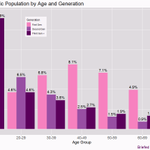
If you want to compare household wealth by groups, then you need to consider the unique age and generation distribution of the U.S. Hispanic population. Read more: briefedbydata.substack.com/p…

3

Thomas J. Pfaff retweeted

A Norwegian neuroscientist spent 20 years proving that the act of writing by hand changes the human brain in ways typing physically cannot, and almost nobody outside her field has read the paper.
Her name is Audrey van der Meer.
She runs a brain research lab in Trondheim, and the paper that closed the argument was published in 2024 in a journal called Frontiers in Psychology. The finding is brutal enough that it should have changed every classroom on Earth.
The experiment was simple. She recruited 36 university students and put each one in a cap with 256 sensors pressed against their scalp to record brain activity. Words flashed on a screen one at a time.
Sometimes the students wrote the word by hand on a touchscreen using a digital pen, and sometimes they typed the same word on a keyboard. Every neural response was recorded for the full five seconds the word stayed on screen.
Then her team looked at the part of the data most researchers had ignored for years, which is how different parts of the brain were communicating with each other during the task.
When the students wrote by hand, the brain lit up everywhere at once.
The regions responsible for memory, sensory integration, and the encoding of new information were all firing together in a coordinated pattern that spread across the entire cortex. The whole network was awake and connected.
When the same students typed the same word, that pattern collapsed almost completely.
Most of the brain went quiet, and the connections between regions that had been alive seconds earlier were nowhere to be found on the EEG.
Same word, same brain, same person, and two completely different neurological events.
The reason turned out to be something nobody had really paid attention to before her work. Writing by hand is not one motion but a sequence of thousands of tiny micro-movements coordinated with your eyes in real time, where each letter is a different shape that requires the brain to solve a slightly different spatial problem.
Your fingers, wrist, vision, and the parts of your brain that track position in space are all working together to produce one letter, then the next, then the next.
Typing throws all of that away. Every key on a keyboard requires the exact same finger motion regardless of which letter you are pressing, which means the brain has almost nothing to integrate and almost no problem to solve.
Van der Meer said it plainly in her interviews.
Pressing the same key with the same finger over and over does not stimulate the brain in any meaningful way, and she pointed out something that should scare every parent who handed their kid an iPad.
Children who learn to read and write on tablets often cannot tell letters like b and d apart, because they have never physically felt with their bodies what it takes to actually produce those letters on a page.
A decade before her, two researchers at Princeton ran the same fight using a completely different method and ended up at the same answer. Pam Mueller and Daniel Oppenheimer tested 327 students across three experiments, where half took notes on laptops with the internet disabled and half took notes by hand, before testing everyone on what they actually understood from the lectures they had watched.
The handwriting group won by a wide margin on every question that required real understanding rather than surface recall.
The reason was hiding in the transcripts of what the two groups had actually written down.
The laptop students typed almost word for word, capturing more total content but processing almost none of it as they went, while the handwriting students physically could not write fast enough to transcribe a lecture in real time, which forced them to listen carefully, decide what actually mattered, and put it in their own words on the page.
That single act of choosing what to keep was the learning itself, and the keyboard had quietly skipped the choosing and skipped the learning along with it.
Two studies. Two countries. Same answer.
Handwriting makes the brain work. Typing lets it coast.
Every note you have ever typed instead of written went into your brain through a thinner pipe. Every meeting, every book highlight, every idea you captured on your phone instead of on paper was processed at half depth.
You did not forget those things because your memory is bad. You forgot them because typing never woke the part of the brain that would have made them stick.
The fix is the thing your grandmother already knew.
Pick up a pen. Write the thing down. The slower road is the faster one.

Who has more people moving out, TX or CA? See the answer to that as well as migration and emigration data for all states in tile grid maps. briefedbydata.substack.com/p…

8
Thomas J. Pfaff retweeted

My son is a teacher, which means I may be slightly biased on this issue, but it is a fact that men make up just 23% of the U.S. teaching workforce. Today, on National Teacher Appreciation Day, I'm proud to announce the launch of the Male Educator Network & Policy Institute (MEN) led by @curtiseveryday.

Thomas J. Pfaff retweeted

The economy seems to be headed toward a collapse scenario of the type Dr. Joseph Tainter talks about in his book, "The Collapse of Complex Societies." I try to explain what is happening, where we are relative to historic norms, and why there is hope for t ourfiniteworld.com/2025/10/0…
How is world energy production changing? Actually, very little. We are still increasing fossil fuel use even as renewables increase. See the data briefedbydata.substack.com/p…

32
The animation here uses the R package datasauRus which was created by Alberto Cairo. It has 13 paired data sets with almost exactly the same means, standard deviations, and correlations. The R code for the animation and other information is in the post: briefedbydata.substack.com/p…
33
Demand for electricity is expected to soar in the next five years. Not because of electric cars but because of data centers. That and more in this weeks QTRS: briefedbydata.substack.com/p… Please consider subscribing (for free) and look for a cool data animation Saturday.

22
Another post this week on Briefed by Data by IC alum Drew Erskine. When will we see 1 billion air travelers? It isn't far off, and that also means we will keep burning fossil fuels. Read more and consider subscribing: briefedbydata.substack.com/p…

23
Global warming has been growing at a quadratic rate for years. However, quadratic rates accelerate, so this isn't new. Second, this graph is misleading without ENSO. Here is a better one with more info here: briefedbydata.substack.com/p…


24
Here is my monthly post, Classroom Connections, with links to applied mathematics and statistics papers that might get used in a classroom, as well as some data sources. Also a good read if you are just curious. briefedbydata.substack.com/p…

1
14
Three years of presidential election exit polls show that Trump made gains for three straight elections with many demographics. In some cases, impressive gains in this election. Democrats shouldn't ignore this. See the data: briefedbydata.substack.com/p…

8
Are EVs a superior technology that will replace gas cars? I'm not so sure. Here is my reasoning: briefedbydata.substack.com/p…

8
Just because the mean velocity of a fastball is getting faster doesn’t mean the maximum is. And no, we aren’t going to see 125mph or even 110mph; that’s just click bait from the Athletic.
briefedbydata.substack.com/p…

There was some buzz about male college enrollment this past week. I respond with plenty of data to help clarify the issue: briefedbydata.substack.com/p…

8
