
Head of Fixed Income - Laffer Tengler Investments -posts are not investment advice. “Enjoy the silence”
Scottsdale, AZ
Joined May 2024
- Tweets775
- Following266
- Followers673
- Likes842



Pinned Tweet
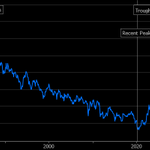
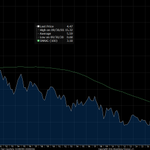
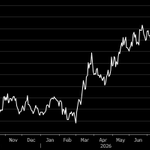
Fed Balance sheet as a % of GDP. Can you see when the Fed went fully interventionist? How do we ever unwind this much manipulation without pain? Forget ever going back to baseline +/- 6% short duration balance sheet. If Logan is correct, QE is here to stay forever. The not so hot take is that the Fed will never end manipulation. Fed's Logan: The Fed should buy more shorter-dated assets WHEN Fed purchases resume. Logan says its about mirroring Treasury issuance. Maybe Congress can do its' job and push back a little before allowing this AGAIN? Don't worry the Fed that didn't react to inflation for a year and stagnated the housing market with QE has this covered. The problem is Logan thinks the big balloon is the normal part of that curve. These people have ZERO reverence for the US economy. bloomberg.com/news/articles/…

Byron Anderson retweeted

Today I begin hosting @YahooFinance Market Hang!
Join me and our expert panel Oct. 26–30 for unscripted conversations on markets and earnings.
12:30–1:30 p.m. ET.
Watch: finance.yahoo.com/live/
Not investment advice. Disclosures: laffertengler.com/disclosure…

Byron Anderson retweeted

I like Claudia and I agree with Claudia on this topic.
But I also wonder where the concern for skill development and retention was when economists were cheerleading the replacement of domestic manufacturing skills with Chinese imports?
Maybe a mea culpa could be a healing experience?
richmondfed.org/publications…


Byron Anderson retweeted

Bonds rallied as tech stocks tumbled. Was Wall Street unwinding a crowded AI trade or rushing to safety? @sws9876 and @ByronAndersonII discuss what drove the moves, and what comes next.
🔗cdn.jwplayer.com/previews/lW…

Favorite time of the week, talking bonds with Scott.

Finishing strong! Jim Iuorio, Mike Lee, Byron Anderson, Arlan Suderman & Patrick Mueller. Tune to The Cow Guy Close on RFD-TV daily from 12:30pm CST and 1:30pm EST. @jimiuorio @MikeLeeStrategy @ByronAndersonII @ArlanFF101 @BellaAdvisors @AshleePitzl @OfficialRFDTV @CowGuyClose
Byron Anderson retweeted
Why do I see defensive characteristics in select mega-cap tech companies? Earnings, dividends and financial strength.
Thank you, @KellyCNBC for the conversation on @CNBC’s The Exchange about AI, innovation and staying invested.
🔗 laffertengler.com/insights/n…
laffertengler.com/disclosure…

Byron Anderson retweeted
Looking forward to hosting @YahooFinance Market Hang Oct. 26–30!
Join me and a rotating group of guests for unscripted conversations about markets, earnings and the day's biggest developments.
12:30–1:30 p.m. ET daily.
Tune in: finance.yahoo.com/live/

Nothing has changed for the back drop of the bond market. Coreweave does not change the trajectory of yields, it is a causalty. Used the recent rally to reposition, you should have seen the weak spots in your bond portfolio. Treasury volatility and credit spreads are the indicators. Iran, Oil, inflation, AI, and the largest buyer of bonds (FED) being out of the market, have not changed. Directionally we are still pointed higher until something changes, labor/growth/consumer spending.

Hot inflation, falling bond yields, and mortgage rates stuck near 7.4%. @ByronAndersonII speaks with @ScottTheCowGuy about what's driving the bond market’s wild moves.
🔗cdn.jwplayer.com/videos/cub2…

Byron Anderson retweeted

Friday baby! We have Jim Iuorio,Mike Lee,Byron Anderson,Arlan Suderman & Patrick Mueller.Tune in to The Cow Guy Close on RFD-TV daily from 12:30pm CST and 1:30pm EST. @jimiuorio @MikeLeeStrategy @ByronAndersonII @ArlanFF101 @BellaAdvisors @AshleePitzl @OfficialRFDTV @CowGuyClose
What journalist would write about being an outright thief? As if it’s a badge of honor. It’s not normal, most people don’t steal from restaurants just kleptomaniacs like you. I hope every restaurant bans her from ever getting a reservation.
My meal was over sauced so I stole from you.
Society needs a pendulum swing.
bloomberg.com/news/articles/…

The Fed is trying to solve the AI boom by hitting interest rate insensitive areas of the economy. The past decade of low coupons and low interest cost is at an end. Volatility in treasuries has finally spiked and that has a correlation to increasing bond spreads. There is no one to push back against long end shorts.
Call the rebound all you want but without the Fed stepping in or a change to the chaos, yields are going higher. The Fed being tough guys on inflation, Midterms give us divided government, debt ceiling in early ‘27, international turmoil, and Iran will drag on. Directionally there is no catalyst to stop the slide, without the Fed coming to their collective senses. @federalreserve
The speed of the recent surge in Treasury yields is rattling markets as investors confront the possibility of higher interest rates instead of the cuts once expected. @ScottTheCowGuy brought on @ByronAndersonII to see what’s going on.
🔗cdn.jwplayer.com/previews/zK…

Just listen to what Barkin is implying. Dodge the interest rate insensitive question. Because we can’t do anything about interest rate insensitive areas of the economy AI, tariffs and Oil we are going after the part that isn’t the problem to balance it out, demand. Your iPhone costs more because of a chip shortage, the Fed has a solution, raise costs on consumers and businesses to kill the demand, while not solving supply shocks. Geezus. This is where problems emerge.

My question to Barkin afterwards
Q: What do you think monetary policy is trying to accomplish right now? Because you hear different stories. One is, real rates are falling, so you need to raise the nominal rates just to stand still. Another would be taking back last year's insurance because now you have a different risk you want to insure against. Another would be you want to actually slow down the labor market and the economy if these [rate] insensitive sectors are going to keep prices rising. Not to ask a leading question, but what do you think monetary policy ought to be accomplishing with tighter policy now?
Barkin: I've often said I think monetary policy works both physically and—if I could use the word—metaphysically. The physical part of it is if you raise rates that quiets parts of the economy, in particular interest sensitive parts of the economy first and that reduces price pressure in those segments and that flows through to inflation. It takes some time to get there as long and variable lags, all that stuff. The part I was calling metaphysical is more the expectation channel and the notion that the Fed will respond when inflation lingers, I think, sends signals to actors in the economy, price-setters throughout the economy, that inflation going forward is going to come down and that then influences and I think could influence relatively quickly their wage and price decisions going forward. I often tell the story of the CFO and the head of sales arguing what price we're going to put in next year's budget. And if they're doing that this October, which I presume they are, I hope they're hearing sounds that says the Fed is focused on inflation [and] is doing something about it. I think that might well impact how they think about price setting going forward.
Once again nothing changes inside the Fed. Where terrible ideas go to thrive. Geezus.

Debate on cause of rise of the long term bond yields:
Two models, both produced by economists affiliated with the Fed:
1) ACM (it’s all real yields/growth/ppl expect Fed to hike)
2) KM (it is term premium)
Warsh picked the former interpretation. As did the rest of the FOMC, implied in the SEP
More than a year ago, debate on whether tariffs would generate persistent vs transitory inflation:
Two models also from Fed affiliated economists:
1) tariffs generate persistent inflation (new research)
2) tariffs deflationary in the long term, and initially a one off price change (from a long standing structural model that proved to be correct in 2018)
The FOMC adopted the first interpretation, until facts showed otherwise today.
Tell me that economics is not a dismal science.
At least the Fed should debate about this, disagree. That is not what the SEP show.
Group think is rearing its ugly head inside the Fed again.
Warsh is trying to be Greenspan in ‘94 but that rate hike cycle was called “The Great Bond Massacre”. Everyone is waiting for a the Fed to TACO but as everyone knows they will hold on to terrible ideas longer than anyone expected. Rate hikes are a mistake and will continue to cause chaos if they get aggressive.
You had your chance months ago to shift risk so are you going to bet the Fed changes course now?

Warsh is handing markets a gift if you are willing to listen. You can be mad that the Fed isn't handing out free money or manipulating the yield curve or stoking risk assets anymore, but Warsh is firmly telling everyone to adjust. The Fed is not your nanny anymore.
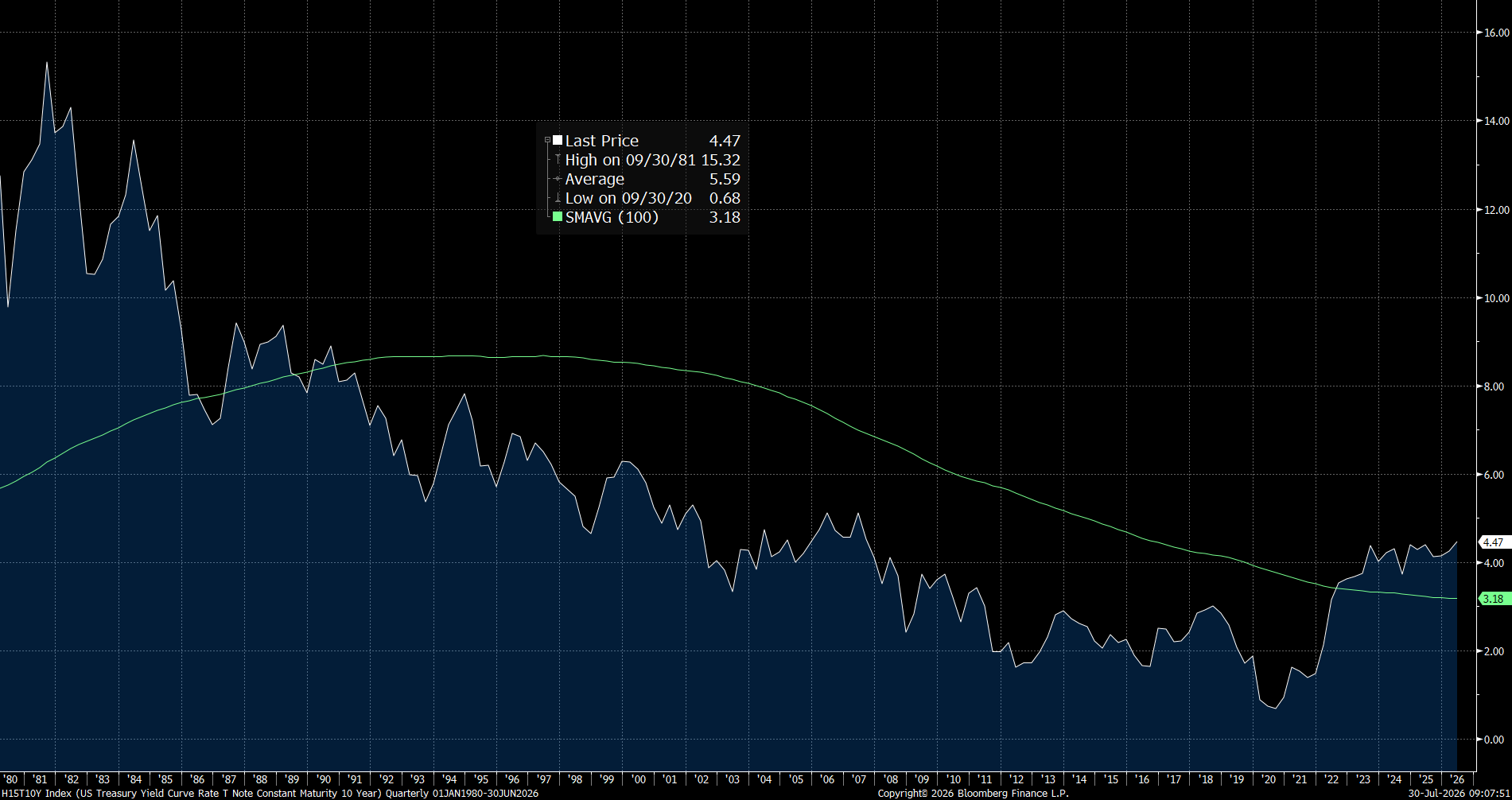
My assumption is that the people panicking about the recent yield increase have never seen a normal bond market or are misremembering pre-manipulation, which is reasonable since we had declining yields since the 80's.
Debt/deficit/interest will matter but bond markets work glacially until they finally break. I'd be more worried about a LONG list of other countries first, e.g. Japan is managing a currency and debt crisis, but yields need to go way up and currency much weaker to actually normalize ~250% debt to GDP.
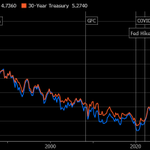
Let's calm down about a 5.2% 30-year, BTW the 30-yr is economically unimportant outside of corporate borrowing and funding government. All eyes on the 10-year, since it rules a massive part of our economy. Back to that 40 year bull market in bonds, and if you believe my assumptions that glacier looks to be changing course (10-yr CMT trend attached).
It's not fun if you hold risk assets or duration right now I get it. Adjust your risk with the change in Fed profile. From Warsh, I am assuming the Fed is not here to bail markets out everytime they hiccup, like under Powell and Yellen. I am assuming the Fed is not going to intervene with it's balance sheet to manipulate the yield curve, outside of crisis. These signals are telling you how to adjust. Free money days are over and with normalization of bond markets so are manufactured low yields.
When I started on the trading desk the 30-year was over 6%, 6.35% to be exact, and I thought that was SO high. Everyone needs to find a bond trader that worked in the 80's and early 90's they will change your perspective on volatility and risk.
Byron Anderson retweeted

Kelly: “I mean, Rick, it's worth pointing out how unusual it is to have five-year yields rise 18 basis points in one session.”
Rick Santelli: “How unusual is it to have zero interest rates for seven years around the globe?
This is the price we pay for manipulating, and it's a normalization.
I'll give you something. Since 1980, the average yield on a ten-year note is around 5.5 to 5.6 percent. That should put things in perspective.”
😃
Byron Anderson retweeted
Friday! We made it. We talk Warsh's thoughts, bonds and oil. We end on row crops and AI. Tune in to The Cow Guy Close on RFD-TV daily from 12:30pm CST and 1:30pm EST. @jimiuorio @ByronAndersonII @CarnegieInvest @ArlanFF101 @rwang0 @AshleePitzl @occicialRFDTV @cowguyclose
Media notes from yesterday on the Fed:
Rate hikes have a cost and do not solve oil, Iran or supply issues, but they can undo the labor standoff that prior rate cuts have provided. Low hire low fire is different from a robust labor market. Is the Fed really willing to put enough pressure on the economy with rate hikes to pull inflation to target by hitting demand? We don't get back to trend until 2029, which doesn't say aggressive rate hikes.
The Fed had no choice but to give the market a hike or risk a much bigger bond market selloff, which is shown in the 12-0 vote. The Fed is trying to calm the bond market rather than signaling a hiking cycle. The market narrative is on a collision course with the Fed from here on out, which means more volatility. A single rate cut is not going to placate this bond market for long and will not solve inflation.
An Iran solution would be much better than rate hikes but alas.
@federalreserve
Byron Anderson retweeted
'At The Battle of Loc Ninh, over 6 hours, Master Sergeant Roy Benavidez suffered 37 separate bullet, shrapnel, and bayonet wounds, and was even thrown from a helicopter as he tended to survivors, called in air strikes, distributed water, and carried his dead and wounded comrades to the choppers following a run-in with a large enemy force.
Doctors thought he was dead and placed him in a body bag, but he spit in a doctor's face to show he was alive.'

Byron Anderson retweeted

Bill Nelson: "Earlier this week, Steve Liesman at CNBC broke the story that the Treasury might fund its buybacks of longer-term securities using some of the cash it has on deposit at the Federal Reserve Bank of New York (the “Treasury General Account” or “TGA”) rather than by issuing more bills. If the Treasury were to do so, however, the Fed would end up reducing its investment in bills by the same amount. The public would likely end up having to purchase the same quantity of bills at auction as they would if the Treasury funded the buybacks with increased bill issuance." @CNBC @steveliesman @bankpolicy