

Ecologist/Ecotoxicologist/Guy who likes science. Research Scientist with Natural Resources Canada - Canadian Forest Service. Views are my own
Canada
Joined December 2011
- Tweets3.4K
- Following375
- Followers491
- Likes2.9K





Chris Edge retweeted

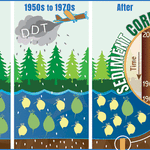
On our way to Renous and LSW watersheds to study #lake recovery from DDTs. Map data from Heartz et al. Ecology is hosted by Gov of NB here: snb.ca/e/2000/data-E.html Map helps us select lakes across DDT gradient which we will groundtruth with sediments @CB_Edge #PowerOfPaleo

Interested in legacy effects and ecosystem recovery after broad scale applications of pesticides? Come join our working group!
English: ciee-icee.ca/wg61.html
French: ciee-icee.ca/wg6.html

And the recent paper describing the pesticide application dataset.
esajournals.onlinelibrary.wi…

1
2
167
The working group is only possible due to support from the excellent Living Data Project at the Canadian Institute of Ecology and Evolution. @CIEEICEE
2
141
Great place to work and great colleagues.
This Post is from an account that no longer exists. Learn more
241
Interested developing novel forest management planning tools and applying them to a unique management situation? Anthony Taylor and I are looking for a PhD Student.

Chris Edge retweeted

A new Data Paper in @ESAEcology:
Historical pesticide applications for the treatment of eastern spruce budworm infestations in New Brunswick
doi.org/10.1002/ecy.4068
#DDT #SilentSpring #HistoricPesticide #OpenScience @CB_Edge @CFA_AFC_Science

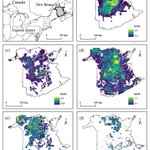
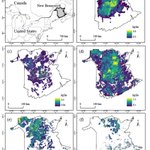
ALT (a) Location of New Brunswick, Canada. Cumulative application rate of the 4 most commonly used insecticides in New Brunswick from 1952-1993: (b) DDT 1952-1968, (c) Phosphamidon 1963-1977, (d) Fenitrothion 1966-1993, and (e) Aminocarb 1970-1987, and one currently in use (f) Bacillus thuringiensis kurstaki 1975-1993
Chris Edge retweeted

On my recent trip to @GLFC_CFS, I had the pleasure of touring the Insect Production and Quarantine Laboratories. The scientists behind rearing these bugs deserve praise for their contributions to pest management and related research throughout Canada. A 🧵about 🐛🪲...


From 1952-1993 one of the worlds largest aerial pesticide application programs occurred in New Brunswick, Canada. During the program 97% of forested land (6.2 million ha) in New Brunswick was treated. The dataset is now online and open access.
esajournals.onlinelibrary.wi…
The hope is making these data available will help future studies on environmental fate, ecosystem recovery, and legacy effects.
A fun project that involved fantastic collaborators across two levels of government and academia. The project would not have been possible without help from the @ciee living data project and @CFS_Science_ATL
Amazing and so well deserved

Marie-Josee Fortin @FortinMJ is honored as Canada “National Champion" of the first #FrontiersPlanetPrize on today's #EarthDay. She receives the honour on the behalf of her collaborators @ArielGreiner, @emilysdarling, @MarcoAndrello, @MartinKrkosek.👏frontiersplanetprize.org

1
226
Is glyphosate is entering New Brunswick rivers from applications in forestry? We collected 296 water samples from 8 watersheds and detected glyphosate once.
onlinelibrary.wiley.com/doi/…


Chris Edge retweeted

One of the all time great Calcutta Cup tries from Duhan ⚡️
#AsOne