

Engineering Blockchain Protocols, L1,L2 chains, Cryptographic Systems, Post-Quantum Security, MPC, ZKProofs, DID,RWA Tokenization & Enterprise systems
Infrastructure & Security
Joined October 2026
- Tweets28
- Following1
- Followers8
- Likes74
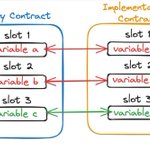








Upgradeable proxy bugs often stem from silent storage slot shifts rather than complex logic error.
Use explicit initializer modifiers and reserve strict storage gaps in base contracts to keep proxy state intact. 🛠️


State bloat isn't just about disk space,
it's an I/O bottleneck. Random reads on massive state tries during execution can stall validators faster than raw storage limits.
How are you tuning client compaction and snapshot strategies for peak loads?

3
17
Codes For Tomorrow retweeted

If Considering Eth as store of value, the most important aspect would be cross chain native communication.
Agreed on the intent-based UX shift, but until cross-chain communication moves away from relying solely on trusted off-chain solvers and bridge relays toward trustless, native state-proof verification, we are just trading L1 fragmentation for off-chain centralization risks.
Need an EIP standard focusing strictly on native, trust-minimized cryptographic settlement for cross-chain intents.
@VitalikButerin @ethereumfndn @binji_x

# 1. ETH as fee-burning token never was as strong as it seemed
Let us re-cap the economic theory behind valuation of a fee-burning token. This is the "net present value" (NPV) theory.
Formula: market cap = fees burned / discount rate
Imagine you have a token of which $1 billion is burned per year, and this is a long-term stable equilibrium. Now, imagine the discount rate is 4%; that is, people value having $1B today as much as $1.04B in one year.
The idea is that $1B / 4% = $25B serves as a natural "floor" for the valuation: if the valuation drops lower than that, then someone could buy an asset expected to pay $1 per year forever for less than $25 (by buying some tokens, and then selling >4% of their supply each year so their share of the total pie remains the same), and so by buying the asset you reliably beat the market.
In 2021-23, Ethereum burned millions of ETH per year in this way.
But here's the problem: this was never a true floor. The reason is that the bulk of that burn was crypto-internal use cases. If ETH had dropped by 10x, then the profits from those use cases would have also dropped, because all the buyers would have had much less money to pay with. This applies both to things like that infamous $180m-fees-burned-in-one-day digital monkey sale (yes, this happened; if you don't remember look it up!), and to more "normal" things like lending. The floor argument only works if the backing of the revenue stream is external.
Today, Ethereum actually has a better claim to this external backing, because of the growing RWA economy, but on the other hand, perhaps precisely because it's a normal stable mature business, it's not going to randomly go crazy and burn $180m on a digital monkey sale.
Proxy upgrades hide silent storage collision vectors if you only test isolated versions.
Set up Echidna stateful fuzzing to run deploy, initialize, mutate, and upgrade sequences in one continuous test run.
@KWebbuddy ur say?

A smart contract can borrow code and accidentally hand it the keys to the house.
Scarb 2.21, released on October 12, introduced static contract forwarding for Cairo. It lets one @Starknet contract expose another class's functions without copying the implementation.
Clean. But here's the trap: forwarded calls run against the caller's storage, not the target's deployed storage.
If both classes use an owner slot, they may touch the same storage location. A forwarded upgrade function could even replace the caller's class if permissions allow it.
And because the target class hash is fixed at compile time, upgrading the original deployment won't automatically patch the forwarder.
I like the simplicity. But I'd check storage layouts, initialization and upgrade permissions before shipping anything.
Then test the exact build on Sepolia.
In smart contracts, less code doesn't automatically mean less risk.

1
2
52
Monolithic on-chain registries break fast when mixing ownership, immutable fee shares, and subscription logic.
Separate core state from payment routing using clean modular patterns to keep your Solidity codebase audit-ready.

Open-sourcing the Certora Prover is worth more than a tooling headline. It brings greater visibility and a contribution path to a formal-verification engine used for smart contract analysis.
Read the full article here : codesfortomorrow.com/blogs/B…

1
4
25
Formal verification works best alongside testing, fuzzing, static analysis, manual review and operational controls. It is part of a security programme, not a replacement for one.
1
Codes For Tomorrow retweeted
Email is a postcard. Wallets are padlocks.
At @MSTBlockchainHQ, a partner wanted to send users a gift voucher that only they could see.
We skipped the inbox. The user signs a claim (ECDSA) → we encrypt the code with their public key → only their private key opens it.
E2EE for everyday apps. Building for the common man.


Codes For Tomorrow retweeted

How secure is a crypto wallet if the randomness behind its recovery phrase is weak?
Join us for a technical discussion on **ILL Bloom (CVE-2026-71851), investigated by Coinspect, with Vikrant Singh, VP Tech @CFT_Tweets
📅 5 Nov | 6:15 PM IST
📍 CFT Branch Office


Codes For Tomorrow retweeted
@iphelix shared a fascinating perspective on security in Blockchain & DeFi, the people behind it, and AI's growing impact.
From security being treated as an underdog to AI exposing vulnerabilities faster than ever.
Best part? A practical framework to address these challenges.


Codes For Tomorrow retweeted
While dozens of event happening in Mumbai, The real event and most mature conversations are here at @summit_defi. A Big shoutout for @SagivMooly and everyone who made it success. #devcon #defisummit


