






CIRSD retweeted
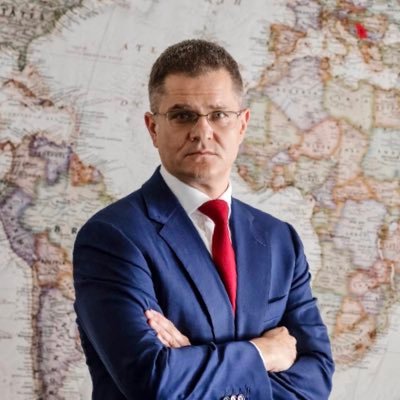
Belgrade and Non-Alignment: 65 Years of a Grand Idea @CIRSD
cirsd.org/opinions/belgrade-…

CIRSD retweeted
Deeply grateful to @CEBRI for bringing together an exceptional group of thinkers and practitioners from around the world for the inaugural Paraty Dialogues.
At a moment of profound geopolitical change, the quality, candor, and diversity of the exchanges made this a genuinely meaningful discussion on global affairs—and a powerful reminder of the value of dialogue across regions and perspectives.
My warmest thanks to our Brazilian hosts for their vision, as well as for the extraordinary hospitality and generosity throughout our time in beautiful Paraty. I very much look forward to seeing this important initiative grow in the years ahead.


CIRSD retweeted
Horizons Summer 2026 Vol.35
The Unbearable Lightness of Global Governance - EDITORIAL @CIRSD
CIRSD retweeted
HORIZONS Vol. 34 SPRING 2026
CONNECTIVITY AND SUSTAINABILITY: THE MARVELS OF THE FUTURE WORLD @CIRSD
WHEN Marco Polo returned from his quarter-century-long travels across the Silk Road in 1295, he described a world so densely connected and abundant in its marvels that few of his contemporaries chose to believe him. The routes he traversed were not merely commercial arteries—they were the foundations of an emerging world order, binding civilizations together through the exchange of goods and ideas. Today, humanity stands before what this issue of Horizons calls the “Marvels of the Future World”: a new age of connectivity and sustainability whose ambitions are no less extraordinary than Marco Polo's own discoveries, and whose realization is no less uncertain.
THE energy transition is perhaps the most visible of these marvels. The disruptions in the Strait of Hormuz have exposed with extraordinary clarity what years of analysis had failed to convey: a global system still tethered to fossil fuels and concentrated supply routes is deeply fragile. Countries that invested in renewable infrastructure entered this crisis with resilience; most of those that deferred found themselves at the mercy of chokepoints they could not control. The lesson is unsparing—the grid, not the pipeline, is the infrastructure of the future.
YET building that future requires materials whose geography is itself a source of tension. Lithium, cobalt, and rare earth elements are the new strategic commodities, and the capacity to refine and distribute them remains asymmetrically concentrated. ASEAN sits atop extraordinary reserves; Africa holds critical minerals whose value the world is only beginning to reckon with. But endowment is not leverage. Converting natural wealth into strategic power requires investment, regulatory clarity, and regional coordination that has so far proved elusive. For hundreds of millions of households, meanwhile, the most fundamental connectivity gap is measured not in gigawatts but in the smoke rising from an open cooking fire every day.
CONNECTIVITY is not only physical. It is digital, institutional, and deeply political. Artificial intelligence is now infrastructure in the fullest sense—material, energy-intensive, and contested. The race to build sovereign AI systems, smarter power grids, and resilient pharmaceutical supply chains is a race to determine who designs the architecture of the next century and on whose terms. These are among the defining “Marvels of the Future World”—not spectacles to be admired, but transformational systems to be built and made to work for the many rather than the few.
SUSTAINABILITY has outgrown the vocabulary of environmental policy. It is now a question of whether the systems we are building are capable of enduring the pressures placed upon them. The SDGs were conceived as a roadmap; a decade on, they read more like a rescue plan. Development finance remains insufficient. Corporate sustainability too often stops at compliance. The multilateral architecture, designed for a world that no longer exists, struggles to channel the investment that the transition demands.
MARCO Polo's marvels were not as much about any particular destination as about the fact of connection itself. The “Marvels of the Future World” are by all means attainable. Whether we seize them depends on choices being made now, in government ministries, corporate boardrooms, regional blocs and international institutions. The contributors to this issue map those choices with clarity and without illusion. The road ahead is open. The question is who will travel it, and how fast.

CIRSD retweeted

On March 20, 2026, a delegation from leading international think tanks, including the Center for International Relations and Sustainable Development,@CIRSD, @Global_Neighbrs, and the Council on Foreign Relations @CFR_org , visited the CCG Beijing Academy for discussions. Dr. Henry Huiyao Wang and Dr. Mable Lu Miao met with guests including Vuk Jeremić, Jovanka Porsche, Huang Yanzhong, and ambassadors to China from Austria, Indonesia, and Fiji.

CIRSD retweeted
After an intensive and deeply rewarding month as a Visiting Professor at Tsinghua University in Beijing, I am returning to @CIRSD profoundly inspired.
Teaching a course titled “Leading in Contemporary Geopolitics” at a top Asian university at this moment in world affairs could not have been more timely.
The 144 Schwarzman Scholars I had the privilege of working with—drawn from across the globe—represent the most exceptional cohort of students I have ever encountered. Each of them brought astonishing intelligence, curiosity, and intellectual honesty to our discussions. Together, we tackled the most pressing issues of our time—from conflicts in the Middle East and Eastern Europe to the trajectory of American foreign policy and the future of Europe.
Our final simulation of selecting a new UN Secretary-General felt remarkably real—thoughtful, nuanced, and deeply engaging.
The potential of these young people is extraordinary. I am humbled to have been their teacher.


CIRSD retweeted
“We should thank President Trump. Europe cannot live under a US protectorate forever.”
A fascinating conversation with Thierry de Montbrial—President of IFRI, member of the French Académie des sciences morales et politiques, and one of Europe’s most influential strategic thinkers.
We discussed the shifting geometry of global power and the future of Europe in an increasingly fragmented world.
A masterclass in clarity and long-term thinking.
Listen to the full @CIRSD Horizons podcast below:
youtu.be/QvH98gffa88?si=5kyr…

CIRSD retweeted
What is the future of the Board of Peace? @RichardHaass, President Emeritus of @CFR_org.
CIRSD retweeted
HORIZONS WINTER 2026, VOL.33
PAX MULTIPOLARIS: THE-MANY BODY PROBLEM
EDITORIAL
IN his science fiction masterpiece The Three-Body Problem, Liu Cixin depicts a civilization trapped in a system besieged by the unforgiving interactions of three suns—its progress condemned to recurring catastrophes caused by celestial disorder.
That metaphor resonates powerfully today. As the international system moves away from the imperfect but steady orbit of the Pax Americana, it has entered a far less predictable configuration. The interaction between the incumbent power and the resurgent and rising ones has produced a geopolitical “many-body problem,” raising a fundamental question: can Pax Multipolaris exist—in other words, can a multipolar balance bring lasting peace?
THIS issue of Horizons begins with a basic premise: the post–Cold War order is over, but no coherent replacement has yet emerged. The present moment is defined less by transition than by accumulation—unresolved conflicts, overlapping power centers, and institutions designed for a world that no longer exists. The result is not equilibrium, but mounting friction.
ACROSS our pages, contributors converge on a central observation: power is dispersing faster than the rules that once used to constrain and channel it. Institutions intended to manage rivalry now struggle to enforce norms consistently or to mediate crises among increasingly self-confident actors. In response, diplomacy has become more situational and transactional, relying on improvised mechanisms rather than durable frameworks. Order has not disappeared, but it has weakened immensely.
MEANWHILE, the emerging landscape cannot be reduced to great-power rivalry alone. For many states, particularly outside the neighboring centers of gravity, multipolarity has expanded strategic options. Regional actors and middle powers are asserting autonomy, recalibrating partnerships, and resisting fixed alignment. This diffusion of agency complicates inherited models of hierarchy and challenges assumptions about who shapes the international system.
THE unresolved question is whether restraint can keep pace with the widening distribution of power. Historically, multipolar systems have endured only when competition was bounded by credible limits and shared expectations among major actors. Such systems depended on mutual recognition of red lines and a willingness to absorb short-term costs to avoid systemic breakdown. Where those habits were absent, rivalry escalated unchecked.
CRUCIALLY, those stabilizing habits are now under strain in the day-to-day conduct of international politics. Economic interdependence has shifted from reassurance to leverage. Technologies that once promised efficiency now compress decision-making timelines and magnify the risk of miscalculation. As trade, finance, and innovation are increasingly weaponized, the margin for error narrows. Managing competition—rather than imagining its resolution—has become the central task of statecraft.
ULTIMATELY, the “many-body problem” has no general solution. Whether Pax Multipolaris emerges as a viable order or dissolves into systemic turbulence hinges on three pivotal choices: the depth of diplomatic engagement, the restoration of institutional legitimacy, and the willingness to accept limits in the exercise of power. Those choices, more than any others, will shape the geopolitical landscape of the years ahead.
CIRSD retweeted
Multipolarity isn’t a theory anymore. It’s the story unfolding in real time.
That’s among the reasons why the 33rd Volume of @CIRSD Horizons is exceptionally well timed — and why it lands with unusual force.
This new edition is built around one defining question: what does a truly multipolar world look like in practice — and what comes next? From power politics and economics to security, technology, and global governance, Horizons convenes voices that don’t just comment on events — they help shape them.
Inside Volume 33 you’ll find exclusive interviews and essays by the Foreign Minister of UAE, His Highness Sheikh Abdullah bin Zayed Al Nahyan @ABZayed, alongside some of the most influential thinkers of our time: John Mearsheimer @MearsheimerJ, Jeffrey Sachs, Richard Haass @RichardHaass, George Friedman @George_Friedman, Ivan Krastev, and Kishore Mahbubani @mahbubani_k.
The roster spans continents and convictions — from elected leaders and former top officials to leading scholars: Dimitris Keridis @DimKairidis, head of the Greek parliamentary majority; Pramit Chaudhuri @PramitWorld, former National Security Adviser of India; former foreign ministers Antônio Patriota (Brazil) and Mohammad Javad Zarif @JZarif (Iran); Luis Almagro @Almagro_OEA2015, former Secretary General of the Organization of American States; Jonathan Brown, policy head of Nigel Farage’s Reform Party; and a distinguished academic lineup including Dmitry Trenin (Russia), Wang Wen @WangwenR (China), Tim Murithi @tmurithi12 (Africa), Dejan Jović @DejanFpzg (Balkans), and Gordon Flake @lgflake (Australia) — among many others.
Nowhere else can you find such a wide range of top-notch authors in one place — debating the same reality from fundamentally different vantage points.
Our Volume 33 is out now!

CIRSD retweeted
Thrilled to launch the newest issue of @CIRSD Horizons at the Anwar Gargash Diplomatic Academy @AGDAUAE in Abu Dhabi—marked by a terrific panel discussion in these deeply disruptive geopolitical times.
I had the pleasure of a lively, wide-ranging debate with Lord David Cameron @David_Cameron, former UK Prime Minister—who was also teaching a J-Term course at NYU Abu Dhabi—and with the Academy’s Dean, my good old friend Eric Alter.
Lord Cameron and I were joined by our NYU students, whose sharp questions and energy kept the conversation informed and driven by the perspectives of the next generation.
We were also honored to welcome top UAE government representatives and foreign diplomats in the audience.
Grateful indeed to AGDA for its hospitality, partnership, and steadfast support of serious dialogue.


CIRSD retweeted
Grateful to @TheECSSR for the warm hospitality they extended to me and my @NYUAbuDhabi students in Abu Dhabi.
Thank you for the opportunity to share my reflections on today’s global developments and for convening such a thoughtful, engaged audience!
The quality of questions and the ensuing discussion underscored how essential serious and open dialogue is in a time of accelerating change and uncertainty.
Looking forward to further engagement between @TheECSSR and @CIRSD!
CIRSD retweeted

This Thursday, January 15, we invite you to attend a Fireside Chat hosted by the Emirates Center for Strategic Studies and Research (ECSSR) titled: “The Global Order: Current Moment and Future Trends.” We will be joined by H.E. Vuk Jeremić—former Minister of Foreign Affairs of Serbia, Professor of Practice at Sciences Po–Paris School of International Affairs, and 67th President of the UN General Assembly—to discuss the evolving contours of today’s international order and the trends shaping what comes next.
Join us on Thursday, January 15, 2026, at 6:30 PM, at Sheikh Zayed Hall, ECSSR.
Register now:
ecssr.ae/en/news-events/even…
#TheECSSR
@jeremic_vuk

CIRSD retweeted
The balance of global power is tilting eastward—and the Asia-Pacific is where the history of the 21st century will be written.
‼️ Don’t miss our fireside chat with Professor Jeffrey Sachs, launching the latest Horizons issue, “The Asia-Pacific Century,” on geopolitics, development, and what comes next! ‼️
Watch the full discussion at the link below!👇 👇 👇

“Europe came to dominate the world, and then Europe destroyed its own dominance.”
Watch the full Horizons Discussion featuring Jeffrey Sachs, in conversation with @jeremic_vuk , President of CIRSD and Editor-in-Chief of Horizons.
youtu.be/68MX32fXfsM?si=edeF…
CIRSD retweeted

It was a true pleasure, as always, to meet and exchange with former UN Secretary-General Ban Ki-moon.
Long before leading the United Nations, he served as Chef de Cabinet to the President of the General Assembly; an experience that gave him a unique understanding of the vital interplay between the Assembly’s deliberative and decision-making authority and the Secretariat’s operational leadership. His reflections and insights remain invaluable as we look ahead to the future of the United Nations.
@uncpga @NizamiGanjaviIC @GWLvoices @CitiesAlliance @bankimoon_org

CIRSD retweeted
Henry Huiyao Wang @HuiyaoWang writes for the Center for International Relations and Sustainable Development @CIRSD on Preparing the UN Security Council for Today’s Challenges
cirsd.org/en/horizons/horizo…
CIRSD retweeted

Immensely honored to have published an article in the latest edition of Horizons quarterly magazine: cirsd.org/en/horizons/horizo…
Honored because I genuinely think Horizons must be the best geopolitical magazine out there in the world today.
The Editor in Chief is the great @jeremic_vuk (former Foreign Minister of Serbia, former President of the UN General Assembly and currently president of @CIRSD) who works together with Managing Editor @StefanAnticRS. Their basic concept is to put together what a world-class geopolitics magazine should be - but which so few are: a platform for genuinely diverse viewpoints from across the world, in the actual (and not liberal) sense of the word “diverse”.
The quality of the contributors is so awe-inspiring that I almost have imposter syndrome ☺️. In this edition they managed to bring together:
- George Yeo: the former Foreign Minister of Singapore whom I admire immensely (and cite all the time, including in my Horizons article!)
- Fu Ying: former Vice Minister of Foreign Affairs of China and one of China's most senior and respected diplomatic voices
- Yan Xuetong: Director of Tsinghua's Institute of International Studies and arguably China's most influential international relations scholar (you might remember him from this teapawt.net/RnaudBertrand/status/1…)
- Kao Kim Hourn: the Secretary-General of ASEAN
- Moon Chung-in: Special Advisor to President Moon Jae-in of South Korea for Foreign Affairs and National Security
- Yao Rukun: who teaches International Relations and World Political Parties at the Party School of the Beijing Municipal Committee
- Kevin Rudd: former PM of Australia
- Thierry de Montbrial: founder and executive chairman of the French Institute of International Relations (Ifri),
And many others… In past editions they had contributors like Yang Jiechi, Viktor Orbán, Sergey Lavrov, Jeffrey Sachs, Joseph Nye, Elvira Nabiullina, and John Mearsheimer.
You might disagree with some of those (I certainly do, Rudd being one notable example) but that’s the whole point: geopolitics isn’t about finding the “correct” view or remaining in a safe space of “like-minded partners”, but about doing the hard work of understanding how others actually think. Because it's only through genuine understanding - not caricatures or strawmen - that you can identify where bridges might be built.
My own article in the magazine actually touches on some of this.
I notably describe how - in my view - the West replaced strategic analysis with moral sermons or wishful thinking about China, which was extremely detrimental TO THEM because it led them to miss China’s actual transformation, something I’ve constantly warned about over the years.
We’re now waking up (and, to be frank, most are still asleep) with a China that’s simply so massive, so technologically sophisticated and so central that its mere existence in the world today generates a “geopolitical gravity” that’s redrawing the world order and renders ideology largely irrelevant - because in physics as in geopolitics, nothing escapes gravity.
I'm of course not making the point that, had we understood China correctly, the West could have "contained" it - I think the very notion of containment is abhorrent. The point is about adaptation and rooting one's actions in the world as it is and not as we wish it to be.


Absolutely extraordinary exchange between Israel and China 👇 I've never seen such a heated exchange come out of top-level forum in China (this is from the 12th Beijing Xiangshan Forum that started yesterday), this normally never happens.
The guy speaking is Yan Xuetong, the dean of the Institute of International Relations at Tsinghua University, the most prestigious university in China.
Speaking for Israel is a military officer apparently called Elad Shoshan.
Yan Xuetong truly doesn't hold back:
- When the Israeli officer tries to bullshit him around how Israel supposedly protects civilians in Gaza, he replies: "You killed more than 70,000 civilians!... The fact is not decided by you... It is not decided by your government. Your government has no legitimacy or the right to decide or defend what is fact"
- And when told that the war will end when Hamas release hostages he replies: "No, this kind of propaganda have too many. No one believe it! Too many! Too much! No one believe it, except a few Israelis"
CIRSD retweeted

Amb. Eichtinger hosted “Shifting Grounds: The Caucasus, Central Asia and Europe in a New Global Order”, with @CIRSD and @NizamiGanjaviIC. The discussion brought together Dimitris Avramopoulos, Ana Birchall, Nino Burjanadze, Benita Ferrero-Waldner, Boris Tadić, and Vuk Jeremić.

CIRSD retweeted

Can the UN survive a divided world? Former UNGA President @jeremic_vuk shares insights on global governance, reform, and China’s role in shaping a fairer, more cooperative international order.
Watch the full discussion below 👇
#UnitedNations #GlobalPolitics
CIRSD retweeted
Last night, @CIRSD launched the Global Preventive Diplomacy Initiative at an exclusive fireside chat on the top floor of the MetLife Building in New York.
Together with my fellow Co-Chair, @mfespinosaEC, former UNGA President and Ecuador’s Foreign & Defense Minister, we opened a vital conversation before a select audience of philanthropists, business leaders, and diplomats.
We began with a question we hear often these days: is diplomacy dead — and if so, how can we revive it? For all its shortcomings, the United Nations remains the only international organization with universal membership and legitimacy. It must therefore be central to any effort to rebuild trust and cooperation.
Our key message: it is far more pragmatic — and cost-effective — to prevent crises before they explode. Once conflicts erupt and outside powers line up behind opposing sides, lives are lost and the path to peace becomes far more difficult. Today, many under-discussed flashpoints carry the potential to destabilize entire regions, even the world.
In the weeks and months ahead, Maria Fernanda and I will be joined in this Initiative by a number of high-level former colleagues and dignitaries from around the globe.
We invite all to support peace — in whichever capacity you can. 🌍☮️


