

We train the computational scientists of the future and carry out innovative research with real-world impact.
Joined July 2019
- Tweets95
- Following67
- Followers126
- Likes4
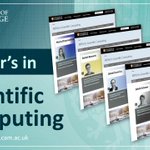


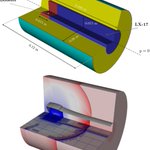
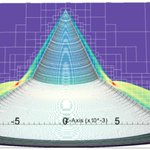


Only a few weeks left to apply for the MPhil in Scientific Computing - deadline 16 May! This course provides world-class education on high-performance computing and advanced algorithms for numerical simulation at continuum and atomic-scale levels. https://teapawt.net/t.co/RPxbAscvuw

2
226
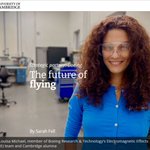
Our research projects on plasma arc interaction with aerospace composites, ultrasonic excitation of substrates and laser melt of titanium powders have been highlighted in a recent article on the University's strategic partnership with Boeing: https://teapawt.net/t.co/VUBqEVTHlM

2
223


Centre for Scientific Computing retweeted

When lightning strikes... Fantastic example of industry-academic partnership, using advances in mathematical physics to solve a very complex problem. @CSC_LabSC @Maxwell_Centre

Inside Boeing South Carolina's lightning lab, scientists are simulating the effects lightning strikes may have on airplane parts using data developed through a partnership with @Cambridge_Uni.
Read more: https://teapawt.net/t.co/bp2Z6fKahx
Booking for the High Performance Computing Academy closes next Friday 22 July, so make sure you reserve your place now as spaces are limited. Info and booking: https://teapawt.net/t.co/cOQgKwe5E6

Centre for Scientific Computing retweeted
Join the GAPSTI seminar on computational modelling of storms and hurricanes by Prof Rupert Klein - today at 3:00pm BST online and at the Maxwell Centre. Info: talks.cam.ac.uk/talk/index/1… @Maxwell_Centre @DeptofPhysics @FU_Berlin
The deadline to apply for a HPC Academy bursary is fast approaching. Open to full-time university students based in the UK. Apply by Friday 24 June. Details here: https://teapawt.net/t.co/cOQgKwe5E6
Centre for Scientific Computing retweeted
GAPSTI seminar: 'Mathematical and computational modelling of tropical storms and incipient hurricanes' by Prof Rupert Klein. Friday 10 June at 3:00 pm at the Maxwell Centre and on Zoom. For more details: talks.cam.ac.uk/talk/index/1…
Centre for Scientific Computing retweeted
Our next GAPSTI Distinguished Seminar will be a talk by Iain Cooper on unmanned emissions detection from industrial facilities. This will be held on Zoom on Friday 27 May at 3:00 pm. For more information and to register visit: https://teapawt.net/t.co/uEawROnD8c
Booking is now open for the two-week High Performance Computing Academy 2022, running from 5-16 September. Bursaries are available for students in full-time education. For more information and to book: https://teapawt.net/t.co/cOQgKwe5E6
#hpc #scientificcomputing #scientificprogramming

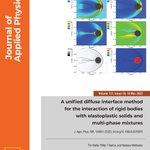
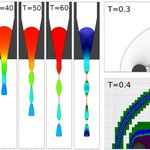
We are pleased to see the paper by Wallis, Barton, and Nikiforakis: "A unified diffuse interface method for the interaction of rigid bodies with elastoplastic solids and multi-phase mixtures", on the front cover of the Journal of Applied Physics doi.org/10.1063/5.0079970

1
The paper by Wallis, Barton, and Nikiforakis: "A unified diffuse interface method for the interaction of rigid bodies with elastoplastic solids and multi-phase mixtures", has appeared in the Journal of Applied Physics 131, 104901 (2022) doi.org/10.1063/5.0079970

1
The paper by Demattè, R., Michael, L. and Nikiforakis N.: "Reacting condensed phase explosives in direct contact" has appeared in the Journal of Applied Physics
131, 095901 (2022); doi.org/10.1063/5.0075851

The paper by Apsley, Millmore and Nikiforakis on radiative models for lightning strike simulations has appeared as a 'Featured' article in Physics of Fluids https://teapawt.net/t.co/m77SBE1hc2 and was showcased at the American Institute of Physics 'Scilight' https://teapawt.net/t.co/r2jNmnDJcE
The paper by Muir, Michael & Nikiforakis 'Numerical Methodologies for Magnetohydrodynamic Flow Control for Hypersonic Vehicles' has appeared in Active Flow and Combustion Control 2021. Notes on Numerical Fluid Mechanics and Multidisciplinary Design vol 152 https://teapawt.net/t.co/hqX4lSBP4L

GAPSTI Lecturer in Computational Materials Science, Dr Bartomeu Monserrat was awarded the James Clerk Maxwell Medal and Prize from the Institute of Physics (IOP) for his outstanding early-career contributions to theoretical physics https://teapawt.net/t.co/wCepMyc998
3
A manuscript by CDT student Benjamin Shires and Prof Chris Pickard has been published in Physical Review X: doi.org/10.1103/PhysRevX.11.….