

Enrolled Agent | Author | Tax Preparer and Advisor My sites: https://teapawt.net/t.co/sI1SL1hPXM Buy The Crypto Tax Book on Amazon: https://teapawt.net/t.co/OF4zUTZEpL
Florida, USA
Joined March 2009
- Tweets32.2K
- Following2.3K
- Followers1.3K
- Likes243K




Pinned Tweet
In case you haven’t heard . . .
I wrote a book!
Not just any book. And not an obvious book like The Accountant’s Guide to Tax Preparation. Not only would that be boring—so boring nobody would read it—it’s also on a topic that has been written about thousands of times.


Good news for your end-of-year giving: You no longer need to itemize to get a tax break for your charitable contributions. The IRS just released a major reminder (IR-2026-135) ahead of the upcoming tax season: under the newly passed Working Families Tax Cuts, the above-the-line charitable deduction has been made permanent.
If you plan to take the standard deduction for 2026, here is what you need to know before making your end-of-year donations:
The New Permanent Limits
You can now deduct up to $1,000 for single filers and $2,000 for married couples filing jointly, even if you do not itemize your deductions on Schedule A.
Strictly Cash Only
This specific deduction is for qualifying cash contributions only (which includes physical cash, checks, and credit card payments). Donating non-cash assets, like property, stocks, or cryptocurrency, does not qualify for this specific non-itemizer break.
No Donor-Advised Funds (DAFs)
You cannot claim this deduction for cash contributions made to a Donor-Advised Fund (DAF) or a supporting organization. The donation must go directly to a qualified 501(c)(3) public charity.
Keep Your Receipts
The IRS is strict on documentation. You must maintain bank records, canceled checks, or written acknowledgments from the charity showing the organization's name, the date, and the exact contribution amount.
You don't need a complex itemized return to get a tax benefit for your generosity this year, but you do need to follow the rules to claim it.
You can read about the new charitable deduction here: irs.gov/newsroom/irs-reminde…

Ralph Mendoza, EA retweeted

Staking is also where records matter most. Each reward is its own lot, with basis equal to its value when received. If those lots get dropped when the tokens move to another wallet, the later sale shows zero basis and you lose the capital loss on top of paying the income tax.
It is a common misconception that losing money in the cryptocurrency market automatically absolves you of a tax liability. However, due to how the IRS classifies and taxes digital assets, there are several scenarios where a taxpayer can owe significant taxes despite suffering overall financial losses.
The Ordinary Income Tax Trap - the following transactions are still considered reportable taxable events that must be reported on your tax return:
1. Earning cryptocurrency through activities like mining, staking, airdrops, or receiving it as payment for services is taxed as ordinary income.
2. You owe tax based on the fair market value of the tokens in U.S. dollars at the exact time you receive them.
3. While capital losses can offset an unlimited amount of capital gains, they can only offset a maximum of $3,000 of ordinary income per year. If you have significant income from other sources, the $3,000 capital loss may not drastically reduce your tax liability.
For example, you earned $50,000 in staking rewards and later sold those tokens for $5,000, you are still taxed on $47,000 of ordinary income for that year, with the remaining capital losses carrying forward.
Unrealized Losses v. Realized Gains
Purchasing and simply holding cryptocurrency does not create a taxable event. To claim a capital loss on your tax return, you must "realize" it by selling, trading, or disposing of the asset. If you made profitable trades early in the year, but the crypto you are currently holding has plummeted in value, you cannot use those unrealized losses to offset your earlier gains until they are sold or disposed of.
4
7
2,361
Ralph Mendoza, EA retweeted

Regular readers of my column may recall that a few years back, I did an explainer on Medicare.
Since there have been a few changes, it felt like time to do a refresh.
So here's an updated look at the different parts of Medicare, an explanation of Original Medicare and Medicare Advantage, and a comparison of 2026 and 2027 costs.
taxgirl.com/2026/11/19/medic…


Ralph Mendoza, EA retweeted

The crypto tax bill is hit and miss for investors.
Hits:
>voluntary disclosure path to fix past returns without serious penalty
>gambling losses fully deductible vs. winnings
Misses:
>Wash sale rule extends to crypto from 14 sep (nightmare)
>hedging perps short triggers reportable profit on spot bags
>Staking/mining = income becomes law vs. assumption
Meh:
>Loaning crypto is not a sale (nobody thought it was)
>regulated stablecoin price treated = $1, won’t be on 1099-da, still reportable on 8949

.@RepHorsford (D-Nev.) said he has hope in moving the crypto tax bill through Congress in the lame duck session and in the next Congress, encouraging constituents to push their representatives to back the legislation.
"These are tough issues, but walking away and doing nothing doesn't solve the problem, and, in fact, it potentially can make it worse for the people that we represent," Horsford said during The Hill’s “Capitol Crypto Forum.”
Watch the full event here: youtube.com/watch?v=tl8dhDGU… @TheHillEvents
You’ve heard of harvesting losses. But if you take the standard deduction, there’s another way to lower your taxable income before December 31. 🏛️📊
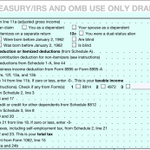
The new Line 12f on the draft 2026 Form 1040 is where you can take the charitable contribution deduction as a non-itemizer. Here’s how to put it to work this year.
Roughly 90% of taxpayers take the standard deduction ($16,100 single / $32,200 married filing jointly for 2026). In recent years, their charitable giving earned no federal tax break.
Starting with the 2026 tax year, a permanent charitable deduction for non-itemizers changes that.
🔹 How Line 12f Works
On the draft 2026 Form 1040, Line 12f sits directly below the standard deduction (Line 12e). It adds to your standard deduction, letting non-itemizers reduce taxable income by up to $1,000 (single) or $2,000 (married filing jointly). It does not reduce your AGI, and amounts above the limit cannot be carried forward.
🔹 Four Rules to Check Before December 31
1️⃣ Cash only. Checks, credit cards, and electronic transfers count. Noncash gifts, such as clothing, household goods, stock, or digital assets, do not.
2️⃣ Qualified charities only. Cash given to donor-advised funds or supporting organizations is excluded.
3️⃣ Standard deduction filers only. Itemizers now face a 0.5%-of-AGI floor on charitable deductions, so if you’re close to itemizing, run the numbers both ways. The standard deduction plus Line 12f may come out ahead.
4️⃣ Document every gift. Keep bank records, canceled checks, or receipts showing the charity’s name, date, and amount. For any single gift of $250 or more, get a written acknowledgment from the charity before you file.
If year-end giving is already part of your holiday plans, confirm your gift meets these rules and save the receipt now. That’s how routine generosity becomes a lower 2026 tax bill.
96
Why I recommend taxpayers get an IP PIN to protect fake returns from being filed using their information.

We have learned that third parties who provide services to the firm were the target of a cyber attack.
Based on our investigation so far, we believe the attackers accessed certain marketing data held by those vendors, which may include some customer names and email addresses.
There is no disruption to our services.
Where appropriate, we will contact affected customers directly and offer support, including complimentary credit monitoring.
There is no connection to service disruption some customers experienced earlier this week.
85
The IRS could be headed for its tightest budget in decades. 🏛️📊
A Senate funding proposal released this week would cut the IRS’s core budget by another 7%. According to the Tax Law Center at NYU Law:
🔹 After inflation, the IRS’s core budget would be 45% smaller than in 2010.
🔹 Money for audits and tax collection would drop to its lowest level in 40 years.
🔹 Extra IRS funding approved in 2022 is likely to run out by the end of 2028. If budgets stay flat, total IRS funding in 2029 would be more than 50% lower than at the start of 2025.
🔹 Supporters of the cuts argue that artificial intelligence and better technology will let the IRS do more with fewer resources. Critics say budget cuts also reduce the money needed to build that technology.
The proposal still has to pass Congress, but here’s what a smaller IRS could mean for you:
• Automated IRS letters and filing deadlines don’t go away.
• Answers, refunds on amended returns, and fixes to account problems may take longer.
The best protection doesn’t change: file on time, keep good records, and respond to IRS letters quickly.
1
114
Sold crypto in 2026? Early next year, your exchange will send you a new tax form called Form 1099-DA. Here’s what to know before you file. 📊
Your form will sort your crypto into two groups:
✅ Covered: crypto you bought in 2026 and kept on the same exchange until you sold it. The exchange knows what you paid, so it reports both your sale price and your cost to the IRS.
⚠️ Noncovered: crypto you bought before 2026, or moved in from another exchange or a personal wallet. The exchange only reports what you sold it for. It may not know what you paid.
Why it matters:
• A blank “cost” box does not mean your cost was $0. If you don’t report what you paid, you could end up paying tax on the entire sale amount instead of just your profit.
• Sharing your records with the exchange doesn’t make it responsible for your numbers. Proving what you paid is still up to you.
• One sale can come with more than one form. That’s normal when older and newer coins are sold together.
If your form doesn’t match your own records, it isn’t automatically a mistake, as long as you can back up your numbers.
What to do now: gather your purchase history, especially for crypto bought before 2026 or moved between wallets and exchanges.
1
7
2,147
Starting January 1, 2027, a new federal tax credit can lower your tax bill dollar-for-dollar. The Federal Scholarship Tax Credit (also known as the Education Freedom Tax Credit) rewards cash donations to approved Scholarship Granting Organizations (SGOs) that fund K-12 scholarships.
An individual can claim up to $1,700 per year, and married couples filing jointly up to $3,400. Unlike a deduction, which only lowers taxable income, this credit reduces the taxes you actually owe.
Donations cannot go to a single school or a specific student. They go to the SGO, which must serve at least two schools and 10 or more children. Families then apply for funds that can cover tuition, tutoring, and test prep.
Most states have opted in. Washington, California, Michigan, and Pennsylvania have not. However, you do not need to live in the SGO’s state. As long as you give to an SGO on a participating state’s approved list, you can claim the credit.
If you are looking for where to give, Dave Ramsey recommends ACE Scholarships. ACE is a national nonprofit SGO that has been delivering K-12 scholarships for more than 25 years.
You can read more about ACE here:
acescholarships.org/eftc/
69
Ralph Mendoza, EA retweeted

Coinbase just made crypto loans available in all 50 states.
Borrowing against your Bitcoin isn't a sale.
Getting liquidated is.
And you can owe tax on a liquidation that puts $0 in your pocket.
Here's how it works.
You pledge BTC. Coinbase converts it 1:1 to cbBTC and moves it to Morpho. You get USDC.
A loan generally isn't income, so the USDC you receive isn't taxed.
But if your debt plus interest hits 86% of your collateral's value, a liquidator can repay the loan and take your collateral, plus a 4.38% penalty on the debt repaid.
You didn't click "sell." The IRS will likely treat it as a sale anyway.
Hypothetical:
• You bought 1 BTC years ago for $10,000
• You pledge it and borrow $50,000
• BTC slides to $58,000, and your loan hits 86%
• If the whole loan is liquidated, about $52,000 of your BTC (0.9 BTC) is taken to repay it plus the penalty
That's roughly $41,000 to $43,000 of long-term capital gain, depending on how the penalty is treated.
At a 15% rate, about $6,200 to $6,500 in federal tax.
Cash you get from the liquidation: $0. It all goes to the lender.
Same coin, same price drop, but the borrower who topped up collateral in time owes $0 and still owns 1 BTC.
Two more things almost nobody mentions:
• Interest on a loan you spend on personal stuff isn't deductible. Use it to buy investments and it may be investment interest, but only if you itemize.
• The IRS hasn't issued guidance on whether wrapping BTC into cbBTC is a taxable swap. Keep your original purchase dates and cost basis either way, and talk to a pro before you file.
Borrowing can be a smart way to get cash without selling.
Just know your liquidation price, set alerts, and keep cash ready to top up.
Would you rather borrow against your BTC or sell and pay the tax now?
If you overreported capital gains on the disposition of crypto, but found cost basis that show a loss instead, you are likely sitting on a possible tax refund.
This is one of the most common and most expensive errors digital asset investors make. When a taxpayer cannot locate their historical acquisition costs across multiple decentralized wallets and defunct exchanges, they often file with a $0 cost basis. Consequently, the IRS taxes 100% of the gross sale proceeds as pure profit.
If you have since located the missing transaction data, here is exactly how you can correct the record and claw back your overpaid taxes:
1. File an Amended Return (Form 1040-X)
You are not permanently locked into the artificial gains you reported on your original return. By aggregating your fragmented wallet histories and establishing the true acquisition cost, you can file an amended return to correct the historical Schedule D and Form 8949.
2. Trigger a Retroactive Refund
By officially proving the disposition was actually a loss, you wipe out the fabricated capital gains tax liability you paid for that specific tax year. This triggers a direct refund from the Treasury for the overpayment.
3. Unlock the Capital Loss Deduction
Correcting the record does more than just erase a phantom gain. Establishing the actual capital loss allows you to offset up to $3,000 of your ordinary income for that tax year. Any remaining loss balance is then carried forward indefinitely to shelter your future investments from capital gains taxes.
4. The Strict Statute of Limitations
You cannot delay this process. Under IRS rules, you only have a three-year window from the original filing deadline (or two years from the date the tax was paid, whichever is later) to submit your Form 1040-X and legally claim the refund. Once that statute of limitations expires, your overpayment belongs to the government permanently. As of today, the standard three-year window allows you to file an amended return (Form 1040-X) and claim a refund for tax years 2023, 2024, and 2025.
2
361
Ralph Mendoza, EA retweeted

Most business owners would be better off learning how to make more money/reinvest into cash flowing assets than obsess over paying less or minimum taxes.
Both are good, but don’t let the tail wag the dog.
The IRS and Treasury just finalized the new SECURE 2.0 automatic enrollment rules and business owners have a strict new compliance mandate to prepare for. The U.S. Department of the Treasury and the Internal Revenue Service (IRS) today issued final regulations to help more Americans save for retirement through their workplaces. The regulations implement a key provision of the SECURE 2.0 Act, providing employers with clear guidance on automatic enrollment for certain 401(k) and 403(b) retirement plans. The rules help workers build retirement savings while preserving their control over how much they contribute. Treasury estimates that SECURE 2.0’s automatic enrollment expansion provision will increase retirement savings by an average of $4.2 billion annually over the 2023-2032 period.
Covered plans are now required to automatically enroll eligible employees at a starting contribution rate of 3%. Covered plans are now required to automatically enroll eligible employees at a starting contribution rate of 3%. Employees may opt out or choose a different contribution rate. The Treasury estimates this structural shift will force an average of $4.2 billion in new retirement savings annually.
For employers, these finalized regulations generally apply to retirement plan years beginning after December 31, 2027. However, the IRS has clarified that certain statutory exceptions apply for qualifying small businesses, newly established businesses, governmental plans, and SIMPLE 401(k)s.
You can read more from the IRS here:
irs.gov/newsroom/treasury-ir…
Now that the IRS has released the draft form 1040, it can be confirmed the charitable deduction for non-itemizers will go on line 12f as an additional deduction. However, it does not affect the adjusted gross income. It will reduce your taxable income.

Ralph Mendoza, EA retweeted

New from me: Itemizing is so back.
That's a key takeaway from a fresh batch of IRS data on the tax returns filed this year.
Tax year 2024: 31% itemizing rate for incomes $250k-$500k.
Tax year 2025: 57%.
For more:
wsj.com/personal-finance/tax…

Ralph Mendoza, EA retweeted

A Georgia resident is bringing a class action against one of the promoters of nonexistent sovereign tribal tax credits, the latest in a string of lawsuits from people who thought they were lowering their tax bills but ended up owing even more to the IRS. news.bloombergtax.com/daily-…
If you are considering changing your tax professional for the upcoming filing season, waiting until January or February to make the switch is one of the most expensive mistakes you can make. The tax professional who was a perfect fit for a simple W-2 might be the wrong fit if you have started a business, entered high-income brackets, or begun trading digital assets. If you have outgrown your current preparer, here is why you must initiate the transition right now, before the calendar year closes:
1. The Window for Proactive Tax Strategy Closes December 31
A standard tax preparer simply records history; a tax advisor helps you change it. If you wait until tax season to meet your new professional, the tax year is already locked. By engaging an advisor now, you have time to execute crucial end-of-year strategies—such as maximizing retirement contributions, executing Roth conversions, harvesting capital losses, or making strategic equipment purchases that actually reduce your final tax bill.
2. Securing Historical Carryforward Data
Switching tax professionals requires a meticulous transfer of historical data. Rushing this process in March often leads to lost deductions. Your new advisor needs time to request and review your prior returns to capture essential carryforward items, including:
-Net Operating Losses (NOLs)
-Capital loss carryovers from previous market downturns
-Depreciation schedules and fixed asset histories
-Passive activity loss carryovers
3. Evaluating New Complexities (Like Form 1099-DA)
If your financial footprint has expanded to include multi-state income, a new corporate entity, or heavy cryptocurrency trading, a high-level practitioner needs time to review the architecture. For example, with the incoming IRS Form 1099-DA crypto reporting rules, waiting until the spring rush means your new preparer will not have the bandwidth to properly aggregate your wallets and reconstruct missing cost bases.
4. Top-Tier Firms Cap Their Rosters Early
Elite Enrolled Agents and CPAs actively manage their capacity to maintain high service standards. The best professionals often close their books to new clients well before the spring filing rush begins. If you wait until tax season, you will likely be turned away by top-tier advisors and forced to settle for a volume-based filing mill.
You should never feel like a reactive afterthought to your tax professional. You should start to build a proactive, audit-ready architecture for your wealth as soon as possible.