

Not for profit & farmer driven
Condobolin, New South Wales
Joined September 2013
- Tweets1.4K
- Following1.2K
- Followers1.9K
- Likes779



CAPTURE LIFE ON THE LAND: CWFS 2026 PHOTO COMPETITION, NOW OPEN
We want to see agriculture in Central West NSW through your lens. Weather, livestock and crops, sunrise in the paddock, the people who keep things running, family moments, working dogs, machinery, sheds and landscapes: show us what life on the land means to you.
Two categories:
Junior (under 18)
Open
Each category winner receives:
$100 worth of Yeti products
Their photo featured in the CWFS Newsletter
A CWFS goodie bag
How to enter: Text your photo to Georgie on 0427 756 217, send it via message to our page, or tag Central West Farming Systems. Please include your name, category and where the photo was taken, and send the original full-resolution image rather than a screenshot.
Entries close 5pm, Monday 18 January 2027.
By entering, you grant CWFS permission to share your image, with full credit to you, across our publications and communication channels. Junior entries must be submitted with the permission of a parent or guardian.
Stay safe around machinery this harvest. No photo is worth the risk.
#CWFSphoto26


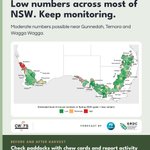
Spring 2026 Mouse Forecast – keep checking paddocks
The latest CSIRO Mouse Forecast puts mouse numbers across most of NSW at low levels this spring. Moderate numbers are possible in parts of the Liverpool Plains near Gunnedah and the eastern Riverina near Temora and Wagga Wagga.
A low forecast does not mean you can stop monitoring. The forecast shows regional risk, not what is happening in individual paddocks. Numbers after harvest also set the risk for next season’s sowing.
Before harvest, monitor with chew cards or walk through crops checking for damage
Aim for a clean harvest to limit grain left in stubble for mice
Keep monitoring after harvest, and consider zinc phosphide baiting before sowing if mice or damage are found
Report what you see on MouseAlert, including low activity. It takes about 60 seconds and improves the forecast
CWFS is one of the organisations collecting monitoring data for the GRDC and CSIRO Mouse Monitoring and Surveillance project.
Full forecast: mouseforecast.com
#MouseMonitoring #CWFS #GRDC #CSIRO

Harvest is underway on our Soil CRC trials.
Yesterday the plot header worked through Organic based nitrogen fertiliser demonstration site, which compares biochar with urea as a nitrogen source. The yield data will show how the two perform in our lower-rainfall mixed farming systems.
It will be very interesting to see how the biochar performs in comparison with the urea.
This work has been supported by the Cooperative Research Centre for High Performance Soils, whose activities are funded by the Australian Government's Cooperative Research Centres Program.
#SoilCRC #soil, #soilhealth, #soilcarbon #cwfs
We can’t control the weather… but we can get smarter about it 🌦️
Highlights from our Weather Wise workshop: from global circulation down to your paddock, plus how to match the forecast to the decision.
Save this for season planning 📌 #FutureDroughtFund #AusAg #WeatherWise #ClimateRIsk #CWFS #droughtresilience
@sqnnswhub @nswdcceew


El Niño forecast. Rain still fell. Here is why.
Indicators of El Niño are only one part of the picture. El Niño is only one part of the picture. At our Weatherwise workshop, Anthony from NSW DPIRD Climate team showed what the oceans were doing. The Indian Ocean was neutral, with warm water right across it and no strong temperature gradient. That set up a series of northwest cloud bands, which carried moisture across the continent and brought rain to the region through winter, even as El Niño strengthened in the Pacific.
As the Bureau of Meteorology notes, a strong El Niño does not necessarily mean strong impacts on Australia's climate.
One climate driver never tells the whole story. With a dry September and a spring outlook that still leans drier, it pays to watch all the climate drivers, not just one.
The second of our two Weather Wise highlights.
#FutureDroughtFund #AusAg #WeatherWise #ClimateRIsk #CWFS #droughtresilience

It wasn’t the mice turning up in numbers on this warm spring day – the flies beat them to it.
Sapphire was out setting chew cards across our Central West sites for the CSIRO mouse monitoring project. Each gridded card (slide 2) is left overnight, then scored on how much has been chewed. That gives a quick measure of mouse activity at each site. Where we find burrows, we spread cornstarch around the entrance (slide 3) so fresh tracks show whether mice are still using them.
The monitoring records how many mice there are, whether they’re breeding and level of activity. That data feeds into CSIRO models, refined over the past 20–30 years, that help forecast mouse outbreaks across the region. The project runs until 2029.
#TrialTuesday #MouseMonitoring #CWFS #GRDC #CSIRO


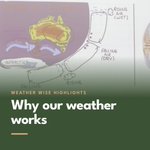
Why does the Central West get the weather it does? The answer starts at the scale of the whole planet.
At our Weather Wise workshop, Anthony from NSW DPIRD Climate team explained how three large circulation cells in each hemisphere (the Hadley, Ferrel and polar cells) set the basic structure of our climate. As the seasons change, these cells contract and spread, shifting where the high- and low-pressure systems that bring our rain and dry spells sit.
#FutureDroughtFund #AusAg #WeatherWise #ClimateRIsk #CWFS #droughtresilience

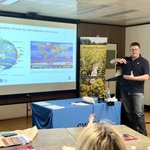
A great day at our Weatherwise Workshop last week! We can't control the weather… but we CAN get smarter about it 📷
Some of our highlights:
📷 How Earth's climate system works, and where all that climate data comes from (sensors, weather stations and more)
📷 Farm climatology: the real odds of rain at Condo, using probability and reliability rather than wishful thinking
📷 Reading a forecast properly, beyond just checking the rain icon
📷 Lu Hogan from Ag360 on proactive management of land and animals in a variable climate
📷 The AMEND Project reminding us that the most important asset on any farm is the people running it
Biggest takeaway? A forecast won't make the decision for you, but it'll help you weigh up the risk 📷
A huge thanks to Anthony & Kel (NSW DPIRD Climate team), Lu Hogan (Ag360.com.au), Lewis Bird (Amend Project), everyone who came along & asked great questions 📷 and finally to our funding supporters including RDA Central West.
This workshop is funded by the Armidale Node of the SQNNSW Innovation Hub, with support from the Farm Business Resilience Program (FBRP), Central West Farming Systems and DPIRD.
The Innovation Hub and FBRP are funded by the Australian Government's Future Drought Fund, with the FBRP also jointly funded by the NSW Government.
#FutureDroughtFund #AusAg #WeatherWise #ClimateRIsk #CWFS #droughtresilience @nswdpird @RDAcentralwest @sqnnswhub


Spring pest hotspots – keep an eye on your lucerne
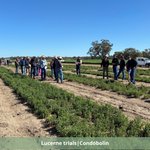
Following our field day at the Mixed Farming System Trial at the Fettel Centre earlier this month, spring pest pressure is a timely reminder that lucerne can become a prime target as the season changes.
As clovers, medics and annual species move into reproductive growth and senesce, actively growing lucerne stays green and attractive to pests such as aphids and early-stage red-legged earth mite nymphs. Pest hotspots can build quickly, sometimes outpacing what beneficial insects alone can control.
At the trial, producers looked first-hand at:
•identifying pests and understanding population levels
•where pests are feeding and how they affect plant growth
•potential impacts on lucerne persistence, plant recovery and feed quality
•when control may be warranted
•control options within an integrated pest management approach.
The take-home message: don't just look across the paddock – look closely within the lucerne. Pest pressure can vary significantly, and picking up developing hotspots early supports timely, targeted management decisions.
Now is a good time to inspect your lucerne and know what's there before deciding what action, if any, is needed.
#FutureDroughtFund #MixedFarmingTrials #LucerneManagement #SNSWInnovationHub #CharlesSturtResearch
#Lucerne #MixedFarming #PestManagement #RedleggedEarthMite #Aphids #FettelCentre #CentralWestNSW #PastureManagement #IntegratedPestManagement

👉 Yes, you! We want your ideas.
Got a question you'd love answered in your own paddock? Nitrogen rates, seeding rates, soil amendments, poor zones… tell us, and it could become a CWFS On Farm Experimentation trial on your farm.
Your paddock. Your challenge. Tested. Swipe for more ➡️
📞 Chiara 0421 155 194 | Bill 0429 976 565
Proudly funded and led by @GRDC @SouthernNSWHub @Gulbali_Inst
#OnFarmExperimentation #OFE #CWFS #GRDC #CentralWestNSW #Farming #Agronomy #GrainsResearch


We look forward to continuing our sponsorship with CWFS.
Market Check would like to invite CWFS members to one of our 2026 Pre-Harvest Seminars. These sessions are a chance to catch with our team over a coffee or a drink, while we run through a comprehensive grain market update and our current strategies.
Central NSW
PARKES - Tue, 29th Sep 8:00am - Parkes Leagues Club
CONDOBOLIN - Tue, 29th Sep 5:00pm - Condobolin RSL
WEST WYALONG - Wed, 30th Sep 8:00am - West Wyalong Services & Citizens Club
RANKINS SPRINGS- Wed, 30th Sep 5:00pm - Conapaira Hotel
Register here: go.agrisk.com.au/2026PHSemin…

Aphid colonies are building in faba beans right now — feeding damage shows as wilting, stunting and premature flower and pod drop, plus the added risk of virus spread.
With crops at flowering, that's a direct hit on fertilisation and pod set — where yield is actually decided. Get into paddocks and check aphid and beneficial numbers before acting. A selective insecticide like Pirimicarb is less disruptive to beneficials than some other options (note: WHP is 21 days).
Timing the call now matters more than timing it late.
#FutureDroughtFund #AusAg #SoilCRC #CWFS #MurdochUniversity #SouthernCrossUniversity #droughtresilience #TrialTuesday #CropDiversity #aphids #fababeans


DON"T MISS OUT Spring Field Day — Tue 8 Sept, 8am, Condobolin Ag Station. Field walks on drought resilience, lucerne trial & N banking, plus flock mgt & Optiweigh updates. Breakfast included. RSVP essential: trybooking.com/events/landin…
#CWFS #GRDC #FutureDroughtFund

SAVE THE DATE: WeatherWise Workshop
Climate and weather information is everywhere and farmers rely on forecasts to make critical farm decisions every day.
This practical workshop has weather experts talk through some of the key factors to consider when reading weather apps and using support tools. We will look at regional climate trends & variability; interpreting seasonal forecasts; drought cycles and risk vs uncertainty in agriculture.
Save the date now — this is an important workshop to attend.
This workshop is funded by the University of New England (UNE), with support from the NSW Farm Business Resilience Program (FBRP), and through funding from the Australian Government's Future Drought Fund and University of Southern Queensland, SQNNSW Innovation Hub, Central West Farming Systems and DPIRD. #FutureDroughtFund #WeatherWise #ClimateRisk #FarmingSystems #CWFS #SaveTheDate #AusAg #DroughtResilience

Trial update: Neo CL barley at growth stage Z30 (start of stem elongation).
CWFS agronomists Chiara and Sapphire are out measuring biomass across our fertiliser treatment plots. Samples will head to Griffith University for nitrogen tissue testing, helping us evaluate how Neo CL responds to different organic-based nitrogen fertilisers and impact on nitrogen use efficiency, crop performance and soil health.
Stay tuned for results as the trial progresses.
Project - Glasshouse and Field evaluation of organic based nitrogen fertilisers for crop production and soil health.
#SoilCRC #GriffithUniversity #CharlesSturtUniversity
#CWFS #CentralWestNSW #BarleyTrial #NeoCL


